Quick Verdict
Tirana is Albania’s beating heart—chaotic, colorful, with communist-era museums, Ottoman bazaars, and Balkan nightlife. No beach, but you’re 2-3 hours from anywhere in the country. Base here if you want urban energy and maximum day trip flexibility.
Durrës is Albania’s main beach city near the capital—30 minutes from Tirana with a Roman amphitheater, long sandy beach, and resort town vibe. Base here if you want seaside relaxation without sacrificing access to Tirana.
Most travelers don’t choose one over the other—they spend 2-3 nights in Tirana exploring the capital, then either day-trip to Durrës or skip it entirely for better beaches south (Vlora, Saranda).
At a Glance
| Factor | Tirana | Durrës |
|---|---|---|
| Best For | Culture, nightlife, day trips | Beach access, Roman history |
| Atmosphere | Energetic capital chaos | Laid-back beach city |
| Main Attractions | Bunk’Art, museums, Blloku, Mt. Dajti | Amphitheater, waterfront, Venetian Tower |
| Getting There | Direct flights to Tirana International Airport | 30 min from Tirana (bus or car) |
| Accommodation | €20-100/night | €25-80/night |
| Time Needed | 2-3 days | 1-2 days |
Tirana: What Makes It Special
Tirana is not what you expect. Buildings painted in wild geometric patterns (blame former mayor Edi Rama, now Prime Minister, who decided gray communist blocks needed color therapy), Italian espresso culture mixed with Turkish coffee rituals, Mercedes sedans and donkey carts sharing the same roads. It’s messy, contradictory, and way more fun than most European capitals take themselves to be.
What it’s known for: Albania’s capital and largest city (pop. 500,000, though it feels bigger), Tirana is the country’s political, economic, and cultural center. It’s where communist-era history collides with aggressive modernization—one block has Stalinist murals, the next has glass skyscrapers and rooftop bars. Skanderbeg Square, the central plaza, was redesigned by Belgian architects in 2017 and remains controversial (Albanians either love the pedestrian openness or hate that they removed the trees).
Top things to do:
Bunk’Art 1 and Bunk’Art 2 are essential. These are Cold War nuclear bunkers converted into museums covering Albania’s communist dictatorship (1944-1991). Bunk’Art 1 (500 LEK, on the edge of town) is the main bunker built for Enver Hoxha and government leaders—5 floors underground with 100+ rooms documenting surveillance state paranoia. Bunk’Art 2 (500 LEK, city center) focuses on the secret police (Sigurimi). Both are haunting. Budget 2-3 hours each.
National History Museum (700 LEK) on Skanderbeg Square covers Albanian history from Illyrian tribes through Ottoman occupation to communist collapse. The mosaic on the facade—heroic communist workers—is worth the entry price for irony alone given what’s inside.
Blloku neighborhood is Tirana’s nightlife center. During communism, this was the forbidden zone where party elites lived (regular Albanians faced prison for entering). Now it’s bars, clubs, and trendy restaurants. Radio Bar (craft beer, 400-600 LEK) and Komiteti Kafe Muzeum (raki and communist nostalgia decor) are both worth a stop.
Mt. Dajti cable car (1,000 LEK round trip) takes you 1,200 meters up the mountain overlooking Tirana. The views are spectacular on clear days. You can hike back down (2-3 hours) or take the cable car both ways.
The Pyramid (Piramida) is a brutalist concrete pyramid built as a museum for dictator Enver Hoxha. It’s been abandoned, graffitied, and climbed by teenagers for years. As of 2024, it’s being converted into a tech education hub—catch it while it’s still half-ruin, half-repurposed monument.
Who it’s best for: City lovers who want Balkan grit without Western European polish, history buffs (communist-era sites are world-class), digital nomads (fast wifi, cheap coffee, growing coworking scene), and anyone using Albania as a regional hub for day trips.
Not ideal for travelers seeking beach vacations (Tirana is landlocked) or those overwhelmed by traffic and urban noise.
Practical info: Accommodation is plentiful—€20-30 for hostels, €40-60 for mid-range hotels, €80-100 for boutique properties. Stay in the Blloku area for nightlife or near Skanderbeg Square for museums and walkability.
Food is the best in Albania—you’ve got traditional Albanian (Oda, Era), Italian (everywhere), and increasingly good international options. Budget €8-15 for restaurant meals, €3-5 for byrek (savory pastry) and coffee.
Getting around: The city center is walkable, but outlying sites (Bunk’Art 1, Grand Park) require taxis (Bolt app works, 300-600 LEK for most trips). Buses exist but are confusing—stick to walking and taxis.
Tirana International Airport (TIA) is 25km northwest—take a taxi (€20-25, pre-negotiate or use Bolt) or bus (350 LEK, hourly). The airport serves most major European cities.
The city is functional year-round, but summers are hot (35°C+) and many locals flee to the coast. Spring (April-May) and fall (September-October) are ideal—warm, fewer crowds, cafe culture in full swing.
Durrës: What Makes It Special
Durrës is Albania’s pragmatic beach city—the place where Tirana residents go for weekend beach time without driving 4 hours to the Riviera. It’s got ancient history (2,600 years old, founded as a Greek colony), a long waterfront promenade, and perfectly fine beaches that won’t blow your mind but also won’t disappoint if you’re just here to swim.
What it’s known for: Albania’s second-largest city (pop. 200,000) and main port, Durrës is the closest beach to Tirana (30 minutes by car). It’s been a strategic Adriatic port for millennia—the Romans built Via Egnatia starting here, connecting the Adriatic to Byzantium. The city beach is 10km of sand (Albania’s longest urban beach), lined with hotels, beach clubs, and seafood restaurants.
Top things to do:
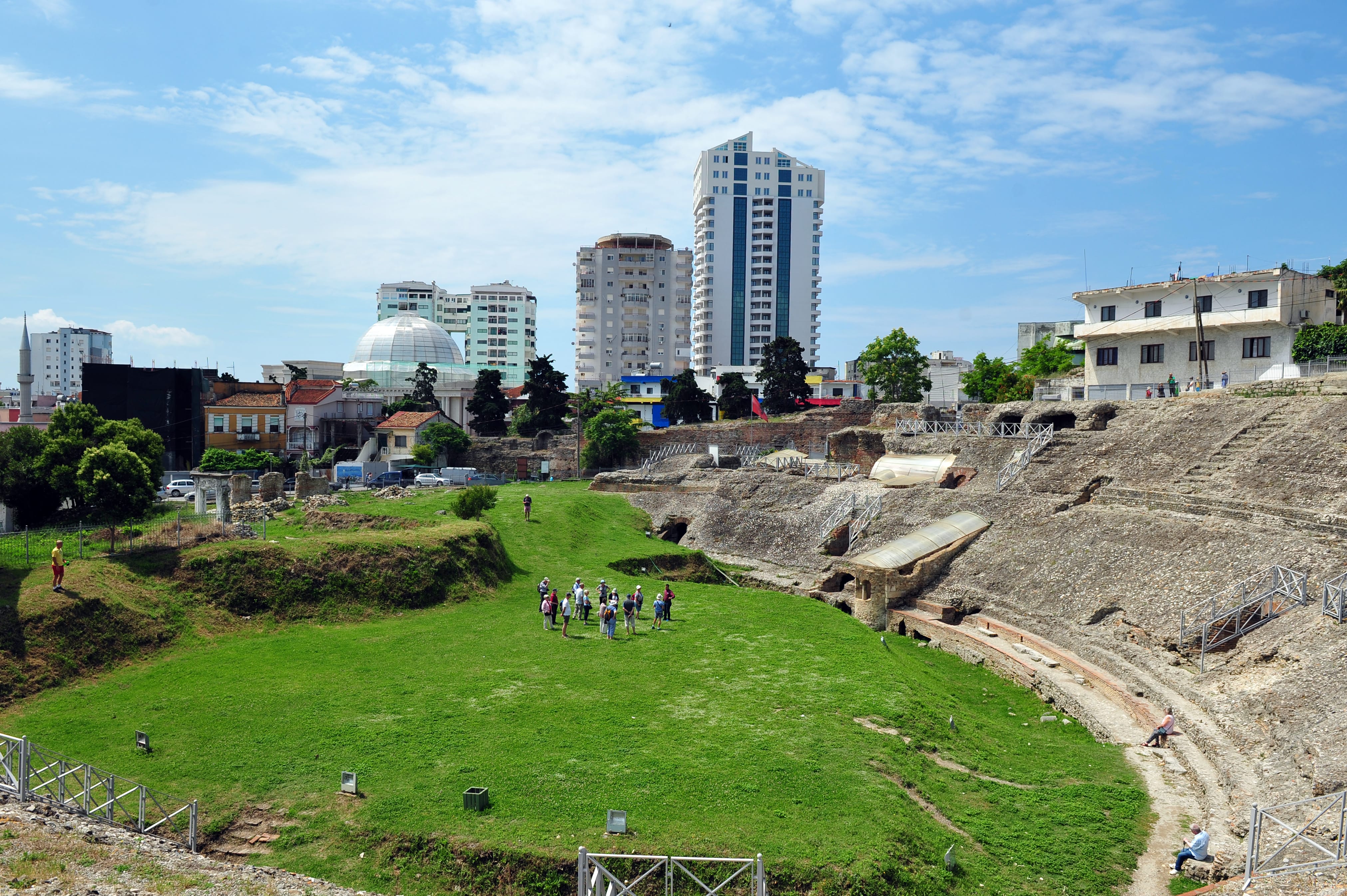
The Roman Amphitheater (400 LEK) is shockingly good—one of the Balkans’ largest, built in the 2nd century AD for 20,000 spectators. It was lost under houses for centuries, rediscovered in 1966, and still being excavated. You can walk through tunnels where gladiators waited and see Byzantine mosaics on the walls. Budget 1-2 hours.
Venetian Tower (Kulla Veneciane) on the waterfront is a 15th-century defensive tower—small, but the views from the top (200 LEK) cover the entire bay.
The waterfront promenade (Vollga) is 10km long—walk, bike, or rent a scooter. It’s lined with palm trees, beach clubs, and cafes. The beaches are sandy but crowded June-August (every Tiranale family descends on weekends). The water is clean but not Ksamil-level turquoise—this is urban beach, not pristine coastline.
Archaeological Museum (300 LEK) has artifacts from Greek, Roman, and Byzantine periods—smaller than Tirana’s National Museum but well-curated if you’re into ancient history.
Day trip to Kruja (1 hour south) combines easily with Durrës—this mountain town was Skanderbeg’s stronghold against the Ottomans. The castle, bazaar, and museum make a solid half-day trip.
Who it’s best for: Travelers who want beach access without abandoning city amenities, families (the long sandy beach is kid-friendly), history buffs (the amphitheater rivals anything in Albania), and anyone who wants to avoid the tourist intensity of Saranda but still swim.
Not ideal for travelers seeking dramatic beaches (the Albanian Riviera is far superior), nightlife seekers (Durrës is calm compared to Tirana), or backpackers (it’s pricier than inland cities due to beach proximity).
Practical info: Accommodation is resort-focused—€30-50 for mid-range hotels, €60-80 for beachfront properties. The area near the amphitheater is walkable and central; beachfront hotels are further north along Vollga promenade.
Food is seafood-heavy—grilled fish and calamari run €10-15 at waterfront restaurants. Vertigo (near the amphitheater) has good Albanian traditional food for €8-12.
Getting there: From Tirana, buses leave every 30 minutes from near the train station (200-300 LEK, 45 minutes). If driving, it’s 30 minutes via A1 highway (€1 toll).
Durrës Port has ferries to Bari and Ancona, Italy (8-10 hours, €40-80 depending on season). If you’re arriving from Italy by ferry, Durrës is your entry point.
The city functions year-round (unlike pure beach towns), but the beach season is June-September. Winters are mild but rainy, and most beach clubs close October-April.
Which Should You Choose?
Choose Tirana If…
- You want Albania’s best nightlife and restaurant scene
- You’re interested in communist-era history (Bunk’Art museums)
- You need access to day trips (Kruja, Berat, Bovilla Lake)
- You prefer urban energy over beach relaxation
- You’re flying into Tirana International Airport (easier logistics)
- You want more accommodation and dining options
- You’re backpacking or budget traveling (hostels, cheap eats)
Choose Durrës If…
- You want to combine beach time with culture
- You’re arriving or departing by ferry to/from Italy
- You want a quieter base than Tirana but don’t want to be far from the capital
- You’re interested in Roman/Byzantine archaeology
- You’re traveling with kids (beach + shallow water)
- You want to be able to day-trip to Tirana (30 min) without staying in the capital
Can You Visit Both?
Yes, easily—and most travelers do. They’re 30 minutes apart, connected by frequent buses and taxis. Here’s the most common itinerary:
Day 1-3: Tirana
- Arrive at Tirana International Airport
- Explore Bunk’Art 1 & 2, National Museum, Blloku nightlife
- Day trip to Kruja (1 hour) or Bovilla Lake (45 min)
Day 4: Day trip to Durrës from Tirana
- Morning bus to Durrës (30 min, 200 LEK)
- Visit Roman Amphitheater (2 hours)
- Lunch at waterfront seafood restaurant
- Swim at city beach (if summer)
- Return to Tirana evening
Alternative: Base in Durrës, day trip to Tirana
- Reverse the above—stay in Durrës for beach access, day trip to Tirana for museums and nightlife. This works if you’re prioritizing beach time over urban exploration.
Which to skip if you only have time for one? Tirana wins for most travelers. It’s got better museums, food, nightlife, and serves as a hub for day trips across Albania. Durrës is pleasant but not essential—if you’re already going to Saranda or the Albanian Riviera, you’ll get better beaches there. The amphitheater is the only truly unique attraction in Durrës, and you can see it on a half-day trip from Tirana.
Cost comparison: Tirana is slightly cheaper for accommodation and food due to more competition. Durrës has inflated prices near the beach June-August (but off-season is comparable to Tirana).
My recommendation: Spend 2-3 nights in Tirana. If you love Roman ruins and want easy beach access, add 1-2 nights in Durrës or just day-trip there. If you’re indifferent to ancient amphitheaters and prioritize spectacular beaches, skip Durrës entirely and save your beach time for Vlora, Himara, or Saranda.
The honest truth? Durrës is Albania’s most “optional” major city. It’s nice, convenient, and has real historical value—but it’s not a must-see the way Tirana, Berat, or Gjirokastër are. Visit if it fits your itinerary or you’re arriving by ferry from Italy. Otherwise, Tirana is the better urban base, and the Albanian Riviera is the better beach destination.