How to Get to Sarandë
From Tirana
- By Bus: Multiple daily departures from southern terminal. Journey takes 5-6 hours and costs 1,500-2,000 LEK (€13-17).
- By Car: 280km via Fier and coastal SH8. Drive time approximately 5 hours, including spectacular Llogara Pass.
- By Tour: Multi-day tours typically combine Sarandë with Gjirokastër and Butrint.
From Corfu, Greece
- By Ferry: Daily ferries from Corfu (30-45 minutes, €20-25 one-way). Perfect for entering Albania from Greek islands.
From Vlora
- By Bus: Frequent buses along coastal SH8. Journey takes 2.5-3 hours and costs 800-1,000 LEK (€7-9).
- By Car: 130km via spectacular Albanian Riviera coastal road. Drive time approximately 2.5 hours.
Why Visit Sarandë
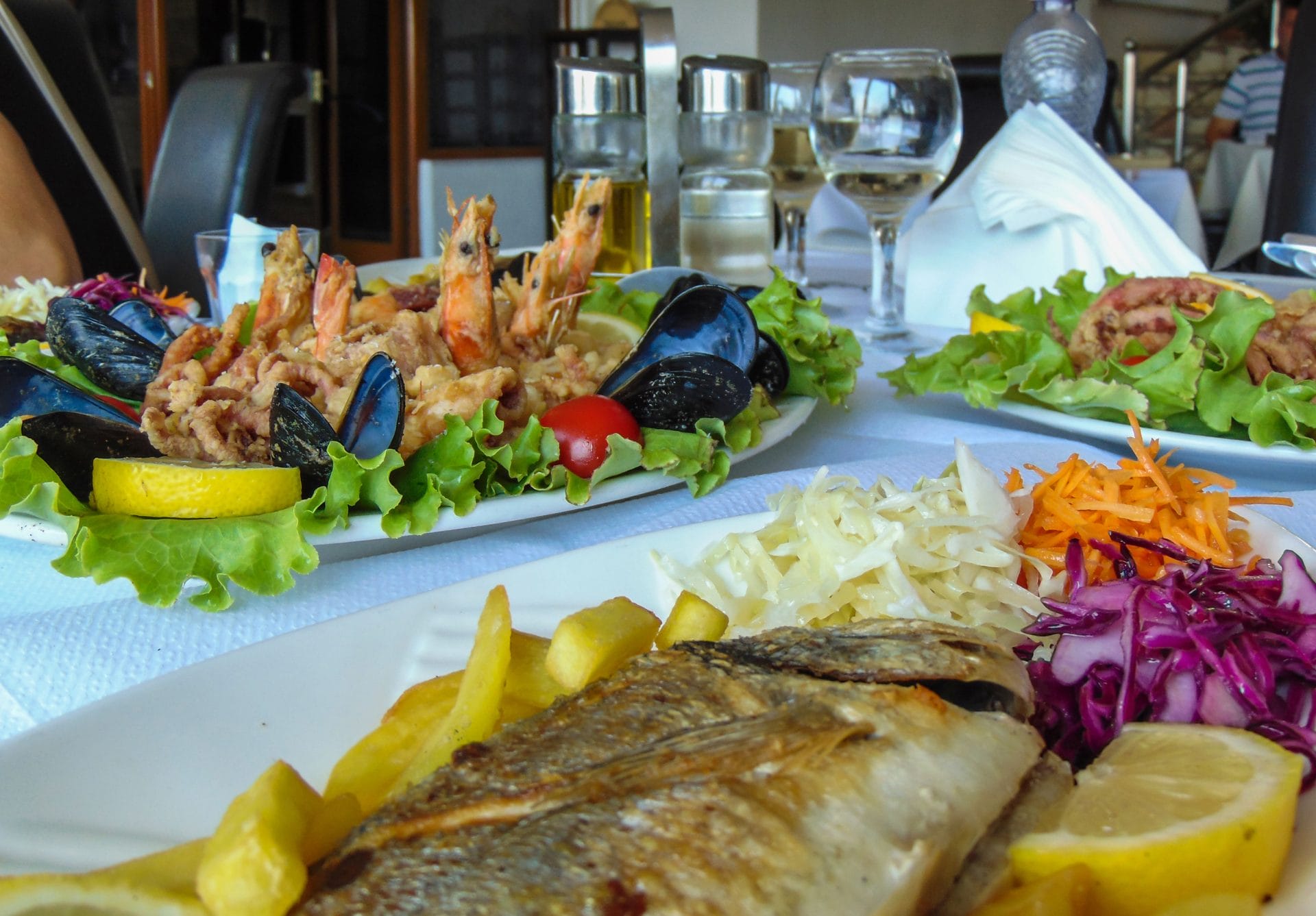
Saranda wraps around a horseshoe bay where Greeks, Romans, Byzantines, and Venetians all built cities layered on top of each other across 2,500 years of continuous occupation because the natural harbor was simply too strategically valuable to pass up. The narrow strait to Corfu (just 10 kilometers west across the Ionian Sea) made this location a crucial crossroads controlling maritime traffic between the Adriatic and broader Mediterranean, explaining why every major power that dominated this region fortified Saranda at some point in history. Today it’s Albania’s number one beach resort destination—and that description needs to be clear from the start: this is not undiscovered Albania, not quiet traditional mountain culture, not some hidden gem that guidebooks haven’t found yet. Saranda is a fully functioning Mediterranean resort town where Greek tourists arrive by ferry every morning for day trips and weekend getaways, where Albanian beaches pack with families during the July-August peak season, and where restaurants along a 2-kilometer waterfront promenade serve fresh octopus and grilled fish at prices higher than inland Albania but reasonable compared to Greek or Italian coastal resorts. The development is ongoing and sometimes chaotic, with new hotels rising to meet demand from both international tourists and returning Albanian diaspora visiting family.
But 20 minutes south: Butrint. UNESCO World Heritage site where you can stand in a 4th-century BCE Greek theater that holds 2,500 people, walk Roman bath mosaics that haven’t moved in 2,000 years, and see Byzantine baptistery floors with fish patterns so detailed you can count scales. All layered on one 16-hectare peninsula.
And 20 minutes in a different direction: Ksamil beaches. Four small islands 50-150m offshore, turquoise water so clear you see fish from shore, shallow enough to wade toward the islands at low tide. Albania’s most photographed beaches.
And 30 minutes inland: Blue Eye spring. Water bubbling from karst depths divers measured past 50 meters before it drops into darkness sonar can’t reach. Constant 10-13°C year-round - cold enough to shock most people out after 30 seconds of swimming.
This is Albania’s accessible Riviera. Beaches + 2,500 years of layered history + daily ferries to Greece. Not undiscovered, but worth it.
Butrint: Where 2,500 Years Layered on One Peninsula
The Greeks founded Butrint (ancient Buthrotum) in the 7th-4th century BCE. Built a theater into the hillside (holds 2,500 people, acoustics still work - stand center stage, speak normally, hear your voice in top rows). The Roman writer Virgil mentioned it in the Aeneid. It was real, important, thriving.
Romans took over, added baths with mosaic floors, forum, villas, aqueduct. Enlarged the theater. Created a proper Roman provincial city.
Byzantines built churches. The baptistery floor mosaic (6th century CE) shows animals, birds, fish in such detail you can identify species. Perfectly preserved because it was covered by soil for centuries.
Venetians fortified the acropolis when Ottoman Empire was expanding. Built the fortress that still crowns the site.
Then the city declined. The harbor silted up. Malaria from wetlands made it uninhabitable. People left. Nature reclaimed it. Buried it. Preserved it.
Archaeologists started excavating in early 1900s. UNESCO designated it World Heritage in 1992. Now you can walk through all these layers in one visit - Greek theater, Roman baths, Byzantine mosaics, Venetian fortress, all on 16 hectares.
Visit: 1,000 LEK (~€10), open 8 AM-7 PM summer. Hire a guide at entrance (€20-30) - minimal signage, context is everything. Bring water, hat, sunscreen - limited shade. Allow 2-3 hours minimum.
18km south of Saranda (20-min drive). Tour buses arrive 10 AM-2 PM - go early or late to avoid crowds.
Ksamil: Four Islands and Turquoise Water
20km south of Saranda. Four small islands sitting 50-150m offshore. Water so turquoise it looks fake in photos. Shallow for 50 meters from beach - safe for families, clear enough to watch fish.
At low tide, you can wade toward the closest islands. Rent kayak/paddleboard (€10/hour) for the farther ones. Bring snorkel - underwater visibility is exceptional.
July-August reality: packed. Arrive before 10 AM to claim beach space or come after 4 PM when day-trippers leave. Multiple coves - if one’s crowded, try the next beach 200 meters away.
September-October: perfect. Water still warm (22-24°C), crowds gone, restaurants open, weather ideal.
Some people base themselves in Ksamil instead of Saranda - quieter, directly on best beaches, growing hotel/restaurant scene. Trade-off: fewer services, less nightlife, need transport for Butrint/Blue Eye/Saranda.
The Blue Eye That Drops Into Darkness
30km inland from Saranda (30-40 min drive). Crystal-clear water bubbling from a karst spring, shades of blue from minerals + light refraction through pure water. Surrounded by oak and plane tree forest creating cool microclimate.
Divers measured depth past 50 meters. They could see clear bottom… then it drops into darkness sonar can’t fully measure. The spring likely connects to extensive underground river systems.
Water temperature: constant 10-13°C year-round. You can swim but the cold shocks most people out quickly. Locals do it. Tourists wade briefly, take photos, retreat.
Visit: 100 LEK (~€1). Café/restaurant at site. Walking paths through forest. Gets crowded July-August midday - go morning or late afternoon.
Where Albania Meets Greece
Corfu (Greek: Kerkyra) sits 10km west across the strait. Daily ferries (€10-20 one-way, 30-min crossing) make day trips easy. Greek tourists reverse the route - arriving in Saranda Friday-Sunday for cheaper accommodations/food than Corfu.
You can see Corfu’s mountains from Saranda waterfront. At night, lights twinkle across the strait. The cultural/economic connection is tight - many Saranda businesses cater to Greek weekenders.
Lëkurësi Castle (6km above Saranda): 16th-century fortress with panoramic views. Entire bay, Corfu island, Greek mountains beyond, Ionian Sea stretching south. Restaurant serves traditional food timed for sunset. Castle itself is modest - views are everything. Taxi up (€5-8) or drive - steep climb.
Albania’s Premier Resort
This isn’t undiscovered Albania. July-August brings crowds, higher prices, fully-booked hotels. The waterfront promenade fills with tourists, restaurants blast music, beaches pack with families.
September-October: ideal. Heat softens to perfect beach weather (25-28°C), sea stays warm (22-24°C), crowds thin, prices drop 30-40%, everything’s still open.
November-March: many businesses close. Promenade quiets. Prices hit yearly lows but options are limited. Some digital nomads winter here for budget reasons - just know you’re getting off-season Saranda, not peak resort experience.
Budget €50-80 daily July-August (accommodation €40-70, meals €15-25, transport/activities €10-15). Shoulder season (May-June, Sept-Oct) drops to €40-60 daily with 30% discounts common.
The honest take: Saranda delivers accessible Albanian Riviera - beaches + Butrint’s 2,500 years + Ksamil’s islands + Blue Eye’s depths + Greek ferry connections. It’s developed, touristed, commercial. If you want undiscovered Albania, head to the mountains. If you want Mediterranean beach resort with UNESCO ruins 20 minutes away, this works.
Butrint’s theater hasn’t changed in 2,400 years. The Blue Eye still flows from unmeasured depths. Ksamil’s islands still sit offshore in turquoise water. And Greek tourists still arrive every morning on the Corfu ferry because the strait is 10km wide and Saranda’s cheaper than Greek resorts.
Budget €50-80 daily. Bring sunscreen. The horseshoe bay is waiting.