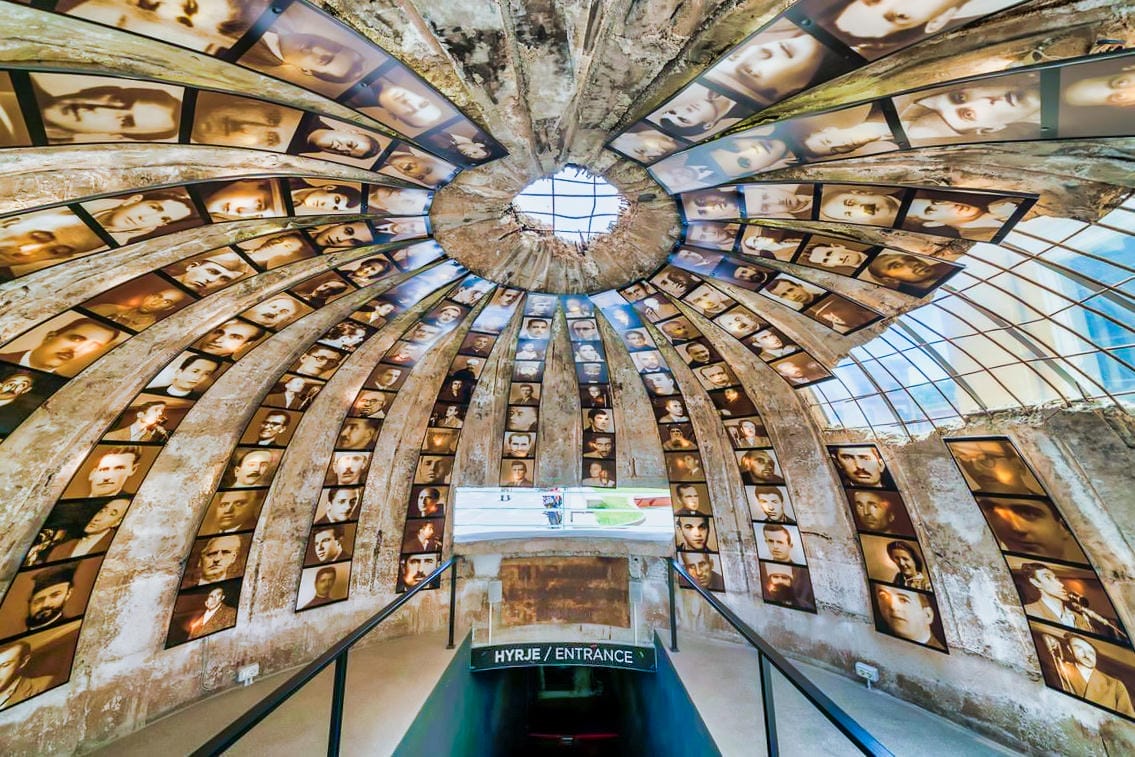
The Bunker Built for a War That Never Came
Between 1972 and 1978, while Albania remained one of the world’s poorest countries with most citizens living in pre-industrial agricultural conditions where electricity and running water were luxuries in rural areas, Enver Hoxha’s communist government built a five-story underground bunker containing 106 rooms designed to shelter the party elite during nuclear war, a facility whose construction costs likely consumed resources equivalent to building hundreds of schools or hospitals Albania desperately needed. The construction occurred in complete secrecy near Mt. Dajti on Tirana’s eastern edge, employing forced labor drawn from political prisoners and military conscripts who worked under threat of punishment, consuming resources Albania’s isolated and struggling economy could barely spare while the population faced rationing of basic goods. The bunker included decontamination chambers equipped with showers and changing areas for removing radioactive contamination from anyone entering from the irradiated surface, communication centers filled with 1970s-era radio equipment for maintaining contact with military commands across Albania even if surface infrastructure was destroyed, living quarters furnished with beds and period furniture designed for extended underground stays lasting months or years, assembly halls where the Political Bureau could continue governing during nuclear apocalypse, and extensive storage rooms for food, water, medical supplies, and other necessities meant to sustain occupancy for months following nuclear attack. The facility was never used for its intended purpose—the nuclear war Hoxha feared never materialized, rendering the elaborate preparations obsolete. When Hoxha died in 1985 and the communist regime collapsed in 1991 amid popular uprisings and economic collapse, the bunker was abandoned by soldiers who sealed the entrances and left everything inside exactly as it had been maintained for decades. It sat empty in the dark for over two decades, the climate control systems eventually failing, before opening temporarily as a museum in November 2014 and permanently in April 2016, its rooms preserved largely as they were when construction completed in 1978, creating an unintentional time capsule documenting Cold War paranoia, Albanian isolation from both Eastern and Western blocs, and the psychological state that led a desperately poor nation to invest millions in elaborate preparations for nuclear apocalypse while its citizens struggled with basic poverty.
What Paranoia Built
Walking through Bunk’Art 1 means navigating multiple underground levels connected by concrete corridors, descending deeper into the mountainside where temperature holds between 12 and 15°C (54-59°F) regardless of season. Bring a jacket even during August heat—the underground climate feels genuinely cold after 30 minutes.
The bunker’s layout reflects its dual purpose as both military command center and government refuge. The deepest levels housed the most critical functions—communication equipment, strategic planning rooms, and Hoxha’s personal quarters. Higher levels contained assembly spaces, additional living quarters for officials and their families, storage areas, and support facilities.
What you’ll see:
Decontamination Areas: Chambers where anyone entering from the irradiated surface world would remove contaminated clothing, undergo washing procedures, and receive medical screening before proceeding deeper into the bunker. Original equipment, instruction posters, and protective gear demonstrate the protocols designed to prevent radioactive contamination from spreading through the facility.
Communication Centers: Rooms filled with 1970s communication equipment—radio systems, encryption devices, telephones connecting to military commands across Albania. Much of the equipment remains in place, though obviously non-functional. Information panels explain how the bunker would coordinate military response and maintain government continuity during nuclear war.
Living Quarters: Bedrooms furnished with original 1970s beds, desks, chairs, and personal items showing how officials and their families would live underground indefinitely. The rooms feel cramped and institutional despite being designed for Albania’s most powerful citizens—evidence that even elite survival conditions during nuclear war wouldn’t be comfortable.
Assembly Halls: Large rooms where the Political Bureau would meet to make decisions, where Hoxha would address subordinates, where the machinery of government would continue operating despite the world ending above. The largest hall includes original stage, seating, and Albanian flags, creating atmosphere simultaneously mundane (it’s just a room) and deeply unsettling (this was where they’d govern after nuclear annihilation).
Secret Police Archives: Rooms dedicated to Sigurimi (Albania’s secret police) documenting surveillance methods, interrogation techniques, and the apparatus of repression that functioned alongside military paranoia. Files, photographs, and equipment show how the communist state monitored, intimidated, and punished citizens suspected of disloyalty.
Contemporary Art Installations: The museum incorporates modern video and art installations that comment on the historical material, creating dialogue between past repression and contemporary reflection. Some installations work brilliantly, others feel heavy-handed, but they prevent the bunker from being pure historical artifact and force engagement with what this place meant and means.
The Rooms Worth Slowing Down For
The exhibition runs across five historical zones in chronological order—Fascist Italy (1939–1943), wartime diplomacy (1941–1945), the German occupation and Albanian resistance (1943–1944), the postwar years of hope and disappointment (1945–1947), and Albania after Liberation. About forty of the 106 rooms hold permanent installations. The rest is corridors, technical chambers, and blast doors you pass on the way.
If you only have two hours, these are the ones to slow down for.
Hoxha’s apartment. Sleeping quarters, personal office, a small sitting area—all cramped and sparsely furnished. The modesty of his personal rooms set against the scale of the bunker around them says something no interpretive panel manages to.
Mehmet Shehu’s apartment. This is the one most visitors walk past without understanding what they’re looking at. Shehu was Hoxha’s prime minister from 1954 to 1981 and his closest comrade for forty years. On the night of December 17, 1981, he was found dead in his bedroom with a bullet wound, wearing pyjamas and sunglasses. Radio Tirana announced a suicide in a “moment of nervous crisis.” Almost nobody in Albania believed it then and almost nobody does now.
The assembly hall. Two storeys underground, 200 seats, a proper stage, built for Politburo meetings during a nuclear strike. Never used for that. Occasionally used for events today, which is its own kind of strange.
The Socialist Home. A reconstructed apartment and grocery shop from the communist period, with ration-level empty shelves and standard-issue furniture. If the political exhibits feel abstract, this room grounds them fast.
The bunkerization exhibit (1975–1983). The room explaining the bunker program itself—maps, numbers, ideological justifications, and Josif Zagali, the military engineer who designed the dome-shaped pillbox because shells ricochet off curved concrete. By this point you’ve driven past that landscape for days without registering it.
Why Build This
Understanding Bunk’Art requires understanding Albania’s position during the Cold War. Hoxha broke with Yugoslavia (1948), the Soviet Union (1961), and China (1978), leaving Albania without major power patron and deeply paranoid about invasion from multiple directions. The country became possibly the most isolated nation on Earth, sealed from both capitalist West and communist East, convinced enemies surrounded it on all sides.
This isolation bred paranoia manifesting in massive defensive preparations. Between 1967 and the mid-1980s Hoxha’s government built roughly 173,000 bunkers across Albania—about one for every four citizens—ranging from tiny concrete mushrooms in agricultural fields to massive facilities like Bunk’Art. (You’ll see the figure 750,000 quoted in older guidebooks and on plenty of websites. It’s wrong, and the bunkerization exhibit inside the museum walks through the real numbers.) At peak construction the regime poured an estimated 500,000 tons of concrete into bunkers every year while roughly 70% of urban Albanians faced housing shortages. The nuclear bunker represented the apex of this defensive architecture, the ultimate insurance policy for regime survival even if nuclear war destroyed civilization.
This specific bunker had a codename: Objekti Shtylla, “Object Pillar.” Hoxha inaugurated it himself in June 1978. He died in April 1985 without ever needing it.
The bunker’s construction also served domestic political purposes. It demonstrated Hoxha’s commitment to defending Albania, justified harsh economic policies by pointing to external threats, and created employment for those building it (albeit under forced labor conditions). The project’s existence meant something regardless of whether nuclear war actually occurred.
Visiting Practicalities
Location and Access: Bunk’Art 1 sits approximately 6.2 kilometers east of Tirana’s center at Rruga Fadil Deliu, behind the Dajti Express cable car station. The location is deliberately remote—building the bunker near Mt. Dajti provided both cover and mountain rock to absorb potential blast effects.
Bus L11—the blue “Porcelan” line—provides the most economical access, departing from the Biblioteka stop on Rruga Ludovik Shllaku, behind the National Opera near the Clock Tower and a short walk from Skanderbeg Square. The fare is 40 ALL, paid in cash to the conductor on board. It’s 17 stops and takes 20-45 minutes depending on traffic.
Taxis from Tirana center run 700-1,000 ALL one-way (roughly €6-8), 15-20 minutes. Merr Taxi has a negotiated fixed rate of 650 ALL.
The approach on foot. However you arrive, you’re not done. A long, narrow tunnel carved into the hillside leads to the ticket booth, and from there a wooded path climbs about 300 metres uphill to the actual bunker entrance. Budget 10-15 minutes and wear shoes you can walk in. Signage is clear.
Walking the full 6 kilometres from the city center is theoretically possible, but the route includes steep sections as you ascend toward Mt. Dajti and isn’t particularly scenic. Few people choose this option.
Hours and Admission: The museum operates 9:30 AM-4:30 PM daily year-round, with no weekly closure despite what some older guides claim. That 4:30 closing is the thing that catches people out—if you want time to read the panels properly, arrive by 2 PM at the latest. Entrance costs 900 ALL (approximately €9); with the audio guide it’s 1,000 ALL. A combo ticket covering both Bunk’Art 1 and Bunk’Art 2 works out to 800 ALL each and stays valid for 72 hours. Cash only—no cards, and the nearest ATM is back in the city center near Skanderbeg Square. The audio guide runs as a phone app you download over Wi-Fi before arriving, so test it first; bring your own headphones, because the ticket booth doesn’t supply them.
Time Required: Allocate minimum 2-3 hours for thorough exploration. The bunker is extensive—106 rooms means there’s substantial physical space to navigate, plus time needed to read historical information, view video installations, and process what you’re seeing. History enthusiasts easily spend 3-4 hours. Rushing through in 60-90 minutes means you’ll see the space but miss most context.
Timing Your Visit: Early morning arrival at 9:30 AM opening offers the most peaceful experience, allowing exploration of rooms alone or with minimal crowds. Weekdays prove significantly less busy than weekends. Avoid Sunday afternoons when local families visit en masse. Summer brings more tourists but doesn’t overwhelm the facility given its size.
What to Bring: Warm clothing regardless of season—the underground temperature holds at 12-15°C year-round. Comfortable walking shoes for the uphill approach and the concrete floors and stairs inside. Phone or camera for photography (allowed throughout). Water and a snack: there’s nothing on-site at all.
Accessibility: Bunk’Art 1 is not wheelchair-friendly. There are no elevators, the approach from the ticket booth is a 300-metre uphill walk, and the interior has multiple staircases between floors, narrow corridors, and low ceilings in places. If you’re prone to claustrophobia, some sections will be difficult—though you can turn back at any point.
Pairing it with Dajti: The bunker’s remote location gets treated as a drawback. It’s actually the setup for Tirana’s best half-day. The Dajti Ekspres lower station is a five-minute walk away—the approach tunnel you came through runs underneath it. Catch the L11 at 9:00, be inside when the bunker opens at 9:30, spend two hours, then walk over and ride the cable car up for lunch at the summit. If you’re building a whole day around this history, do Bunk’Art 1 first: it gives you the full scope of the regime, which is what makes Bunk’Art 2 and the House of Leaves land afterward. Bunk’Art 2 sits in the city center near Skanderbeg Square and narrows in on the Sigurimi secret police; the House of Leaves is inside their actual former headquarters. Dajti is closed on Tuesdays; on those days, do the bunker in the morning and the two city-center sites in the afternoon.
With kids: Workable for older kids and teens who’ve had some WWII or Cold War context, too much for young children. Dim corridors, siren soundtracks in some rooms, and the Shehu story are genuinely unsettling. It’s less graphic than Bunk’Art 2, which deals directly with torture and political executions.
The Honest Assessment
Bunk’Art 1 succeeds as historical experience, offering access to genuine Cold War infrastructure that few countries preserve at this scale or with this level of authenticity. The bunker wasn’t sanitized for tourism—you’re walking through spaces that genuinely document paranoia, isolation, and the psychology of a regime preparing for nuclear apocalypse while its population struggled with basic poverty.
The contrast between the elaborate facility and Albania’s economic reality during construction creates powerful cognitive dissonance. This was a nation where most rural families lacked electricity or running water in the 1970s, yet the government invested in a 106-room nuclear bunker featuring air filtration, communication systems, and furnishings for elite comfort during the end times.
The museum doesn’t shy from this contradiction. Exhibits document both the paranoia that built the bunker and the repression that funded it, showing how defense preparations and domestic surveillance functioned as linked aspects of Hoxha’s totalitarian system.
What the museum doesn’t offer is light entertainment. This is serious, often dark material presented in underground concrete spaces that feel oppressive by design. Visitors seeking cheerful cultural tourism or Instagram-friendly attractions should look elsewhere. Those interested in 20th-century history, Cold War dynamics, and how authoritarian systems function will find Bunk’Art compelling and worth the time investment.
Skip Bunk’Art 1 if you have limited time in Tirana and prefer seeing the city center, if dark historical material creates discomfort, if confined underground spaces trigger claustrophobia, or if you’ve visited similar Cold War sites elsewhere (though few match this scale).
Visit if you’re spending multiple days in Tirana, if Cold War history interests you, if you want to understand Albanian communism beyond superficial explanations, or if you appreciate historical sites that preserve difficult pasts rather than sanitizing them for tourism consumption.
The bunker stands as monument to the paranoia that defined Albania for nearly half a century. Whether that paranoia was justified given Albania’s geopolitical isolation remains debated. What’s undeniable is that Bunk’Art 1 preserves the physical infrastructure that paranoia created, allowing contemporary visitors to walk through spaces designed for surviving civilization’s collapse—spaces that were never used because the apocalypse, thankfully, didn’t arrive.