Tirana is fine for 2-3 days, but by day four you start noticing the same faces at the same cafes and wondering if there’s more to Albania than construction cranes and traffic circles. Good news: there is, and most of it is within 2 hours’ drive. UNESCO towns built into hillsides, medieval fortresses where Albania’s national hero held off Ottoman armies, ancient Greek cities in pastoral valleys, mountain lakes for hiking, and—if you’re willing to commit to a long day—even the beaches of the Albanian Riviera.
Here’s what’s actually reachable, what’s worth the travel time, and which ones you can do via public transport versus needing a car or tour.
Quick List
- Krujë - Skanderbeg’s fortress castle (45min, easy by bus)
- Durrës - Roman amphitheater and beach city (40min, easy by bus)
- Berat - UNESCO old town on hillside (2hrs, long day)
- Apollonia - Ancient Greek/Roman ruins (2hrs, combine with Berat)
- Bovilla Lake - Mountain reservoir for hiking (30min, need car/taxi)
- Petrela Castle - Medieval fortress with views (30min, need car)
- Dajti Mountain - Already covered but worth overnight (30min)
- Blue Eye Spring - Day tour option (3.5hrs, organized tour only)
- Elbasan - Ottoman town, castle, thermal baths (1hr, bus possible)
- Shkodër - Castle, lake, old town (2hrs, rushed as day trip)
- Llogara Pass & Riviera Preview - Mountain pass, coastal views (3hrs)
- Lake Ohrid (North Macedonia) - Cross-border option (3hrs, need passport)
1. Krujë
This medieval castle town 45 minutes north of Tirana is where Albania’s national hero Gjergj Kastrioti (Skanderbeg) established his base and fought the Ottoman Empire for 25 years. The fortress sits on a hilltop above the modern town, containing Skanderbeg Museum, ethnographic museum, and an old bazaar that’s been selling traditional crafts since the 15th century (now somewhat touristy, but atmospheric).
What makes Krujë essential is context. Skanderbeg is to Albania what William Wallace is to Scotland—mythologized national hero whose resistance became foundational to national identity. The museum is propaganda-heavy but historically important, and the castle setting with views over the plain toward Tirana is genuinely impressive.
The old bazaar sells traditional crafts (filigree, carpets, copper work, felt, woodcarving) at prices lower than Tirana’s tourist shops. Quality varies wildly; bargaining expected. It’s tourist commerce, but it’s been tourist commerce since the Ottoman era, so there’s historical continuity.
What to see: Skanderbeg Museum (€200 LEK, essential), castle grounds (free to walk), old bazaar (free, budget €10-30 if buying crafts), ethnographic museum (€100 LEK, optional), Dollma Teqe (small tekke with city views, free).
Transport: Furgon (minibus) from Tirana’s North Bus Station every 30 minutes, €150 LEK (~€1.50), 45 minutes. Last return furgon around 5pm. Or taxi each way (€15-20), or organized tour (€25-35).
Time needed: Half-day (4-5 hours including travel). Leave Tirana around 9am, return by 2-3pm. Or make it a full day and eat lunch at Bardhi restaurant (traditional Albanian food, €8-12 mains, views over plain).
Pro tip: The castle and museum get tour-group crowded 11am-1pm. Go early (arrive by 9:30am) or late afternoon (after 3pm) for better experience. Also, the bazaar sellers are aggressive—don’t feel obligated to buy, but be polite.
See our full Krujë destination guide for details.
2. Durrës
Albania’s second-largest city and main port is 40 minutes west of Tirana—close enough that Tirana residents come here for beach weekends in summer. For day-trippers, the draw is the Roman amphitheater (2nd-century, capacity 15,000-20,000, one of the largest in the Balkans) and the Byzantine forum ruins, plus seafood restaurants and beach if you want a coast fix without traveling to the Riviera.
The amphitheater is the reason to come. It was buried under modern buildings until archaeological excavations in the 1960s, and even now, houses are built directly over parts of the structure. You can walk through the arena, see the underground chambers, and visit the small chapel built inside the amphitheater in the 6th century (with original mosaics). It’s surreal urban archaeology.
The beachfront is functional—long sandy beach, cafes, restaurants, promenade. It’s not scenic like the Riviera (the city sprawl backs right onto the beach), but if you want to combine ancient history with a beach afternoon, it works.
What to see: Roman amphitheater (€300 LEK), Byzantine forum ruins (€200 LEK), Archaeological Museum (€300 LEK, excellent collection), Venetian Tower (€100 LEK, harbor views), beach (free).
Transport: Bus from Tirana’s West Bus Station every 20 minutes, €150 LEK, 40 minutes. Last return bus around 8pm. Or train (€80 LEK, slower but scenic). Taxis available but unnecessary.
Time needed: Half-day for ruins + lunch, full day if including beach time. Arrive by 10am, can return late afternoon or stay for seafood dinner and evening bus.
Pro tip: Avoid weekends in summer if you dislike crowds—half of Tirana descends on Durrës beach. Weekdays are calmer. For seafood, go to the small restaurants near the harbor (Portiku, Aragosta, Piazza) rather than the big touristy beachfront places—better food, lower prices (€10-15 for fresh fish vs €20-25 at beach clubs).
See our Durrës destination guide.
3. Berat
The “city of a thousand windows,” a UNESCO World Heritage Site where Ottoman-era houses climb steep hillsides, their white facades and rows of windows creating this instantly recognizable layered effect. Berat is Albania’s most beautiful town, essential if you want Ottoman architecture and traditional Balkan old-town atmosphere. It’s also a 2-hour drive from Tirana, making it a long but doable day trip.
You’ll spend your time in three areas: Mangalem quarter (lower old town on one hillside), Gorica quarter (across the river on opposite hillside), and Berat Castle (Kalaja, on the hilltop). The castle is still inhabited (families live inside the fortress walls), contains churches, mosques, museum, and panoramic views. Walking the old quarter streets feels like stepping back 200 years.
As a day trip, you have time to visit the castle, walk both old quarters, eat lunch, and maybe visit the Onufri Museum (16th-century iconography). You won’t have time for deep exploration or relaxed wandering—those require an overnight stay. But you’ll see why Berat is on every Albania itinerary.
What to see: Berat Castle (€100 LEK), Onufri Museum (inside castle, €200 LEK), Red Mosque, Bachelor’s Mosque, Gorica Bridge, walking the old quarters (free). Skip the Ethnographic Museum unless you have extra time.
Transport: Bus from South Bus Station (Terminali Jugor) at 8am, 11am, 2pm, €400 LEK, 2 hours. Return buses at various times, last around 5pm (confirm schedule). Or rent car (€25-35/day) for flexibility. Or organized tour (€35-50).
Time needed: Full long day. Take 8am bus, arrive 10am, leave around 4-5pm, back in Tirana by 7pm. You’ll have 6-7 hours in Berat.
Pro tip: Wear comfortable walking shoes—the old town is steep cobblestones, and the castle climb is 20-30 minutes uphill. Have lunch at Antigoni (traditional Albanian food, €8-12 mains, terrace views) or Onufri (similar vibe, slightly cheaper). Both are better than tourist traps near the bridge.
See our comprehensive Berat destination guide.
4. Apollonia
Ancient Apollonia was one of the most important Greek cities in Illyria, founded in the 6th century BC, later becoming a major Roman city where Augustus sent his nephew (future emperor) to study. Today, it’s a partially excavated archaeological site in a beautiful pastoral setting—rolling hills, scattered ruins, monastery-museum, and very few tourists compared to Butrint in the south.
The site includes the library, odeon (small theater), columned portico, city walls, and a museum housed in the 14th-century Monastery of Saint Mary. It’s not as dramatically preserved as some Mediterranean ancient sites (think scattered columns and foundation outlines rather than standing temples), but the setting is peaceful, the history is significant, and if you like archaeology without crowds, it delivers.
Apollonia works best combined with Berat (they’re 45 minutes apart) as an overnight trip, but it’s also doable as a standalone day trip or combined with Durrës (1 hour away).
What to see: Archaeological park (€300 LEK includes museum), library ruins, odeon, monastery of Saint Mary (Byzantine church inside, 13th-14th century frescoes), city walls, panoramic views. Takes 2-3 hours to see properly.
Transport: No direct public transport from Tirana. Best options: (1) Rent car and drive (2 hours), (2) Taxi (€80-100 round trip including wait time), (3) Combine with Berat tour, (4) Organized day tour from Tirana (€40-60).
Time needed: Half-day for Apollonia alone (4-5 hours including travel). Full day if combining with Berat or Durrës.
Pro tip: Bring picnic supplies—there’s a small cafe at the entrance, but it’s limited. The grounds are perfect for eating lunch among ancient ruins. Also, avoid midday summer heat (no shade at the site)—morning or late afternoon visits are more comfortable.
5. Bovilla Lake
This mountain reservoir 30 minutes northeast of Tirana is where locals go for weekend hikes, kayaking, and escaping the city without traveling far. It’s not tourist infrastructure (no organized tours, no facilities beyond a few seasonal cafes), just a large lake in a mountain valley surrounded by trails ranging from easy lakeside walks to challenging ridge hikes.
What makes Bovilla worth visiting is the non-touristy aspect. You’ll see Tirana families picnicking, serious hikers doing trail loops, occasional kayakers, and almost zero foreign tourists. The lake views are scenic (turquoise water, rocky mountains), and on clear days you can see Dajti Mountain and back toward Tirana.
Activities: Hiking (multiple trails, 1-4 hours, various difficulty levels), kayaking (bring your own or arrange rental through local contacts—not organized service), picnicking, photography. The main trail follows the western shore; side trails climb to viewpoints.
Transport: No public transport. Best options: (1) Taxi from Tirana (€15-20 each way, arrange pickup time), (2) Rent car, (3) Organized hiking tours sometimes include Bovilla (check Tirana tour operators). The access road is paved until the final approach, which is rough but manageable.
Time needed: Half-day (4-5 hours including travel and hiking). Or full day if doing longer trail loops.
Pro tip: Bring water, snacks, sun protection—facilities are minimal. Trails are not well-marked; consider downloading offline maps (Maps.me or similar). Best in spring (April-May) for wildflowers, fall (September-October) for colors, or summer morning before heat peaks.
6. Petrela Castle
This 5th-century fortress (rebuilt in the 15th century) sits on a rocky hill 30 minutes south of Tirana, controlling the road to Elbasan. It’s smaller and less touristed than Krujë, but it’s also more dramatically positioned—perched on a cliff with 360° views over the valley, forested mountains, and on clear days, all the way to Durrës coast.
The castle is compact (takes 30-40 minutes to explore), partially restored, and contains a restaurant inside the fortress walls (surprisingly good traditional Albanian food, €10-15 mains, incredible views). It’s the day trip for people who want castle views without the Krujë crowds, or it works as a stop en route to/from Berat or Elbasan.
What to see: Castle keep (climb to top for views), fortress walls (walkable), small exhibition about the castle history, restaurant terrace views. Entry €200 LEK.
Transport: No public transport. Options: (1) Taxi from Tirana (€15-20 round trip with wait time), (2) Rent car, (3) Combine with Berat/Elbasan trip (it’s on the route). The castle is visible from the main Tirana-Elbasan highway; turnoff is well-marked.
Time needed: 2-3 hours total including travel and visit. Or combine with lunch at the castle restaurant and make it a half-day (4 hours).
Pro tip: Best at sunset—the views over the valley with mountains in the background are spectacular in golden hour. The restaurant stays open until late, so you can eat dinner there and watch the light change. Reserve a table if going on weekends.
7. Dajti Mountain
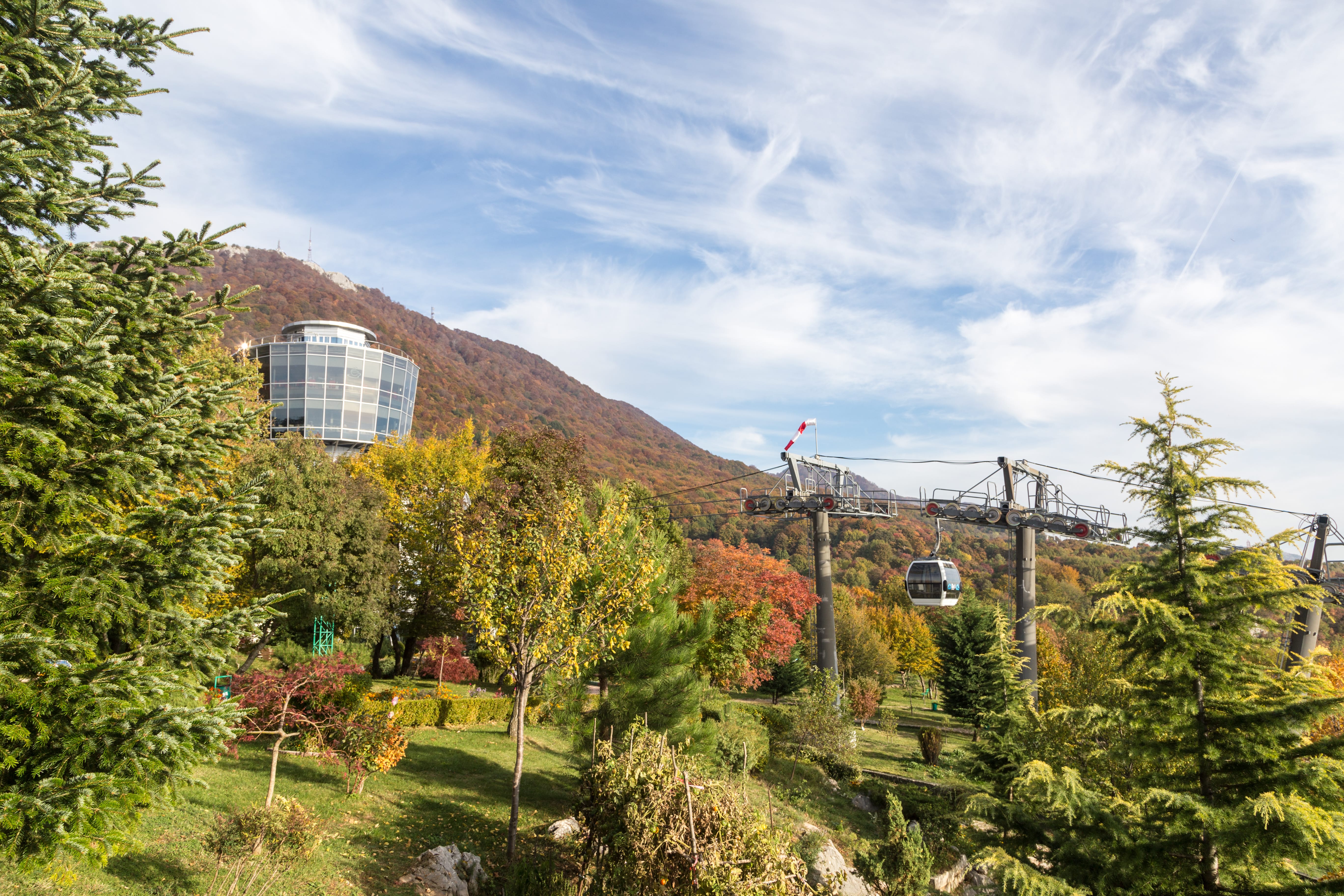
Already covered in our Things to Do in Tirana guide (cable car, Bunk’Art 1, hiking trails), but worth mentioning as overnight option. There are small hotels and guesthouses at the cable car top station and along the mountain roads, making Dajti a mini mountain retreat 30 minutes from Tirana.
The overnight angle gives you time for longer hikes, sunrise/sunset from the peaks, cooler mountain air, and escape from city noise. It’s the trip for when you want nature but have limited time to reach actual wilderness.
Where to stay: Hotel Panorama (at cable car top station, €60-80/night, restaurant, views), various smaller guesthouses along mountain roads (€30-50/night, more basic).
Pro tip: Combine with Bunk’Art 1 visit and hiking—take cable car up in afternoon, hike to the bunker, overnight on mountain, more hiking the next morning, descend by cable car or road.
8. Blue Eye Spring (Syri i Kaltër)
This famous karst spring near Saranda in southern Albania is 3.5 hours from Tirana—too far for a sensible day trip on your own, but organized tours do it as a long day (leave 6am, return 9-10pm). You’ll spend 7+ hours driving for 2-3 hours at the Blue Eye, which is absurd unless you have zero other chance to see it.
The spring itself is stunning—deep blue water bubbling up from unmapped depths, surrounded by forest, popular swimming spot (water is 10-13°C year-round, bracing but refreshing). But it’s 15-20 minutes from parking to the spring, then you swim/photograph/hang out for 1-2 hours, and you’re done. The time-to-destination ratio makes this better as part of a southern Albania trip, not a Tirana day trip.
Transport: Organized tour only (€50-70 from Tirana), often combined with Gjirokastër or other southern stops. Or skip as day trip and visit when you’re actually in the south.
Pro tip: If you do this tour, make sure it includes Gjirokastër or other stops—Blue Eye alone doesn’t justify 7 hours driving. Better yet, save it for when you visit the Albanian Riviera and do it as a proper day trip from Saranda (45 minutes).
9. Elbasan
This central Albanian city 1 hour southeast of Tirana has a Roman/Ottoman fortress (one of the largest in the Balkans), thermal baths just outside town, and an old bazaar that’s less touristy than Krujë’s. It’s not a highlight destination, but if you want to see a functioning Albanian city without tourist infrastructure, Elbasan delivers.
The fortress walls (built by Romans in the 3rd century, rebuilt by Ottomans) still enclose the old town center. You can walk sections of the walls, visit the King’s Mosque (1492), Orthodox cathedral (1830s), and wander streets that see almost zero foreign tourists. The vibe is “normal Albania” rather than “Albania performing for visitors.”
What to see: Fortress walls (free to walk), King’s Mosque (usually open, free), Orthodox Cathedral, old bazaar (functional market, not tourist crafts), Ethnographic Museum (€100 LEK, optional). Outside town: Llixha e Elbasanit thermal baths (€3-5 entry, basic facilities, local scene).
Transport: Bus from South Bus Station every 30-60 minutes, €200 LEK, 1 hour. Or shared furgon. Last return bus around 6pm. Or combine with Berat trip (Elbasan is 1 hour from Berat).
Time needed: Half-day (4-5 hours including travel). Or full day if including thermal baths.
Pro tip: This is off-the-beaten-path Albania. Almost no English, limited tourist facilities, real working city. Bring patience and Google Translate. The reward is seeing Albania functioning without a tourism performance layer.
10. Shkodër
Northern Albania’s cultural capital, with a massive hilltop fortress (Rozafa Castle), large lake (Shkodër/Skadar Lake, shared with Montenegro), historic old town, and jumping-off point for the Accursed Mountains. Shkodër deserves 2 days minimum, but it’s technically doable as a long day trip from Tirana (2 hours each way).
As a day trip, you have time for Rozafa Castle (essential—views over city, lake, and mountains), quick walk through the old town, lunch, maybe the Marubi Photography Museum (excellent 19th-20th century Albanian photography). You won’t have time for lake activities, deeper exploration, or the relaxed cafe culture that makes Shkodër special.
What to see: Rozafa Castle (€400 LEK, allow 2 hours), Marubi Photo Museum (€200 LEK, 1 hour), old town pedestrian street (Rruga Kol Idromeno), Lead Mosque (1773), Ebu Beker Mosque (largest in the Balkans), Shkodër Historical Museum (optional).
Transport: Bus from North Bus Station every 30-60 minutes, €300 LEK, 2 hours. Last return bus around 6pm. Or rent car for flexibility. Or organized tour.
Time needed: Full long day (10-12 hours including travel). Take early morning bus, return evening bus. You’ll have 6-7 hours in Shkodër.
Pro tip: Honestly, Shkodër is better as an overnight trip—it’s worth more time than a rushed day allows. But if you only have one day and want northern Albania exposure, it’s doable. Have lunch at Tradita G&T (traditional northern Albanian food, €10-15/person, excellent).
See our Shkodër destination guide.
11. Llogara Pass & Albanian Riviera Preview
The Llogara Pass (1,027 meters) crosses the Ceraunian Mountains between central Albania and the Riviera coast. The drive from Tirana is 3 hours, but the pass itself—with dramatic switchbacks, forest, and viewpoints overlooking the Ionian Sea far below—is spectacular. You descend to Palase Beach on the Riviera, giving you a few hours of beach time before the return drive.
This is borderline absurd as a day trip (6 hours driving for 3-4 hours at the beach), but organized tours do it, and if you have zero other chance to see the Riviera, it’s technically possible. The pass views are genuinely stunning—some of the best coastal mountain scenery in the Balkans.
What you see: Llogara Pass (viewpoints, short trails, mountain lodge), Palase Beach or Drymades Beach (swimming, lunch at beach taverna), maybe quick stop in Himara if time allows. That’s it—you don’t have time to explore the Riviera properly.
Transport: Organized tour only (€60-80 from Tirana), or rent car if you’re comfortable with mountain driving (the pass has dramatic hairpin turns, steep grades, limited guardrails).
Time needed: Full long day (12 hours). Leave Tirana 6-7am, return 7-8pm.
Pro tip: This trip is better saved for when you actually visit the Albanian Riviera for 2-3 days. As a day trip it’s rushed and exhausting. But if you’re in Tirana for a week, have already done other day trips, and desperately want to see the Riviera, it’s an option.
See our Albanian Riviera guide and Llogara Pass for details.
12. Lake Ohrid (North Macedonia)
Lake Ohrid, one of Europe’s oldest and deepest lakes (UNESCO World Heritage), sits on the Albania-North Macedonia border. The North Macedonia side (town of Ohrid) is more developed and accessible, about 3 hours from Tirana via Elbasan and the border crossing at Qafe Thanë.
As a day trip, you cross the border (bring passport, EU/US/UK citizens get 90 days visa-free in both countries), drive to Ohrid town, see the old town (churches, fortress, lakefront), eat lunch, maybe swim if it’s summer, and return. It’s a long day (7-8 hours driving total), but it’s doable and gives you a different country + lake scenery.
What to see: Ohrid old town (Church of St. John at Kaneo, Samuel’s Fortress, ancient theater, old bazaar), lake swimming (crystal clear, 20-23°C in summer), lakefront cafes and restaurants. North Macedonia uses Macedonian denar (MKD); euros accepted but poor exchange rate.
Transport: Organized tour (€70-90 from Tirana, handles border crossing), or rent car (requires cross-border insurance, arrange with rental company). Public transport exists (Tirana to Ohrid bus) but is complicated for day trip.
Time needed: Full long day (12 hours including border crossing time). Leave early morning, return evening.
Pro tip: Border crossing can be quick (15 minutes) or slow (1+ hour) depending on traffic and random factors. Budget extra time. Also, North Macedonia is 1 hour ahead of Albania in summer (both countries use daylight saving, but North Macedonia is UTC+2 vs Albania’s UTC+1)—set your watch forward when you cross.
Planning Your Day Trips
Priority ranking (if you do only 2-3):
- Krujë—easiest, most essential for Albanian history
- Berat—most beautiful, worth the longer drive
- Durrës—if you want Roman history + beach combo
Transportation decision tree:
Public transport works for: Krujë, Durrës, Elbasan, maybe Berat and Shkodër (but less convenient)
Need car/taxi for: Bovilla, Petrela, Apollonia (unless organized tour), Dajti mountain roads
Organized tour necessary for: Blue Eye (from Tirana), Llogara/Riviera, Lake Ohrid (or comfortable with cross-border driving)
Car rental: €25-40/day from Tirana agencies (Hertz, Europcar, local companies). Roads are good on main routes, challenging on mountain/rural roads. Parking is easy outside Tirana.
Organized tours: Available from Tirana tour operators (check TripAdvisor, GetYourGuide, or ask hotel concierge). Prices €25-90 depending on destination. Convenient but less flexible.
Multi-day options:
- Krujë + Durrës + beach = 1 day
- Berat + Apollonia = 2 days (overnight in Berat recommended)
- Shkodër + Theth/Valbona = 3-4 days (proper north Albania trip)
- Llogara + Riviera beaches = 3-5 days (don’t rush the coast)
For comprehensive Tirana information and where to base yourself for day trips, see our Tirana destination guide.