By 9:30 AM, every cafe in Tirana is full. This isn’t breakfast rush—it’s the first of three mandatory daily coffee sessions that structure Albanian life with more regularity than work schedules. The capital feels less like a curated tourist destination and more like a city that invited you to its ongoing experiment: what happens when a country isolated for 40+ years suddenly opens up and tries everything at once?
The result is fascinating and occasionally absurd. Nuclear bunkers are now museums. The dictator’s forbidden neighborhood is now rooftop bars. MVRDV built an 85-meter apartment tower wrapped in trees. Yugoslav brutalism gets covered in street art. It’s messy, contradictory, very much alive, and nothing like the rest of the Balkans.
Here’s what’s worth your time.
Quick List
- Bunk’Art 2 - Communist surveillance bunker museum (city center)
- Skanderbeg Square - Heart of the city, architectural chaos
- Blloku District - Former elite zone, now bars and restaurants
- Dajti Ekspres Cable Car - Mountain views over the city
- National History Museum - Albania in chronological order
- Bunk’Art 1 - Massive Cold War bunker on Dajti Mountain
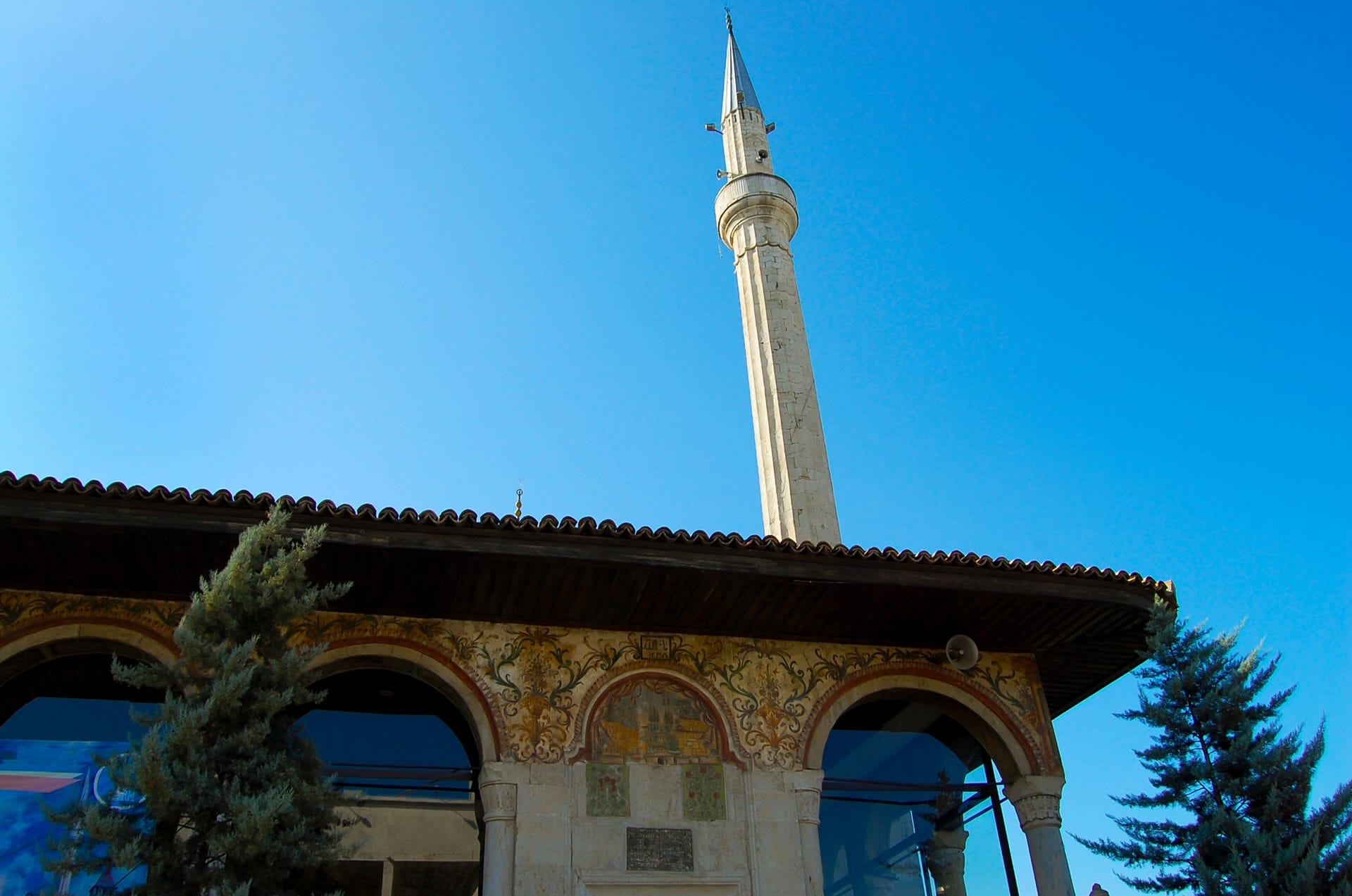
- Et’hem Bey Mosque - 18th-century survivor
- New Bazaar (Pazari i Ri) - Renovated market hall
- Pyramid of Tirana - Hoxha’s mausoleum, now skate park
- Grand Park & Artificial Lake - Where locals exercise
- House of Leaves - Secret police surveillance museum
- National Art Gallery - Communist-era and contemporary art
- Street Art Tour - Murals on communist buildings
- Mount Dajti National Park - Hiking above the city
- Day Trips - Kruja, Durres, Berat all within 2 hours
1. Bunk’Art 2
This is the Tirana experience that stays with you. Bunk’Art 2 is a massive nuclear bunker built in the 1980s beneath what’s now the Ministry of Internal Affairs, converted into a museum about Albania’s communist-era surveillance state and security apparatus. You descend underground into this Cold War relic and spend 60-90 minutes walking through exhibits about political persecution, secret police operations, and the paranoia that defined Hoxha’s Albania.
What makes it powerful is the setting—you’re literally inside the infrastructure of repression. The bunker rooms, designed to shelter the Ministry of Interior leadership during nuclear war, now contain photo exhibits of political prisoners, recreated interrogation rooms, and documentation of the Sigurimi (secret police) surveillance network. It’s disturbing and essential history, presented without sensationalism.
The contrast with the world outside is stark. You emerge blinking into Tirana’s chaotic present—cafes, traffic, normal life—after 90 minutes immersed in Albania’s locked-down past. That whiplash is the point.
Practical details: Located near Skanderbeg Square, entrance €500 LEK (~€5). Open daily 9am-7pm (summer), 9am-4pm (winter). English signage throughout. Takes 60-90 minutes. Can get crowded midday in summer; go early or late afternoon.
Pro tip: Bunk’Art 2 focuses on political repression and surveillance. Bunk’Art 1 (on Dajti Mountain, entry #6 below) covers military history and Hoxha’s bunker. Do Bunk’Art 2 first—it’s more accessible and more emotionally impactful.
For more on Tirana’s history, see our Tirana destination guide.
2. Skanderbeg Square
Skanderbeg Square is Tirana’s physical and symbolic center—10 hectares of mostly empty concrete plaza surrounded by architectural chaos from six different eras. You’ve got the National History Museum (1981, socialist-realist mosaic facade), Et’hem Bey Mosque (1793, Ottoman survivor), Italian fascist-era buildings (1930s), and new construction that ranges from “competent” to “what were they thinking.”
The square was redesigned in 2017 by Belgian firm 51N4E, removing cars and opening up sightlines. Whether this was a good idea depends on who you ask—locals either love the pedestrian space or miss the old chaotic traffic circle. Either way, it’s where the city gathers for protests, celebrations, and the New Year’s concert that shuts down downtown.
What’s interesting is watching how people use the space. By day, it’s tourists photographing the mosque and museum. By evening, it’s teenagers on rented e-scooters, families walking laps, and old men debating politics on the benches. The square works as a social hub even if aesthetically it’s… a lot.
What to see: National History Museum (entry #5), Et’hem Bey Mosque (entry #7), the Skanderbeg equestrian statue (1968, pure socialist-realist heroism), Clock Tower (climb for views, €200 LEK).
Pro tip: The square is OPEN with zero shade. In summer, time your visit for early morning or evening unless you enjoy standing on hot concrete in 35°C heat. The cafes ringing the square charge tourist prices (€3-4 for espresso vs €1-1.50 elsewhere).
3. Blloku District
Until 1991, this neighborhood was literally forbidden—reserved for Communist Party elite and their families, blocked by checkpoints, off-limits to regular Albanians. Enver Hoxha lived here. So did every Politburo member. It was privilege concentrated into a few tree-lined blocks while the rest of the country waited in line for bread.
Today? It’s Tirana’s nightlife and dining center. The villas are now restaurants, cafes, bars, and boutiques. The streets that were empty are now packed Thursday-Saturday nights with Tirana’s 20-somethings drinking cocktails at €8 each (expensive for Albania, cheap for anywhere else). The contrast between past exclusivity and current accessibility is so on-the-nose it feels scripted.
By day, Blloku is worth a walk—see Hoxha’s former villa (now closed to public), check out the architecture, grab lunch. By night, it’s where you go for dinner and drinks. The bar/restaurant quality ranges from excellent to tourist-trap; do minimal research and you’ll be fine.
Where to go: Komiteti Kafe Muzeum (traditional Albanian food in communist-nostalgia decor), Mullixhiu (farm-to-table, €25-35/person), Radio (rooftop bar), Era (cocktails), Tartuf (pizza). These are starting points; walk around and see what appeals.
Pro tip: The former checkpoint site at the entrance to Blloku is marked with “Postbllok” monument—a piece of the Berlin Wall and a section of the former barrier. It’s easy to miss but worth seeing for context.
For nightlife recommendations, check our Tirana guide.
4. Dajti Ekspres Cable Car
The 15-minute cable car ride from Tirana’s eastern edge up to Mount Dajti (1,050 meters) gives you the view that makes Tirana make sense. From ground level, the city is chaotic and borderline ugly. From above, you see the scale of what’s happening—the construction boom, the sprawl, the ring of mountains, the distance to the coast, why this valley became a capital.
The cable car itself is Austrian-built (2005), modern and comfortable, rising 900 vertical meters over forest and ravines. At the top station, you’ve got restaurants, hiking trails, horse rentals, and a rotating observation tower (€2 extra, worth it for 360° views). The air is 10°C cooler than in the city. On clear days, you can see the Adriatic.
Most people ride up, have lunch at one of the mountaintop restaurants (€12-18 for mains), take photos, and ride back down. If you’re into hiking, there are trails ranging from easy forest walks to longer ridge routes (ask at the top station for maps).
Practical details: Cable car runs daily 9am-8pm (summer), 9am-5pm (winter). Round-trip ticket €1,000 LEK (~€10). Departure point is 5km east of city center (taxi €500-700 LEK / €5-7, or city bus #1). Can get crowded on weekends; weekdays are better.
Pro tip: The restaurant at the top (Ballkoni i Dajtit) is overpriced and underwhelming. Better to ride up for views, walk the short trail to the observation point, then descend and eat in Tirana. Or pack a picnic and eat at the picnic areas near the top station.
If you’re hiking-inclined, continue to entry #14 for Mount Dajti trails.
5. National History Museum
This massive socialist-era museum (1981) covering 18,000 square meters takes you through Albanian history from Illyrians to postcommunism. The facade alone is worth seeing—an enormous mosaic titled “The Albanians” showing heroic workers, partisans, and revolutionaries in full socialist-realist glory. Inside, it’s chronological galleries covering prehistory, antiquity, medieval period, Ottoman era, independence, WWII, communism, and the 1990s transition.
The quality is uneven. Ancient artifacts (Illyrian helmets, Greek ceramics, Roman mosaics) are genuinely impressive. The medieval section is adequate. The WWII partisan section is heavy on Albanian Communist Party heroism and light on nuance. The communist-era section (added after 1991) tries to document repression but still feels incomplete. The 1990s section barely exists.
What makes it valuable is context. If you’re visiting Albania with minimal background, this museum fills in the historical gaps. You’ll understand references you encounter elsewhere. The iconography pavilion (orthodox and catholic religious art confiscated during the atheism campaign) is particularly good.
Practical details: Located on Skanderbeg Square. Entrance €1,000 LEK (~€10), €500 for students. Open 10am-6pm Tuesday-Saturday, 10am-2pm Sunday, closed Monday. English labels throughout. Takes 2-3 hours to see properly; 90 minutes if you’re selective.
Pro tip: Start on the top floor and work down—the flow makes more sense that way. The museum cafe has excellent views over Skanderbeg Square and decent coffee (€1.50).
6. Bunk’Art 1
While Bunk’Art 2 (entry #1) is a bunker beneath the city, Bunk’Art 1 is a bunker inside a mountain. This five-story underground complex on the slopes of Mount Dajti was built in the 1970s as a nuclear shelter for Albania’s political and military leadership. It could house 300+ people for months, with sleeping quarters, assembly halls, decontamination rooms, and Hoxha’s personal office/bunker.
Now it’s a museum covering Albania’s history from 1912-1991, with focus on WWII and the communist period. The exhibits include military equipment, photographs, propaganda materials, and recreated rooms showing how the bunker functioned. But honestly, the space itself is the attraction—walking through these endless concrete corridors, seeing the scale of Cold War paranoia made physical, understanding the resources poured into preparing for nuclear war while the population lacked basic goods.
The bunker also hosts contemporary art installations, which creates this surreal effect—modern art displayed in rooms designed for the apocalypse. Whether this works aesthetically is debatable, but it’s certainly memorable.
Practical details: Located on Mount Dajti’s slopes, 5km from city center. Taxi €1,000 LEK (~€10) from Skanderbeg Square. Entrance €500 LEK. Open daily 9am-7pm (summer), 9am-4pm (winter). Takes 90-120 minutes. Bring a light jacket—it’s cold underground even in summer.
Pro tip: Combine with the Dajti cable car (entry #4)—they’re on the same side of the city. Take cable car up, hike down to Bunk’Art 1 (30-minute trail), visit bunker, taxi back to city. Or reverse the order.
7. Et’hem Bey Mosque
Built between 1789-1823, this small mosque is one of the few religious structures in Tirana that survived communist-era demolitions. It was closed in 1967 when Albania declared itself the world’s first atheist state, reopened in January 1991 (before official permission was granted—the reopening was a political statement as much as a religious one).
What makes it worth visiting is the interior decoration—floral and nature-themed frescoes and paintings that are unusual for mosque architecture (Islamic tradition typically avoids figurative art, but Albanian practice was more flexible). The craftsmanship is Ottoman-era Albanian, distinct from mosque decoration elsewhere in the Muslim world.
The mosque is small, holds maybe 100 people, and sits right on Skanderbeg Square surrounded by socialist-era and contemporary buildings. That juxtaposition—18th-century mosque, fascist-era buildings, communist museum, modern plaza—is pure Tirana.
Practical details: Located on Skanderbeg Square. Free entry (donations encouraged). Open daily outside of prayer times. Dress modestly (covered shoulders/knees). Remove shoes before entering. Takes 15-20 minutes to visit.
Pro tip: The attached clock tower (1822) is climbable for panoramic views over the square and city (€200 LEK, 90 steps, narrow spiral staircase). Worth it if you’re comfortable with tight spaces.
8. New Bazaar (Pazari i Ri)
The New Bazaar has existed since the 1930s but was renovated in 2016-2017 into this covered market hall surrounded by cafes and restaurants. It’s where Tirana residents buy fresh produce, meat, fish, cheese, and household goods at prices lower than supermarkets. For tourists, it’s worth visiting for the atmosphere and the attached restaurants serving traditional Albanian food.
The market itself is a grid of stalls selling everything from seasonal vegetables to whole hanging sheep carcasses (welcome to the Balkans). The quality is excellent—this is where chefs shop. The vendors are used to tourists photographing everything; be polite and ask before taking close-up shots of people or products.
The real draw is the perimeter restaurants and cafes. Multiple places serve traditional Albanian dishes at local prices (€5-8 for mains) in both indoor and outdoor seating. It’s the best budget food in central Tirana, and it’s good—not just cheap, actually delicious.
Where to eat: Zgara Korçare (grilled meats), Oda (traditional Albanian, try the tavë kosi), Gurra e Vogël (seafood), Mulliri Vjeter (breakfast/brunch). Expect to wait for tables during lunch rush (12:30-2pm).
Pro tip: The market is best in the morning (8-10am) when it’s busiest and you see the full range of produce. By late afternoon, many stalls are closing. For restaurant meals, lunch (12-2pm) is peak quality since everything’s freshly cooked; dinner service exists but is less energetic.
9. Pyramid of Tirana
Enver Hoxha’s mausoleum, designed by his daughter and son-in-law (both architects), opened in 1988—three years after his death. It was supposed to be an eternal monument to the dictator. Instead, it became a symbol of everything that followed: the 1990s chaos (it was a NATO base during Kosovo War), the cultural confusion (it was a nightclub, then a trade fair venue, then abandoned), and now, Tirana’s experimental present.
After years of decay, the Pyramid reopened in 2023 as a youth education and tech center designed by MVRDV. They kept the brutal concrete structure but added colored volumes, stairs you can climb up the exterior (yes, you can walk up the pyramid), and programming focused on free coding classes for teenagers. Whether this is brilliant adaptive reuse or just weird is a matter of opinion—but it’s definitely interesting.
From the outside, you can walk around, climb the exterior stairs for views over the city, and appreciate the absurdity. The interior houses education programs but also has cafe space and areas open to public.
Practical details: Located south of city center, 15-minute walk from Skanderbeg Square. Exterior is free and open 24/7 (the climbing stairs are accessible). Interior education center open weekdays 9am-6pm. Climbing to the top of the pyramid takes 10 minutes and gives views—do it.
Pro tip: The pyramid is most photogenic at sunset when the colored volumes catch golden light. It’s also less crowded then—midday gets swarms of teenagers using it as a skate park and hangout (which is charming, but loud).
10. Grand Park & Artificial Lake
This 289-hectare park on Tirana’s southern edge is where the city goes to exercise, walk, and escape urban density. The centerpiece is an artificial lake created in 1956 with a walking path around the perimeter (4.6km loop). By Albanian standards, it’s beautifully maintained. By Western European park standards, it’s… functional.
What makes it worth visiting isn’t aesthetics but use—you see Tirana at leisure. Morning (6-9am) is joggers and speed-walkers doing laps. Afternoon is families with kids feeding aggressive ducks. Evening (6-9pm) is couples walking, teenagers on rented bikes, old men fishing. The lake path is the city’s social hub in a way that Skanderbeg Square tries but doesn’t quite achieve.
There are cafes and restaurants around the lake (quality varies, stick to places that are busy). The park also contains the botanical garden (underwhelming), Presidential Palace (not open to public), and various communist-era monuments in varying states of repair.
Practical details: Free access. Southern end is 2km from city center (30-minute walk, or taxi for €300-500 LEK). Lake loop is 4.6km, flat, mostly paved. Cafes around the lake charge local prices (€1-2 for coffee). Safe to walk day or night.
Pro tip: Rent a bike (€3-5/hour from stands near the southern entrance) if you want to cover the full loop quickly. Walking the perimeter takes 60-90 minutes at a relaxed pace.
11. House of Leaves
This museum documenting the surveillance methods and victims of Albania’s communist-era secret police (Sigurimi) opened in 2017 in the actual building used by surveillance operatives. It’s smaller and more focused than Bunk’Art 2 (entry #1)—where Bunk’Art covers the broader system of repression, House of Leaves is specifically about surveillance: phone tapping, informant networks, hidden cameras, interrogation techniques.
The exhibits include listening devices, hidden cameras disguised as everyday objects, actual surveillance equipment used by the Sigurimi, and personal stories of people who were monitored. There’s a recreation of a listening post showing how phone tapping worked. It’s technically interesting and deeply disturbing in equal measure.
What hits hard is the scale—at peak, the Sigurimi employed one agent for every 150 citizens, plus a vast informant network. The paranoia this created (who’s reporting on you? your neighbor? your coworker? your family member?) shaped an entire society.
Practical details: Located in Blloku district (Rruga Dëshmorët e 4 Shkurtit). Entrance €700 LEK (~€7). Open Tuesday-Sunday 9am-4pm, closed Monday. English signage throughout. Takes 60-90 minutes. Photography not allowed in all sections.
Pro tip: Visit this after Bunk’Art 2 and/or National History Museum—it builds on context those places provide. Without background, the surveillance equipment is interesting but lacks emotional impact.
12. National Art Gallery
Albania’s main art museum covers Albanian art from the 15th century to present, with heavy focus on the socialist-realist period (1945-1991) when art was state-controlled and had to serve “the people and the party.” The collection includes iconography (medieval religious art), some Ottoman-era works, Italian occupation-era pieces, and extensive socialist-realist paintings and sculptures.
The socialist-realist collection is what’s genuinely interesting—heroic workers, idealized peasants, partisan battle scenes, Hoxha portraits (now displayed as historical artifacts rather than propaganda). It’s aesthetically… a lot. But as documentation of how art served ideology, it’s fascinating. The gallery doesn’t shy from the propaganda aspect—labels discuss how artists who deviated from approved styles faced persecution.
The contemporary section (post-1991) shows Albanian artists working through the transition period and current issues. Quality is uneven but earnest. There are often temporary exhibitions featuring current Albanian and Balkan artists.
Practical details: Located just off Skanderbeg Square (Bulevardi Dëshmorët e Kombit). Entrance €300 LEK (~€3). Open Tuesday-Saturday 10am-5pm, Sunday 10am-2pm, closed Monday. English labels throughout. Takes 60-90 minutes.
Pro tip: The socialist-realist gallery is the essential section. If you’re short on time, focus there and skip the contemporary rooms (unless temporary exhibitions interest you).
13. Street Art Tour
Tirana’s street art scene exploded in the 2010s when the city started commissioning murals on communist-era apartment blocks. The project aimed to inject color and culture into grey concrete neighborhoods, and while results are mixed, some pieces are genuinely impressive. You’ll see everything from geometric abstracts to political commentary to pure decorative work.
The best way to see this is walking. No formal “street art tour” exists, but the concentration is highest in these areas: around the Pyramid, Kombinat neighborhood (southeast of center), former Student City area, and along Rruga Kavajës. Just wander with eyes up—murals appear on building facades, electrical boxes, underpasses.
Some notable pieces: the colorful geometric facades in Kombinat, the partisan-themed murals in student district (ironic heroism commentary), German artist’s work near the Pyramid. Also watch for political graffiti—it’s less curated than commissioned murals but often more pointed.
Practical details: Free, obviously. Self-guided. Best in morning or late afternoon light. Kombinat neighborhood is 20 minutes southeast of center (taxi €500 LEK or walk). Allow 2-3 hours if you’re thorough; 60-90 minutes for highlights.
Pro tip: Pair this with coffee stops in local cafes (€1-1.50 vs €3-4 in tourist areas). The street art neighborhoods are working-class residential areas where you’ll see normal Tirana life without tourist polish.
14. Mount Dajti National Park
Beyond the cable car (entry #4) and Bunk’Art 1 (entry #6), Mount Dajti has hiking trails ranging from easy forest walks to challenging ridge routes. The mountain (1,613m peak, though cable car only goes to 1,050m) is Tirana’s escape valve—cooler air, forested trails, views over the capital and toward the coast.
From the cable car top station, the marked trails include: short loop to observation tower (30 minutes, easy), trail to Maja e Tujanit viewpoint (90 minutes, moderate), longer route to Shëlgu peak (3+ hours, more challenging). All trails are well-marked; get maps at the cable car station.
The hiking isn’t dramatic by Balkan standards—you’re in oak and beech forest most of the time, not alpine terrain. But the accessibility (cable car up, walk down) makes it doable even if you’re not a serious hiker. And after days in Tirana’s heat and chaos, the cool quiet forest has appeal beyond the views.
Practical details: Cable car covered in entry #4. Trail maps available at top station (free). Trails open year-round but best May-October. Bring water (small bar at top station but limited). Mobile signal is weak on trails.
Pro tip: The descent trail from cable car top station to Bunk’Art 1 (entry #6) takes about 45 minutes, mostly downhill through forest. You can combine cable car + hike + Bunk’Art + taxi back to city as a half-day trip.
15. Day Trips from Tirana
Tirana’s central location makes multiple day trips feasible. Here are the top options:
Krujë (45 minutes north): Medieval castle town where Albania’s national hero Skanderbeg fought the Ottomans. Fortress, museum, old bazaar selling traditional crafts. Essential Albanian history, tourist-friendly, doable in a half-day. See our Krujë guide.
Durrës (40 minutes west): Albania’s main port city with Roman amphitheater (2nd-largest in Balkans), beachfront, seafood restaurants. Good for ancient history + beach combination. Half-day or full day.
Berat (2 hours south): UNESCO World Heritage old town built into hillside, Ottoman architecture, castle, museums. Albania’s most beautiful town; worth overnight stay but doable as long day trip. See our Berat guide.
Apollonia (2 hours southwest): Ancient Greek/Roman city ruins in pastoral setting. Less crowded than Butrint, more accessible than Butrint from Tirana. Combine with Berat for long day or overnight trip.
Bovilla Lake (30 minutes northeast): Reservoir in mountain valley, popular for hiking and kayaking. Less touristy, more local weekend destination. Good if you want nature without going far.
Longer options: Shkodër is doable (2 hours north) but rushed as day trip—better as overnight. Gjirokastra (4 hours south) is too far. Albanian Riviera beaches require overnight stays.
Pro tip: For Krujë and Durrës, you can do public transport (furgons from North Bus Station). For Berat and Apollonia, rent a car or book organized tour—public transport exists but is complicated and time-consuming.
See our detailed Day Trips from Tirana guide for full information.
Planning Your Visit
How long: 2-3 days covers entries 1-13 comfortably with time for meals, coffee breaks, and wandering. Add day 4 if including day trips.
Best time: Spring (April-May) and fall (September-October) have pleasant weather (15-25°C), fewer tourists than summer. Summer (June-August) is hot (30-35°C) and crowded but energetic. Winter (December-February) is cold and grey but functional—everything’s open.
Getting around: Central Tirana is walkable (entries 1-3, 5, 7-9, 11-12 are within 2km of Skanderbeg Square). For Dajti cable car, Bunk’Art 1, Grand Park, and Pyramid, take taxis (cheap, €3-7 per ride) or use city buses (€40 LEK = €0.40 per ride).
Where to stay: Blloku district (entry #3) for nightlife access, near Skanderbeg Square (entry #2) for sightseeing convenience. Budget: €20-40/night hostel or guesthouse. Mid-range: €50-80/night hotel. See our Tirana accommodation guide.
Budget: Tirana is cheap by European standards. Daily budget: €25-40 (hostel, street food, public transport), €50-80 (hotel, restaurant meals, taxis), €100+ (boutique hotel, fine dining). Museum entries are €3-10 each.
For comprehensive Tirana information, see our full Tirana destination guide.