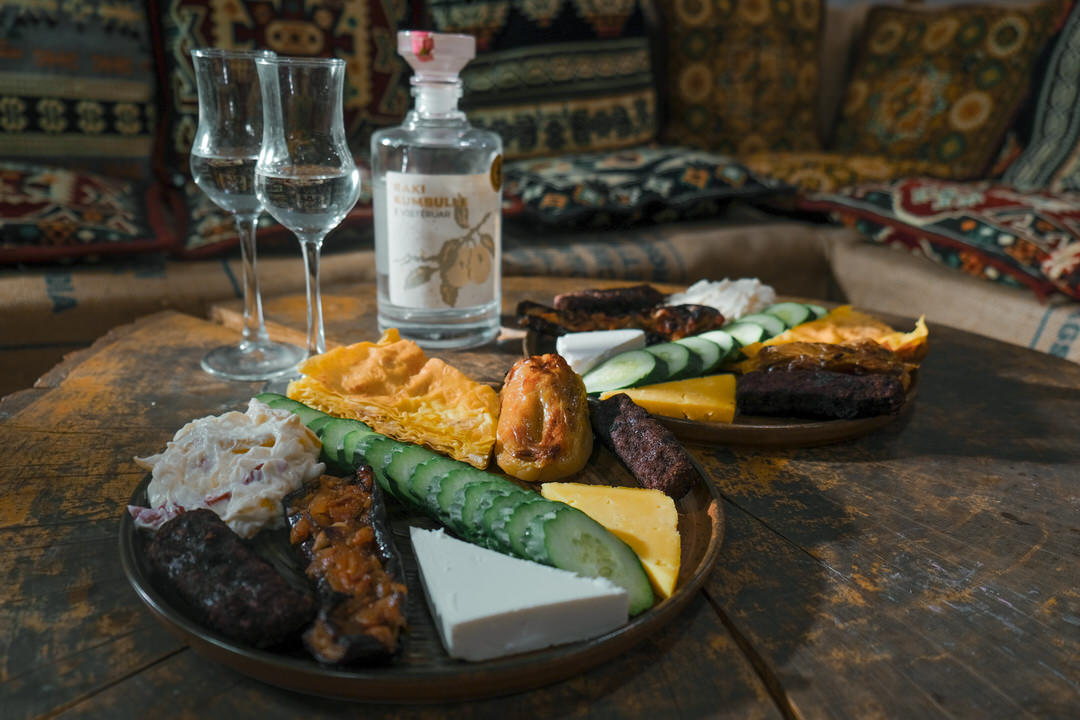
Albanian cuisine doesn’t show up on “best food destinations” lists, which is partially fair (it’s not Italy) and partially absurd (it’s delicious, affordable, and largely unknown outside the Balkans). The food is Mediterranean at its core—olive oil, fresh vegetables, grilled meats, yogurt, cheese—with Ottoman influences (byrek, baklava), Italian touches (pasta shows up everywhere), and regional variations between coast, mountains, and central plains.
What makes Albanian food worth your attention is authenticity. This isn’t cuisine that’s been sanitized for tourists or exported and adapted. When you eat byrek at 7am from a neighborhood bakery, you’re eating what Albanians have eaten for generations, at local prices (€1.50), surrounded by locals doing the same thing. The food culture hasn’t been performed yet—it’s just daily life.
Here are 20 dishes that define Albanian cuisine, from breakfast pastries to mountain specialties to desserts to the firewater that closes every meal.
1. Byrek
Savory phyllo pastry filled with cheese, spinach, meat, or pumpkin, baked until golden and flaky. This is Albania’s breakfast staple, sold at bakeries (furra) starting at 6am, eaten standing at counters with coffee or taken away wrapped in paper. A slice costs €1-1.50, comes fresh from the oven every 20-30 minutes, and is consumed by everyone from construction workers to office employees to students.
The classic filling is byrek me djathë (cheese—usually white feta-like cheese), but spinach (me spinaq) and meat (me mish, ground beef or lamb) are equally common. Some bakeries make pumpkin byrek in fall, or leek and onion versions. The phyllo should be crispy outside, soft and layered inside, with enough filling that it’s substantial but not so much it falls apart.
You’ll see byrek everywhere—every neighborhood has 2-3 bakeries making it fresh all morning. The quality varies (flaky and fresh vs soggy and reheated), so watch for crowds—Albanians vote with their feet, and a busy bakery at 8am is making good byrek.
Where to eat it: Any neighborhood furra (bakery) in Tirana, Shkodër, Berat, anywhere. In Tirana: Byrek Pite Shtëpie (near New Bazaar), Mulliri Vjeter (New Bazaar area). Pair with kos (yogurt) and kafe turke (Turkish coffee).
Pro tip: Byrek is morning food. By afternoon, bakeries stop making fresh batches and what’s left is reheated and sad. Eat it before noon for best quality.
2. Tavë Kosi
Baked lamb (sometimes chicken) with rice in a tangy yogurt-egg sauce, considered Albania’s national dish. The lamb is cooked with rice until tender, then mixed with a sauce of yogurt, eggs, and flour, and baked until the top forms a golden crust. The result is creamy, tangy, rich, and unlike anything else in Balkan cuisine.
The yogurt sauce is the defining element—it’s thickened with flour so it doesn’t separate during baking, and the eggs give it structure. The tanginess from the yogurt cuts the richness of the lamb. It’s comfort food, special-occasion food, and the dish Albanian grandmothers are judged on.
Quality varies wildly depending on the yogurt (thick homemade vs watery store-bought), lamb-to-rice ratio, and whether it’s cooked fresh or reheated. When it’s good—made with quality ingredients, baked properly—it’s exceptional. When it’s mediocre, it’s just okay.
Where to eat it: Traditional Albanian restaurants (Oda in Tirana New Bazaar, Era in Blloku, Mullixhiu for upscale version). In Berat: Antigoni or Onufri. Any family-run restaurant that has it on the menu is worth trying.
Pro tip: Tavë kosi is made to order in good restaurants (takes 40+ minutes), so order it when you arrive, have appetizers, and wait. Rushed versions are reheated and inferior.
3. Fërgesë
A baked dish of peppers, tomatoes, onions, and cheese (sometimes with meat, sometimes vegetarian), somewhere between a casserole and a dip, eaten with bread. The vegetables are cooked down until jammy, mixed with cottage cheese or feta, and baked until bubbly. The result is rich, tangy, slightly sweet from the peppers, and dangerously addictive with fresh bread for scooping.
There are two main versions: fërgesë Tirane (with veal or beef liver), and fërgesë me speca (vegetarian, just peppers and cheese). The Tirana version is more traditional; the vegetarian version is more common in restaurants because it’s easier to make and appeals to more people.
This is summer food when peppers and tomatoes are in season, though restaurants serve it year-round. It’s usually served in the same clay pot it’s baked in, still bubbling, with a basket of bread on the side.
Where to eat it: Traditional restaurants across Albania. In Tirana: Oda (New Bazaar), Mullixhiu (upscale version), Era (Blloku). In Shkodër: Tradita G&T. In Berat: Antigoni.
Pro tip: Fërgesë is meant to be shared—order one for 2-3 people along with other dishes. And tear the bread into pieces for scooping rather than using utensils; this is hands-on food.
4. Qofte
Grilled meatballs or oblong patties, usually beef or lamb mixed with onions, herbs, and spices, grilled over charcoal until slightly charred outside and juicy inside. These show up at every grill restaurant (zgara), casual eateries, and street vendors. They’re cheap (€0.50-1 each), filling, and when made properly with quality meat and fresh herbs, genuinely delicious.
The seasoning is simple—salt, pepper, onions, parsley, sometimes mint or oregano—but the quality depends entirely on the meat and the grill. Charcoal-grilled qofte at a proper zgara beats gas-grilled versions every time.
Qofte are usually served with french fries, salad, and bread. In northern Albania, they’re often served with ajvar (roasted pepper spread) or spicy pepper sauce. They’re working-class food, comfort food, cheap-meal-when-you’re-hungry food.
Where to eat it: Any zgara (grill restaurant). In Tirana: Zgara Korçare (New Bazaar area), Era, street vendors in Blloku. In Shkodër: Shega e Vogël. Basically anywhere you see smoke rising from charcoal grills.
Pro tip: Fresh > reheated. Watch for restaurants grilling to order rather than keeping cooked qofte warming. And if you see qofte të fërguara (fried qofte), try them—less common but equally good.
5. Speca të Mbushura
Stuffed peppers—bell peppers filled with rice, ground meat, herbs, and spices, baked in tomato sauce. This is home cooking, grandmother food, the dish that shows up at family Sunday lunches. The peppers are usually red or green bell peppers (not spicy), hollowed out, filled with a mixture of rice and seasoned ground beef or lamb, and baked until tender in a simple tomato sauce.
The filling varies by region and family—some add pine nuts, raisins, or dill; some use only rice for vegetarian versions; some add cheese. The common thread is slow-cooked comfort and the sweetness of the peppers mixing with savory filling and tangy tomato sauce.
This is seasonal food (best when peppers are in season, summer through early fall), though restaurants serve it year-round using greenhouse peppers. Quality depends entirely on the cook’s skill and ingredient quality.
Where to eat it: Home-style restaurants, traditional Albanian eateries. In Tirana: Oda, Zgara Korçare. In Berat: restaurants in the old town (Onufri, Antigoni). In Gjirokastër: any traditional restaurant.
Pro tip: This dish is even better the next day once the flavors meld. If you’re cooking it yourself (or staying somewhere with a kitchen), make it in advance.
6. Flija
A northern Albanian specialty—thin crepe-like layers cooked one at a time under a metal lid covered with hot coals, building up a stack that’s then cut into wedges and served with sour cream. Making flija is a 2-3 hour process, and it’s traditionally served for special occasions and large gatherings in the mountain regions (especially around Gjakova and Peja across the border in Kosovo).
The layers are made from a batter of flour, water, and sometimes yogurt or milk, poured onto a large round griddle (saç) and cooked from both top and bottom (coals underneath, coals on the lid above). Each layer cooks, then another is added, building up to 20-30 layers. The result is crispy, smoky, slightly chewy, and unique.
You won’t find flija in most restaurants—it takes too long to make. But in northern Albania (Shkodër area) and especially in Kosovo, some restaurants specialize in it, and it’s worth seeking out.
Where to eat it: Northern Albania restaurants (Shkodër: Tradita G&T sometimes has it), Kosovo (easier to find in Pristina or Gjakova). Or at northern Albanian weddings and celebrations if you’re lucky enough to be invited.
Pro tip: Flija is meant to be shared—one saç serves 6-10 people. Order it as a group dish, and be prepared to wait (or call ahead to pre-order).
7. Bakllava
Yes, baklava is Turkish. Yes, it’s also Greek. Yes, it’s Albanian. This is how Ottoman cuisine works—shared dishes with regional variations. Albanian bakllava is phyllo pastry layered with walnuts (sometimes almonds), soaked in honey or sugar syrup, cut into diamonds or squares. It’s sweet, crunchy, nutty, sticky, and best with strong Turkish coffee to cut the sweetness.
Albanian versions tend to be less syrup-soaked than Turkish bakllava, and walnuts are more common than pistachios (which are expensive in Albania). The best versions use homemade phyllo and local honey, but most bakeries and sweet shops use commercial phyllo.
You’ll find bakllava at pastiçeri (pastry shops), bakeries, and restaurants. Quality ranges from excellent (flaky, not too sweet, fresh nuts) to mediocre (soggy with syrup, old phyllo, cheap nuts).
Where to eat it: Tirana: Pastiçeri Francesa, Pastiçeri Tirona, cafes in Blloku. Berat: sweet shops in the old town. Gjirokastër: old town sweet shops. Basically any pastiçeri in any Albanian city.
Pro tip: Fresh bakllava (made that day) is flaky and light. Day-old bakllava soaks up more syrup and becomes softer and sweeter. Both have fans; try both and see your preference.
8. Trilece
Albania’s most popular dessert—a tres leches cake (three milks: evaporated milk, condensed milk, cream) that’s light, spongy, soaked with sweet milk mixture, and topped with caramel or dulce de leche. It’s a Latin American cake that somehow became Albania’s favorite dessert in the 2000s and now appears on every restaurant dessert menu and at every celebration.
The Albanian version is usually topped with caramel sauce or dulce de leche (rather than whipped cream like Latin American versions), and it’s served cold, making it a refreshing end to a heavy meal. Quality varies wildly—good trilece is light and balanced, not overly sweet, with distinct cake texture under the milk soak. Bad trilece is soggy, cloyingly sweet, and tastes like sweetened condensed milk with some bread in it.
Where to eat it: Literally everywhere. Every restaurant, every cafe, every pastiçeri. In Tirana: Mullixhiu (upscale version), Era, any cafe in Blloku. Quality is usually decent across the board.
Pro tip: Trilece is better from restaurants and pastiçeri than from cafes—places that specialize in food take more care with it. And it should be served cold; if it arrives room temperature, send it back.
9. Raki
The Albanian spirit—grape-based firewater (40-60% alcohol) served in small glasses before, during, or after meals, or just because. Every family makes their own, every region has variations, and it’s the social lubricant that appears at every gathering from casual dinners to weddings to funerals.
Traditional raki rrushi (grape raki) is clear, strong, and tastes like distilled wine. Raki mani (mulberry raki) is sweeter and smoother. Raki kumbulla (plum raki) is less common but excellent. Some families add herbs (sage, anise, walnuts) for flavor variations.
Commercial raki exists (Skënderbeu and Përmet are common brands, €8-12 per liter), but homemade is the standard. If offered homemade raki at someone’s home or a family restaurant, accepting is polite. Sipping slowly is smart—this is strong stuff.
Where to drink it: Everywhere. Restaurants serve it as digestif (after meals). Cafes sometimes offer it. Homes always have it. Traditional restaurants might offer it as raki shtëpie (house raki, usually homemade or local).
Pro tip: The toast is “Gëzuar!” (cheers). First raki is sipped, not shot. Second and subsequent rounds… depends on the company and occasion. Pace yourself, or you’ll be very drunk very quickly.
10. Boza
A fermented malt drink (technically alcoholic but barely—1% or less), thick, sweet, slightly tangy, beige-colored, and absolutely an acquired taste. Boza is Ottoman in origin, popular across the Balkans, and consumed mainly in winter as a warm beverage sold by street vendors from wheeled carts.
The taste is hard to describe—imagine slightly sour, malty, thick liquid bread with cinnamon on top. Some people love it. Some people find it disgusting. Very few are neutral. It’s traditionally drunk cold or slightly warm, sprinkled with cinnamon, accompanied by simiti (sesame bread rings).
Boza is nutritious (high in vitamins and carbohydrates), supposedly good for digestion, and deeply nostalgic for older Albanians who grew up drinking it. Younger generations are less enthusiastic.
Where to drink it: Winter street vendors in Tirana (around Skanderbeg Square), some traditional cafes and pastiçeri, bottled versions in supermarkets (Përparimi brand is common).
Pro tip: If you’re adventurous with food, try it once. If you like fermented/sour flavors (kombucha, kefir, natural wine), you might enjoy it. If you prefer things that taste conventional, skip it.
11. Kackavall
Albania’s table cheese—a semi-hard yellow cheese similar to aged provolone or caciocavallo (the name is related), served sliced as appetizer, grilled, fried, or melted. It’s made from sheep’s milk (sometimes mixed with cow or goat milk), aged 2-12 months, and has a sharp, salty, tangy flavor that intensifies with age.
You’ll encounter kackavall everywhere: sliced thin on appetizer platters, grilled in chunks (kackavall i pjekur, see #20), fried (kackavall i skuqur), shaved over salads, melted on toast. It’s Albania’s everyday cheese, the equivalent of what cheddar is to England or parmigiano to Italy.
The best kackavall comes from mountain regions (Dibër, Korça, Gjirokastër) where sheep graze on wild herbs. Supermarket kackavall is fine but industrial. Village-made kackavall is sharp, complex, and worth seeking out.
Where to eat it: Everywhere. Every restaurant serves it. Every home has it. Every market sells it. For quality: New Bazaar cheese vendors in Tirana, Gjirokastër old town market, Korça specialty shops.
Pro tip: If buying kackavall to take home, ask to taste first—sharpness and saltiness vary widely. And age matters—2-month kackavall is mild, 12-month is intense.
12. Dhallë
Albania’s traditional drink—diluted salted yogurt, served cold, similar to Turkish ayran or Indian lassi but with more salt and less sweetness. It’s refreshing, slightly tangy, thirst-quenching, and the traditional accompaniment to byrek, grilled meats, or heavy meals.
Homemade dhallë is yogurt thinned with water and salt, whisked until frothy. Commercial versions (sold in bottles at supermarkets and restaurants) vary from decent to watery and over-salted. The good stuff is thick enough to coat the glass, tangy but not sour, salty but not overwhelming.
Dhallë is particularly popular in summer—it’s hydrating and cooling. In winter, Albanians switch to boza (see #10).
Where to drink it: Restaurants (especially with byrek or grilled meats), bakeries (alongside byrek), bottled at supermarkets (€0.80-1.50 for 500ml). Homemade is better than bottled.
Pro tip: If you find dhallë too salty or tangy, you probably won’t like it more with repeated tries. If you find it refreshing, you’ve just discovered the perfect drink for Albania’s summer heat.
13. Paçe
Sheep’s head soup—a traditional breakfast dish of boiled sheep’s head (including brain, tongue, eyes) in a gelatinous broth, served with garlic, vinegar, and bread. This is traditional, not touristy. It’s working-class food, hangover food, old-school Albanian breakfast that most young Albanians don’t eat but older generations grew up with.
The soup is rich (from the collagen and fat), garlicky, tangy from vinegar, and served steaming hot in the early morning at specialist paçe restaurants. You pick through the head pieces (or order specific parts—tongue is choice, brain is soft and creamy, cheek meat is tender), dip bread in the broth, and add garlic and vinegar to taste.
This is 100% an acquired taste. If you eat offal and adventurous proteins, try it. If you don’t, skip it without guilt.
Where to eat it: Specialist paçe restaurants in Tirana (open early morning, 6-11am, mostly in residential neighborhoods). Ask locals for recommendations—these places don’t advertise to tourists.
Pro tip: Paçe is meant to be eaten early morning (traditionally after a night of drinking). The restaurants serving it are open early and close by noon. Go with an Albanian friend if possible.
14. Japrak
Stuffed grape leaves—rice and sometimes ground meat wrapped in brined grape leaves, cooked in lemon and olive oil. Similar to Greek dolmades or Turkish sarma, but Albanian versions tend to be smaller, tighter-rolled, and served at room temperature or cold as appetizers (meze).
The filling is usually rice with dill, mint, and onions; meat versions add ground beef or lamb. The grape leaves add a tangy, slightly bitter flavor that balances the rice. They’re served drizzled with lemon juice and olive oil, often alongside other appetizers.
Japrak is labor-intensive to make (rolling dozens of tiny grape leaves), so it’s special-occasion food or restaurant food rather than everyday cooking. Quality depends on the tightness of the roll, the seasoning of the filling, and the freshness of the grape leaves.
Where to eat it: Traditional restaurants, especially those serving meze (appetizer platters). In Tirana: Oda, Mullixhiu, Era. Coastal restaurants (Durrës, Vlora, Saranda) often serve japrak as part of seafood meze.
Pro tip: Japrak is best at room temperature or slightly warm—not straight from the fridge. And they’re meant as part of a larger meal, not a main course on their own.
15. Qifqi
Rice balls from Gjirokastër—sticky rice mixed with eggs and herbs (usually mint, dill, or parsley), formed into balls, and either boiled or fried. They’re served as appetizers or light snacks, warm or at room temperature, sometimes with yogurt or tomato sauce for dipping.
Qifqi are a Gjirokastër specialty—every restaurant in the old town serves them, and locals argue about whose grandmother makes them best. The texture is somewhere between risotto balls and falafel (sticky rice held together with egg), and the fresh herbs give them brightness.
Some versions are vegetarian (just rice, eggs, herbs). Some add cheese. Some add ground meat. Traditional qifqi are boiled, but fried versions are increasingly common (crispier exterior, softer interior).
Where to eat it: Gjirokastër restaurants (any place in the old town), Tirana restaurants specializing in southern Albanian food. Qifqi are rarely found outside these contexts.
Pro tip: Try both boiled and fried versions if available—they’re different textures and both have fans.
16. Ballokume
A crumbly, slightly sweet cornmeal cookie from Elbasan, traditionally made for Dita e Verës (Summer Day, March 14th) but available year-round at bakeries. Ballokume have a sandy texture (from cornmeal), subtle sweetness, and flavor from butter and sugar. They’re not fancy, but they’re addictive—one cookie turns into five.
The traditional version uses cornmeal, butter, sugar, and eggs. Some bakers add vanilla or lemon zest. They’re baked until firm but not hard, crumbly but not falling apart, and dusted with powdered sugar.
Ballokume are Elbasan’s culinary pride—every bakery in the city makes them, and Elbasan residents insist theirs are the best in Albania (Tirana bakeries make them too, but Elbasan versions have regional pride behind them).
Where to eat it: Elbasan bakeries (every furra makes them), Tirana bakeries and pastiçeri, packaged versions in supermarkets. Best fresh from a bakery rather than pre-packaged.
Pro tip: Ballokume pair excellently with Turkish coffee or espresso—the bitterness cuts the sweetness, and the cookie texture is perfect for dunking.
17. Petulla
Fried dough—Albania’s street food snack, fair food, rainy-day comfort. Petulla are small pieces of yeasted dough deep-fried until golden and puffy, served warm, sprinkled with powdered sugar or drizzled with honey, or served with cheese and jam. They’re the Albanian version of funnel cake, beignets, or zeppole.
Texture is crispy outside, soft and airy inside. They’re best fresh and hot—once they cool, they’re just okay. You’ll see petulla vendors at street markets, fairs, festivals, beach towns in summer, and occasionally at cafes and bakeries.
They’re cheap (€2-3 for a serving), filling, and pure indulgence. Not health food, not fancy cuisine, just delicious fried dough.
Where to eat it: Street vendors at markets and festivals, beach town stands (Durrës, Vlora, Saranda), some cafes in Tirana (especially in winter). Look for places frying to order rather than keeping them warm.
Pro tip: Ask for them fresh (të freskëta)—you want them straight from the oil, not sitting under a heat lamp. And the cheese + honey combination is unexpectedly good.
18. Fasule
White bean soup or stew—one of Albania’s most common home-cooked meals, cheap, filling, nutritious, and surprisingly delicious when made well. Fasule can be soupy or thick, vegetarian or with smoked pork, simple or loaded with vegetables, but the core is white beans cooked until creamy with onions, garlic, bay leaves, and paprika.
The best versions use dried white beans soaked overnight and cooked slowly until they’re soft and the liquid becomes rich and starchy. Canned bean versions exist but are inferior. Traditional fasule is served with pickled vegetables (turshi), crusty bread, and sometimes kackavall cheese.
This is working-class food, comfort food, winter warmth. It’s not pretty, it’s not exotic, but it’s the food Albanians actually eat regularly.
Where to eat it: Home-style restaurants, traditional eateries (especially in mountain regions), Oda in Tirana, any restaurant serving “traditional Albanian home cooking.” Harder to find in touristy restaurants because it’s too simple.
Pro tip: Fasule is even better the second day. If you see it on a menu, ask if it’s made fresh that day or the day before—day-old fasule has thicker, richer broth.
19. Kukurec
Grilled lamb or goat intestines wrapped around offal (liver, heart, sweetbreads), seasoned with herbs and spices, grilled over charcoal until crispy outside and tender inside. This is adventurous eating, the dish that separates offal-lovers from the squeamish.
Kukurec is common at grill restaurants (zgara), especially in southern Albania and among older generations. The intestines get crispy and charred, the offal inside stays tender and rich, and the herbs (usually oregano and garlic) add flavor. It’s served sliced into rounds, often with bread, lemon, and rakı.
If you eat liver, kidney, heart, and don’t mind intestines, try it. If offal isn’t your thing, skip it—this is not a gateway offal dish.
Where to eat it: Grill restaurants (zgara), especially in southern Albania (Gjirokastër, Korça, Permet), some Tirana grill spots (ask if it’s available—not always on menu). Most common at traditional family-run restaurants.
Pro tip: Kukurec is often sold by the piece. Order one piece to try before committing to a full portion. And it pairs excellently with raki.
20. Kackavall i Pjekur
Grilled kackavall cheese (see #11)—thick slices of semi-hard cheese grilled until the outside is golden and slightly charred, the inside melted and gooey. Served hot with bread, sometimes with a drizzle of honey or jam for sweet-salty contrast. It’s Albanian fried cheese, comfort food, the appetizer that everyone orders and then fights over the last piece.
The cheese develops a crispy crust while staying soft inside, the salt intensifies, and if you’re lucky, it arrives still bubbling. Eating it with bread is standard; drizzling honey over grilled cheese sounds weird but is traditional in some regions (the sweet-salty combo works).
This is taverna food, appetizer food, drink-accompaniment food. Simple, delicious, universally loved.
Where to eat it: Most restaurants with a grill, especially traditional tavernas. In Tirana: Oda, Zgara Korçare, Era. Coastal restaurants. Mountain region restaurants. Basically everywhere with a charcoal grill.
Pro tip: Kackavall i pjekur is meant to be eaten immediately while the cheese is melted. Once it cools, the texture changes (still edible, but not the same). Order it when you’re ready to eat, not in advance.
Planning Your Albanian Food Journey
Budget: Albanian food is cheap. Street byrek €1-1.50, casual restaurant meals €6-10 per person, mid-range restaurants €15-25 per person, upscale dining €30-50 per person. Wine €8-15 per bottle in restaurants. Beer €1.50-3.
Best food cities:
- Tirana: Widest range, New Bazaar for traditional, Blloku for modern/upscale
- Berat: Traditional Albanian cuisine, old town restaurants with atmosphere
- Gjirokastër: Southern specialties, qifqi, mountain food
- Shkodër: Northern cuisine, lake fish, Tradita G&T for regional dishes
- Korça: Mountain food, local beer (Korça beer is Albania’s best)
When to eat:
- Breakfast: 7-9am (byrek, coffee)
- Lunch: 12-3pm (main meal, restaurants are fullest)
- Dinner: 7-10pm (lighter than lunch for locals, but restaurants serve full menus)
- Coffee: All day, but especially 10am, 3pm, and after dinner
Dietary restrictions:
- Vegetarian: Doable but requires asking—many “vegetable” dishes have meat stock or hidden meat. Byrek me spinaq, fasule, fërgesë (vegetarian version), salads are safe.
- Vegan: Challenging—dairy is everywhere. Salads, grilled vegetables, fasule (ask for no butter), some bean dishes work.
- Gluten-free: Difficult—bread is essential to Albanian meals. Grilled meats, salads, some stews work, but cross-contamination is common.
Food words to know:
- Furra - Bakery
- Zgara - Grill restaurant
- Pastiçeri - Pastry shop
- Shtëpie - House/homemade (as in “raki shtëpie” = house raki)
- Të freskëta - Fresh
- Pa mish - Without meat (vegetarian)
- Pa djathë - Without cheese
For regional food specialties, see our destination guides for Tirana, Berat, Gjirokastër, and Shkodër.
Gëzuar! (Enjoy!)