Quick Verdict
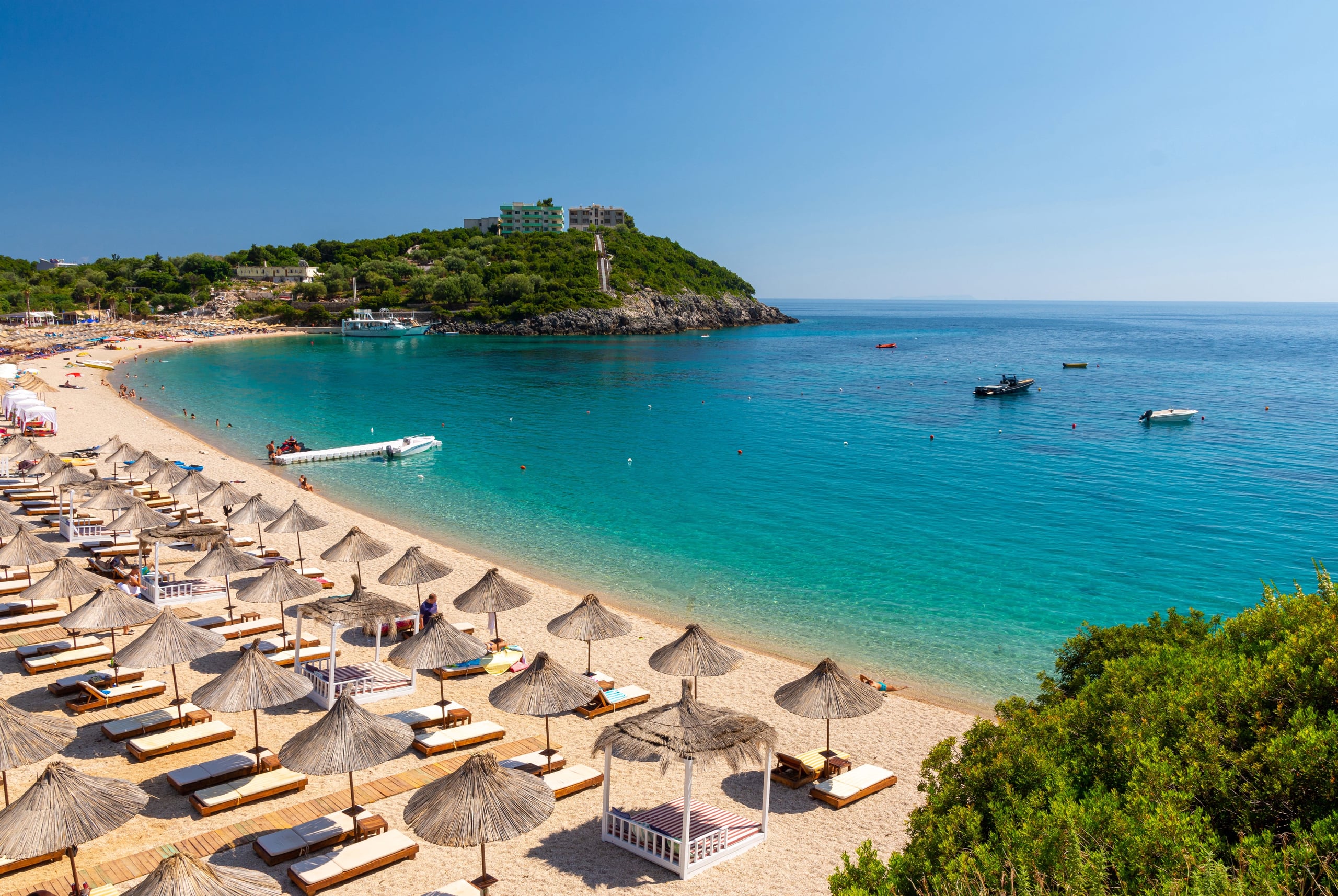
Albania gives you wild, affordable beaches with crystal-clear water, minimal development, and that “discovering something before everyone else” feeling. Infrastructure is rough—expect gravel roads and basic hotels—but you’ll pay half what Montenegro charges.
Montenegro offers polished Adriatic glamour—Kotor’s fjord-like bay, Sveti Stefan’s island resort, Budva’s medieval old town. Better roads, more restaurants, slicker hotels, but also higher prices and cruise ship crowds.
If you want raw natural beauty and budget-friendly beach time, choose Albania. If you want Instagram-worthy resort towns with better infrastructure and don’t mind tourist crowds, choose Montenegro. Or do what smart travelers do: combine both in a 10-14 day Adriatic road trip.
At a Glance
| Factor | Albania | Montenegro |
|---|---|---|
| Best For | Budget travelers, nature lovers | Comfort seekers, resort lovers |
| Atmosphere | Wild, developing, authentic | Polished, touristic, sophisticated |
| Best Beaches | Ksamil, Dhërmi, Gjipe, Drymades | Sveti Stefan, Mogren, Buljarica |
| Water Quality | Exceptionally clear (especially south) | Clear, but varies by beach |
| Infrastructure | Basic—rough roads, simple hotels | Excellent—smooth roads, resort hotels |
| Accommodation | €30-80/night | €60-150/night |
| Restaurant Meal | €8-15 | €15-25 |
| Crowds | Moderate (July-Aug busy) | Heavy (cruise ships June-Sept) |
Albania’s Beaches: What Makes Them Special
The Albanian Riviera is the Mediterranean’s last relatively undiscovered coast—and I say “relatively” because locals will laugh at calling it undiscovered when Ksamil gets packed in August. But compared to Croatia’s Dalmatian Coast or Montenegro’s Bay of Kotor, Albania’s beaches still have that frontier feeling.
What it’s known for: Albania’s coast runs 450km along the Adriatic and Ionian seas, but the famous “Albanian Riviera” is the southern stretch from Vlora to Saranda—100km of dramatic cliffs, turquoise coves, and white pebble beaches. The water here rivals anything in Greece or Croatia (same sea, after all), but you’ll pay €40/night instead of €120.
Best beaches:
Ksamil (near Saranda) is Albania’s postcard beach—four small islands connected by sandbars at low tide, water that shifts from turquoise to sapphire blue, and beaches so white they look tropical. It’s Albania’s most famous beach, which means July-August bring crowds, but visit June or September and you’ll have space. The water is shallow and warm—perfect for families.
Gjipe Beach (between Dhërmi and Himara) is a hidden canyon beach accessible only by hiking 30 minutes down a steep trail or arriving by boat. The reward: a pristine pebble beach enclosed by 100-meter cliffs, zero development, and some of Albania’s clearest water. Bring food and water—there’s nothing here but nature.
Dhërmi and Drymades are the Riviera’s main party beaches—beach clubs, sunbeds, music, and a young international crowd. Dhërmi has white pebbles and is more developed; Drymades (5 min south) is slightly quieter with a mix of sand and pebbles. Both have stunning water and excellent sunset views.
Jale Beach (near Himara) is Albania’s unofficial “hippie beach”—camping is common, beach bars play reggae until 3 AM, and the vibe is more backpacker than resort tourist. It’s beautiful (clear water, white pebbles, forested hills behind) and cheap.
Livadhi Beach (Himara) is a local favorite—long pebble beach with shallow water, less touristy than Dhërmi, and plenty of family-run tavernas serving fresh seafood for €8-12.
Who it’s best for: Budget travelers (everything costs less), adventure seekers (the infrastructure gaps are part of the charm), beach lovers who prioritize water quality over resort amenities, and anyone who wants to feel like they’re discovering something before it gets overdeveloped.
Not ideal for luxury resort seekers (Albania’s “luxury” is Montenegro’s mid-range), travelers who need perfect roads and signage, or anyone who wants five-star polish.
Practical info:
Accommodation: €30-50 for guesthouses and simple hotels, €60-80 for beachfront hotels, €100+ for the few boutique properties (like Rapo’s Resort in Himara). Most are family-run and basic but clean.
Food: Fresh seafood dominates—grilled fish, calamari, octopus salad for €10-15 at beachside tavernas. Inland restaurants (walk 5-10 min from the beach) drop prices to €6-10 for the same quality.
Roads: The coastal road (SH8) from Vlora to Saranda is paved and scenic, but winding and narrow. The Llogara Pass descent is spectacular but not for nervous drivers. Allow more time than GPS suggests.
Best time: June and September offer warm water, sun, and manageable crowds. July-August are hot (35°C+) and packed with Albanian diaspora returning for summer. October is quiet but some businesses close.
Getting there: Fly into Tirana, drive 4 hours south via Vlora. Or fly into Corfu (Greece), take the 30-minute ferry to Saranda, and explore north from there.
Montenegro’s Beaches: What Makes Them Special
Montenegro’s coast is compact (just 293km) but delivers more dramatic scenery per kilometer than maybe anywhere in Europe. The Bay of Kotor alone—a fjord-like inlet ringed by 1,000-meter mountains—justifies the trip, even if the beaches themselves are small and often pebbly.
What it’s known for: Montenegro markets itself as “Wild Beauty” (Divlja Ljepota), and the coast lives up to it—medieval walled towns, forested islands, and the glitziest resort in the Balkans (Sveti Stefan, where rooms start at €800/night). Infrastructure is excellent (thanks to EU accession efforts), but that means higher prices and more development than Albania.
Best beaches:
Sveti Stefan is Montenegro’s icon—a fortified island village connected to the mainland by a narrow causeway, now a luxury Aman resort. The public beach next to it is excellent (pebbles, clear water, views of the island), though you’ll pay €50-80 for sunbeds in high season. The setting is unbeatable.
Mogren Beach (near Budva) is a double bay of fine pebbles surrounded by cliffs, accessible via a coastal path from Budva’s old town (10-minute walk). It’s small and gets crowded, but the water is pristine and the scenery dramatic.
Jaz Beach (near Budva) is Montenegro’s largest—2.5km of pebbles and sand, popular with locals and known for music festivals (Sea Dance Festival in July). Less scenic than Sveti Stefan but more space to spread out.
Buljarica Beach (south of Budva) is a long, relatively undeveloped beach backed by olive groves. It feels more like Albania’s wild coast than Montenegro’s polished resorts—a good middle ground.
Kotor Bay beaches are small and often artificial (concrete platforms), but the bay setting—medieval towns, mountains rising straight from the water—compensates. Kotor and Perast are must-visit towns even if you don’t swim there.
Who it’s best for: Travelers who want resort comfort with Adriatic beauty, history buffs (Kotor’s UNESCO old town is spectacular), road-trippers connecting the Balkans (Dubrovnik is 1 hour from Kotor), and anyone willing to pay more for better infrastructure.
Not ideal for budget backpackers (it’s expensive compared to Albania or Bulgaria), beach lovers seeking long stretches of sand (most beaches are small pebble coves), or anyone trying to avoid tourist crowds.
Practical info:
Accommodation: €60-100 for mid-range hotels, €120-200 for beachfront hotels, €300+ for luxury resorts. Kotor and Budva have the most options; smaller coastal towns (Herceg Novi, Ulcinj) are slightly cheaper.
Food: Restaurant meals run €15-25 for seafood, €10-15 for pizza/pasta. It’s comparable to Croatia or Greece—not outrageous, but double Albania’s prices.
Roads: Excellent. The coastal highway (Adriatic Highway/E65-E80) is well-maintained and signposted. The Kotor-Cetinje road has 25 hairpin turns climbing 900 meters—it’s terrifying but stunning.
Best time: May-June and September-October offer warm weather and fewer crowds. July-August bring cruise ships (Kotor sees up to 5 ships/day), making coastal towns unbearable midday. Shoulder seasons are ideal.
Getting there: Fly into Tivat Airport (on Kotor Bay) or Podgorica (1 hour inland). Most travelers drive from Dubrovnik, Croatia (1 hour to Kotor) or cross from Albania via Shkodra (2 hours to Kotor).
Which Should You Choose?
Choose Albania If…
- You’re on a budget (30-50% cheaper than Montenegro)
- You want long, pristine beaches over dramatic coastal towns
- You enjoy the adventure of developing destinations (rough edges included)
- You prefer fewer tourists and more authentic local culture
- You’re backpacking or road-tripping on a budget
- You don’t mind basic accommodation and occasional infrastructure gaps
- You want to swim in some of the Mediterranean’s clearest water
Choose Montenegro If…
- You want polished resort towns with medieval old town charm
- You prioritize good roads, clear signage, and reliable infrastructure
- You’re drawn to dramatic scenery (Kotor Bay is unforgettable)
- You want more restaurant and nightlife options
- You’re comfortable paying Western European prices
- You’re connecting to Dubrovnik, Croatia (1 hour from Kotor)
- You want Instagram-worthy settings (Sveti Stefan, Perast)
Can You Visit Both?
Absolutely—and you should. They share a border, and the drive from Albania’s Shkodra to Montenegro’s Kotor is just 2 hours through gorgeous mountain scenery. Combining both gives you the best of the Adriatic: Albania’s wild beaches and Montenegro’s polished medieval towns.
Suggested 10-14 Day Itinerary:
Days 1-3: Tirana & Shkodra (Albania)
- Fly into Tirana, explore the capital (Bunk’Art, Blloku)
- Day trip to Kruja or drive to Shkodra (Lake Shkodra, Rozafa Castle)
Days 4-7: Albanian Riviera
- Drive Vlora → Llogara Pass → Dhërmi → Himara → Saranda
- Stay 2 nights in Himara (base for Gjipe Beach, Jale)
- Stay 2 nights in Saranda (base for Ksamil, Butrint, Blue Eye)
Days 8-10: Montenegro Coast
- Drive Saranda → Shkodra → Kotor (3.5 hours)
- Explore Kotor Bay (Kotor old town, Perast island churches)
- Drive to Budva, stay 2 nights (base for Sveti Stefan, Mogren Beach)
Days 11-12: Optional Extensions
- Dubrovnik, Croatia (1 hour from Kotor)—UNESCO old town, city walls
- Or more time in Albania (Berat, Gjirokastër UNESCO towns)
Days 13-14: Return
- Drive back to Tirana (4-5 hours from Budva) or fly out of Podgorica/Dubrovnik
Transport: Rent a car in Tirana, drop off in Dubrovnik (one-way rental fees apply, €50-100). Or rent in Tirana, return to Tirana, and fly out. Public transport exists but is slow—furgons (shared minibuses) run Albania’s coast; buses connect Montenegro’s towns.
Border crossing: Albania-Montenegro border at Hani i Hotit is straightforward (10-30 min wait). Bring your passport and rental car papers.
Cost comparison (10 days):
- Albania only: €600-900/person (accommodation, food, transport)
- Montenegro only: €1,000-1,500/person
- Combined: €800-1,200/person
Which to prioritize if time is limited? If you only have 5-7 days, choose Albania for beaches (more variety, better water, cheaper) and add Montenegro’s Kotor Bay as a 2-3 day extension if possible. If you’re prioritizing resort towns and don’t mind higher prices, reverse it—base in Montenegro and day-trip to Albania’s northern coast.
The honest answer: Albania gives you better beach experiences for the money; Montenegro gives you better photo opportunities and infrastructure. Do both if you can swing 10+ days. If forced to choose one? I’d say Albania for pure beach vacation, Montenegro if you’re combining with Croatia/Dubrovnik.
But here’s the thing—they’re so close and so different that skipping one feels like a missed opportunity. The drive from Ksamil’s turquoise bays to Kotor’s medieval fjord is one of Europe’s great coastal journeys. Take two weeks, do it right, and you’ll hit the Adriatic’s full range from wild to polished.