Tirana's Infrastructure Crisis: 20 Minutes of Rain Expose Decades of Neglect
When 20 minutes of rain flooded Velipoja's streets for hours, it exposed a pattern of infrastructure neglect that contradicts Albania's carefully curated tourism image.
When 20 minutes of rain flooded Velipoja's streets for hours, it exposed a pattern of infrastructure neglect that contradicts Albania's carefully curated tourism image.
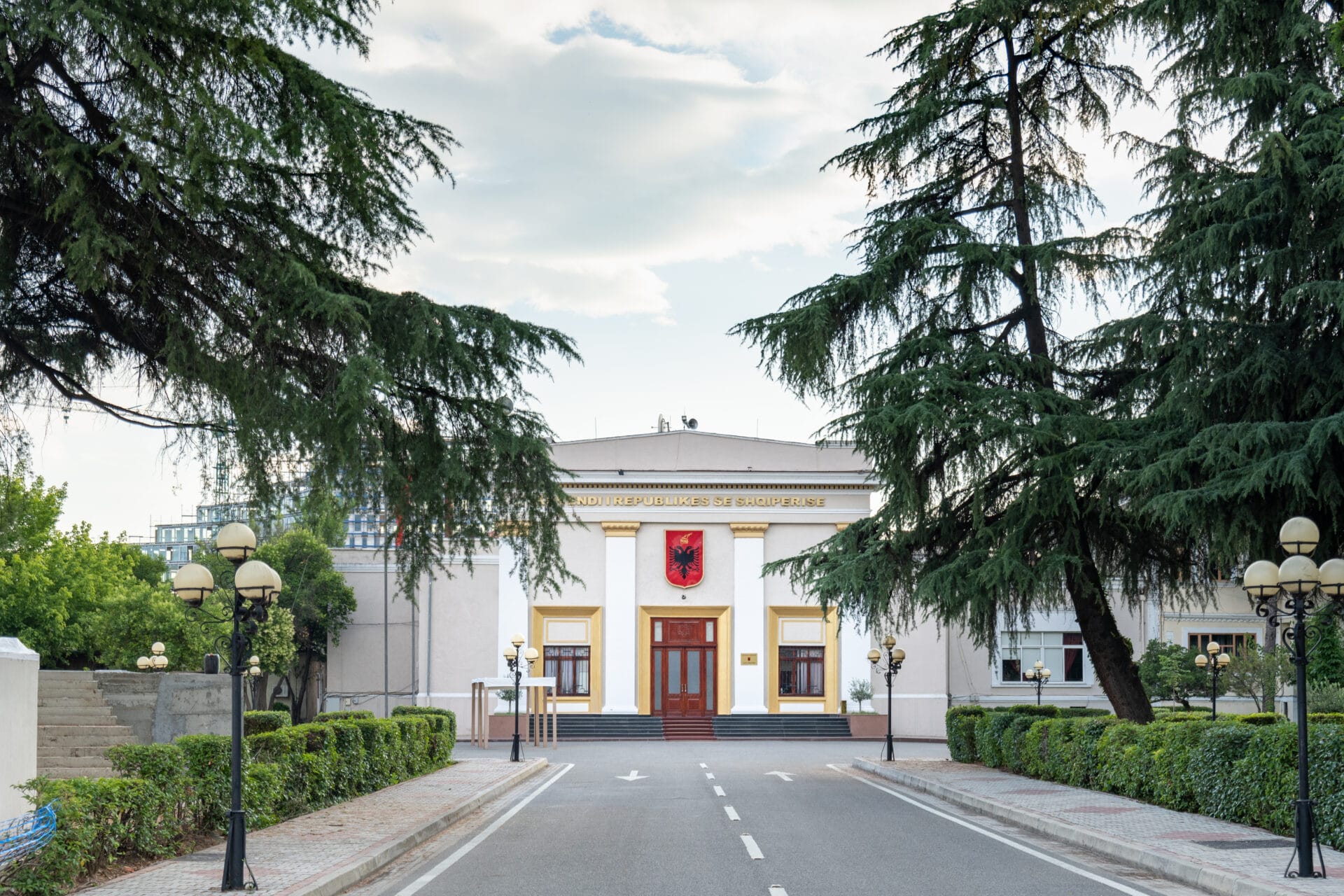
Twenty minutes of rainfall in Velipoja on September 15, 2024, transformed the northern Albanian coastal town’s main streets into flooded canals, stranding vehicles for approximately four hours. The flooding occurred despite the town’s promotion as a major tourism destination by government officials and tourism authorities.
The incident highlighted a recurring pattern observed across Albanian tourist destinations: substantial government investment in tourism promotion while infrastructure remains neglected or deteriorates.
Days before the flooding, Prime Minister Edi Rama’s official Instagram account featured Velipoja in posts promoting Albanian coastal tourism. The account, which has over 600,000 followers, regularly showcases Albanian destinations with professionally produced photography and videography.
When AlbaniaVisit attempted to post eyewitness observations about the flooding in comments on these posts, the comments were removed. The Prime Minister’s Office did not respond to requests for comment about the comment moderation policy or the flooding incident by publication time.
Local business owners in Velipoja, speaking on condition of anonymity due to concerns about government retaliation, described the flooding as a regular occurrence during even moderate rainfall.
“This happens every time it rains more than a few minutes,” said one hotel owner who has operated in Velipoja for 15 years. “The drainage system is the same one built during the Italian occupation in the 1930s. Nothing has been maintained or upgraded.”
The Velipoja flooding represents a pattern documented across Albanian tourist destinations:
In Valbona, a mountain destination heavily promoted by the Tourism Ministry, daily power outages of 2-4 hours remain common during peak summer tourism season, according to guesthouse operators interviewed in July 2024.
In Tirana, the capital city that receives the most government infrastructure investment, roads in residential areas show extensive deterioration. A 2023 survey by the Albanian Road Authority found that 68% of secondary roads required major repairs.
Along the Albanian Riviera, where tourist accommodations charge €150-300 per night during summer season, many coastal villages lack proper waste management systems, leading to beach contamination issues documented by environmental monitoring groups.
The gap between tourism promotion spending and infrastructure investment is substantial. According to government budget documents reviewed by AlbaniaVisit, the Tourism Ministry allocated €8.3 million for marketing and promotion in 2024, while municipal infrastructure maintenance budgets averaged just €2.1 million for coastal regions.
Infrastructure neglect occurs against a backdrop of ongoing corruption investigations by SPAK (Special Anti-Corruption Structure), Albania’s dedicated anti-corruption prosecutorial body established in 2019.
Since 2022, SPAK has charged multiple high-ranking officials with corruption allegations related to public infrastructure contracts:
Former President Ilir Meta was arrested in October 2023 on charges of passive corruption and money laundering. Meta denies all charges and remains in pre-trial detention.
Multiple former ministers face charges related to the “incinerator scandal,” in which government contracts for waste incinerator plants allegedly cost taxpayers hundreds of millions of euros for facilities that never functioned. Defendants in the case deny wrongdoing.
Former Prime Minister Sali Berisha faces corruption charges related to privatization of public land. Berisha denies the charges and claims political persecution.
These investigations have not yet produced final convictions, and defendants are presumed innocent until proven guilty in court.
Albania has chronically underinvested in basic infrastructure maintenance since 1991. Each government prioritizes visible new projects over unglamorous maintenance work. Drainage systems, power grids, water systems—infrastructure that doesn’t generate ribbon-cutting ceremonies or social media content—receive minimal attention despite their critical role in public welfare.
According to World Bank data, Albania invests approximately 2.1% of GDP in infrastructure annually, compared to a European average of 3.8%. However, even this limited investment is concentrated in high-visibility projects like new highways rather than maintenance of existing systems.
The irony is that infrastructure failures directly undermine the tourism sector the government heavily promotes. A tourist stuck in flooding for four hours doesn’t return and doesn’t recommend Albania to others.
Albanian median monthly income stands at approximately €450, according to INSTAT (Albanian Institute of Statistics) 2024 data. Yet government officials have faced scrutiny over asset declarations that appear inconsistent with their official salaries.
A 2023 analysis by Transparency International Albania found that 34% of high-ranking government officials declared assets exceeding €500,000, including multiple properties and luxury vehicles. On official government salaries of approximately €1,200-€2,000 monthly, acquiring such assets would typically require decades of savings with no other expenses.
Officials whose declarations were questioned have cited family inheritance, spousal income, and business investments as sources of wealth. Albania’s asset declaration system does not require proof of income sources, only disclosure of existing assets.
The government did not respond to requests for comment about asset declaration policies or discrepancies between official salaries and declared wealth.
Multiple Albanians who have posted critical comments on government social media accounts report similar experiences: comments disappear without notification or explanation.
AlbaniaVisit documented this practice by posting three neutral, fact-based comments describing infrastructure issues on Prime Minister Rama’s Instagram posts between September 15-20, 2024. All three comments were removed within 6-12 hours, while positive and neutral comments remained visible.
The Prime Minister’s Office maintains official social media accounts across Facebook, Instagram, Twitter, and TikTok with a combined following exceeding 1.2 million. The comment moderation policies for these accounts are not publicly disclosed.
Media freedom organizations have raised concerns about government social media practices. The 2024 Freedom House report on Albania noted “concerns about selective moderation of government social media that may suppress critical voices.”
Albania is a candidate for European Union membership, with negotiations formally opened in July 2022. The EU’s regular progress reports have repeatedly cited corruption and rule of law issues as major obstacles.
The European Commission’s 2023 Albania Progress Report specifically noted:
“Corruption remains prevalent in many areas and continues to be a serious problem. Albania needs to demonstrate a more convincing track record of investigation, prosecution and final conviction in cases of corruption at all levels.”
Infrastructure deficiencies also factor into EU assessments. The 2023 report noted that “significant investment is needed in transport, energy, water and waste management infrastructure to reach EU standards.”
European Commission officials declined to comment specifically on the Velipoja flooding incident but confirmed that infrastructure quality is considered in membership evaluations.
The Prime Minister’s Office did not respond to AlbaniaVisit’s request for comment by publication time. Questions submitted included:
This article will be updated if a response is received.
The Municipality of Velipoja also did not respond to requests for comment about drainage system maintenance plans or timeline.
Infrastructure issues in Albanian tourist destinations are likely to intensify during the 2025 summer tourism season without significant maintenance investment, according to infrastructure experts.
SPAK’s corruption investigations continue, with additional indictments expected in 2025 related to public infrastructure contracts, according to statements from the prosecutor’s office.
Albania’s EU membership negotiations will continue, with the European Commission scheduled to publish its next progress report in October 2025. Infrastructure and corruption will remain key evaluation criteria.
For tourists considering visits to Albania, infrastructure limitations should factor into travel planning. While Albania offers significant natural beauty and cultural attractions at prices lower than Western European destinations, visitors should prepare for infrastructure challenges including:
Despite these challenges, Albanian tourism continues growing, with arrivals increasing 32% in 2024 compared to 2019, according to INSTAT data.
Sources:
Albanian Institute of Statistics (INSTAT). “Tourism Statistics 2024” instat.gov.al. September 2024.
Albanian Road Authority. “Road Condition Survey 2023” arrsh.gov.al. December 2023.
European Commission. “Albania 2023 Report” ec.europa.eu. November 2023.
Freedom House. “Freedom in the World 2024: Albania” freedomhouse.org. February 2024.
Prime Minister Edi Rama Instagram Account. instagram.com/ediramaal. September 2024.
Special Anti-Corruption Structure (SPAK). “Public Announcements” spak.al. 2022-2024.
Transparency International Albania. “Asset Declaration Analysis 2023” transparency.al. May 2023.
World Bank. “Infrastructure Investment Data: Albania” worldbank.org. 2024.
Additional Reading:
AlbaniaVisit. “Albania Corruption”
AlbaniaVisit. “SPAK Albania Anti-Corruption”
AlbaniaVisit. “Albania EU Membership”