Albania's AI 'Minister' Diella: Innovation or Governance Theater?
Prime Minister Rama's announcement of Diella, an AI 'minister' for public procurement, has generated international attention—but critical implementation details remain undisclosed.
Prime Minister Rama's announcement of Diella, an AI 'minister' for public procurement, has generated international attention—but critical implementation details remain undisclosed.
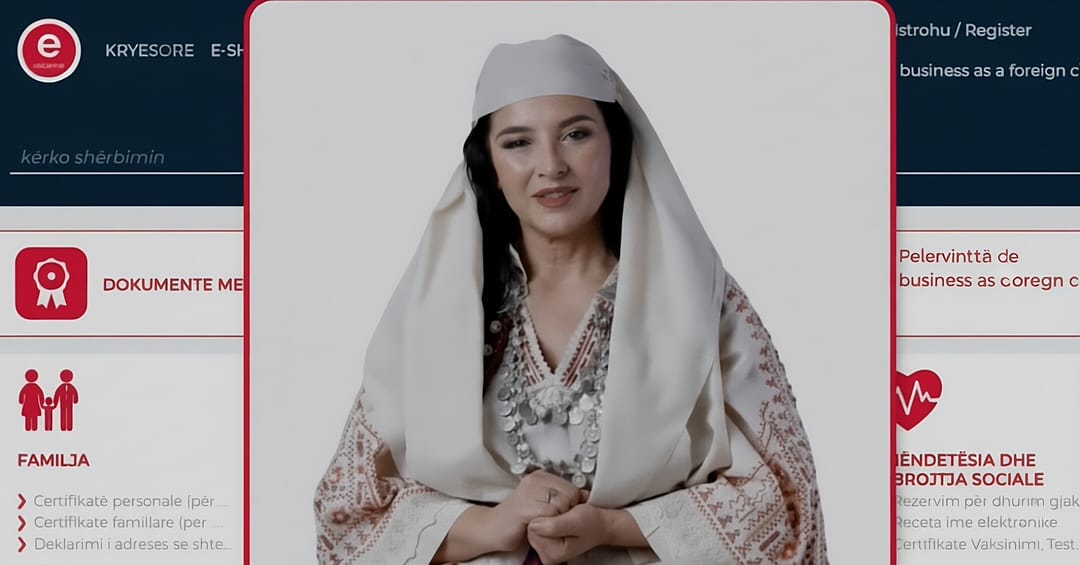
On September 11, 2025, Albanian Prime Minister Edi Rama announced what he described as a world-first: Diella, an artificial intelligence system, would assume ministerial responsibility for overseeing public procurement. According to government statements, Diella will ensure public tenders are “100% free of corruption.”
The announcement generated significant international media coverage, with major outlets framing the development as either revolutionary governance innovation or questionable political theater. The divergence reflects genuine uncertainty about what Diella actually represents—a question complicated by the Albanian government’s limited disclosure of technical and legal implementation details.
Diella already exists on e-Albania (albania.al), the government’s digital portal operated by AKSHI (National Agency for Information Society). The platform helps citizens access public services, request documents, and navigate bureaucracy. The new announcement scales Diella’s role from virtual assistant to what Rama characterized as decision-making authority over public procurement processes.
Three weeks after the announcement, critical implementation details have not been publicly disclosed. These gaps make it impossible to assess whether Diella represents a meaningful anti-corruption tool or primarily serves as political messaging.
Albanian law establishes procurement regulations through the Public Procurement Law and related regulations. How an AI system gains legal authority to make or influence procurement decisions within this framework has not been explained.
Key unanswered questions:
Albanian procurement law specifies that procurement commissions—human bodies with legal accountability—make decisions. If an AI system now makes these decisions, either the law must be amended to recognize this authority, or Diella operates in a legal gray zone. Neither scenario has been publicly clarified, creating fundamental questions about the system’s legal basis.
The Prime Minister’s Office did not respond to AlbaniaVisit’s request for comment about Diella’s legal framework by publication time.
No technical documentation explaining Diella’s decision-making algorithms has been released. This prevents independent experts from assessing bias, accuracy, or manipulation risks.
Critical technical details that remain undisclosed:
AI systems learn from historical data. If that data reflects corrupt practices—which Albania’s procurement history certainly does—the AI could perpetuate or even optimize for corruption patterns unless specifically designed to detect and exclude them. Without published technical specifications, this risk cannot be independently evaluated.
Public procurement routinely involves judgment calls that exceed simple rule-based automation: evaluating whether a proposed solution meets specifications, assessing bidder capacity, determining whether deviations from requirements are acceptable.
How Diella handles these scenarios—and what human oversight exists—remains unspecified:
International best practices for AI in government decision-making, established by organizations like the OECD and EU AI Act, emphasize “human in the loop” requirements for consequential decisions. Whether Albania’s implementation follows these standards cannot be determined without published documentation.
AI systems in government procurement create new attack surfaces. Malicious actors could attempt to:
Albania experienced devastating cyberattacks in 2022, attributed to Iranian actors, that compromised government databases and leaked sensitive information. This history raises particular concerns about securing an AI procurement system.
No information has been published about:
The Diella announcement occurs against a backdrop of significant digital infrastructure challenges. Albania ranks 101st of 180 countries on Transparency International’s 2023 Corruption Perceptions Index and struggles with basic e-government functionality.
Albania’s official tourism website (albania.al) features broken forms, unanswered contact requests, and outdated information—problems documented in a previous AlbaniaVisit investigation of the National Tourism Agency’s digital failures. If Albania struggles to maintain a functional tourism website, questions naturally arise about capacity to implement sophisticated AI governance systems.
This gap between announcement and demonstrated capability fuels skepticism about whether Diella represents genuine technological governance or primarily serves political messaging purposes.
Albania is not alone in exploring AI applications in government. Estonia, often cited as a digital governance leader, uses AI for various administrative functions but maintains strict transparency and human oversight requirements.
Estonia’s AI governance approach:
Singapore similarly employs AI in public services but publishes detailed technical specifications and maintains human decision authority for consequential choices.
Albania’s approach, based on current public information, appears to lack these transparency and accountability mechanisms—though definitive assessment is impossible without published documentation.
Experts who study technology and governance in developing democracies express caution about AI deployment outpacing institutional capacity and transparency.
A documented pattern in developing countries shows governments announcing ambitious technology initiatives primarily for international reputation rather than domestic functionality. The announcement generates positive headlines abroad—“Albania leads with AI minister!”—while implementation never matches the rhetoric. Similar patterns appeared with blockchain land registries and digital identity systems.
However, skepticism should not preclude the possibility of genuine innovation. It’s possible Albania has developed a workable system with appropriate safeguards. But absent published documentation, technical specifications, and legal frameworks, such claims cannot be independently evaluated. The burden is on the government to demonstrate this is substance, not theater.
For Diella to represent credible institutional innovation rather than political messaging, the Albanian government would need to publish:
Legal Framework: Legislation or executive orders explaining Diella’s legal authority, accountability mechanisms, and relationship to existing procurement law.
Technical Documentation: Algorithms, training data sources, decision criteria, and bias mitigation strategies—ideally reviewed by independent technical experts.
Operational Procedures: How procurement processes work with Diella, what human oversight exists, how appeals function, and what fail-safes prevent errors.
Performance Metrics: How Diella’s effectiveness will be measured, what constitutes success, and how the public can verify claimed improvements.
Independent Audits: Third-party technical and legal reviews assessing whether the system functions as described and complies with international governance standards.
Several international organizations, including the OECD, EU, and World Bank, have offered to assist Albania with anti-corruption and digital governance initiatives. Whether Albania has sought or will accept such expertise regarding Diella remains unclear.
Albania opened EU accession negotiations in July 2022. The European Commission’s regular progress reports emphasize that effective anti-corruption measures and rule of law improvements are prerequisites for membership.
An AI procurement system could theoretically support these goals—if it demonstrably reduces corruption and operates transparently. However, if Diella primarily serves as political messaging without substantive anti-corruption impact, it could complicate EU assessment.
The European Commission declined to comment specifically on Diella but confirmed that Albania’s anti-corruption efforts factor heavily into membership evaluations. The Commission’s next Albania progress report, scheduled for October 2025, may address the initiative.
Some Albanian analysts have raised concerns that AI-driven procurement could centralize decision-making power rather than increase transparency. If Diella’s algorithms are controlled exclusively by central government without independent oversight, the system could theoretically be configured to favor preferred contractors while maintaining a veneer of algorithmic objectivity.
Traditional procurement corruption involved local officials favoring friends. With AI-driven centralized procurement, favoritism could be embedded directly into algorithms—favoring whoever configured the system to prefer certain bidders. The veneer of neutral algorithmic decision-making could make such favoritism harder to detect than traditional corruption. Without transparency into how algorithms work, centralized control must be taken on faith.
This concern doesn’t assume malfeasance but highlights why algorithmic transparency matters: to verify that centralization of procurement authority serves anti-corruption goals rather than enabling more sophisticated forms of favoritism.
According to government statements, Diella is currently being integrated into procurement processes. No public data has been released about:
The Prime Minister’s Office stated that performance data would be released “in due course” but provided no specific timeline.
Diella’s credibility as anti-corruption innovation rather than political theater will be determined by whether the Albanian government provides the transparency required for independent assessment. Key developments to monitor:
Legislative Review: Whether Parliament debates and formally authorizes Diella’s legal authority under Albanian law.
Documentation Release: Whether technical specifications, algorithms, and operational procedures are published for expert review.
Performance Data: Whether measurable improvements in procurement integrity can be demonstrated.
International Assessment: How EU officials, international anti-corruption organizations, and tech governance experts evaluate the initiative once details emerge.
Appeals and Disputes: How the first contested procurement decisions are handled and whether appeal processes function transparently.
Albania’s experiment with AI governance could represent genuine innovation in anti-corruption technology—or an elaborate example of what scholars call “technological solutionism,” where complex institutional problems are addressed with technology announcements rather than substantive reforms.
The difference between these outcomes depends entirely on implementation details the Albanian government has not yet disclosed.
Additional Reading:
AlbaniaVisit. “Albania’s Tourism Agency Digital Failures”
AlbaniaVisit. “Albania Corruption”
AlbaniaVisit. “Albania EU Membership”