The short answer
Albania has world-class outdoor adventure—cheap, uncrowded, and mostly undiscovered.
Hiking: The Albanian Alps rival the Dolomites. The Theth-Valbona trek is €15/day for a guide, guesthouses cost €15-20/night.
Rafting: The Vjosa River (Europe’s last wild river) offers Class III-IV rapids for €45-60/person.
Climbing: Via ferratas, sport climbing, and bouldering throughout. Guides €35-50/day.
Diving: Wrecks, caves, and reefs along the Ionian coast. €60/dive with equipment.
Mountain biking: Rough trails, almost no other riders, stunning views. Bike rental €15-25/day.
You’re not fighting crowds. You’re not paying Swiss prices. You’re just outdoors in the Balkans at their best.
Hiking and trekking
The Albanian Alps (Prokletije/Bjeshkët e Nemuna)
This is why you came.
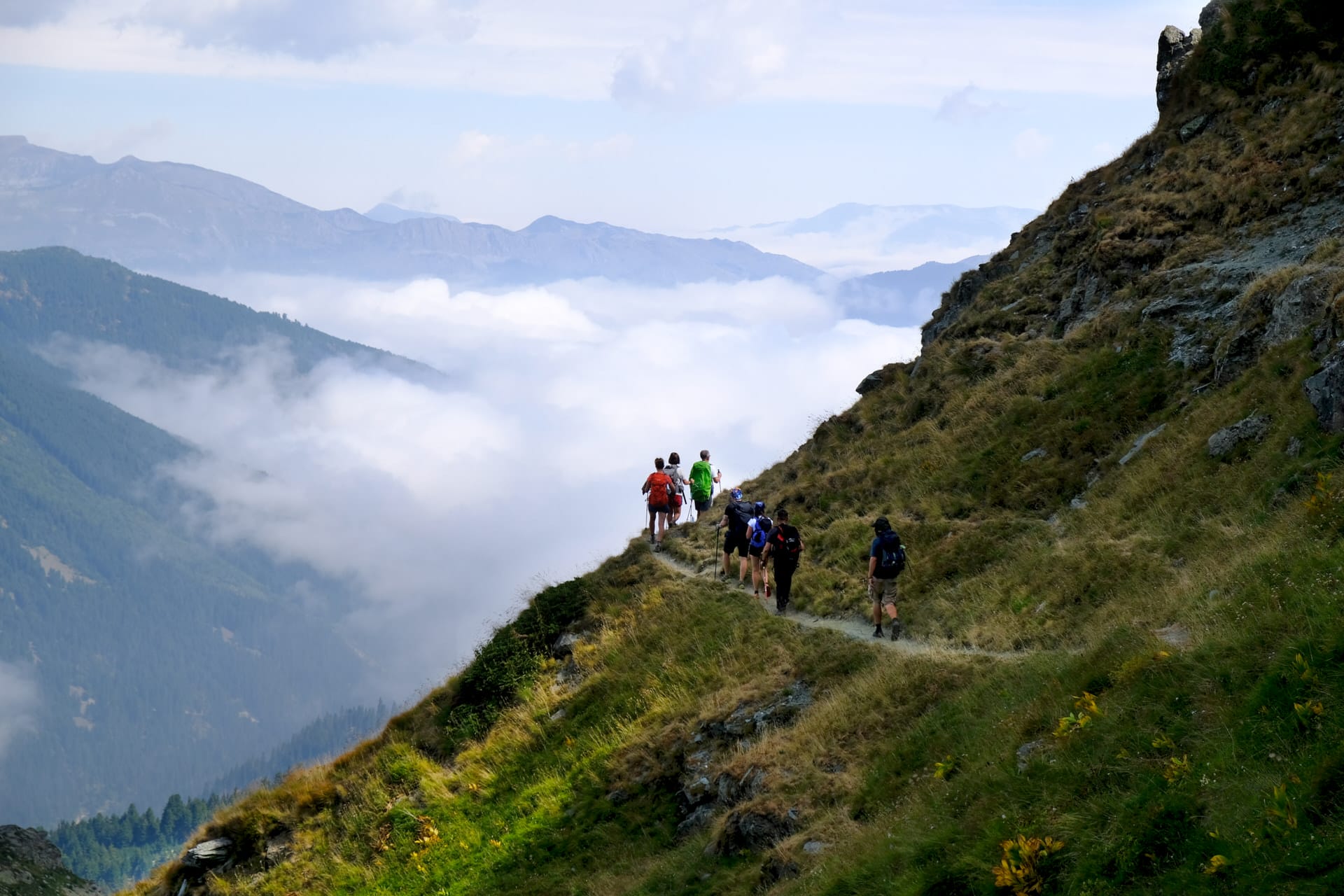
The Albanian Alps—part of the Dinaric Alps stretching into Montenegro and Kosovo—are Albania’s premier hiking destination. Think jagged limestone peaks, green valleys, shepherds’ huts, and villages that feel like they’re still in the 19th century.
The Theth to Valbona trek — Albania’s most famous hike
- Distance: 14-16 km depending on route
- Time: 6-8 hours
- Difficulty: Moderate (steep ascent to Valbona Pass at 1,795m, then descent)
- Season: June-October (snow blocks the pass Nov-May)
- Cost: €15-20/person for a guide (optional but recommended)
- Guesthouse: €15-20/night in Theth or Valbona (includes dinner and breakfast)
What you’ll see:
- Start in Theth (valley at 750m), surrounded by peaks
- Climb through forest to Valbona Pass (1,795m)
- Panoramic views of jagged peaks
- Descend into Valbona valley
- End in Valbona village or continue to Bajram Curri
Do you need a guide? Not mandatory, but helpful. The trail is marked (red and white blazes), but fog can obscure it. Guides cost €15-20/person (negotiate in Theth or Valbona guesthouses). If you’re fit and have GPS, you can do it solo.
Pro tip: Most people hike Theth → Valbona because the ascent is gentler. If you’re very fit, do Valbona → Theth and get the climb over with early.
Peaks of the Balkans trail
- Distance: 192 km loop through Albania, Kosovo, and Montenegro
- Duration: 10-14 days
- Difficulty: Challenging (high elevation, remote terrain)
- Season: July-September
- Cost: €300-600 guided (with guesthouse accommodation and meals)
This is a serious multi-day trek. You’ll cross three countries, summit peaks over 2,400m, sleep in mountain guesthouses, and see almost no other hikers. Book through Albanian tour operators or go independently with proper maps and GPS.
Day hikes near Tirana
Mount Dajti (1,613m)
- How to get there: Cable car from Tirana (€8 return) or hike from the base
- Trails: Multiple routes, 2-4 hours round trip
- Difficulty: Easy to moderate
- Views: Tirana, the Adriatic coast, mountains
Good for a quick hike if you’re based in Tirana. The cable car makes it accessible. Trails are well-marked. You can hike up, take the cable car down (or vice versa).
Southern Albania hiking
Llogara Pass and National Park
- Location: Between Vlorë and the Riviera
- Trails: Several routes through forest and along coastal cliffs
- Difficulty: Easy to moderate
- Best for: Coastal views, pine forests, paragliding (€60-80 tandem flight)
The Caesar’s Pass trail (2-3 hours) takes you through the park with views over the Ionian Sea. You might see chamois (mountain goats) if you’re lucky.
Gjipe Canyon
- Location: Between Dhërmi and Himara (Riviera)
- Trail: 30-40 min hike from road to Gjipe Beach through a narrow canyon
- Difficulty: Easy (but steep descent)
- Bring: Water, swimsuit (the beach at the end is worth it)
Not a long hike, but beautiful. The canyon narrows to just a few meters wide, then opens onto a hidden beach.
The Blue Eye (Syri i Kaltër)
- Location: Near Sarandë
- Trail: 10-15 min walk from parking to the spring
- Difficulty: Easy (paved path)
- Worth it? Yes, if you’re nearby. The spring is stunning (deep blue, 50m+ deep). But it’s crowded in summer.
What you need for Albanian hiking
Gear:
- Good hiking boots (trails are rocky, uneven)
- Layers (mountains get cold even in summer—bring a fleece or down jacket)
- Rain gear (afternoon storms are common in the Alps)
- Water (2-3 liters for full-day hikes—springs exist but don’t rely on them)
- Snacks (guesthouses provide meals, but bring trail food)
- Offline maps (download Maps.me or AllTrails—cell coverage is spotty)
Don’t need:
- Tent (unless you’re doing a serious expedition—guesthouses exist on most routes)
- Camping stove (guesthouses provide meals)
- Water filter (spring water is generally safe, but bring purification tablets if you’re cautious)
Rafting and kayaking
Vjosa River — Europe’s last wild river
The Vjosa is one of Europe’s last undammed rivers. It flows free from Greece through Albania to the Adriatic. And you can raft it.
What you’ll do:
- Class II-IV rapids (depending on section and season)
- Paddle through gorges, past villages, through clear turquoise water
- Multi-day trips camp on riverbanks
Cost:
- Half-day trip: €45-60/person (including guide, equipment, transport)
- Full-day trip: €70-90/person
- Multi-day (2-3 days): €200-300/person (includes camping, meals, guide)
Season:
- April-June: High water, bigger rapids (Class III-IV)
- July-September: Lower water, mellower (Class II-III), warmer
Where to book: Book through operators in Përmet or Tirana. Companies like Outdoor Albania, Allows Albania, and Albania Rafting run trips. Book 1-2 weeks ahead in summer.
Pro tip: The full-day trip from Këlcyrë to Përmet (or Përmet to Selenicë) is the sweet spot—long enough to feel like an adventure, not so long you’re exhausted. Multi-day trips are incredible if you have time.
Kayaking
Lake Ohrid (North Macedonia border)
- Rental: €15-20/day for kayak
- Best spots: Pogradec (Albanian side), paddle along the shore or to small beaches
- Difficulty: Easy (calm lake water)
Lake Komani
- What it is: A reservoir in northern Albania (looks like a Norwegian fjord)
- How to kayak it: Rent a kayak in Shkodër or join a guided tour (€40-60/person)
- Why: Stunning scenery, quiet water, limestone cliffs
Riviera coast (Ionian Sea)
- Rental: €20-30/day for sea kayak
- Best spots: Dhërmi, Himara, Sarandë
- Paddle to: Hidden beaches, sea caves
Kayaking Albania’s coast is underrated. The water is clear, the beaches are empty, and you’ll find spots only accessible by boat.
Rock climbing and via ferrata
Sport climbing
Albania has limestone everywhere. And limestone means climbing.
Berat
- Routes: 30+ sport climbing routes
- Grades: 5a-7c (French scale)
- Location: Cliffs near Berat Castle and along the Osum River
- Guidebook: Limited—ask local climbers or use UKClimbing.com forums
Osumi Canyon
- Routes: Developing area with 20+ routes
- Grades: 5b-7a
- Scenery: Deep canyon, turquoise river below
Tirana area
- Locations: Mount Dajti, Erzeni Canyon
- Routes: Mix of sport and trad
Gear rental: Hard to find. Bring your own if you’re serious about climbing. Some guesthouses in Berat can connect you with local climbers who might lend gear.
Guides: €40-60/day for a climbing guide (book through climbing groups on Facebook or Outdoor Albania)
Via ferrata
Via ferratas (Italian for “iron path”) are climbing routes with fixed steel cables, ladders, and rungs bolted into rock faces. You clip in with a harness and climb up otherwise inaccessible cliffs.
Osumi Canyon via ferrata
- Location: Near Çorovoda (between Berat and Përmet)
- Length: 1.5 km, 2-3 hours
- Difficulty: Moderate (some exposure, requires fitness)
- Cost: €35-50/person (includes guide, harness, helmet)
- Scenery: Waterfalls, canyon views, swimming holes
This is Albania’s best via ferrata. Book through Outdoor Albania or local operators in Berat/Çorovoda. You’ll climb along the canyon wall, cross suspension bridges, scramble over rocks, and end at a natural pool where you can swim.
Tirana via ferrata (Mount Dajti)
- Location: Near Tirana
- Length: Shorter (1-1.5 hours)
- Difficulty: Easy to moderate
- Cost: €30-40/person
Good if you’re based in Tirana and want a quick via ferrata experience.
Do you need experience? No. Guides teach you how to clip in and move safely. You need decent fitness (you’ll be climbing for 2-3 hours) and no severe fear of heights.
Mountain biking and cycling
Albania’s roads are rough. Its trails are rougher. If you’re into mountain biking, this is paradise (with very few other riders).
Where to ride:
Albanian Riviera (Vlorë to Sarandë)
- Distance: ~120 km
- Terrain: Hilly, coastal roads, some gravel sections
- Difficulty: Moderate to challenging (steep climbs over Llogara Pass)
- Scenery: Coastal views, beaches, olive groves
This route is stunning but tough. You’ll climb Llogara Pass (1,027m), then descend to the Riviera. The SH8 coastal road has light traffic (outside July-Aug). Bring spares, a pump, and tools—bike shops are rare.
Mount Dajti trails
- Type: Singletrack, forest roads
- Difficulty: Moderate to advanced (steep, rocky)
- Access: Cable car or ride from Tirana
Theth area
- Type: Rough mountain roads, some singletrack
- Difficulty: Advanced (remote, rocky, steep)
- Scenery: Alps, valleys, villages
Only for experienced mountain bikers with proper bikes (full suspension recommended).
Bike rental:
- Tirana: €15-25/day for mountain bike, €10-15 for city bike
- Riviera towns (Vlorë, Himara, Sarandë): €15-20/day
- Quality: Variable. Check brakes, gears, tires before setting off.
Guided bike tours:
- Day trips: €50-80/person (including guide, bike, support vehicle)
- Multi-day tours: €400-700/person for 5-7 day Riviera or Alps tours
Book through Albania Bike Tours, Outdoor Albania, or similar operators.
Pro tip: Bring your own helmet, pedals, and saddle if you’re picky. Rental bikes are often basic mountain bikes with cheap components.
Diving and snorkeling
Albania’s Ionian coast has clear water, wrecks, caves, and reefs. And almost no divers.
Where to dive:
Sarandë area
- Sites: Wrecks (including a WWII Italian ship), underwater caves, reef diving
- Visibility: 20-30m (summer)
- Water temp: 24-26°C (July-Sept), 18-20°C (May-June, Oct)
- Cost: €60/dive with equipment, €300-400 for PADI Open Water course
Ksamil
- Sites: Shallow reefs, rock formations, beginner-friendly
- Snorkeling: Excellent (rent gear for €5-10/day, or bring your own)
Himara and Dhërmi
- Sites: Coastal caves, reef walls
- Operators: Fewer than Sarandë, but available
What you’ll see:
- Grouper, octopus, moray eels, sea bream
- Some wrecks (boats, planes from WWII)
- Colorful reefs (not tropical, but Mediterranean species)
Pro tip: Visibility is best May-June and Sept-Oct. July-August brings more plankton and boat traffic (lower visibility). Water is warmest July-Sept.
Winter sports (skiing and snowshoeing)
Albania gets snow. A lot of it in the mountains. And while it’s not the Alps, it’s cheap and uncrowded.
Where to ski:
Brezovica (Kosovo, but accessible from Albania)
- Elevation: 900-2,500m
- Season: December-March
- Slopes: 10+ km of runs, mix of beginner to advanced
- Cost: €10-15/day for lift pass, €15/day for ski rental
- Accommodation: €20-40/night
This is the best ski resort near Albania. It’s technically in Kosovo, but only 2 hours from Prizren (which is 2 hours from Tirana). The skiing is solid, prices are absurdly cheap, and crowds are minimal.
Bigëll-Dardhë (near Korçë, Albania)
- Elevation: 1,200-1,800m
- Season: December-March (snow permitting)
- Slopes: Limited (2-3 runs), basic lifts
- Cost: €8-12/day lift pass
- Accommodation: €15-25/night in Korçë
Albania’s main ski area. It’s small and the infrastructure is dated, but it works. Good for a day or two if you’re nearby.
Dajti (near Tirana)
- Type: Small ski area, family-friendly
- Slopes: 1-2 beginner runs
- Worth it? Only if you’re in Tirana and want to try skiing for a few hours
Backcountry skiing/snowshoeing: The Albanian Alps offer incredible backcountry skiing and snowshoeing, but you need experience, proper gear, and ideally a guide (avalanche risk is real).
Guides for backcountry: €60-100/day (book through Outdoor Albania or Tirana-based mountain guides)
Wildlife watching and nature
Birdwatching:
Divjakë-Karavasta National Park
- What to see: Dalmatian pelicans (endangered, ~200 nesting pairs), flamingos, herons, ducks
- Season: March-May (nesting), Oct-Nov (migration)
- Access: 2 hours from Tirana, guided tours €40-60/person
Lake Prespa (North Macedonia/Albania/Greece border)
- What to see: Migratory birds, endemic fish species
- Season: Spring and fall migration
Lake Shkodër/Skadar
- What to see: Over 280 bird species, pelicans, cormorants
- Access: From Shkodër, boat tours €30-50/person
Mammals:
- Chamois (mountain goats) in Llogara National Park
- Wild boar throughout forested areas
- Wolves and bears in remote areas (very rarely seen)
Pro tip: Bring binoculars. Most wildlife is shy and distant. Guided tours with local naturalists improve your chances of good sightings.
Canyoning
Canyoning (descending canyons by rappelling, sliding, jumping into pools) is growing in Albania.
Osumi Canyon (near Berat/Çorovoda)
- Route: Descend through the canyon, rappel waterfalls (up to 20m drops), slide into pools
- Duration: 4-6 hours
- Difficulty: Moderate (no experience needed, but you must be comfortable with heights and cold water)
- Cost: €50-70/person (guide, equipment, transport)
- Season: May-October (water levels vary—June has more water)
Grunas Waterfall (near Theth)
- Route: Rappel down a 30m waterfall
- Difficulty: Moderate
- Cost: €40-60/person (guide, gear)
Pro tip: You’ll get wet and cold. Bring a change of clothes and a towel. Wetsuits are usually provided.
Paragliding
Llogara Pass
- Flight: Tandem flights from Llogara (1,027m) down to the coast
- Duration: 15-30 minutes
- Cost: €60-80/person
- Views: Ionian Sea, Riviera beaches, mountains
You don’t need experience. Tandem flights mean you’re strapped to a pilot who does all the work. You just enjoy the view.
Practical info for outdoor adventures in Albania
Best seasons
Hiking: May-October (June-Sept for high mountains)
- May-June: Green, wildflowers, fewer crowds, some trails still snowy
- July-August: Hot, dry, crowded (avoid lowland hikes, stick to mountains)
- September-October: Perfect weather, fall colors, fewer tourists
Water sports (rafting, kayaking, diving): April-October
- April-June: High water for rafting
- July-September: Warm water for swimming and diving
Skiing: December-March
Mountain biking: April-June, September-October (July-Aug is too hot)
What to bring
For multi-day hikes:
- Hiking boots (broken in)
- Layers (it gets cold at altitude)
- Rain jacket
- Sunscreen, hat, sunglasses
- Water bottles (2-3 liters)
- Headlamp (guesthouses sometimes lose power)
- Cash (guesthouses don’t take cards)
For water sports:
- Swimsuit, towel
- Water shoes (rocky beaches)
- Dry bag for phone/camera
- Sunscreen
For climbing/via ferrata:
- Comfortable athletic clothes
- Closed-toe shoes (climbing shoes if you have them, otherwise sneakers)
- Gloves (optional but helpful for via ferrata cables)
Guides and tour operators
Do you need a guide?
- Hiking: Not always. Well-known routes (Theth-Valbona) are marked. Remote routes benefit from guides.
- Rafting, canyoning, via ferrata: Yes. You need technical equipment and knowledge.
- Climbing: Depends. Experienced climbers can go solo. Beginners need guides.
- Diving: Yes (certified dive guide required).
Reputable operators:
- Outdoor Albania (outdoor-albania.com) — Multi-day treks, rafting, via ferrata, cycling
- Albania Rafting (albaniarafting.com) — Vjosa River trips
- Allows Albania — Canyoning, rafting
- Albanian Alps Adventures — Theth-Valbona treks
Costs:
- Day guide (hiking): €15-30/person (split among group)
- Multi-day trek guide: €50-80/day
- Rafting guide (included in price): €45-90/person
- Via ferrata guide: €35-50/person
- Climbing guide: €40-60/day
Accommodation
Mountain guesthouses (Theth, Valbona):
- Cost: €15-20/person (includes breakfast and dinner)
- What you get: Simple rooms (often shared), home-cooked meals, hot showers (usually)
- Book ahead? In July-August, yes. Rest of the year, you can show up.
Camping:
- Official campsites: Rare. Some areas (Theth, Valbona) have designated campsites (€5-10/tent)
- Wild camping: Technically illegal, but tolerated in remote areas if you leave no trace
Safety considerations
Albania’s outdoors are generally safe, but:
- Mountain weather changes fast. Bring layers and rain gear.
- Trails aren’t always marked well. Download offline maps (Maps.me, AllTrails).
- Cell coverage is spotty in mountains. Tell someone your plans.
- Rescue services are limited. If you get injured in a remote area, extraction is difficult. Travel insurance with mountain rescue coverage is smart.
- Drinking water: Springs in the mountains are generally safe, but bring purification tablets if you’re cautious.
Landmines: Cleared in most areas, but avoid going off-trail in extreme northern border areas near Kosovo. Stick to marked trails.
Money and logistics
Cash: Bring euros or lek. Most guesthouses, guides, and small operators don’t take cards.
ATMs: Available in Tirana, Shkodër, Berat, Gjirokastër, Vlorë, Sarandë. Rare in mountain villages.
Transport: Rent a car to access most adventure areas. Buses go to major towns (Shkodër, Berat), but not to trailheads or remote spots.
Phone/internet: Buy a local SIM (Vodafone or One) for €10-15 with data. Coverage is decent in towns, spotty in mountains.
Common mistakes (and how to avoid them)
Underestimating mountain weather.
- Albanian Alps can drop from 25°C to 5°C in hours. Afternoon thunderstorms are common in summer.
- Bring layers, even in July.
Not bringing enough cash.
- Mountain guesthouses don’t take cards. Guides expect cash.
- Bring €100-200 in small bills for multi-day hikes.
Renting cheap bikes for rough terrain.
- Albania’s trails are rocky. A €10 rental bike will break.
- Pay extra for a decent mountain bike with suspension.
Skipping travel insurance.
- Medical evacuation from remote mountains is expensive.
- Get insurance that covers adventure sports and mountain rescue.
Expecting Swiss-level infrastructure.
- Albania’s outdoor infrastructure is developing. Trails aren’t always marked, rescue is slow, equipment rental is limited.
- Come prepared, bring your own gear if you’re serious, and manage expectations.
Hiking Theth-Valbona without checking weather.
- Fog obscures the trail. Rain makes it slippery.
- Check the forecast, and if it’s bad, wait a day or hire a guide.
FAQ
Do I need a guide for the Theth to Valbona hike?
No, it’s not required. The trail is marked with red and white blazes. But if you’re inexperienced, going solo, or weather is uncertain, a guide helps (€15-20/person). Guides know the route, carry first aid, and speak English.
How fit do I need to be for Albanian hiking?
Theth-Valbona: Moderate fitness. 6-8 hours of hiking with 800m elevation gain. If you can hike 15 km with a daypack, you’re fine.
Peaks of the Balkans: Good fitness required. Long days (6-8 hours), high elevation, rough terrain.
Day hikes (Dajti, Llogara): Easy to moderate. Most people can manage 2-4 hours.
Is rafting the Vjosa safe?
Yes, if you use a reputable operator with certified guides. The rapids are Class II-IV (moderate to advanced), but guides know the river. Wear a life jacket, helmet, and follow instructions. Most accidents happen when people don’t listen to guides.
Can I rent climbing gear in Albania?
Barely. Some operators (Outdoor Albania) have limited gear. If you’re a serious climber, bring your own harness, shoes, quickdraws, etc. Ropes and helmets are sometimes available to rent.
What’s the best time for diving in Albania?
May-June and September-October for best visibility (20-30m). July-August is warmest (24-26°C water), but visibility drops due to plankton and boat traffic. Avoid winter (Nov-March)—water is cold (14-16°C) and rough.
Are there bears and wolves in Albania?
Yes, in remote mountain areas (Albanian Alps, Pindus Mountains). You’re very unlikely to see them. They avoid humans. No recent attacks on tourists. If hiking in bear country, make noise (talk, clap) so you don’t surprise them.
Can I ski in Albania?
Yes, but it’s basic. Bigëll-Dardhë near Korçë is the main resort (small, dated lifts, limited runs). For better skiing, go to Brezovica in Kosovo (2 hours from Albanian border). Or consider backcountry skiing in the Albanian Alps with a guide.
Do I need special insurance for adventure activities?
Yes. Standard travel insurance often excludes adventure sports (climbing, rafting, skiing). Get insurance that covers:
- Adventure sports (check policy details)
- Mountain rescue/evacuation (expensive if you need a helicopter)
- Medical treatment abroad
World Nomads and SafetyWing both cover adventure sports.
Is wild camping allowed in Albania?
Technically no, but it’s tolerated in remote areas if you:
- Camp away from villages and roads
- Leave no trace (pack out all trash)
- Don’t light fires outside designated areas
- Ask permission if you’re near a farm or guesthouse
In practice, wild camping in the Alps (Theth, Valbona area) is common and accepted.
Can I drink water from mountain streams?
Generally yes in high mountain areas (above 1,500m) where there’s no livestock or villages upstream. But to be safe, bring purification tablets or a filter. Lower elevation streams near farms/villages—don’t drink without treating.
How much does a multi-day trek cost?
Theth-Valbona (2 days, 1 night):
- Guesthouse: €15-20/night (includes dinner and breakfast)
- Guide (optional): €15-20/person
- Transport to/from Shkodër: €15-25/person
- Total: €50-80/person
Peaks of the Balkans (10-14 days):
- Self-guided: €300-500 (guesthouses, food, transport)
- Guided tour: €600-1,000 (includes guide, accommodation, meals, transport)
Are there mountain rescue services in Albania?
Limited. Albania has mountain rescue teams, but response times are slow (hours, not minutes). Helicopter evacuation is possible but expensive (€2,000-5,000+). This is why travel insurance with mountain rescue coverage is critical.
What’s the best base for outdoor adventures?
Shkodër for northern mountains (Theth, Valbona, Lake Shkodër)
Berat for climbing, canyoning, Osumi Canyon
Tirana for day trips (Dajti, Erzeni, access to everything)
Përmet for rafting the Vjosa, hot springs, southern mountains
Sarandë or Himara for diving, coastal activities
Can I do via ferrata without climbing experience?
Yes. Via ferratas have fixed cables you clip into. Guides teach you the system in 10 minutes. You need:
- Decent fitness (2-3 hours of climbing/scrambling)
- No extreme fear of heights
- Ability to follow instructions
If you can climb a ladder and aren’t terrified of exposure, you’ll be fine.
Is mountain biking in Albania safe?
Safe from traffic (most trails are remote, roads have light traffic outside July-Aug). Rough terrain means you need a good bike and skills. Bring:
- Spare tubes, pump, tools
- First aid kit
- Offline maps
- Phone with local SIM (for emergencies)
Don’t expect roadside bike shops. If your bike breaks, you’re fixing it yourself or hitching a ride.
Last updated: October 2025. Prices, tour operators, and trail conditions change. Always check current conditions before heading into the mountains.