Albania PM Edi Rama Faces Mounting Corruption Allegations
Allegations against Albania's Prime Minister include FBI official corruption, procurement irregularities, and alleged ties to organized crime—claims Rama denies as politically motivated.
Allegations against Albania's Prime Minister include FBI official corruption, procurement irregularities, and alleged ties to organized crime—claims Rama denies as politically motivated.
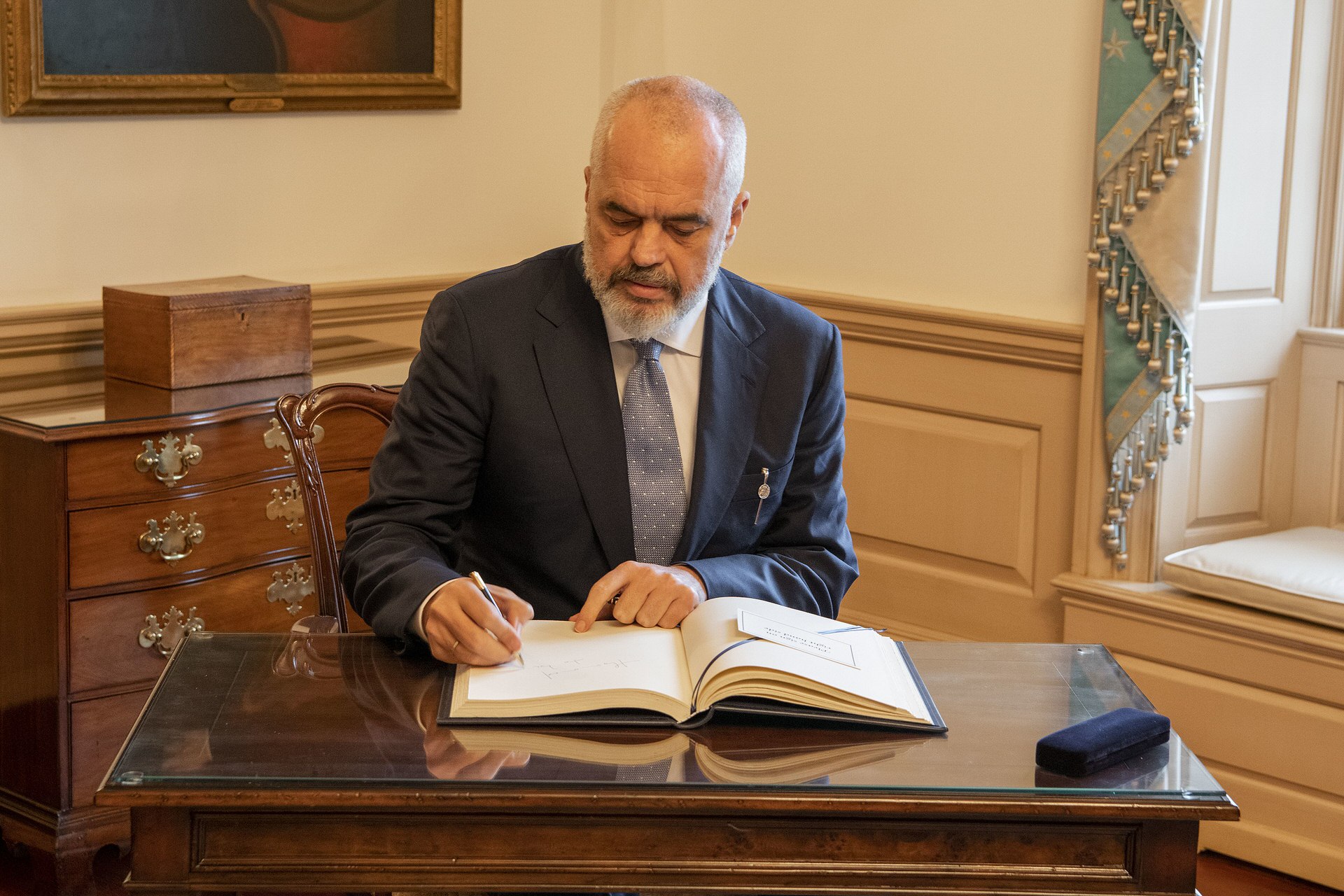
Prime Minister Edi Rama, who has led Albania’s Socialist Party government since 2013, faces multiple serious corruption allegations that threaten Albania’s European Union membership prospects and raise questions about democratic governance in the Western Balkans.
The allegations—which Rama categorically denies and characterizes as politically motivated attacks—span multiple scandals: the indictment of a former senior FBI official on charges related to his relationship with Rama’s administration, major public procurement investigations, and Italian authorities’ reports of alleged ties between Albanian officials and organized crime networks.
These unproven allegations occur as Albania navigates EU accession negotiations, where the European Commission has repeatedly emphasized that sustainable anti-corruption reforms are prerequisites for membership progress.
The most internationally prominent development involves Charles McGonigal, former Special Agent in Charge of the FBI’s New York counterintelligence division, who was indicted in January 2023 on multiple corruption charges—some involving alleged improper contacts with Albania’s government.
According to the U.S. Department of Justice indictment, McGonigal allegedly:
McGonigal pleaded guilty to one count of concealment of material facts in August 2023 and was sentenced to prison. The case is documented in federal court records from the Southern District of New York.
Rama’s Response: The Prime Minister’s Office issued a statement in January 2023 asserting that Rama’s meetings with McGonigal were conducted in official capacity related to security cooperation between Albania and the United States. The statement characterized the FBI investigation as focused on McGonigal’s conduct, not Albanian officials’ actions.
“Any suggestion that Albania or its leadership engaged in improper conduct is categorically false and contradicted by the facts,” the Prime Minister’s Office statement read.
Albania’s waste incinerator procurement process has drawn scrutiny from multiple international investigative bodies. The scandal centers on contracts reportedly worth approximately €430 million for waste-to-energy facilities that allegedly never functioned as intended.
According to documents reviewed by Albanian investigative journalists and international media, the procurement process for these facilities has raised questions about:
In December 2023, U.S. authorities announced they were examining aspects of the incinerator contracts as part of broader anti-corruption investigations in Albania.
SPAK (Albania’s Special Anti-Corruption Structure) has charged multiple former officials in connection with the incinerator scandal, including:
Important: These individuals face charges but have not been convicted. All defendants deny wrongdoing and are presumed innocent until proven guilty in court.
Rama’s Response: Prime Minister Rama has stated that any corruption within his administration represents individual misconduct that his government is committed to prosecuting. In a September 2024 statement, Rama said:
“We established SPAK precisely to investigate corruption wherever it exists, including within our own party. The arrests of former officials demonstrate our commitment to accountability, not our complicity in corruption.”
Opposition leaders counter that the timing of arrests—often occurring after individuals leave government—suggests selective enforcement rather than genuine anti-corruption commitment.
Italian law enforcement agencies have published reports alleging connections between Albanian government officials and organized crime networks involved in drug trafficking. These reports, primarily focused on cocaine trafficking routes from South America through Albania to European markets, have raised concerns about state capture by criminal organizations.
The Italian National Anti-Mafia Directorate’s 2023 annual report noted “concerning indications of Albanian organized crime groups maintaining relationships with individuals in positions of governmental authority.” The report does not name specific officials but describes a pattern of corruption enabling drug trafficking operations.
Albanian opposition politicians have alleged—without providing public evidence—that drug money has been laundered through Albania’s real estate sector, fueling construction booms in Tirana and coastal areas. These allegations remain unproven and are disputed by government officials.
Rama’s Response: The Prime Minister has repeatedly denied any connection between his administration and organized crime, characterizing such allegations as “desperate opposition propaganda attempting to undermine Albania’s progress.”
In a February 2024 parliamentary address, Rama stated:
“Albania’s cooperation with international law enforcement against organized crime is stronger than ever. We work daily with Europol, the DEA, Italian authorities, and other partners. These baseless accusations insult not only our government but the thousands of police and judicial officials fighting crime every day.”
Critics argue that Rama’s Socialist Party has consolidated excessive control over local governance and media. According to data from Albania’s Central Election Commission, Socialist Party candidates control mayors’ offices in approximately 90% of Albania’s municipalities following the 2023 local elections.
Opposition politicians characterize this dominance as evidence of unfair electoral advantages. Government supporters note that voters freely chose these outcomes in elections that international observers deemed generally free, though not without concerns.
Freedom House’s 2024 report rates Albania as “Partly Free” in press freedom, noting:
“Media ownership concentration and financial pressures make most outlets vulnerable to political influence. Government advertising is reportedly allocated to reward friendly coverage while punishing critical reporting.”
The European Commission’s 2023 Albania Progress Report similarly noted concerns about “selective government advertising that may influence media independence.”
Rama’s Response: The government maintains that media operates freely and that Socialist Party electoral success reflects voters’ approval of economic progress under Socialist governance. The Prime Minister’s Office did not respond to specific questions about government advertising allocation policies.
Opposition Democratic Party leaders characterize the allegations against Rama as evidence of systematic corruption requiring international intervention.
Edi Paloka, Democratic Party spokesperson, stated in a September 2024 interview with AlbaniaVisit:
“The McGonigal case proved what we’ve been saying for years—Rama’s government operates through international influence peddling and corruption. The incinerator scandal alone represents theft of hundreds of millions of euros. Yet prosecutions only happen after individuals leave power or become politically expendable.”
Paloka’s allegations reflect opposition rhetoric but lack independent verification of systematic government corruption beyond specific cases currently under investigation.
Albania opened EU accession negotiations in July 2022, entering the initial screening phase. However, the European Commission’s regular progress reports have repeatedly identified corruption and rule of law weaknesses as major obstacles.
The Commission’s 2023 Albania Report stated:
“Corruption remains prevalent in many areas and continues to be a serious problem. Albania needs to demonstrate a more convincing track record of investigation, prosecution and final conviction in cases of corruption at all levels, including high-level corruption.”
These ongoing allegations could complicate Albania’s membership timeline. While the EU evaluates institutional reforms rather than individual corruption cases, a pattern of unresolved high-profile scandals suggests weak anti-corruption enforcement—a core EU concern.
The EU doesn’t demand perfection—corruption exists in member states too. But EU officials want to see functioning institutions that investigate corruption regardless of political connections. When most corruption prosecutions target opposition figures or former officials who’ve fallen from favor, that pattern suggests selective justice rather than rule of law—a core EU concern in membership evaluations.
Several independent Albanian civil society organizations and international watchdog groups have analyzed corruption allegations against Rama’s government.
Transparency International Albania’s 2023 assessment noted:
“While SPAK’s creation represents institutional progress, concerns remain about the timing and selectivity of investigations. Genuine anti-corruption commitment requires pursuing cases regardless of political consequences, including within the ruling party’s current leadership.”
The Albanian Helsinki Committee, a human rights organization, stated in March 2024:
“Albania faces a credibility crisis. Multiple serious allegations exist, but whether these represent systematic government corruption or political opposition exploitation of legitimate concerns about individual misconduct remains difficult to determine without completed judicial processes.”
Several developments will shape whether these allegations result in accountability or remain unresolved political controversies:
Judicial Outcomes: Ongoing criminal cases, including the incinerator scandal prosecutions, will either demonstrate that Albania’s justice system holds powerful officials accountable or confirm suspicions of selective enforcement.
EU Progress Reports: The European Commission’s October 2025 Albania assessment will evaluate whether corruption investigations demonstrate genuine institutional independence or political instrumentalization.
Electoral Implications: Albania’s next parliamentary elections (scheduled for 2025) will test whether corruption allegations influence voter decisions or whether economic growth considerations outweigh governance concerns.
International Investigations: U.S. authorities’ examination of the incinerator contracts may provide independent assessment of corruption allegations beyond Albanian political debates.
SPAK Investigations: Whether Albania’s anti-corruption prosecutors pursue cases involving current high-ranking officials will indicate institutional independence.
Albania’s situation reflects challenges common to post-communist democracies in Southeast Europe: weak institutions inherited from authoritarian periods struggle to establish rule of law against entrenched patronage networks and political pressure.
Whether Rama’s government represents a corrupt administration cleverly evading accountability or a reformist leadership unfairly targeted by opportunistic opposition remains a question that can only be definitively answered through completed judicial processes and sustained institutional improvements.
What is certain: Albania’s European future depends on resolving these questions through functioning legal institutions rather than political rhetoric. The gap between Albania’s democratic aspirations and current governance reality determines whether the country achieves EU membership or remains indefinitely stuck in candidacy status.
Sources:
U.S. Department of Justice. “Former FBI Special Agent Charged in Albania-Related Lobbying Scheme” justice.gov. January 2023.
U.S. District Court, Southern District of New York. “United States v. Charles McGonigal, Case No. 1:23-cr-00032” courtlistener.com. 2023.
European Commission. “Albania 2023 Report” ec.europa.eu. November 2023.
Freedom House. “Freedom in the World 2024: Albania” freedomhouse.org. February 2024.
Transparency International Albania. “Anti-Corruption Assessment 2023” transparency.al. April 2023.
Italian National Anti-Mafia Directorate. “Annual Report 2023” (Italian government publication). June 2023.
EurActiv. “Italy-Albania Organized Crime Investigations” euractiv.com. 2024.
Additional Reading:
AlbaniaVisit. “FBI Scandal Albania Corruption Allegations”
AlbaniaVisit. “Albania Real Estate Crime Corruption”
AlbaniaVisit. “Albania EU Membership”
AlbaniaVisit. “SPAK Albania Anti-Corruption”