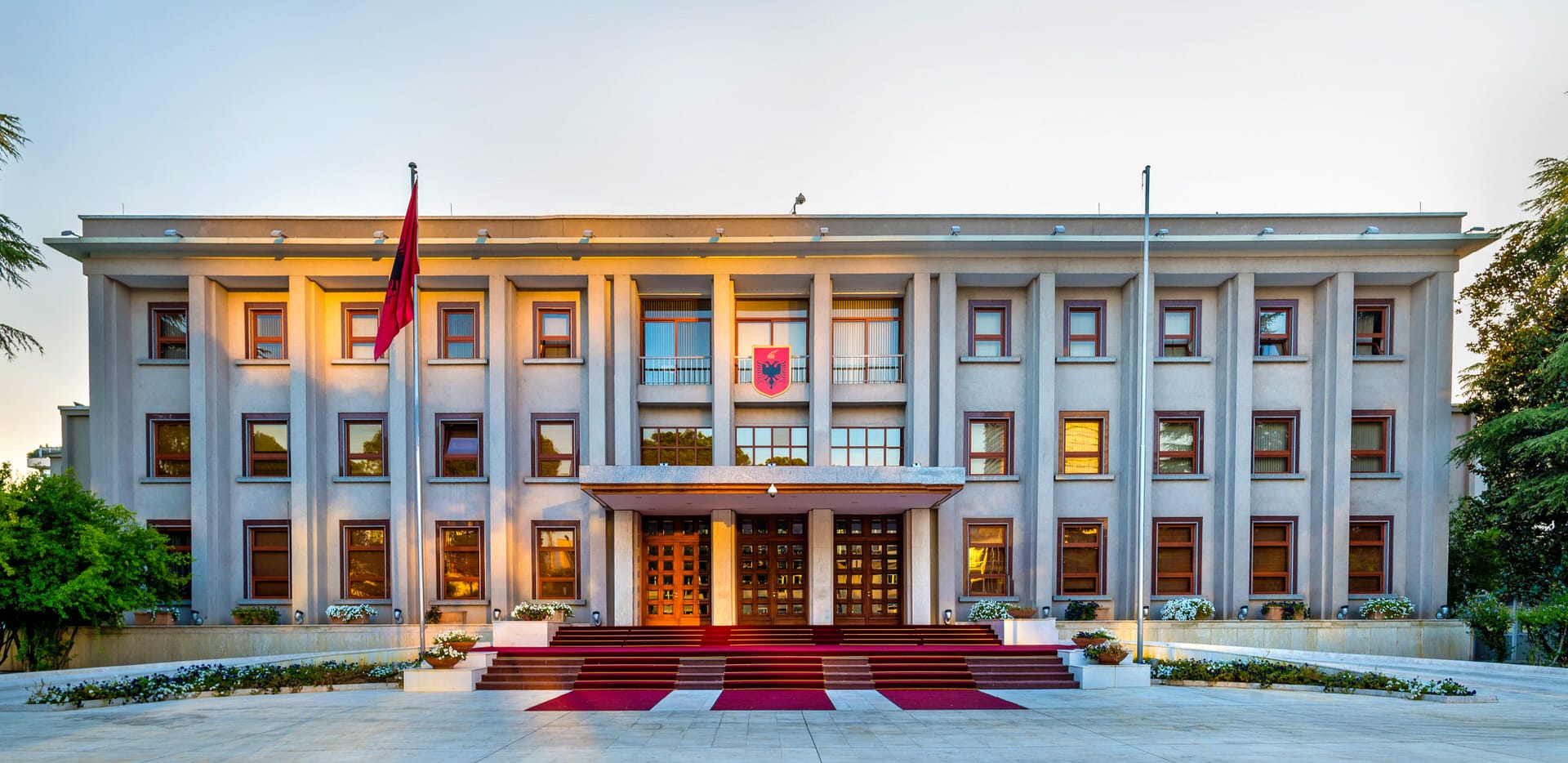
The Democratic Deficit Persists
Thirty-four years after Albania became the last Eastern European country to abandon communist dictatorship in 1990, the nation continues struggling to build functional democratic institutions. While neighbors like Romania and Bulgaria have joined the European Union and consolidated democratic gains, Albania remains mired in political dysfunction, endemic corruption, and weak rule of law.
The numbers tell a sobering story. On Transparency International’s 2023 Corruption Perceptions Index, Albania ranked 101st out of 180 countries—the lowest score in the Western Balkans and far behind EU candidates like North Macedonia (87th) and Montenegro (64th). This persistent corruption undermines democratic consolidation and threatens Albania’s EU membership prospects.
Two-Party Polarization
Albania’s political landscape has been dominated by two parties for three decades: the Socialist Party (descended from the communist-era Party of Labor) and the Democratic Party (founded during the 1990s transition). This duopoly has created a zero-sum political culture that privileges partisan advantage over institutional development.
The Socialist Party, led by Prime Minister Edi Rama since 2013, has won all six elections (three parliamentary, three municipal) over the past decade. Rama’s government promotes itself as committed to European integration and judicial reform, positioning Albania as ready for EU membership.
The Democratic Party, meanwhile, remains fractured by internal conflict. Former Prime Minister Sali Berisha, the party’s founder, was designated “persona non grata” by the US State Department in 2021 over alleged corruption. He was placed under house arrest in December 2023 on charges related to the privatization of public land—charges Berisha denies and characterizes as political persecution.
Berisha’s legal troubles have split the Democratic Party into two factions: one loyal to Berisha despite his house arrest, another seeking to distance the party from his legacy. Both factions fielded competing candidates in recent municipal elections, further weakening Albania’s already ineffective opposition.
Regional Divisions Deepen Political Dysfunction
Albania’s partisan polarization has geographic dimensions rooted in the communist era. Democratic Party leadership typically comes from northern Albania, which experienced harsher totalitarian repression and maintains stronger anti-communist sentiment. Socialist Party leaders predominantly hail from the south, the communist regime’s political base.
This regional favoritism extends into state institutions. When power changes hands, bureaucratic positions shift wholesale to the winning party’s regional loyalists. Albanian parties mobilize regional identity and historical grievances rather than competing on policy platforms. When Democrats hold power, northerners dominate institutions. When Socialists win, southerners replace them. This pattern creates institutional instability and fuels brain drain as competent professionals flee a system based on partisan loyalty rather than merit.
The zero-sum mentality perpetuates distrust in state institutions, which appear to serve partisan interests rather than public welfare. This dynamic traps Albania in ideological conflicts that neighboring countries have moved beyond through merit-based civil service reforms and balanced regional development.
The Corruption Challenge
Despite ongoing EU pressure to implement anti-corruption reforms, graft remains pervasive across Albanian institutions. The European Commission’s 2023 Albania Progress Report noted:
“Corruption remains prevalent in many areas and continues to be a serious problem. Albania needs to demonstrate a more convincing track record of investigation, prosecution and final conviction in cases of corruption at all levels.”
The establishment of SPAK (Special Anti-Corruption Structure) in 2019 represented Albania’s most significant anti-corruption initiative. SPAK has secured high-profile arrests, including:
-
Former President Ilir Meta, arrested in October 2023 on charges of passive corruption and money laundering (Meta denies all charges and remains in pre-trial detention)
-
Multiple former ministers charged in the “incinerator scandal,” involving allegedly fraudulent waste management contracts costing hundreds of millions of euros (defendants deny wrongdoing)
-
Former Prime Minister Sali Berisha, facing corruption charges related to land privatization (Berisha denies charges)
While SPAK’s investigations demonstrate that high-ranking officials can face prosecution, none of these cases has yet produced final convictions. Defendants are presumed innocent until proven guilty in court.
Albania’s judicial system has undergone a controversial vetting process since 2016, intended to remove corrupt or incompetent judges and prosecutors. The process, unprecedented in Europe, has dismissed or prompted resignations from 61% of Albania’s judges and prosecutors, according to justice sector monitoring organizations.
This mass removal created a staffing crisis. As of October 2023, Albania’s Supreme Court operates with only half its intended judges, the Constitutional Court lacks a quorum for many decisions, and lower courts face extensive backlogs.
Critics argue the vetting process, while well-intentioned, has been used selectively for political purposes. Supporters counter that drastic action was necessary given the judiciary’s deep corruption. Either way, the process has left Albania’s justice system weakened precisely when strong institutions are needed to combat corruption.
Press Freedom Concerns
While Albania’s constitution guarantees press freedom, the intermingling of business, political, and media interests undermines independent journalism. Freedom House’s 2024 report rates Albania as “Partly Free” in press freedom, noting:
“Most media outlets exhibit bias favoring either the Democratic or Socialist parties. Reporters face lawsuits, intimidation, and occasional physical attacks. Declining print revenue has depressed journalist salaries, making the profession vulnerable to financial pressure.”
The European Commission’s 2023 Albania report similarly noted concerns about “selective government advertising that rewards friendly outlets while starving critical media of revenue.”
EU Membership Prospects
Albania officially opened EU accession negotiations in July 2022, entering the initial screening phase to assess compliance with EU standards. However, progress remains slow. The accession process involves adopting the EU’s 35 policy chapters into domestic law and implementing political, economic, and administrative reforms.
The European Commission has repeatedly identified corruption and rule of law as major obstacles. Until Albania demonstrates sustainable improvements in judicial independence, anti-corruption enforcement, and democratic institutional strength, full EU membership remains a distant prospect.
Prime Minister Rama has declared Albania’s “European destiny as our anchor to the future.” But rhetoric alone cannot substitute for the difficult institutional reforms required to meet EU standards.
Government Response: Prime Minister Rama has stated that EU membership remains Albania’s “strategic priority” and that institutional reforms are progressing despite opposition criticism. In a September 2024 statement, Rama emphasized that SPAK’s independence and the judicial vetting process demonstrate Albania’s commitment to rule of law. The Prime Minister’s Office did not respond to specific questions about corruption prosecution timelines or judicial vetting completion by publication time.
The Brain Drain Crisis
Albania’s political dysfunction fuels massive emigration of educated professionals seeking opportunity abroad. According to Albanian Institute of Statistics (INSTAT) data, approximately 1.7 million Albanians (nearly 40% of the population) live outside Albania, predominantly in Greece, Italy, and Germany.
This brain drain creates a vicious cycle: talented individuals leave, weakening institutions further, which drives more emigration. Albania loses doctors, engineers, professors, and entrepreneurs who could build a prosperous society but see no future in a system dominated by partisan patronage and corruption.
The 2021 census revealed Albania’s population declined from 2.9 million (2011) to 2.4 million—a 17% drop in just one decade. For a small country aspiring to EU membership, this represents an existential crisis.
What Democratic Consolidation Requires
Political scientists who study post-communist transitions identify several prerequisites for democratic consolidation that Albania has yet to achieve:
Independent institutions: Courts, electoral commissions, and oversight bodies must function independently of partisan control. Albania’s vetting-weakened judiciary and partisan bureaucracy fail this test.
Alternation in power: While Albania has experienced power changes between parties, these transitions haven’t reduced corruption or improved governance—both parties engage in similar patronage practices.
Civic culture: Citizens must trust institutions and participate in civic life beyond voting. Albania’s low institutional trust and high emigration suggest weak civic foundations.
Rule of law: Laws must apply equally regardless of political connections. High-profile corruption cases that drag on for years without convictions undermine this principle.
Media independence: Free press holds power accountable. Albania’s financially struggling, politically aligned media cannot fulfill this role.
Albania possesses the formal structures of democracy—elections, parliament, constitution—yet lacks the informal norms and civic habits that make democracy function effectively. Until political leaders prioritize national development over partisan advantage, and until citizens demand accountability rather than tribal loyalty, the country will remain stuck in this quasi-democratic limbo.
Regional Context and External Pressures
Albania maintains generally positive relations with regional neighbors, though occasional tensions arise. The country is a NATO member (since 2009) and maintains close security cooperation with the United States, which enjoys high popularity among Albanians for supporting Kosovo’s independence and backing Albania’s Euro-Atlantic integration.
However, Prime Minister Rama’s diplomatic outreach to Serbian President Aleksandar Vučić has generated controversy in Albania and Kosovo. Critics argue that Rama’s pragmatic engagement with Serbia overlooks unresolved tensions between Serbia and Kosovo, where ethnic Albanian populations continue facing discrimination.
Albania also faces external security challenges. In 2022, the country endured devastating cyberattacks targeting government infrastructure, attributed to Iranian actors. Hackers disrupted government websites and leaked sensitive data, including intelligence officer identities and border crossing records. The attacks exposed Albania’s vulnerability to technological sabotage and prompted closer cybersecurity cooperation with NATO allies.
The Path Forward
Albania’s democratic future depends on breaking the pattern of partisan zero-sum politics and building institutions stronger than personalities. This requires:
Completing judicial reform: Filling vacant judgeships with qualified professionals while maintaining vetting standards to prevent corruption’s return.
Professionalizing the civil service: Establishing merit-based hiring and job security to reduce partisan influence in government institutions.
Strengthening media independence: Supporting diverse, financially sustainable journalism through transparent public media funding and legal protections for reporters.
Demonstrating anti-corruption results: SPAK must produce final convictions in high-profile cases to prove that justice applies to powerful officials, not just rhetoric.
Building cross-party consensus: On EU integration and institutional reform, moving beyond treating every issue as a partisan battleground.
The European Commission’s next Albania progress report, scheduled for October 2025, will assess whether the country has made meaningful advances. Without substantial progress on corruption and rule of law, Albania’s EU membership timeline could extend indefinitely.
Conclusion: Democracy as Continuous Struggle
Albania’s experience demonstrates that holding elections and writing constitutions doesn’t automatically produce functioning democracy. Three decades after communism’s fall, Albania possesses democratic forms but lacks democratic substance—a cautionary tale about the difficulty of building liberal institutions in societies lacking strong civic traditions.
Yet Albania’s story also shows progress is possible. SPAK’s investigations, however incomplete, would have been unthinkable a decade ago. The judicial vetting process, despite its costs, has removed demonstrably corrupt officials. Media outlets, though struggling financially, continue exposing scandals.
The question is whether these tentative institutional gains can withstand partisan pressure and mature into sustainable democratic governance. Albania’s 2.4 million remaining citizens, having waited 34 years for prosperity and justice, deserve an answer soon.
Sources:
Albanian Institute of Statistics (INSTAT). “Population and Housing Census 2021” instat.gov.al. May 2022.
European Commission. “Albania 2023 Report” ec.europa.eu. November 2023.
Freedom House. “Freedom in the World 2024: Albania” freedomhouse.org. February 2024.
Transparency International. “Corruption Perceptions Index 2023” transparency.org. January 2024.
EurActiv. “Albania Justice Reform Monitoring Report” euractiv.com. October 2023.
Additional Reading:
AlbaniaVisit. “Albania EU Membership”
AlbaniaVisit. “Albania Corruption”
AlbaniaVisit. “SPAK Albania Anti-Corruption”