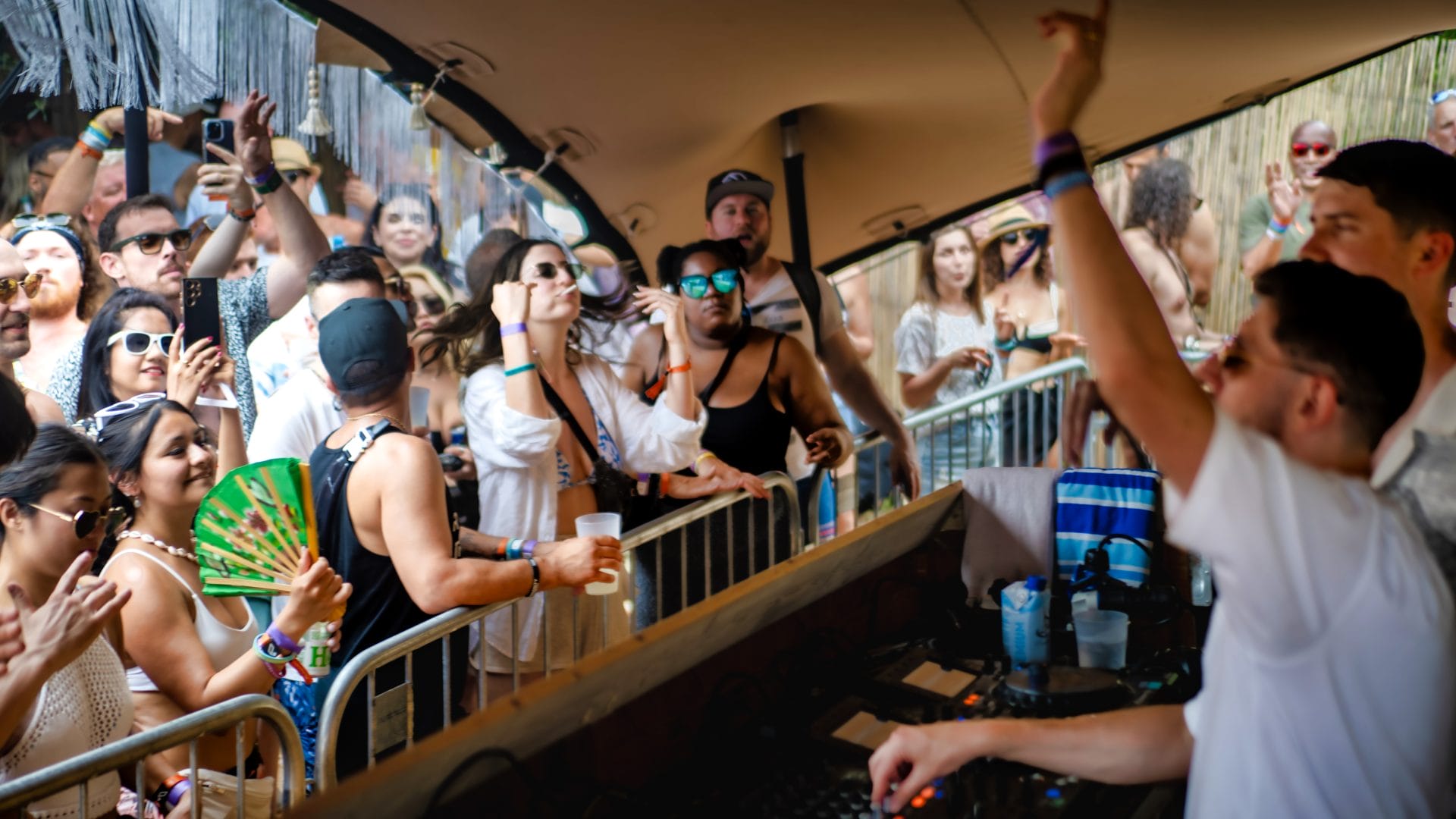
The transformation of Albania’s coastline into Europe’s newest electronic music destination represents one of 2025’s most compelling cultural developments.
Along this pristine stretch of the Mediterranean coastline, something remarkable has taken shape. This festival ecosystem combines natural beauty, cultural heritage, and cutting-edge sound in ways that feel entirely new.
Albania’s Music Festival Scene
The story begins in 2018 when Kala Festival first brought international electronic music to the shores of Dhërmi.
What started as an experiment has evolved into a sophisticated season of events spanning May through September.
This evolution becomes particularly significant in 2025, as improved infrastructure makes the region more accessible while carefully preserving its unique character.
The completion of the Llogara Tunnel in summer 2023 has significantly transformed the visitor experience in the region.
This engineering achievement provides a direct route through the mountains that previously required navigating the winding Llogara Pass.
Festival-goers now have a choice: take the efficient tunnel route or opt for the historic mountain road, which offers spectacular coastal views.
While plans for Vlorë International Airport continue to develop with a tentative 2026 target, current access routes through Tirana International Airport and Corfu (with ferry connections to Saranda) serve the region well.
The 2025 Festival Calendar
May: Opening the Season
The festival season begins with the Color Day Festival in Tirana’s historic Skanderbeg Square. This free celebration, requiring registration through VIVERE.AL transforms the capital’s heart with a combination of electronic music and chromatic celebration. May’s moderate temperatures around 23°C (73°F) create ideal conditions for this urban introduction to Albania’s festival culture.
June: Peak Season Begins
June 2025 marks a pivotal moment with Anjunadeep Explorations (June 12-17), celebrating its fifth year of music, community, and connection in Dhërmi. This carefully curated event exemplifies the sophistication of Albania’s festival evolution, offering six nights of programming that extend through to Wednesday morning, June 18.
Explorations transform multiple venues, including Empire, Splendor, and The Cove, each offering distinct experiences and acoustic environments. The festival’s approach to programming strikes a balance between intensity and sustainability, featuring intimate Gjipe Beach parties and extended sunrise sessions, complemented by an extensive wellness program that includes diverse classes suitable for all levels.
Accommodation for Explorations reflects the festival’s thoughtful organization, with options spanning four distinct areas:
-
Festival site locations (requiring 5-night minimum stays)
-
Dhërmi beach hotels (4-night minimum)
-
Perivolos accommodations (3-night minimum)
-
Drymades options (3-night minimum)
Packages start at £340 per person, which includes festival tickets and accommodation. This pricing structure, combined with local costs (meals: €5-15, drinks: €4-8), maintains accessibility while ensuring high-quality experiences.
Anjunadeep Explorations, Dhermi Beach, Albania
The Festival Calendar
To understand how Albania’s festival scene operates, imagine it as a carefully orchestrated sequence, with each event carefully chosen to complement the region’s changing seasons and landscapes.
The journey begins in May, when the Color Day Festival transforms Tirana’s historic Skanderbeg Square.
This free event, requiring registration through vivere.al, serves an important purpose: it introduces visitors to Albanian festival culture in an accessible urban setting, where temperatures averaging 23°C (73°F) create ideal conditions for outdoor celebration.
As spring transitions to early summer, the South Outdoor Festival in Borsh village showcases how electronic music can enhance rather than overshadow local traditions.
Think of it as a cultural bridge, where contemporary sound meets centuries-old Albanian heritage.
June marks a significant shift as Kala Festival returns to Dhërmi, the event that first proved Albania’s potential as a festival destination.
During this time, long Mediterranean days and water temperatures of 21°C (70°F) allow for a distinctive rhythm: sun-soaked beach sessions flow naturally into night-time musical exploration.
Kala’s uses the coastline’s varying topography, transforming beach coves and cliff-top locations into distinct musical environments.
When July arrives, bringing temperatures up to 30°C (86°F), Turtle Fest adapts to the heat with thoughtful programming at Drymades Beach.
Consider how the music mirrors the day’s natural arc: ambient and deep house sounds accompany the intense afternoon sun, gradually building energy as evening brings cooler air.
This three-day event showcases how festivals can promote environmental awareness, with proceeds benefiting local marine conservation efforts.
September brings what many consider the season’s crowning achievement: ION Festival.
The timing is deliberately chosen - 25°C (77°F) days, warm seas, and diminished tourist crowds create perfect conditions for extended musical programming.
ION’s most celebrated innovation is its Gjipe Beach stage, accessible only by speedboat, where limestone cliffs and crystal waters create an acoustic environment unlike anywhere else in Europe.
Natural Acoustics Meet Modern Engineering
Understanding Albania’s festival scene requires appreciating how its unique geography shapes the musical experience.
Dhërmi, which serves as the focal point of the scene, offers a natural amphitheater where mountains meet the sea.
Sound engineers have discovered that these geological formations not only create stunning backdrops but also actively enhance audio quality in ways that conventional venues can’t match.
Consider how each major venue utilizes these natural advantages differently:
Dhërmi Beach’s main festival space teaches us about scale and proportion.
With an 8,000-person capacity, it demonstrates how proper sound design can maintain audio clarity even as crowd sizes grow.
The beach’s gradual slope creates a natural stadium-style viewing experience, while the surrounding elevations offer acoustic reflection that helps contain and focus the sound.
Gjipe Beach reveals the potential of intimate spaces. Although it could hold 2,500 people, organizers cap attendance at 1,800—a decision that prioritizes the experience over profit.
The limestone cliffs that frame this venue create such perfect acoustic conditions that sound systems can operate at lower volumes while maintaining clarity, reducing both energy consumption and environmental impact.
Festival Goers, Anjunadeep Explorations, Gjipe Beach, Albania
Festival Costs
To appreciate Albania’s festival economy, it is necessary to view it within a broader European context.
When significant events like ION and Kala price their passes between €180 and € 230 (with early bird options around €150), they’re offering something remarkable: world-class production values at roughly half the cost of comparable Western European festivals.
Smaller events, such as Turtle Fest, priced at €90-120, make this scene even more accessible while maintaining high standards.
The daily economics tell an equally compelling story about why this scene has grown so organically.
When a local restaurant meal costs €6-10, or beach club dining runs €12-18, festival-goers can fully immerse themselves in the experience without constant financial pressure.
The price of a local beer (€2-3) or festival drink (€4-5) recalls the early days of European festival culture, before commercialization began driving costs upward.
Transportation costs reflect how the region’s geography has been thoughtfully integrated into the festival experience.
Consider the water taxi service to Gjipe Beach - at €15-20, the 15-minute journey becomes more than just transport.
Departing every 30 minutes during events, these boats transform necessary travel into a memorable part of the festival narrative.
Regular taxi services between beaches, capped at around €12, keep the various venues connected without creating financial barriers.
The accommodation landscape reveals how different aspects of Albanian culture contribute to the festival experience.
Beachfront boutique hotels (€90-140 per night) cater to those seeking modern comforts, while hillside apartments (€45-80) offer something more distinctive: shared terraces that have organically evolved into community spaces where festival-goers gather for sunrise.
Traditional guesthouses (€30-40) provide authentic Albanian hospitality, and villa sharing (€35-45 per person) makes luxury accessible through community.
Anjunadeep Music Festival in Gjipe Beach, Albania
The Technology Behind the Experience
The technical infrastructure supporting these festivals demonstrates how modern engineering can enhance rather than dominate natural environments.
Take ION Festival’s main stage: its Void Acoustics Arcline array operates at just 60% capacity, not because of sound limitations, but because the natural amphitheater does much of the work.
This represents a fundamental shift in how festival sound can be approached - working with the environment rather than against it.
Gjipe Beach’s sound design exemplifies this philosophy perhaps more clearly than any other.
Engineers use 3D acoustic modeling to map how sound waves interact with the limestone cliffs, positioning speakers to use these natural features as amplifiers.
The result is an audio experience that feels both powerful and organic, achieving festival-level sound with minimal environmental impact.
Marsh and Simon Doty, Anjunadeep Explorations, Gjipe Beach, Albania
A New Approach to Festival Infrastructure
Festival organizers have addressed practical challenges by understanding how modern convenience can coexist with authentic experience.
The selective approach to connectivity illustrates this balance perfectly: while main venues offer robust Wi-Fi and mobile coverage through temporary base stations, Gjipe Beach maintains limited connectivity, preserving its role as a place where technology takes a step back and music takes center stage.
The cashless payment systems used at major events reflect a similar approach - embracing modern efficiency where it matters, while encouraging traditional cash transactions in surrounding communities.
This hybrid approach helps maintain the local economy’s character while ensuring festival operations run smoothly.
Looking Forward: 2025 and Beyond
In 2025, Albania’s festival scene stands at a fascinating juncture.
With the Llogara Tunnel now facilitating easier access and plans for Vlorë International Airport progressing, the region faces its greatest challenge: balancing authenticity with growth.
Yet the thoughtful development we’ve seen so far suggests this balance is achievable.
What makes this moment particularly significant is that it represents a new model for festival culture development—one that prioritizes integration over imposition, sustainability over short-term gains, and community benefit over pure profit.
For those who understand festival culture as something that should enhance rather than exploit its host environment, Albania offers both inspiration and invitation.