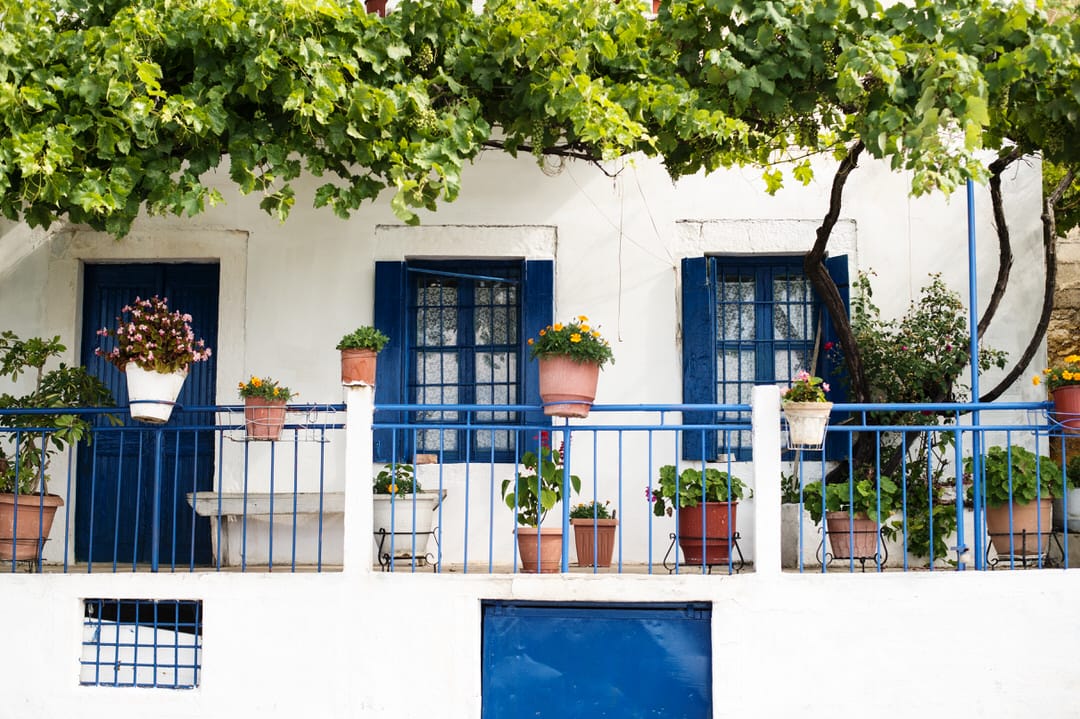
Hillside Village Between Dhërmi and Himarë
Vuno occupies mountainside position approximately 2 kilometers inland and 250 meters above sea level, cascading down steep slope with stone houses, narrow lanes, and terraced gardens typical of traditional Albanian coastal villages. The settlement sits between Dhërmi (6 kilometers north) and Himarë (12 kilometers south), accessible via turn-off from coastal road (SH8) that climbs winding mountain road to village center.
The village architecture reflects construction patterns similar to Qeparo—stone houses built primarily 18th-19th centuries using local limestone, narrow windows for summer heat protection, external staircases accessing upper floors, courtyards enclosed by stone walls, and slate or stone tile roofing. The buildings cascade down hillside following terrain, creating layered visual composition with houses stacked above one another connected by stone-paved lanes too steep and narrow for vehicle access beyond village perimeter.
Like other Albanian Riviera mountain villages, Vuno experienced substantial depopulation following communism’s collapse in 1991. The village once housed 150-200 residents in extended family compounds, with agriculture (olives, grapes, vegetables on terraced plots), livestock (goats, sheep), and subsistence economy sustaining population for generations. Post-1991 emigration—primarily to Greece where linguistic and cultural connections existed (many Vuno families historically spoke Greek as primary language, reflecting region’s Greek minority population), and later to broader European Union destinations and United States—reduced permanent population to approximately 40-50 year-round residents by 2020s, predominantly elderly maintaining family properties and small-scale agriculture.
Tourism provides supplementary economy. Several families converted traditional houses to guesthouses operating seasonally (June-September), offering basic accommodation (shared or private bathrooms, breakfast included, family-operated service) at budget prices substantially below more developed Albanian Riviera destinations. The village maintains 2-3 small restaurants serving traditional Albanian coastal fare during summer season, with most facilities closing October-May when population shrinks to minimal core and winter weather reduces tourism to near-zero.
The depopulation creates atmosphere combining architectural preservation with evident decline—some houses show careful maintenance by diaspora families using properties for summer holidays, others stand partially collapsed with vegetation reclaiming structures, and overall village character reflects diminished community maintaining physical presence without vibrant social life that population of 150-200 once created.
Why Visit Vuno
Vuno attracts travelers seeking budget Albanian Riviera accommodation (€17-35/night guesthouses) between more expensive Dhërmi and Himarë, gateway position for Gjipe Beach access (3 kilometers via 45-minute hiking trail), traditional hillside village architecture and depopulation study similar to Qeparo, quieter atmosphere than beachfront resorts with family-run guesthouse hospitality, authentic Albanian coastal village experience despite diminished population, and positioning enabling day trips to multiple Albanian Riviera destinations from single accommodation base.
What Vuno offers: Stone village architecture demonstrating traditional coastal Albanian building patterns, guesthouse accommodation in converted family homes (€17-35/night including breakfast, family meals often available for additional €8-12), access to Gjipe Beach via hiking trail departing from village or nearby coastal parking areas, views over Albanian Riviera coast from elevated hillside position, authentic atmosphere reflecting working village adapted to seasonal tourism rather than pure tourism destination, positioning between Dhërmi and Himarë enabling exploration without daily accommodation changes, and budget prices substantially below developed beach resorts.
What Vuno doesn’t offer: Beachfront location (the village sits 2 kilometers inland requiring vehicle or steep 30-40 minute walk to reach coast), extensive services or facilities (no ATMs, limited shops, 2-3 restaurants only during summer), sophisticated accommodation or tourism infrastructure, English proficiency beyond basic transactional vocabulary, varied activities beyond hiking to Gjipe and village exploration, vibrant social life or cultural programming (limited permanent population reduces community vitality), or dramatic visual impact beyond pleasant hillside village setting.
Skip Vuno if you prioritize: Beachfront accommodation with immediate water access, extensive services and tourism infrastructure, English-speaking environments and international standards, vibrant atmosphere and varied entertainment, sophisticated dining and accommodation, varied activities beyond hiking and basic exploration, or destinations offering immediate memorable experiences beyond functional budget base.
Choose Vuno if you value: Budget Albanian Riviera accommodation, gateway position for Gjipe Beach access without camping or difficult logistics, traditional village architecture and depopulation study, quieter alternative to developed beach resorts, authentic Albanian village hospitality despite diminished population, positioning between Dhërmi and Himarë for regional exploration, or acceptance of limited services and modest character in exchange for budget prices and authenticity.
The honest assessment: Vuno functions primarily as budget accommodation base and Gjipe Beach gateway rather than compelling destination independently justifying travel. The village offers pleasant traditional architecture and authentic atmosphere, but depopulation reduces cultural vibrancy to elderly remnant population adapting traditional homes for seasonal tourism. The appeal rests in practical considerations—budget prices, Gjipe access, positioning between developed resorts—rather than exceptional beauty, distinctive character, or memorable experiences. Vuno works best for budget-conscious travelers seeking Albanian Riviera access with realistic expectations about limited services, modest village scale, and diminished community vitality resulting from decades of emigration.
Gateway to Gjipe Beach
Vuno’s primary function for visitors involves accessing Gjipe Beach—one of Albanian Riviera’s most dramatic coastal destinations featuring canyon, white pebble beach, clear Ionian waters, and isolation creating wilderness character unusual on increasingly developed Albanian coast. The beach sits at mouth of Gjipe Canyon where steep limestone gorge meets sea, accessible via hiking trails from either Vuno side (inland approach) or coastal parking areas near Dhërmi.
The hiking route from Vuno follows 3-kilometer path (approximately 45 minutes to 1 hour depending on pace and conditions) descending from village through olive groves and scrubland before reaching canyon and beach. The trail is inconsistently marked—some sections have cairns or painted markings, others require navigation by general direction and asking locals for guidance. The descent involves uneven terrain, loose rocks, and steep sections requiring proper footwear (hiking shoes or sturdy athletic shoes rather than sandals or flip-flops). Water and sun protection are essential—summer temperatures can exceed 30-35°C with limited shade along route.
Alternative access uses coastal parking areas approximately 3 kilometers north of Vuno where secondary roads descend from SH8 highway toward coast. From these parking points, trails descend to Gjipe Beach via different route (approximately 30-40 minutes), with some local operators offering 4x4 transport partway toward beach for reduced hiking distance. The coastal approach avoids Vuno entirely, meaning travelers can access Gjipe from Dhërmi, Himarë, or other Albanian Riviera bases without specifically visiting Vuno village.
Gjipe Beach itself features white pebble composition, dramatic canyon walls rising directly from shore, clear water ideal for swimming and snorkeling, complete lack of facilities or services (no sunbeds, restaurants, bathrooms, fresh water), and wilderness character requiring visitors bring all supplies and remove all waste. Summer season (July-August) brings 50-100+ daily visitors creating crowded conditions unusual for isolated beach, while June and September offer fewer visitors with maintained beach quality. The beach supports camping—travelers sometimes spend nights on beach despite lack of facilities, though this remains informal arrangement without official campground infrastructure.
The Gjipe experience depends heavily on timing and expectations. Travelers seeking dramatic coastal scenery, clear waters, and isolation (during quieter periods) find Gjipe justifies the hiking effort. Those expecting facilities, easy access, or guaranteed solitude (during peak season) often feel disappointed. Vuno’s value as gateway depends on whether travelers prefer village accommodation with hiking access versus camping directly at Gjipe or staying in beachfront resorts (Dhërmi, Himarë) and hiking from coastal parking areas.
Practical Vuno
Getting There: Vuno lies approximately 170 kilometers from Tirana via coastal road through Vlorë and Llogara Pass, requiring 3.5-4 hours by car. The turn-off from SH8 coastal highway sits between Dhërmi and Himarë, marked by basic signage, with 2-kilometer winding mountain road climbing to village.
Public buses connecting Tirana to Sarandë (and reverse) pass Vuno turn-off on SH8 highway, but don’t enter village—travelers must walk 2 kilometers uphill (30-40 minutes steep climb) or arrange transport with accommodation hosts (typically €5-10 for pickup). The furgon (minibus) schedule remains informal—departures when vehicles fill rather than fixed times, with summer frequency higher than shoulder seasons.
Private vehicle travel offers greatest flexibility for Albanian Riviera exploration and Gjipe Beach access. Car rental in Tirana (€25-40 daily for compact car) or Sarandë enables independent travel. The coastal road is paved and generally good condition, though winding with steep sections and dramatic drop-offs requiring careful driving.
Accommodation: Vuno offers approximately 6-8 operating guesthouses during summer season, with basic accommodations (€17-35/night including breakfast) providing family-run hospitality in converted traditional houses. The lodging typically features simple rooms with basic furniture, shared or private bathrooms, inconsistent hot water, limited WiFi, and family meals available for additional cost (€8-12 for dinner). The atmosphere emphasizes authentic Albanian hospitality rather than professional hotel service—hosts prepare meals in family kitchens, share information about local trails and beaches, and maintain properties alongside their own family use.
July-August requires advance booking for available beds—the limited accommodation fills quickly during peak season. June and September offer better availability with 20-30% lower prices. October-May sees most properties closed, with perhaps 1-2 guesthouses available by advance arrangement for hardy off-season travelers.
Dining: The village operates 2-3 small restaurants during summer season, serving traditional Albanian coastal fare—grilled meats (qofte, lamb, chicken), grilled fish (purchased from Himarë or coastal fishermen), byrek, salads, and beverages. Meals cost €8-15 per person including main course and drinks. The quality is adequate to good with home-cooking character, though menus remain limited and repetitive. Most guesthouses offer dinner (€8-12 per person) as alternative to restaurant dining, often providing better food in family setting.
The village store operates irregular hours selling basic supplies (water, snacks, beverages) at prices higher than coastal towns due to transport costs. Travelers planning extended stays should purchase supplies in Himarë or Dhërmi before ascending to village.
Activities: Hiking to Gjipe Beach dominates visitor activities. The village offers limited alternatives—walking stone lanes exploring traditional architecture, observing agricultural activities (olive groves, gardens), views over coast from elevated positions, and evening socializing in village square or restaurant terraces. The atmosphere emphasizes relaxation and simplicity rather than organized activities or varied entertainment.
Day trips to Dhërmi (6km north, 15 minutes by car) provide developed beach facilities, more restaurants, and livelier atmosphere. Himarë (12km south, 20 minutes) offers urban services including ATMs, medical clinic, supermarkets, and varied accommodation. Porto Palermo Castle (20km south, 30 minutes) provides historical site with Ottoman fortress ruins and small beach.
Timing: June and September provide optimal conditions—warm temperatures (24-28°C), swimmable water at Gjipe (22-25°C), fewer visitors than July-August, and 30-40% lower accommodation prices. July-August brings warmest water (25-27°C), guaranteed sunny weather, complete service availability, highest prices, and maximum crowds at Gjipe Beach reducing isolation appeal.
May and October offer shoulder-season budget options with dramatic price drops but cooler water (18-22°C), reduced services as properties close, and weather uncertainty.
Money and Logistics: No ATMs exist in Vuno—withdraw cash in Himarë or Dhërmi before arriving. Budget €30-50 daily including accommodation, meals, Gjipe hiking supplies, and transport. Cash is required for all transactions.
Mobile coverage is inconsistent—reliable in some village sections, weak or absent in others. English proficiency is minimal—Italian is more commonly understood reflecting historical regional patterns. Albanian phrases or translation apps prove essential for communication beyond basic transactions.
Nearby Destinations
Gjipe Beach (3km, 45 min hike): Dramatic canyon beach with white pebbles, clear Ionian waters, complete isolation without facilities, wilderness character requiring self-sufficiency, and wilderness camping opportunities.
Dhërmi (6km north, 15 min drive): Albanian Riviera’s most developed beach resort south of Vlorë, with boutique hotels, beach clubs, varied restaurants, and lively atmosphere contrasting Vuno’s quiet village character.
Himarë (12km south, 20 min drive): Coastal town with Greek cultural influences, multiple beaches, urban services (ATMs, medical clinic, supermarkets), varied accommodation and dining, and livelier atmosphere than Vuno.
Porto Palermo Castle (20km south, 30 min drive): Ottoman fortress on peninsula creating dramatic bay setting, attributed to Ali Pasha of Tepelenë, with free access to ruins and small beach below castle.
Borsh (25km south, 35 min drive): Albania’s longest beach at 7 uninterrupted kilometers, Borsh Castle ruins spanning 2,400+ years, olive oil production villages, and budget-friendly alternative to developed resorts.
The Quiet Village Gateway
Vuno occupies uncertain position between preservation and abandonment. The traditional architecture survives in adequate condition—better than completely deteriorated villages elsewhere in Albania, but showing obvious decline from depopulation and minimal investment. The tourism adaptation provides economic justification for maintaining structures and seasonal population presence, but doesn’t create vibrant community or reverse demographic decline that reduced village to fraction of historical population.
The appeal rests in specific functional purposes—budget Albanian Riviera accommodation, Gjipe Beach gateway, traditional village atmosphere for those interested in rural Albanian demographic patterns—rather than exceptional beauty, memorable experiences, or distinctive cultural programming. Travelers seeking exceptional Albanian Riviera experiences, dramatic scenery, or vibrant atmosphere find better options in beachfront resorts or more distinctive villages. Those prioritizing budget, Gjipe access, and authentic (if diminished) village character with realistic expectations about limitations and modest services find Vuno delivers adequately on these specific promises.
The village continues slowly changing—new guesthouse construction by diaspora families investing tourism income, gradual property sales to outside buyers, and adaptation toward seasonal tourism economy. Whether this stabilizes remaining population or eventually transforms village into summer vacation homes for urban Albanians and foreigners remains uncertain. For now, Vuno exists in transitional state—traditional architecture maintained, diminished population adapted to seasonal tourism, and uncertain future reflecting broader Albanian rural demographic challenges.