How to Get to Theth
From Tirana
- By Car: 100km to Shkodër (1.5-2 hours), then 70km to Theth (2 hours on rough mountain road). Total: 3.5-4 hours. Road closed November-May by snow - summer only access (June-September).
- By Furgon: Summer minibuses from Shkodër to Theth. Irregular schedule, requires coordination. Most travelers hire taxi/driver (€50-70 from Shkodër).
- By Tour: Organized tours from Tirana or Shkodër starting at €70-90 including transport and guide.
From Shkodër
- By Car/4WD: 70km (2 hours). Road is rough, unpaved in sections, requires careful driving. Not recommended for nervous drivers or low-clearance vehicles.
- By Furgon: Summer minibuses (June-Sept) depart Shkodër irregularly. Ask at hotels for current schedules.
Important: Theth is literally the end of the road. No vehicle access beyond the village. Bring cash - no ATMs. Zero mobile coverage except limited satellite WiFi at some guesthouses.
Why Visit Theth
In 1997, a Theth man killed someone. Could have been deliberate, could have been accidental - under Kanun blood feud law, it didn’t matter. The victim’s family now had legal right to kill him or any adult male in his family. Blood for blood. Life for life.
He isolated himself in his home’s defensive upper floors. Emerging only at night to work fields while family and village elders negotiated reconciliation. The isolation lasted seventeen years - 1997 to 2014 - when Catholic priests finally mediated an agreement both families accepted.
Seventeen years effectively imprisoned in your own house because customary law said your neighbors could legally execute you on sight.
That’s the level of tradition that persisted in northern Albanian valleys through independence (1912), communist period (1944-1991), and into post-communist era. The Kanun - customary law code governing mountain communities for centuries. Hoxha’s communists tried to suppress it through force (executing people for blood feuds, demolishing lock-in towers), but when communism collapsed in 1991, some families revived dormant feuds frozen for decades.
The lock-in tower (kulla e ngujimit) in Theth’s village center stands three stories of rough-cut limestone. Thick walls stop rifle fire. Small windows for defensive observation. This architectural form isn’t decorative - it’s functional response to blood feud reality. Men under Kanun death sentence isolating in defensible positions while negotiations happened.
Now some are guesthouses where tourists sleep unaware.
Albania’s Most Iconic Hike
Theth-Valbona Pass: 1,795 meters, 6-8 hours, 12-14km connecting two glacial valleys via mountain crossing with zero road access. Albania’s most iconic trek.
The trail starts near Theth church, initially following the valley upstream through traditional fields and stone houses. Enters beech forest around 1km. First 3km gain elevation gradually, crossing streams via log bridges, passing shepherd’s huts still used for summer grazing.
Around 1,200m elevation: forest ends, alpine meadows begin. Wildflowers bloom June-July. Shepherds move flocks to high pastures for summer. The final approach to Valbona Pass steepens considerably - rocky switchbacks where the exact path varies depending on erosion, snowmelt, informal route-finding. The general direction (upward toward the visible saddle between peaks) remains obvious.
The pass itself: broad saddle between Mount Radohima (2,570m) south and peaks rising north. Small seasonal refreshment stand (June-Sept) sells drinks/snacks/simple food at prices reflecting donkey-back logistics.
From Valbona Pass, the descent reveals dramatic views: layer upon layer of mountain ridges extending toward Kosovo border. Valbona River valley cutting through peaks below. Traditional houses appearing as small white blocks against green valley floor. Rocky trail through alpine meadows, entering forest halfway down, finally reaching Valbona village.
July-August: most reliable weather, though afternoon thunderstorms develop rapidly. Local guides recommend 6 AM starts to reach pass before storms typically form (early afternoon). June: lingering snow on approaches, muddy conditions. September: autumn colors, increasing weather instability as winter approaches. Outside June-September: snow and weather make crossing dangerous without winter mountaineering equipment.
Logistics are complicated: no road connects the valleys. Common solutions: (1) Arrange guesthouse transport via Lake Koman ferry and furgon connections. (2) Hike both directions on separate days to return to your vehicle. (3) Plan one-way travel leaving via Valbona toward Kosovo or Shkodër.
Moderate to high fitness required. 1,015m elevation gain + 795m descent + rocky terrain + 6-8 hour duration = genuine mountain hiking, not casual walking.
The Spring with No Bottom
Blue Eye (Syri i Kaltër): 3km from village center, 45-minute walk through mixed beech/pine forest. Small pool where water wells up from depth, shades of turquoise blue from minerals dissolved in limestone plus light refraction through exceptionally pure water.
Temperature: constant 6-8°C year-round. Cold enough to cause pain and breathing difficulties if you swim more than briefly. Locals do it. Tourists try once.
In 2018, researchers used sonar to measure depth. Readings beyond 50 meters without reaching bottom. The actual depth remains unknown. The spring likely connects to extensive underground water systems extending through surrounding mountains. Volume of water flow (several cubic meters per second, varying seasonally) indicates large catchment area feeding multiple underground tributaries.
Pre-Christian locals held the spring sacred, performed seasonal rituals. Catholic missionaries (reaching Theth in 19th century) adapted rather than eliminated traditions - blessing the spring during Easter and other religious festivals. The hybrid practices persist in modified form. Visitors still see small offerings left at the spring, though meanings have shifted from pre-Christian propitiation to Catholic petition to tourist impulse.
Beyond Blue Eye: Grunas Waterfall (~30m high, 2-hour hike from village). Swimming holes in Theth River where summer temperatures are merely painful rather than impossible. Traditional irrigation channels still visible throughout valley, carrying spring water to terraced fields where families grew corn, potatoes, vegetables supplementing livestock-based economy.
Where the Road Ends
Theth sits at 780m elevation in a glacial valley carved during the Würm glaciation (115,000-11,700 years ago). U-shaped valley floor, steep sides, hanging valleys where tributary streams drop via waterfalls. Erratic boulders deposited by retreating ice.
The road from Shkodër (70km, 2 hours) closes November-May under snow. Summer only access June-September. When you arrive, the road ends. Literally. This is the end.
No hotels. No restaurants beyond guesthouse dining rooms. No shops. No ATMs. No mobile coverage (some guesthouses have satellite WiFi). Power outages occasional. Vegetarian options available if requested in advance but expect mountain cuisine: byrek, tavë kosi, grilled peppers, cornbread, mountain cheese.
Family-run guesthouses €15-25/person including breakfast and dinner. Shared tables. Raki after meals. Stories about valley life. Shared bathrooms common in budget options. Slightly nicer places (€25-35) have private bathrooms but still family-run authenticity.
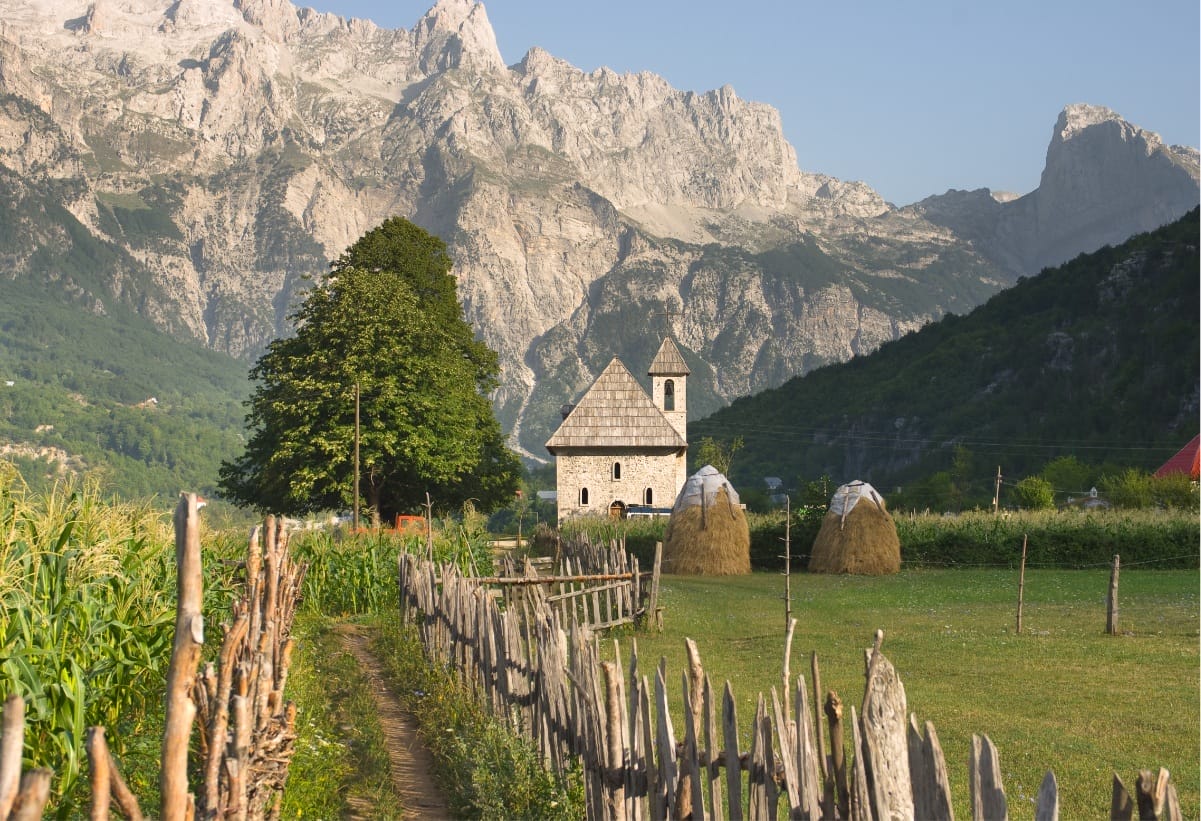
Population varies: ~400 summer, ~100 winter (depending on who counts seasonal residents). Towers throughout the village - some converted to guesthouses, some abandoned, some still family homes. Catholic Church of Theth (1892) with distinctive wooden bell tower visible across valley. Church records documenting blood feud reconciliations 1991-present.
Theth National Park (established 1966, ~2,630 hectares) protects mixed ecosystems: beech forests (Fagus sylvatica), black pine (Pinus nigra), alpine meadows above 1,800m tree line, limestone peaks reaching 2,500+ meters. Brown bears (10-20 estimated), wolves, chamois, golden eagles, endemic Balkan flora.
Human habitation within national park creates management tensions common to European protected areas where traditional communities predate conservation. Residents maintain customary rights to farm, graze livestock, harvest forest resources, live in valley despite park status. Debates over development (pave the road? expand guesthouses? improve electricity?) reflect larger questions about balancing tourism revenue, environmental protection, traditional lifeways.
The End of the Road
Budget €30-45 daily including guesthouse full board, guide if desired, modest supplies. Bring cash - zero ATMs. Bring supplies from Shkodër - limited options in Theth. Bring proper hiking gear if attempting Valbona Pass. Bring flashlight for power outages. Bring acceptance that mobile/internet won’t work.
This is Albania’s last wild alpine valley accessible without technical mountaineering. Blood feud towers where men lived imprisoned by customary law. Springs flowing from unmeasured depths. The iconic Valbona Pass crossing 1,795 meters. Complete disconnection from digital life. Guesthouse hospitality where families share meals, stories, raki.
Not for everyone. Perfect for hikers seeking genuine mountain experience. The valley carved by Ice Age glaciers is waiting. The towers remember blood feuds. The spring still flows at 6-8°C from depths sonar can’t measure.
The road ends at Theth. What happens next is up to you.