The Village That Became Two
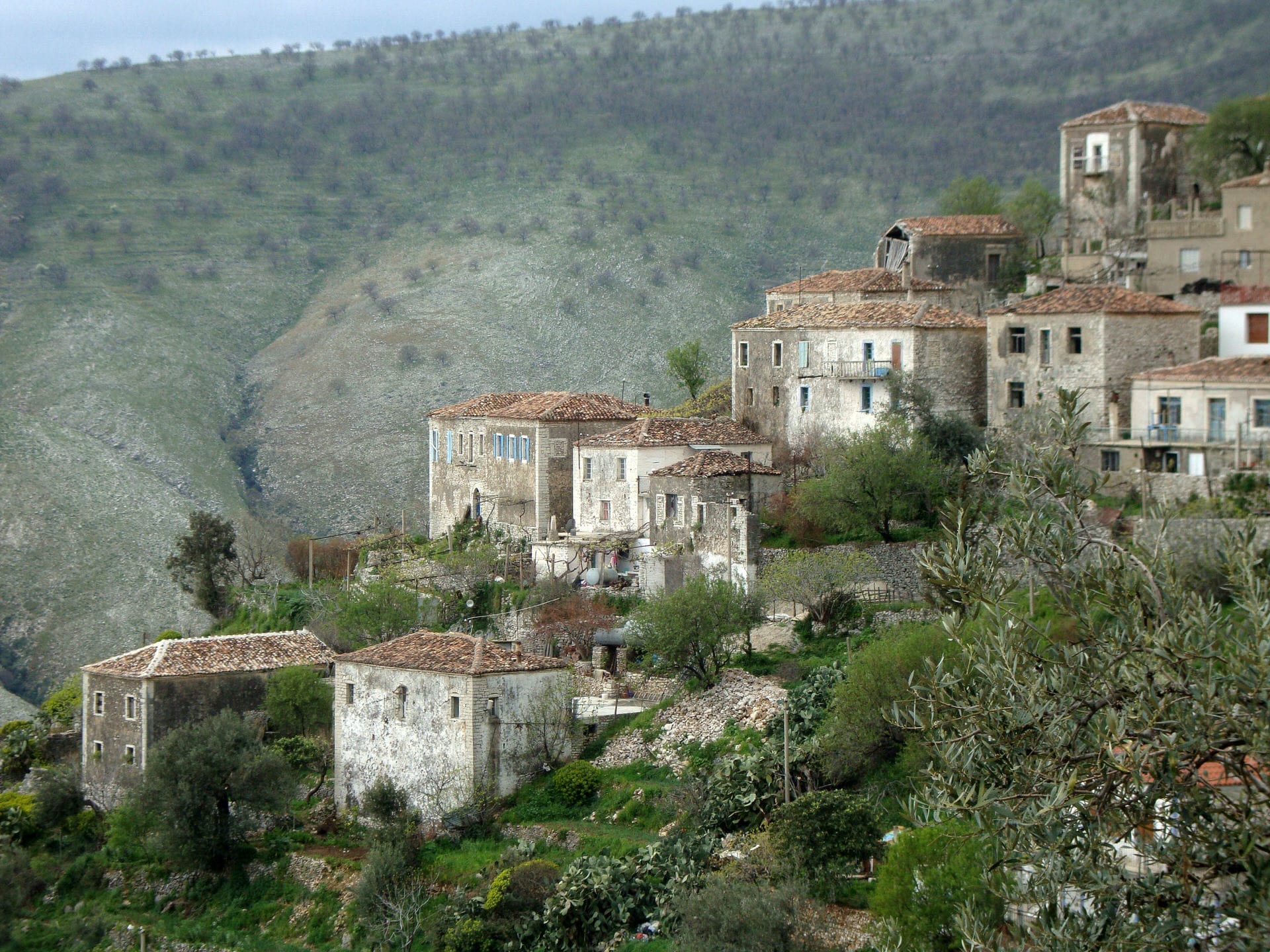
Qeparo exists as two distinct settlements separated by 2 kilometers of mountainside and approximately three decades of Albanian history. Old Qeparo (Qeparo i Vjetër) sits at roughly 300 meters elevation, cascading down the hillside with stone houses built primarily during 18th and 19th centuries using traditional coastal Albanian architecture—thick limestone walls, slate roofs, narrow windows for summer heat protection, and courtyards enclosed by stone walls. The village once housed 200-300 residents in extended family compounds, with church, communal ovens, olive presses, and the social structures that defined pre-industrial Albanian coastal communities.
New Qeparo (Qeparo i Ri) occupies the coastline directly below, developing from near-zero permanent structures in 1990 to substantial tourism infrastructure by 2020s. The beachfront strip extends approximately 1.5 kilometers along white pebble shore, with hotels, apartments, restaurants, beach bars, and tourism services replacing the agricultural terraces, olive groves, and goat paths that previously characterized this coastal section.
The split reflects broader Albanian demographic patterns following communism’s collapse in 1991. During communist period (1944-1991), internal movement controls and collective agricultural systems maintained population in traditional mountain villages even as conditions remained difficult. The regime restricted coastal residence due to security concerns about maritime borders and potential escape attempts to Italy or Greece. Many coastal areas including Qeparo remained underdeveloped or had access restrictions that prevented tourism or permanent habitation near beaches.
Following 1991, Albanian citizens gained freedom of movement both internally and internationally. Qeparo experienced mass emigration, particularly to Greece (where linguistic and cultural connections existed—many Qeparo families spoke Greek as primary language, reflecting the region’s historical Greek minority population) and later to broader European Union destinations and United States. By 2000s, Old Qeparo’s permanent population had declined to perhaps 50-70 year-round residents, primarily elderly. By 2020s, credible estimates suggest fewer than 20 people live in Old Qeparo throughout winter months.
Simultaneously, tourism development incentivized coastal construction. Families who owned agricultural land along the coast began building rental apartments, hotels, or restaurants to capture income from Albanian Riviera tourism growth. Many properties operate as absentee investments—owners live in Tirana, Athens, or abroad, employing managers to operate summer season businesses while properties sit empty October-May. The economic calculus became clear: abandoning difficult mountain village life for beach tourism business or emigration offered better prospects than continuing traditional agriculture and livestock raising that had sustained Qeparo for centuries.
This pattern repeats across Albanian Riviera—Dhërmi, Vuno, Ilias, and other villages show similar splits between depopulating mountain settlements and growing beach developments. Qeparo’s visibility stems from the dramatic contrast—the hillside village remains relatively intact architecturally despite depopulation, allowing visitors to witness both the traditional past (Old Qeparo) and tourism-driven present (New Qeparo) within single location.
Why Visit Qeparo
Qeparo attracts travelers seeking Albanian Riviera beach access with budget-friendly accommodation (€20-40/night for apartments, €50-65 for hotels), proximity to Himarë (10km north) and Borsh (7km south) for varied experiences, Old Qeparo exploration providing architectural interest and demographic study of rural Albanian depopulation, relatively quiet beach atmosphere compared to crowded Ksamil or developed Dhërmi, white pebble beaches with clear Ionian waters and rocky swimming areas, fresh seafood restaurants with moderate prices (€12-18 per person), and access to Phoenice archaeological site (15km inland) for historical context.
What Qeparo offers: Functional beach tourism base with accommodation ranging from basic apartments (€20-30/night, self-catering) to beachfront hotels (€55-65/night, breakfast included), restaurants serving grilled fish, seafood pasta, and traditional Albanian dishes, beach sections with sunbed rentals (€7-10 daily) and free areas with public access, swimming and snorkeling in clear water with visibility often exceeding 15 meters, Old Qeparo village exploration (20-30 minute uphill walk from beach) revealing traditional architecture and depopulation patterns, small-scale operation compared to major Albanian Riviera destinations creating quieter atmosphere, and positioning between Himarë and Borsh enabling day trips to multiple coastal locations from single accommodation base.
What Qeparo doesn’t offer: Dramatic scenic beauty (the beach is pleasant but not exceptional by Albanian Riviera standards), vibrant atmosphere or nightlife beyond basic beach bars and restaurants, extensive English proficiency requiring translation apps for many interactions, varied activities beyond beach time and hillside village exploration, sophisticated tourism services or international standards, boutique accommodation or design-focused properties, or cultural vibrancy (the population loss means limited authentic local life in either old or new village sections).
Skip Qeparo if you prioritize: Exceptional coastal scenery over functional beach access, lively atmosphere and varied nightlife, extensive tourism services and English-speaking staff, architectural preservation and vibrant local culture (the depopulation creates ghost village character rather than living traditional community), varied activities beyond swimming and basic exploration, or destinations offering immediate visual impact and memorable experiences.
Choose Qeparo if you value: Budget Albanian Riviera base with functional beach access, exploring depopulated traditional villages as demographic study, positioning between Himarë and Borsh for regional exploration, quiet beach atmosphere without major tourist crowds, authentic view of Albanian Riviera development patterns showing traditional/modern contrast, or straightforward beach vacation without expectations of exceptional beauty or extensive services.
The honest assessment: Qeparo functions adequately as budget Albanian Riviera base rather than compelling destination independently justifying travel. The beaches are pleasant but not Albania’s most beautiful. Old Qeparo provides architectural interest and stark illustration of rural depopulation, but limited interpretation or cultural vibrancy means the visit feels more like wandering through beautiful ruins than experiencing living community. New Qeparo delivers functional tourism services at moderate prices but lacks character or distinctiveness beyond beach access. Qeparo works best for travelers seeking affordable Albanian Riviera positioning with realistic expectations about limited services and modest scenic appeal, or those specifically interested in studying rural Albanian demographic changes through tangible example of tradition/modernity contrast.
Old Qeparo: Traditional Architecture and Depopulation
Old Qeparo’s stone houses demonstrate traditional Albanian coastal architecture adapted to mountainside terrain. The buildings typically feature three-story construction—ground floor for livestock and storage with stone vaulted ceilings, first floor for living spaces including cooking area and family gathering room, and second floor for sleeping quarters accessible via external stone staircases. This arrangement separated human habitation from animal quarters while maximizing limited hillside space through vertical building.
The stone construction used local limestone, quarried from nearby hillsides and shaped into blocks that fit together with minimal mortar. Walls measure 50-70 centimeters thick, providing insulation from summer heat and structural stability on steep slopes where earthquakes (common in seismically active Albania) threatened buildings. The roofs originally used local slate or stone tiles, though many collapsed roofs now show exposed wooden structural beams deteriorating from weather exposure.
Architectural details include arched doorways, small windows with wooden shutters, external staircases leading to upper floors, and courtyards enclosed by stone walls creating private family spaces. Some houses feature stone cisterns collecting rainwater from roof surfaces—essential during summer dry periods when spring flows diminished. The overall aesthetic reflects utilitarian design shaped by available materials, climate demands, seismic risks, and social patterns emphasizing extended family compounds rather than individual nuclear family residences.
The village church (Orthodox Christian, reflecting the region’s religious composition before and after Ottoman period when many Albanians converted to Islam but coastal areas retained Christian populations) occupies a central elevated position. The structure dates to 19th century with possible earlier foundations, though determining precise construction dates requires architectural analysis not comprehensively undertaken. The church continues receiving occasional maintenance from diaspora community members visiting during summer, though regular religious services occur infrequently given minimal permanent population.
Walking through Old Qeparo reveals depopulation’s physical manifestations—collapsed roofs exposing interior rooms to weather, vegetation reclaiming courtyards and pathways, wooden doors and shutters rotted away, stone walls beginning to crumble where mortar deteriorates without maintenance, and silence broken only by wind, birds, and occasional goats grazing among ruins. Some houses show partial renovation—diaspora families occasionally restore family properties for summer holiday use, creating jarring contrast between restored structures with new roofs and paint alongside completely abandoned ruins.
The depopulation pattern reflects economic rationality rather than inevitable decline. Maintaining traditional hillside agriculture (olives, grapes, vegetables on terraced plots requiring intensive labor) and livestock (goats, sheep on mountainside pastures requiring daily attention) became economically unviable when alternative options emerged post-1991. Migration to coastal tourism businesses, emigration to Greece or beyond, or urban relocation to Tirana and other Albanian cities offered higher incomes with less physical difficulty than continuing mountain village agricultural life. The elderly residents remaining in Old Qeparo represent those unable or unwilling to relocate—often maintaining small gardens and livestock for subsistence while receiving remittances from children living abroad.
No organized preservation effort currently protects Old Qeparo. The settlement doesn’t hold official heritage designation despite architectural and historical significance. Individual property owners determine whether to maintain, renovate, abandon, or potentially demolish family structures. This creates uncertain future—the village could stabilize at current partially-inhabited state, experience further deterioration toward complete abandonment, or potentially see tourism-driven renovation converting stone houses to boutique guesthouses if Albanian Riviera development reaches that level.
New Qeparo: Beach Tourism Development
New Qeparo’s development accelerated during 2000s-2010s as Albanian Riviera tourism grew. The beachfront strip extends approximately 1.5 kilometers, with development concentrated in central section where road access from coastal highway reaches beach level. Construction includes 3-5 story apartment buildings (often built by families pooling resources to create rental properties), small hotels (typically 15-30 rooms), restaurants with beachfront terraces, beach bars offering sunbeds and umbrellas, and minimal public infrastructure beyond basic road access and sporadic trash collection.
The construction quality varies substantially—some properties demonstrate professional design and execution with proper foundations, structural engineering, and finishing standards, while others show obvious deficiencies including inadequate foundations, improvised electrical systems, and construction techniques that create safety concerns. The rapid development during periods when Albanian building regulations remained weakly enforced means many structures lack proper permits, engineering certifications, or adherence to setback requirements from shoreline.
The beaches themselves consist of white pebbles ranging from small stones to fist-sized rocks, creating Mediterranean clarity typical of stone beaches—water visibility often exceeds 15 meters when conditions are calm. The swimming areas feature gradually deepening water, becoming chest-deep approximately 20-30 meters from shore. The pebble composition makes water shoes advisable for comfortable entry/exit. Rocky sections between beach stretches provide snorkeling opportunities with small fish, crabs, and occasional octopus visible among rocks and underwater vegetation.
Beach facilities include sunbed and umbrella rentals (€7-10 daily) concentrated in front of hotels and beach bars, though substantial beach sections remain without facilities allowing free public access. The establishments operating beach facilities typically require drink or food purchase from their bar/restaurant as informal requirement for using their sunbeds—ordering beverages (€2-3 for beer or soft drinks) throughout day satisfies this expectation.
Restaurants serve standard Albanian Riviera fare—grilled whole fish sold by weight (€25-30 per kilogram, feeding 2-3 people), seafood pasta (€8-12), grilled calamari and octopus (€10-14), traditional Albanian dishes (grilled meat, byrek, salads), and beer/wine. The quality ranges from adequate to good depending on specific establishment, with prices generally 20-30% lower than more developed Albanian Riviera destinations like Dhërmi or Himarë but offering similar food rather than distinctive local specialties.
The atmosphere remains relatively quiet even during July-August peak season. Qeparo doesn’t attract the party-focused crowds that concentrate in Ksamil or Dhërmi, nor does it offer boutique resort experience drawing wealthier international travelers. The typical visitors include Albanian domestic tourists (families from Tirana and northern cities seeking affordable coast access), regional tourists from Kosovo and North Macedonia, and budget-conscious international travelers exploring Albanian Riviera without paying premium prices at more developed destinations.
Practical Qeparo
Getting There: Qeparo lies approximately 190 kilometers from Tirana via coastal road (SH8), requiring 3.5-4.5 hours by car. The route follows Adriatic coast to Vlorë, then continues south along Ionian coast through Llogara Pass (dramatic mountain road crossing Llogara National Park at 1,027m elevation before descending to Albanian Riviera) reaching Qeparo approximately 40 kilometers south of Himarë.
Public buses connect Qeparo to Tirana (1-2 daily departures during summer, cost 1,200-1,500 lek, journey 5-6 hours including stops) and Sarandë (45km south, cost 400-500 lek, journey 1 hour). Buses stop along coastal highway where access road descends to New Qeparo beach—travelers must walk or arrange pickup to reach specific accommodations. Schedules remain informal—buses depart when full rather than fixed times, with summer frequency higher than shoulder seasons.
Private vehicle travel offers greatest flexibility for Albanian Riviera exploration. Car rental in Tirana (€25-40 daily for compact car) or Sarandë enables independent travel and day trips to nearby destinations. The coastal road is paved and generally good condition, though narrow sections with steep drop-offs and occasional rock falls require careful driving.
Accommodation: New Qeparo offers approximately 15-20 small hotels and 30+ private apartments available for short-term rental. Apartments (€20-40/night depending on size, season, facilities) provide self-catering options with basic kitchens, bathrooms, and bedrooms—typically adequate but not sophisticated, with inconsistent hot water, limited WiFi, and minimal English from owners. Hotels (€50-65/night with breakfast, €40-50 without) offer more reliable services, on-site restaurants, and beachfront positions, though quality remains modest by international standards.
July-August requires advance booking for better properties, with many places fully reserved by Albanian domestic tourists. June and September offer optimal balance of availability, lower prices (30-40% below peak), pleasant weather, and swimmable water temperatures (22-24°C) without peak-season crowds. October-May sees most properties closed, with few year-round operations.
Old Qeparo occasionally offers guesthouse stays in restored family homes—these provide cultural experience and atmospheric lodging but require advance arrangement through personal contacts or specialized booking platforms, and should not be expected as readily available option.
Dining: New Qeparo’s beachfront restaurants serve similar menus—fresh fish (grilled whole), seafood pasta, grilled octopus, traditional Albanian grilled meats, byrek, Greek salad, and beverages. Prices range €12-18 per person for complete meal with appetizer, main course, and drinks. The quality is generally adequate to good, though not exceptional or distinctive. Seafood freshness varies—fish comes from local small-scale fishing or (increasingly) purchased from larger supply networks rather than guaranteed daily catch.
Old Qeparo has no restaurants or services—visitors must bring food/water if exploring the abandoned village or arrange meals in New Qeparo before/after hillside exploration.
Activities: Swimming and beach time dominate most visitors’ days. The hillside walk to Old Qeparo takes 20-30 minutes uphill from New Qeparo (steep but manageable path), with exploration of abandoned village adding 1-2 hours. The walk provides exercise, views over coast, and architectural interest, though limited interpretation means visitors largely wander independently forming own impressions of depopulation and decay.
Boat tours sometimes operate from New Qeparo or can be arranged through hotels, offering trips to nearby coves, Gjipe Canyon (accessible by boat), or longer excursions to Himarë and surrounding areas. Costs and availability vary by season and demand.
Day trips to Himarë (10km north, 15 minutes by car) provide more developed tourist infrastructure, additional beaches, and livelier atmosphere. Borsh (7km south, 10 minutes) offers Albania’s longest beach (7 kilometers) and castle ruins. Phoenice archaeological site (15km inland, 25 minutes) preserves ancient Chaonian capital ruins including Greek theater, though site receives minimal visitors and lacks extensive interpretation.
Timing: June and September provide optimal Qeparo visiting conditions—warm temperatures (23-28°C), swimmable water (22-25°C), fewer crowds than July-August, and 30-40% lower accommodation prices. July-August brings warmest water (25-27°C), guaranteed sunny weather, complete service availability, but highest prices, maximum crowds (though still modest by major resort standards), and occasionally uncomfortable heat (30-35°C).
May and October offer shoulder-season budget options with dramatic price drops (50% below peak), solitude, and pleasant conditions, but cooler water (18-22°C may feel cold for extended swimming) and reduced service availability as some properties close for off-season.
Money and Logistics: No ATMs exist in Qeparo—withdraw cash in Himarë or Sarandë before arriving. Budget €35-60 daily including accommodation, meals, beach equipment rental, and activities. Most transactions require cash—small restaurants and family-run accommodations rarely accept cards.
Mobile coverage is reliable. English proficiency is limited—younger people may have basic English, but translation apps prove useful for communication beyond simple transactions. Greek is sometimes understood among older residents reflecting the historical Greek-speaking population.
Nearby Destinations
Himarë (10km north, 15 min): Albanian Riviera’s most developed town south of Vlorë, with multiple beaches, Greek cultural influences, varied restaurants and nightlife, better tourism infrastructure, and livelier atmosphere than Qeparo’s quiet character.
Borsh (7km south, 10 min): Albania’s longest beach at 7 uninterrupted kilometers, offering space unusual on Albanian Riviera, Borsh Castle ruins spanning 2,400+ years, olive oil production villages, and budget-friendly alternatives to more developed coastal destinations.
Gjipe Canyon and Beach (7km north): Dramatic canyon with beach accessible via hiking trail from coastal highway (45 minutes downhill) or by boat, offering isolation, scenic beauty, and swimming in completely undeveloped setting with no facilities.
Phoenice Archaeological Site (15km inland, 25 min): Ancient Chaonian capital (founded 4th century BCE) with preserved ruins including Greek theater, defensive walls, and public buildings—provides historical context for Albanian Riviera region, though site receives minimal visitors and lacks extensive interpretation.
Sarandë (45km south, 45 min): Albanian Riviera’s largest coastal city with urban amenities, ferry connections to Corfu, access to Butrint UNESCO archaeological site, and contrast to Qeparo’s village scale and quiet character.
Two Villages, Three Decades Apart
Qeparo’s split between abandoned hillside settlement and growing beach resort creates tangible illustration of Albanian demographic transformation following communism’s collapse. Standing in Old Qeparo’s stone-paved lanes among deteriorating traditional houses, then descending 2 kilometers to New Qeparo’s concrete apartment buildings and beach tourism economy, physically demonstrates the economic and social forces that reshaped rural Albania within single generation.
The old village represents traditional Albanian coastal mountain communities—agricultural subsistence, extended family structures, architectural adaptation to local materials and climate, and relative isolation maintaining distinct local character for centuries. The new village represents post-1991 transformation—tourism-driven development, seasonal rather than permanent population, absentee ownership by diaspora investors, and integration into broader Mediterranean tourism economies.
Whether this pattern constitutes loss or progress depends on perspective. Old Qeparo’s architectural heritage deteriorates without preservation efforts, traditional knowledge and skills disappear as elderly residents die without younger generations continuing practices, and distinct local culture gives way to generic tourism services. Conversely, tourism creates economic opportunities exceeding what traditional agriculture offered, younger generations access education and employment impossible in isolated villages, and living standards improve for those who transition successfully to new economies.
Qeparo won’t provide Albanian Riviera’s most beautiful beaches, most dramatic scenery, best tourism services, or most vibrant atmosphere. What it offers instead is functional beach access at budget prices, visible contrast between traditional and modern Albania, and straightforward services without pretension or tourism adaptation beyond basic accommodation and meals. Whether that appeals depends entirely on expectations—travelers seeking exceptional beauty, extensive services, or memorable experiences will likely be disappointed. Those seeking affordable Albanian Riviera positioning with authentic view of demographic transformation and realistic acceptance of modest services and scenery will find Qeparo delivers adequately on those limited but honest promises.