The Poet Who Defined Mountain Albania
Gjergj Fishta was born in 1871 in the village of Fishta, approximately 12 kilometers from Pukë town, into a Catholic family in the northern Albanian highlands. He studied at Franciscan institutions in Bosnia and Austria before returning to Albania, where he spent decades documenting northern Albanian mountain culture through poetry, linguistics, and advocacy for Albanian independence and cultural preservation.
His masterwork, Lahuta e Malcís (The Highland Lute), published in full in 1937 after decades of composition, extends to approximately 15,613 lines of epic poetry—making it one of the longest epic poems in world literature. The work chronicles Albanian mountain resistance against Ottoman forces, particularly the 1911-1912 uprisings that preceded Albanian independence, while documenting northern Albanian customs, the Kanun customary law code, blood feuds, hospitality traditions, and the cultural worldview that defined isolated mountain communities.
Fishta wrote in Gheg dialect—the northern Albanian linguistic variant—giving literary legitimacy to the language spoken in regions including Pukë, Shkodër, and the mountain communities that maintained distinct cultural identity separate from southern Albanian Tosk-speaking populations. His work influenced the 1908 Congress of Manastir’s adoption of a unified Albanian alphabet, contributing to linguistic standardization that enabled Albanian national identity formation.
The communist regime that controlled Albania 1944-1991 officially suppressed Fishta’s work. Enver Hoxha’s government viewed Fishta’s Catholic faith, his documentation of traditional rather than revolutionary culture, and his literary style as incompatible with Marxist-Leninist ideology. The regime banned his poetry, removed his books from libraries, and effectively erased his contributions from official Albanian literary history for nearly five decades.
Following communism’s collapse in 1991, Fishta underwent cultural rehabilitation. The Albanian government recognized him as national poet, republished his works, and established his birthplace village as site of pilgrimage for Albanian intellectuals and diaspora members seeking connection to northern Albanian cultural roots. The village of Fishta now maintains a small museum documenting his life, though the facility operates informally with limited hours and relies on local volunteers rather than professional management.
Pukë’s association with Fishta creates its primary cultural significance—the town functions as gateway to understanding northern Albanian mountain culture that Fishta documented, and the region’s continued traditional practices (albeit modified by modernization) reflect elements of the world he chronicled. For visitors interested in Albanian literature, cultural history, or understanding how isolated mountain communities maintained distinct identity for centuries, Pukë provides context that more developed tourist destinations lack.
Why Visit Pukë
Pukë attracts travelers seeking Albanian Alps access without commitment to multi-day mountain treks, Drin River rafting providing whitewater adventure in relatively accessible format (half-day to full-day trips from Pukë base), authentic northern Albanian mountain culture in working town rather than tourist-adapted village, budget-friendly accommodation and services (€18-60 daily including lodging, meals, activities), gateway position enabling day trips to Theth, Valbona, and Koman Lake without relocating accommodation base, and literary/cultural significance related to Gjergj Fishta for those interested in Albanian intellectual history.
What Pukë offers: Practical mountain town with approximately 6,000 residents maintaining traditional northern Albanian character rather than tourist-focused identity, accommodation ranging from family guesthouses (€18-30/night including meals) to basic hotels (€40-60/night), Drin River rafting with local operators (€40-60 per person for full-day trip including equipment, guide, transport, lunch), road connections enabling self-drive or bus access to Theth (2.5 hours, unpaved final section requiring high-clearance vehicle or local 4x4 transfer), Valbona via Koman Lake ferry (3-4 hours total including ferry crossing), proximity to Shkodër (60km, 1.5 hours) for urban amenities and Lake Shkodër access, authentic restaurants serving northern Albanian mountain cuisine (€8-15 per person), limited English proficiency requiring basic Albanian phrases or translation apps, and genuine Albanian mountain experience without tourism infrastructure overlay.
What Pukë doesn’t offer: Dramatic scenic beauty (the town occupies valley position with mountains surrounding but not immediate alpine character), extensive tourism services or English-speaking guides beyond rafting operators, attractions within Pukë town itself (the town functions as base rather than destination), sophisticated accommodation or dining, reliable public transport to Theth/Valbona requiring private vehicle or arranged transport, guaranteed rafting operations (river levels May-October determine feasibility, with April high water sometimes too dangerous and late October potentially too low), or varied activities beyond rafting, hiking, and using town as Alps gateway.
Skip Pukë if you prioritize: Immediately dramatic scenery over gateway functionality, extensive tourism infrastructure and English proficiency, attractions within walking distance of accommodation, varied activities without requiring transport to other locations, sophisticated services or international tourism standards, or destinations offering immediate visual impact rather than cultural context and access positioning.
Choose Pukë if you value: Authentic Albanian mountain town experience, budget-friendly northern Albania base, access to Theth/Valbona without committing to mountain village accommodation, Drin River rafting without extensive trip planning, Gjergj Fishta cultural/literary significance, genuine Albanian character without tourism adaptation, or functional gateway position enabling diverse regional exploration from single accommodation base.
The honest assessment: Pukë rewards travelers seeking practical northern Albania base offering regional access and authentic mountain culture rather than those expecting destination attractions or dramatic immediate scenery. The town’s significance rests primarily in its gateway function—positioned between Shkodër (urban amenities, Lake Shkodër, international connections) and Albanian Alps destinations (Theth, Valbona, Koman Lake) while maintaining budget prices and genuine Albanian character. The Drin River rafting provides activity justifying overnight stay beyond gateway function. Gjergj Fishta’s literary legacy adds cultural depth for those interested, though the connection requires visiting his birthplace village rather than Pukë town itself. Pukë functions best for travelers prioritizing budget, authenticity, and regional access over immediate aesthetic appeal or extensive tourism services.
Drin River Rafting: Class III-IV Through Limestone Gorges
The Drin River (Lumi i Drinit) ranks among Albania’s major waterways, with total length approximately 285 kilometers flowing from confluence of Black Drin (originating Lake Ohrid) and White Drin (originating Kosovo) through northern Albania before entering Adriatic Sea near Lezhë. The section accessible from Pukë flows through limestone gorges creating Class III-IV rapids during optimal water levels (April-June peak snowmelt, September-October after autumn rains, with July-August lower but still raftable flows).
Local rafting operators based in Pukë offer half-day trips (approximately 3-4 hours on water, €40-50 per person) covering 12-15 kilometers of river including transport to put-in point upstream, equipment (raft, paddles, helmets, life jackets), guide, and return transport to Pukë. Full-day trips (6-7 hours on water, €50-60 per person) extend to 20-25 kilometers with lunch typically provided at riverside location. Multi-day expeditions combining rafting with camping are possible but require advance arrangement and group minimums.
The rapids classification indicates moderate to challenging whitewater requiring reasonable physical fitness and comfort with water immersion. Class III rapids feature irregular waves, requiring maneuvering around obstacles but not presenting significant danger to experienced rafters. Class IV rapids intensify with larger waves, narrower passages, and more technical requirements, with potential for raft flipping creating brief swimming situations (guides carry throw ropes and safety equipment). Previous rafting experience isn’t required—guides brief participants on paddling techniques, safety procedures, and what to expect—but participants should acknowledge physical demands and water exposure.
The limestone gorge scenery creates visual appeal beyond whitewater excitement. Vertical rock walls rise 100+ meters above river level in sections, with vegetation clinging to cracks and ledges, occasional caves visible in cliff faces, and clear water (when not churned by rapids) revealing rocky riverbed. Eagles and other raptors nest on cliff faces, visible during calmer float sections between rapids. The river corridor remains undeveloped—no settlements, limited road access, and minimal human impact creating wilderness character unusual in accessible European locations.
Timing considerations affect rafting feasibility. Spring (April-May) brings highest water levels from snowmelt, creating most challenging rapids but also coldest water temperatures (8-12°C requiring wetsuits provided by operators). Early summer (June) offers optimal combination of substantial flow, warming water (14-18°C), and longer daylight. Mid-summer (July-August) sees reduced flow creating easier rapids but guaranteed operations, with water warming to 18-22°C. Autumn (September-October) depends on rainfall—wet years provide excellent conditions, dry years may have insufficient water for rafting.
Operators require minimum participant numbers (typically 4-6 people) for trip viability. Solo travelers or couples may need to wait for group formation or pay premium for private trip. Booking 2-3 days ahead during summer allows operators to coordinate group formation. Spring and autumn require checking current water levels—operators determine day-by-day whether conditions permit safe rafting.
Gateway to Theth and Valbona
Pukë’s geographical position creates access advantages for travelers seeking Albanian Alps destinations without committing to mountain village accommodation or needing to relocate between valleys. The town sits approximately 60 kilometers from Shkodër (coastal plain, urban amenities), 90 kilometers from Theth (alpine valley, traditional stone architecture, hiking trails), and can access Valbona Valley via Koman Lake ferry route requiring 3-4 hours total travel including ferry crossing.
Theth Access: The route from Pukë to Theth follows paved road initially before transitioning to unpaved mountain road for final 25-30 kilometers. Total journey requires 2.5-3 hours under good conditions. The unpaved section features narrow track with steep drop-offs, occasional rock falls, stream crossings, and grades requiring vehicle power and clearance. Standard cars manage during summer months when road crews maintain passable conditions, but high-clearance 4x4 vehicles provide confidence and safety margins. Local drivers in Pukë offer 4x4 transfer services (€60-80 for vehicle carrying up to 4 passengers one-way, €100-120 round-trip with designated return time).
The road typically opens May-October, with exact timing dependent on winter snow clearing (usually complete by late May) and autumn weather (heavy October rains sometimes make road impassable by late month). Winter access requires 4x4 with chains or remains impossible during heavy snow periods.
Valbona Access: Reaching Valbona from Pukë requires traveling to Koman Lake ferry terminal (approximately 45 minutes from Pukë), taking 2.5-hour ferry through dramatic lake/gorge scenery to Fierza, then 30-45 minute drive from Fierza to Valbona village. The Koman Lake ferry operates March-November (daily departures 9 AM from Koman, cost €10 per person one-way, vehicles €25-40 depending on size). The journey creates scenic experience itself—the flooded Drin River gorge resembles Norwegian fjords with vertical cliffs rising directly from water, isolated villages accessible only by boat, and wilderness character.
Combined Theth-Valbona access from Pukë base enables travelers to day-trip to either valley without mountain village accommodation commitment. This approach suits those wanting to experience Albanian Alps scenery and hiking but preferring Pukë’s budget accommodation, easier logistics, and town amenities over alpine village isolation. Day trips allow morning departure to either destination, 3-4 hours hiking/exploring, and evening return to Pukë accommodation and restaurants.
Alternatively, Pukë serves as initial or final point for travelers doing the Theth-Valbona trek (or reverse). Hikers can travel Pukë-Theth, spend night in Theth, complete the 6-8 hour mountain pass hike to Valbona, spend night in Valbona, then return to Pukë via Koman ferry route. This creates 3-4 day circuit using Pukë as start/end point with budget accommodation while experiencing Albanian Alps highlights.
Mountain Culture: Traditions Persisting
Northern Albanian mountain regions including Pukë maintained isolation through Ottoman period (1479-1912) and communist era (1944-1991), allowing traditional cultural practices to persist longer than in accessible Albanian regions. The Kanun customary law code—codified by Lekë Dukagjini in 15th century but reflecting earlier tribal practices—governed social relationships, property rights, hospitality obligations, and blood feud protocols through customary rather than written law until 20th century legal systems gradually displaced (but didn’t entirely eliminate) traditional practices.
The blood feud (gjakmarrja) tradition, where murder required retaliatory killing against male family members of perpetrator, created cycles of violence lasting generations. Kanun provisions included concepts of besa (pledged word/honor), house sanctuary where even blood feud targets gained temporary immunity, and mediation processes where community elders negotiated reconciliation between feuding families. The communist regime suppressed blood feuds through harsh penalties, but post-1991 collapse of state authority saw temporary resurgence in northern mountains before Albanian legal system reasserted control through 1990s-2000s.
Hospitality traditions (mikpritja) remain observable in Pukë region. The Kanun mandated that guests receive protection and generosity even from families that might otherwise be enemies—hosts must provide food, shelter, and safety to travelers requesting assistance. Contemporary manifestations include guesthouse operators preparing elaborate meals, refusing payment for small favors, and taking personal interest in guests’ travel plans and safety. This cultural pattern differs from commercial hospitality in tourism-adapted destinations—the tradition predates and operates independently of commercial incentives, creating genuine rather than performed hospitality.
Traditional architecture in villages surrounding Pukë reflects mountain adaptations—stone houses with small windows (conserving heat during harsh winters), thick walls (providing insulation and defensive protection), and slate roofs (local material readily available). Many structures date to 19th or early 20th century, with some incorporating even older foundations. Communist-era construction added concrete buildings lacking traditional character, and post-1991 development continues this trend, but sufficient traditional architecture survives to demonstrate historical building patterns.
Religious diversity characterizes northern Albania including Pukë region, with Catholic, Muslim, and Orthodox Christian communities coexisting. The Catholic presence remains strong in northern mountains—Fishta’s Franciscan connections reflect this regional pattern. Islam arrived during Ottoman period with conversions bringing social and economic advantages under Ottoman administration. The communist regime’s official state atheism (1967-1991) banned religious practice entirely, destroying many religious buildings and persecuting believers. Post-1991 religious revival saw mosque and church reconstruction, though Albanian society maintains secular character with religious identity often cultural rather than deeply observant.
Practical Pukë
Getting There: Pukë lies approximately 120 kilometers from Tirana via national highway to Lezhë, then secondary roads through mountain valleys requiring 2.5-3 hours total journey. From Shkodër (60km, 1.5 hours), the route follows secondary roads through agricultural valleys before climbing into mountains approaching Pukë.
Furgon (minibus) services connect Pukë to Tirana (departures 6 AM and 2 PM from Pukë, return trips 8 AM and 4 PM from Tirana, cost 500-700 lek, journey 3-3.5 hours) and Shkodër (multiple daily departures, cost 300-400 lek, journey 2 hours). Furgons depart from area near Pukë town center when full (typically 8-12 passengers), with posted schedules approximate rather than guaranteed. Purchase tickets from driver upon boarding or from associated coffee shops near departure points.
Private vehicle travel offers flexibility for Theth/Valbona access and regional exploration. Car rental in Tirana or Shkodër (€25-40 daily for compact car, €40-60 for SUV) enables independent travel, though high-clearance 4x4 recommended for Theth road. GPS navigation works generally, though mountain roads may not reflect current conditions—asking locals about road status before departure prevents wasted travel time.
Accommodation: Pukë offers family-run guesthouses (€18-30/night including breakfast and dinner, shared or private bathrooms, basic amenities) and small hotels (€40-60/night, private bathrooms, minimal English, town center locations). The guesthouse option provides authentic Albanian hospitality with home-cooked meals, family interaction, and cultural immersion at budget prices. Hotels offer more privacy and independence but less cultural experience.
Summer (July-August) requires advance booking for best properties. Shoulder seasons (May-June, September-October) typically have availability without reservations. Winter (November-April) sees reduced tourism with many guesthouses closing or available only by advance arrangement.
Dining: Restaurants serve traditional northern Albanian cuisine emphasizing grilled meats (qofte, qebapa, grilled lamb), byrek (savory pastries), tavë (baked dishes with meat and vegetables), mountain dairy products (cheese, yogurt), and seasonal vegetables. Meals cost €8-15 per person including appetizer, main course, and beer/soft drink. Restaurants cluster near town center with evening gathering atmosphere—locals socialize over raki (grape brandy) and coffee, creating opportunities for cultural interaction if travelers initiate conversation.
Traditional dishes specific to northern regions include fli (layered pancake cooked over fire, served with cream and honey), harapash (cornbread), and pitka (round bread). These require advance ordering at guesthouses since preparation takes several hours.
Activities: Beyond rafting and Alps gateway function, Pukë offers limited activities within immediate town vicinity. Grunas Canyon lies approximately 15 kilometers from Pukë, accessible via unpaved roads requiring high-clearance vehicle or arranged transport (€30-40 for vehicle one-way). The canyon features hiking trails following stream through narrow gorge, waterfalls (most impressive during spring high water), swimming holes (June-September warm enough for swimming), and limestone cliff scenery. The area lacks facilities—bring food, water, and swimming gear if planning full-day visit.
Walking in Pukë town and nearby villages provides cultural observation—daily rhythms of mountain town life, agricultural activities in valley floor surrounding town, traditional and modern architecture mix, and interaction with residents going about normal activities rather than catering to tourists.
Timing: May through October provides optimal visiting window. Spring (May-June) brings greenest landscapes, highest waterfalls and river flows, wildflowers in mountains, and moderate temperatures (15-25°C), but occasional rain. Summer (July-August) guarantees sunny weather (25-35°C), enables all activities, but brings warmest conditions and highest (though still modest) visitor numbers. Autumn (September-October) offers ideal temperatures (15-25°C), autumn colors in mountains, and solitude, but September brings occasional rain and late October sees some services closing for winter.
Winter (November-April) brings cold (0-10°C), significant snow in surrounding mountains, and limited tourism services. Theth/Valbona roads typically close November-April. However, winter provides authentic off-season experience for hardy travelers willing to accept limitations.
Money and Logistics: ATMs exist in Pukë town center accepting international cards. Budget €35-60 daily including accommodation, meals, rafting trip or transport to Theth/Valbona, and incidentals. Cash remains primary transaction method—many guesthouses and restaurants don’t accept cards.
Mobile coverage is reliable in town, spotty in mountains. English proficiency is limited—younger residents may have school English, older residents typically don’t. Italian (from television and proximity to Italy) is sometimes understood. Albanian phrases or translation apps prove useful for basic communication.
Nearby Destinations
Fishta Village (12km from Pukë): Gjergj Fishta’s birthplace maintains small museum in building adjacent to his family home, displaying manuscripts, photographs, and artifacts related to his life. The museum operates informal hours—typically mornings, but arrangements through Pukë guesthouses enable visits at other times. Admission is free though donations support maintenance. The village itself preserves traditional northern Albanian architecture with stone houses and narrow lanes.
Theth National Park (90km, 2.5-3hr): Traditional stone architecture including lock-in towers (kulla) documenting blood feud history, Blue Eye spring, Grunas Waterfall, and hiking trails through dramatic alpine scenery including trek to Valbona across mountain pass.
Valbona Valley (via Koman Lake, 3-4hr total): Alpine valley providing access to Albanian Alps highest peaks including Maja Jezercë (2,694m), traditional mountain villages, and extensive hiking trail network ranging from day hikes to multi-day alpine expeditions.
Koman Lake (45 minutes from Pukë): Hydroelectric reservoir created 1978 by damming Drin River, creating flooded gorge scenery with vertical limestone cliffs rising directly from water. The 2.5-hour ferry crossing (Koman to Fierza) provides scenic journey and necessary access to Valbona, operating daily 9 AM March-November.
Shkodër (60km south): Northern Albania’s largest city with Rozafa Castle, Marubi photography museum, Lake Shkodër access, urban amenities including hotels, restaurants, and shops, and transport connections to Montenegro via border crossing 20 kilometers north.
The Gateway That Quietly Functions
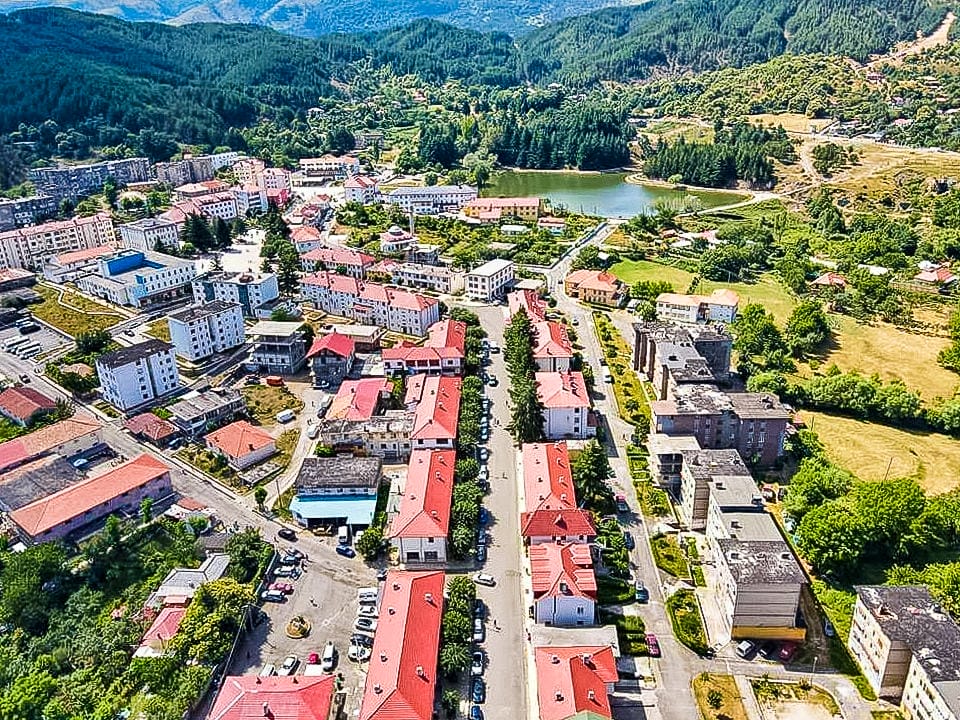
Pukë doesn’t announce itself through dramatic scenery or extensive tourism development. The town occupies valley position surrounded by mountains that create setting without immediate alpine character—you see mountains, but they’re distant context rather than immersive presence. The accommodation is basic, the restaurants serve simple food without pretension, the streets reflect working Albanian mountain town rather than picturesque destination.
What Pukë offers instead is functional gateway position enabling Albanian Alps access while maintaining budget prices and authentic character. Travelers can base in Pukë for €18-30 nightly including meals, day-trip to Theth or Valbona for hiking and scenery, raft the Drin River for whitewater adventure, visit Fishta’s birthplace for literary/cultural context, and experience genuine Albanian mountain town life without tourism overlay—all while spending less than half what developed Albanian Riviera destinations or boutique mountain villages charge.
The approach suits travelers prioritizing budget, authenticity, and regional access over immediate aesthetic appeal or tourism amenities. If you need dramatic scenery from your hotel window, extensive English-speaking services, or destinations offering attractions within walking distance, Pukë disappoints. If you value authentic Albanian experience, practical positioning enabling diverse regional exploration, budget-friendly prices, and cultural context related to northern Albanian mountain traditions that Gjergj Fishta documented, Pukë delivers consistently.
The town won’t appear on “Most Beautiful Albanian Destinations” lists. It functions quietly as gateway, budget base, rafting departure point, and authentic mountain town maintaining traditional northern Albanian character while accommodating modest tourism without adaptation or performance. Whether that appeals depends entirely on what you value in travel—immediate beauty and comfort, or functional access and cultural authenticity at budget prices.