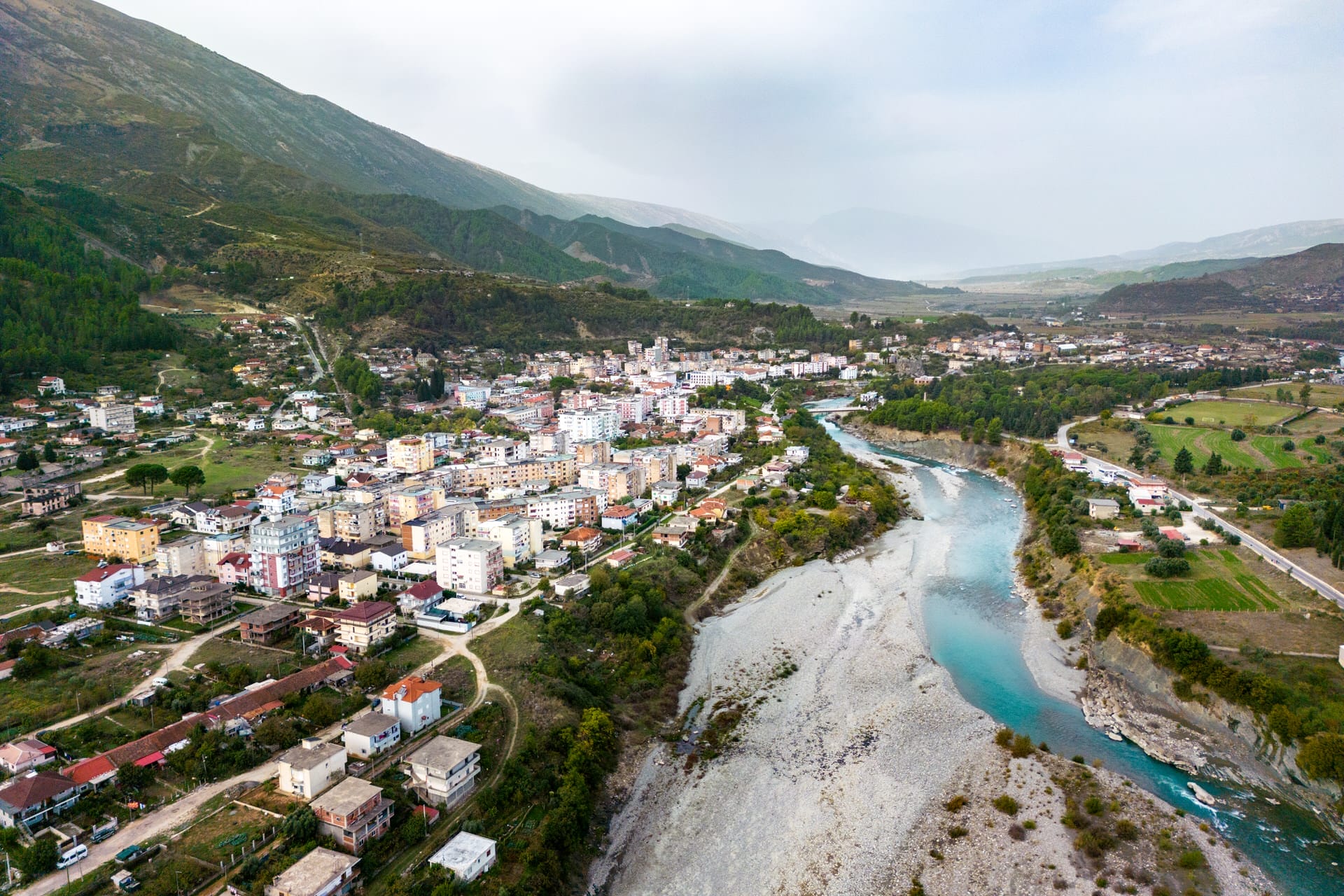
Europe’s Last Wild River Gets Protection
On March 15, 2023, Albania’s parliament voted unanimously to establish Vjosa Wild River National Park, protecting 272 kilometers of free-flowing river from the Greek border to the Adriatic Sea. The designation created Europe’s first Wild River National Park—a protected status specifically recognizing rivers that flow undammed, without artificial flow regulation, and maintaining natural flood regimes and ecosystems.
The Vjosa originates in Greece’s Pindus Mountains (where it’s called the Aoös) at approximately 1,800 meters elevation, flowing northwest through Greek territory before entering Albania near Çarshovë. From there, it flows 192 kilometers through Albanian territory, passing through Përmet at roughly its midpoint, before reaching the Adriatic near Vlorë. The entire system—main stem plus 49 tributary rivers—encompasses 12,872 square kilometers of watershed supporting over 1,100 species including rare endemic fish, 300+ bird species, and threatened European otter populations.
The national park designation culminated a 30-year conservation campaign opposing multiple hydroelectric dam proposals. During the 1990s and 2000s, various Albanian governments approved plans for dams that would have fragmented the river into reservoir sections. International environmental organizations, Albanian civil society groups, and local communities campaigned against the projects, arguing that the Vjosa’s free-flowing status represented irreplaceable ecological value—the last major river in Europe outside Scandinavia maintaining fully natural dynamics.
By 2023, scientific research had documented the Vjosa’s exceptional biodiversity and its role as refugium for species extirpated from regulated rivers elsewhere in Europe. This evidence, combined with changing Albanian government priorities toward sustainable tourism rather than hydroelectric development, led to the protection decision.
Për
met, with population approximately 11,000, sits on the Vjosa’s banks at 300 meters elevation, surrounded by the Trebeshinë-Dhëmbel-Nemërçkë mountain ranges rising to 2,485 meters (Mount Nemërçkë). The town’s economy historically depended on agriculture (particularly fruit cultivation—hence “City of Roses” and other flower references), small-scale manufacturing, and forestry. Tourism increased gradually after 1990, accelerating significantly after the 2023 park designation as the Vjosa gained international recognition as conservation success story.
Why Visit Përmet
Përmet attracts travelers seeking: white-water rafting and kayaking on genuinely wild river, thermal spring bathing in natural setting beneath Ottoman architecture, hiking in undeveloped Balkan forests, experiencing Albanian musical traditions in their geographic origin, and base location for exploring southeastern Albania away from coastal tourism concentrations.
What Përmet offers: Europe’s only Wild River National Park with rafting/kayaking accessible directly from town (Class II-III rapids, suitable for beginners with guides), Bënjë thermal springs (30°C sulfur water year-round in natural pools beneath historic bridge), gliko preserves made by multiple family producers following centuries-old recipes, authentic Albanian mountain town atmosphere without significant foreign tourism development, and prices reflecting Albanian domestic rather than international tourism economics (accommodation €20-50/night, meals €5-12).
What Përmet doesn’t offer: coastal access (nearest beaches 100+ kilometers), luxury accommodation (no hotels above 3-star equivalent), sophisticated dining beyond traditional Albanian cuisine, multilingual services (English proficiency limited outside some tour operators), or comprehensive tourism infrastructure (activities require advance arrangement, spontaneous options limited).
Skip Përmet if you prioritize: beach holidays, urban amenities and nightlife, guaranteed English communication, predictable Western service standards, or destinations with extensive tourism infrastructure allowing easy spontaneous travel without planning.
Choose Përmet if you value: authentic river experience on Europe’s last wild waterway, natural thermal springs in unspoiled setting, traditional Albanian cultural expressions (music, food, hospitality) practiced by locals rather than performed for tourists, outdoor activities (rafting, hiking, canyoning) in genuinely wild environments, and budget-friendly prices in destination where tourism remains secondary economic activity.
The honest assessment: Përmet rewards travelers comfortable with limited infrastructure and willing to arrange activities through local guides. The 2023 park designation brought international attention, but hasn’t (yet) transformed the town into developed tourism destination. Accommodation remains basic, restaurants serve Albanian fare without adaptation to international palates, and exploring beyond the town center requires private transportation or organized tours. For travelers seeking wild-river experience combined with authentic Albanian mountain town life, Përmet delivers exceptional value. Those wanting resort-level comfort or coastal beaches should look elsewhere.
The Vjosa: From Greek Mountains to Adriatic Sea
The Vjosa/Aoös river system represents unusual hydrological phenomenon—one of Europe’s few remaining large rivers flowing essentially unmodified from source to sea. Most European rivers have been channelized, dammed, or otherwise engineered for navigation, flood control, hydroelectric power, or irrigation. The Vjosa maintains natural channel migration, seasonal flood pulses, braided sections where multiple channels divide and rejoin, and gravel bars that shift annually depending on flood intensity.
This natural dynamism creates diverse habitats supporting exceptional biodiversity. The river hosts 13 fish species including Danube roach (Rutilus pigus), Ohrid barbel (Barbus prespensis), and various endemic cyprinids found only in Balkans river systems. European otters (Lutra lutra) inhabit the riverbanks—rare in Europe where otter populations have declined dramatically. Over 300 bird species use the river corridor, including little tern (Sternula albifrons), common sandpiper (Actitis hypoleucos), and various raptors hunting along the banks.
The river’s annual cycle follows predictable pattern based on precipitation and snowmelt in Greek mountains. Winter brings low flows (November-February), with the river channel narrowing and exposing extensive gravel bars. Spring snowmelt (March-May) causes dramatic flooding—the Vjosa can rise several meters, inundating floodplain areas and transporting massive sediment loads. Summer flows (June-August) decline gradually as snowpack depletes, and autumn (September-October) brings moderate flows before winter minimums return.
This flood regime shapes ecosystems. The annual spring floods scour gravel bars, creating pioneer habitats where specialized plant communities establish. Seeds deposited during floods germinate as waters recede, and insects colonize the newly exposed substrates. Fish spawn in gravel beds during specific flow conditions, timing reproduction to seasonal patterns. The entire system pulses with natural rhythms largely eliminated from regulated European rivers.
Përmet occupies strategic position on this system—downstream enough that the river achieves substantial size (50-100 meters wide depending on season), but upstream enough to maintain clean mountain water quality and dramatic canyon sections. The town serves as primary access point for commercial rafting operations running the Këlcyrë Gorge (Class II-III rapids extending 25 kilometers downstream) and for kayakers exploring various river sections depending on skill level and seasonal conditions.
Rafting operations in Përmet (approximately 6-8 companies operating seasonally) offer half-day trips (€30-40 per person) and full-day expeditions (€50-70) including meals. Spring (April-May) provides highest water and most technical rapids, summer (June-August) offers warmer conditions and moderate difficulty, and autumn (September-October) brings low flows suitable for beginners. Winter operations are limited due to cold water temperatures (8-12°C) requiring wetsuits.
The 2023 park designation prohibits new dam construction but allows existing human activities—agriculture, fishing (regulated), rafting tourism, and riverside settlement. Park management (administered by Albanian National Agency of Protected Areas) must balance conservation with local community needs, a challenge common to protected areas worldwide.
Bënjë Thermal Springs and Lengarica Canyon
Fourteen kilometers south of Përmet, the village of Bënjë sits at the entrance to Lengarica Canyon where thermal springs emerge at approximately 30°C year-round. The springs’ water contains dissolved sulfur compounds, creating characteristic odor and milky appearance while allegedly providing therapeutic benefits for skin conditions, arthritis, and respiratory issues (claims based on traditional use rather than modern clinical evidence).
The thermal water emerges from rock formations, flowing into the Lengarica River (a Vjosa tributary) and creating natural pools where bathers can soak. The most famous pool sits directly beneath the Katiu Bridge (also spelled Kadiu, Kadiut)—an Ottoman-era stone arch bridge dating to approximately 1800 (exact construction date unrecorded, but architectural style indicates late Ottoman period). The bridge spans 15 meters across the river at canyon’s narrowest point, constructed from local stone using traditional techniques without mortar in the main arch (though later repairs added cement).
The springs have been used therapeutically for centuries, though documentary evidence is sparse before the 20th century. Ottoman travelers mentioned the waters, and during the communist period (1944-1991) the site functioned as informal health resort where workers came for subsidized rest-cure vacations—common practice in communist countries where mineral springs were promoted as proletarian health resources.
Post-1991, the springs transitioned to informal public bathing site. No tickets, no facilities beyond parking area and simple changing rooms, no lifeguards or regulation—visitors simply park, walk down to the pools, and soak. This informal character persists as of 2024, though increasing visitor numbers (domestic Albanian tourists plus growing international travelers after the Vjosa park designation) have prompted discussions about developing facilities and charging entrance fees.
The natural pools vary in temperature depending on position relative to spring outlets and dilution by cold river water. Pools closest to springs can reach 32-35°C, while those farther downstream mix with cold river water creating temperatures around 25-28°C. Visitors select pools based on temperature preference, though pool locations shift seasonally as river levels change and gravel bars reform.
The surrounding Lengarica Canyon offers hiking opportunities, with trails following the river upstream through progressively narrower canyon sections where limestone walls rise 50-100 meters. The canyon environment supports specialized plant communities adapted to limestone substrates and shaded microclimate, including endemic Balkan species. Birdwatchers spot rock nuthatches (Sitta neumayer), wallcreepers (Tichodroma muraria), and various raptors nesting on canyon walls.
Visiting Bënjë requires private transportation (taxi from Përmet costs €10-15 each way, or rental car) as no public transport serves the site. The access road follows the Lengarica valley on unpaved sections requiring careful driving. Swimming wear, towels, and water shoes (rocky pools can be uncomfortable barefoot) are essential. The site gets crowded during Albanian summer weekends when domestic tourists arrive, but remains quiet on weekdays and off-season.
Gliko: Ottoman Sweet Preserved in Albanian Culture
Gliko (from Greek “glykó,” meaning “sweet”) represents culinary tradition shared across former Ottoman territories—slow-cooked fruit preserves served as hospitality gesture with cold water and coffee. The tradition maintains particular strength in Përmet, where multiple families produce gliko commercially while countless households make it for personal consumption.
The preparation requires specific technique: fresh fruit (typically walnuts, figs, cherries, quince, or even vegetables like eggplant) is cleaned and sometimes blanched or soaked (green walnuts require soaking in limewater to remove bitterness). The fruit then simmers slowly in sugar syrup (often flavored with citrus, vanilla, or spices) until tender but maintaining structural integrity—the goal is fruit saturated with syrup yet remaining intact, not falling apart into jam consistency.
Different fruits demand different techniques. Green walnuts (harvested in June before shells harden) require intensive preparation—soaking for days with frequent water changes, then cooking multiple times in syrup. Figs need delicate handling to prevent collapse. Cherries maintain shape naturally but require pitting or leaving stems attached. Each family guards specific techniques and proportions passed through generations.
The traditional serving ritual demonstrates Albanian hospitality customs: when guests arrive, hosts present a tray with small crystal bowls containing gliko, accompanied by spoons, cold water in glasses, and tiny coffee cups. Guests take a spoonful of gliko, consume it, then drink water to cleanse the palate before coffee. This ritual signals welcome and respect, maintaining Ottoman-era customs despite Albania’s largely secular modern identity.
Përmet’s reputation for exceptional gliko derives from local fruit quality—the surrounding valleys grow walnuts, cherries, figs, and quinces benefiting from altitude (300-800 meters), limestone soils, and Mediterranean-influenced microclimate. Several producers have developed regional brands, selling jarred gliko in Tirana markets and Albanian diaspora shops abroad. Prices range from €5-15 per 500ml jar depending on fruit type and production scale.
For visitors, gliko appears on guesthouse welcome trays, in local restaurants as dessert (served with yogurt or ice cream), and in market stalls where producers offer tastings. The sweetness is intense by contemporary standards—Ottoman-era sugar preservation required high sugar concentrations, and modern versions maintain this characteristic despite refrigeration reducing preservation necessity.
The Frashëri Brothers: Nationalism Born in Mountain Village
Fourteen kilometers from Përmet, the village of Frashër gave birth to three brothers whose intellectual work fundamentally shaped Albanian nationalism: Abdyl (1839-1892), Sami (1850-1904), and Naim (1846-1900) Frashëri. Their family house now operates as small museum (open irregularly, contact Përmet tourist information for access) displaying manuscripts, photographs, and personal items in simple stone building where they spent childhood.
The brothers’ father, Halit bey Frashëri, belonged to Bektashi Muslim landowing family—a religious and social position allowing access to education uncommon for Albanian families under Ottoman rule. All three brothers attended Ottoman schools in Ioannina (Greece) and Constantinople (Istanbul), gaining classical education that exposed them to European Enlightenment ideas circulating through Ottoman intellectual networks in the mid-19th century.
Abdyl Frashëri (1839-1892) pursued politics, founding the Prizren League in 1878—the first major Albanian organization advocating for autonomous Albanian territories within Ottoman Empire. The League opposed Congress of Berlin’s decisions to partition Albanian-inhabited lands among neighboring states (Serbia, Montenegro, Greece). Ottoman authorities initially tolerated the League but later suppressed it when Albanian autonomy demands conflicted with Ottoman centralization policies. Abdyl spent his final years in internal exile, dying in Constantinople without witnessing Albanian independence.
Sami Frashëri (1850-1904) worked as scholar and writer, producing the first comprehensive Albanian dictionary (published 1901 in Istanbul using Latin alphabet, a controversial choice as Ottoman authorities promoted Arabic script). His dictionary systematized Albanian language, providing standardized spellings and definitions essential for developing modern Albanian literature. He also wrote “Albania—What Was It, What It Is, What Will It Be” (1899), arguing for Albanian national identity separate from religious divisions that separated Orthodox, Catholic, and Muslim Albanians.
Naim Frashëri (1846-1900), considered Albania’s national poet, wrote in Albanian at time when Ottoman education system discouraged Albanian language use. His epic poem “The History of Skanderbeg” (1898) romanticized 15th-century Albanian resistance to Ottoman conquest, providing nationalist mythology for late 19th-century independence movement. His pastoral poetry celebrated Albanian landscapes and rural life, creating literary traditions that later Albanian writers would build upon.
The brothers’ significance lies in their comprehensive approach—political organizing (Abdyl), linguistic standardization (Sami), and cultural mythology creation (Naim). Together, they provided intellectual foundations for Albanian nationalism that culminated in 1912 independence declaration.
The Frashër museum operates as modest memorial—two-room exhibition space in family house, with labels primarily in Albanian (limited English), open hours depending on caretaker availability. For Albanians, the site represents pilgrimage to nationalist origins. For international visitors, it requires advance research to appreciate significance, as the exhibition assumes baseline knowledge of Albanian history.
Iso-Polyphony and Kaba: Musical Traditions UNESCO Protects
In 2008, UNESCO inscribed Albanian iso-polyphonic folk singing on its Representative List of Intangible Cultural Heritage of Humanity, recognizing the tradition’s uniqueness and risk of disappearance as younger generations adopt contemporary musical styles. Përmet and surrounding southern Albanian regions represent geographic heartland of this tradition, where iso-polyphony remains practiced in social gatherings rather than existing solely as preserved folk performance.
Iso-polyphony (from Greek “isos,” meaning equal or level) describes vocal style where one singer leads melodic line while two or more voices provide drone accompaniment on a single sustained note (the “iso”). The technique creates harmonic complexity from simple elements—the lead voice ornaments and elaborates while drone voices maintain steady pitch, creating acoustic effect greater than the sum of parts.
The tradition likely predates written documentation, transmitted orally through family and community participation rather than formal instruction. Songs typically address themes universal to Balkan folk traditions—love, death, labor, historical events, religious devotion—with texts in Albanian and regional dialects preserving archaic vocabulary and poetic structures.
Kaba represents related tradition specific to southern Albania and northern Greece—a melancholic instrumental and vocal style characterized by descending melodic phrases, complex ornamentation, and emotional intensity expressing sorrow, longing, or bittersweet memory. The clarinet (brought to Balkans during Ottoman period) became kaba’s signature instrument, with virtuoso players developing techniques producing vocal-like expressiveness from the instrument.
Laver Bariu (1929-1974), born in nearby village to Përmet, exemplified kaba clarinet mastery. His recordings from 1960s-1970s demonstrate the style’s characteristics—long sustained notes with vibrato, rapid ornamental runs, and phrasing imitating human voice. During communist period, the regime promoted Bariu and other folk musicians as representatives of Albanian popular culture (preferable to Western rock music ideologically), giving these traditions unusual government support.
Post-1991, kaba and iso-polyphony faced pressure from contemporary music styles. Young Albanians increasingly preferred Albanian hip-hop, pop, and imported music over traditional forms. The 2008 UNESCO designation aimed to encourage preservation, though debate continues about whether formally teaching these traditions in conservatories (thus removing them from spontaneous social contexts) actually preserves or fundamentally changes them.
For visitors to Përmet, experiencing these traditions requires timing and luck. Formal performances occur irregularly—check with Përmet Cultural Center (located in town center) for scheduled concerts. More authentic experiences happen in tavernas where musicians gather informally during evenings, particularly Friday and Saturday nights when locals socialize. Sitting quietly and respectfully while musicians play often leads to conversations, explanations of song meanings, and invitations to participate (even non-Albanian speakers can join drone voices in iso-polyphony, as technique requires holding single pitch rather than knowing lyrics).
Fir of Hotova National Park: Balkan Forest Ecosystem
Approximately 25 kilometers southwest of Përmet, Fir of Hotova National Park protects 34,000 hectares of mixed forest dominated by Balkan fir (Abies borisii-regis), a tree species endemic to Balkans distributed across Albania, North Macedonia, Greece, and Bulgaria. The park, established 2008, spans elevation range from 800-2,485 meters (Mount Nemërçkë summit), encompassing diverse forest types from low-elevation oak-dominated stands through beech forests to high-elevation fir and alpine meadows.
The Balkan fir represents evolutionary adaptation to Balkan mountains’ specific climate—cold winters with substantial snowpack, warm summers with periodic drought, and limestone substrates common across the region. The trees can reach 40-50 meters height and 1-1.5 meters diameter, with dense crowns providing continuous canopy cover. These forests function as carbon sinks, erosion control on steep slopes, and watershed protection—mountain streams originating in the park provide water for agricultural valleys below.
The forest ecosystem supports diverse wildlife including brown bear (Ursus arctos), European wildcat (Felis silvestris), golden eagle (Aquila chrysaetos), Balkan chamois (Rupicapra rupicapra balcanica), and various endemic Balkan insects and salamanders. Wild boar (Sus scrofa) populations are substantial—visitors frequently encounter boar tracks and rooting damage along trails.
Hiking access points include:
- Hotova village (accessible by car from Përmet, approximately 1 hour on unpaved road): Trails lead into fir forests at 1,200-1,500 meters elevation, with day hikes to forest viewpoints requiring 3-4 hours round trip.
- Bënjë thermal springs: Alternative access via longer approach hiking up Lengarica Canyon, entering park from eastern boundary (full-day commitment, guide recommended).
- Mount Nemërçkë ascent: Multi-day expedition to 2,485-meter summit requiring camping equipment, mountain navigation skills, and summer conditions (snow covers higher elevations November-May).
The park has minimal infrastructure—no visitor centers, limited trail marking (some routes marked with faded paint blazes, others requiring navigation by map and compass), no facilities beyond what exists in access villages. This lack of development means genuinely wild experience but also requires self-sufficiency and preparation.
Mushroom foraging is traditional activity in these forests—locals collect edible species (porcini, chanterelles, various boletes) during autumn (September-October), though visitors should not collect without expert identification as toxic species exist. Medicinal plant harvesting (oregano, sage, St. John’s wort) occurs throughout summer, representing traditional knowledge still practiced by village residents.
Practical Përmet
Getting There: Përmet lies 230 kilometers south of Tirana, requiring 3.5-4 hours by car via the Elbasan-Korçë-Përmet route on roads that improved significantly during 2010s but remain winding through mountain terrain. Daily buses operate Tirana-Përmet route (800-1,000 lek, journey 4-4.5 hours) via various companies departing from Tirana’s southern bus terminal. Buses also connect Përmet to Gjirokastër (70km, 1.5 hours, 300-400 lek).
Travelers with vehicles can rent cars in Tirana (€35-50 per day) and drive to Përmet, allowing flexibility for accessing Bënjë thermal springs, Fir of Hotova National Park, and surrounding villages. Roads within Përmet region vary—main routes are paved, but access to some villages and natural sites requires unpaved roads where careful driving is necessary.
Accommodation: Përmet offers limited tourism infrastructure compared to coastal Albanian destinations. Options include family-run guesthouses (€20-35/night for double room with shared bathroom, €30-50 for private bathroom), small hotels (€40-60/night with breakfast), and apartments (€30-50/night). Properties typically offer Albanian hospitality but without luxury amenities—expect clean basic rooms, home-cooked breakfasts, and personal service but no elevators, air conditioning may be unreliable, and WiFi often weak.
Book ahead during peak season (July-August) when Albanian domestic tourists fill available accommodation. Off-season (November-March), many properties close or reduce services, though some remain open for budget travelers willing to accept minimal services.
Dining: Restaurants serve traditional Albanian mountain cuisine—grilled meats (lamb, beef, chicken), river fish (trout from Vjosa and tributaries), vegetables (peppers, eggplant, tomatoes), and dairy (white cheese, yogurt). Typical meal costs €5-12 per person including drink. Albanian wine (primarily from Berat region) and raki (fruit brandy) accompany meals.
Përmet specialties include gliko (available in restaurants as dessert, €2-3), local dairy products, and mountain honey. Markets sell fresh produce, bread, cheese, and preserved goods at prices reflecting local economy rather than tourist inflation.
Activities: Rafting operators charge €30-40 for half-day trips (3-4 hours on water), €50-70 for full-day expeditions (6-7 hours). Trips operate May-October depending on water levels, with spring (April-May) offering highest difficulty and autumn (September-October) providing gentler conditions. All operators provide life jackets, helmets, guides, and transportation to/from river access points. No experience required for standard trips, though Class III rapids demand following guide instructions.
Thermal springs access at Bënjë is free (as of 2024), though parking costs 200 lek. Private taxis charge €10-15 each way from Përmet (arrange return pickup time). Hiking in Fir of Hotova requires private transportation to trailheads and self-sufficiency (bring water, food, map, appropriate clothing).
Timing: May-June and September-October offer optimal conditions—warm temperatures (18-28°C), lower accommodation prices than peak summer, and fewer crowds. July-August brings hottest weather (30-35°C), highest prices, and maximum visitors (primarily Albanian domestic tourists). Spring (April-May) sees highest Vjosa water levels for challenging rafting. Winter (November-March) means most tourism services closed, cold temperatures (0-10°C), but thermal springs remain accessible year-round.
Money: ATMs exist in Përmet town center (near main square), though withdrawing cash in larger cities before arriving provides backup if machines malfunction. Most restaurants and guesthouses accept only cash (Albanian lek), with euros accepted at poor exchange rates. Budget €30-40 per person daily for modest accommodation and meals, €50-70 for comfortable travel including activities.
Nearby Destinations
Gjirokastër (70km southwest): UNESCO World Heritage town with Ottoman-era architecture, castle complex, and better tourism infrastructure than Përmet—useful base for travelers preferring more amenities while day-tripping to Vjosa region.
Korçë (80km northeast): Southeastern Albania’s cultural capital with French colonial legacy, beer brewery, medieval art museum, and urban comforts providing contrast to Përmet’s mountain town character.
Kelcyrë (40km north): Small town on Vjosa upstream from Përmet, access point for Këlcyrë Gorge rafting section and alternative base for river activities with fewer tourists than Përmet.
Tepelena (60km northwest): Town on Vjosa River with Ali Pasha castle ruins and access to different river sections, combining Ottoman history with river environment.
Vjosa Protection and Përmet’s Future
The March 2023 Wild River National Park designation transformed Përmet’s tourism potential while creating challenges for balancing conservation and economic development. International attention on the Vjosa brought increased visitor numbers—rafting operators reported 30-40% growth in bookings during summer 2023 compared to previous years, and guesthouse occupancy increased significantly.
This growth creates economic opportunity for town of 11,000 where employment options have historically been limited. Young people trained as rafting guides, guesthouse families expanded capacity, and restaurants improved offerings to accommodate foreign visitors. The Vjosa’s international reputation as conservation victory attracts environmentally-conscious travelers willing to visit destinations lacking luxury infrastructure if environmental significance justifies the journey.
However, rapid tourism growth risks degrading the environmental values that justify the park designation. Increased rafting traffic stresses river ecosystems, expanded accommodation development threatens riparian zones, and visitor waste management strains municipal systems designed for much smaller populations. Albanian national park management capacity remains limited—staff levels, funding, and regulatory enforcement mechanisms developed for traditional protected areas (forests, mountains) must adapt to managing river corridor where commercial activities and human settlement predate protection.
For visitors in 2024, Përmet represents destination in transition—no longer the undiscovered mountain town of pre-2023, but not yet transformed into developed tourism destination with international-standard infrastructure. The town maintains authentic Albanian character while accommodating growing visitor numbers, creating experience that balances discovery with comfort depending on traveler expectations and adaptability.
The Vjosa itself remains genuinely wild—the protection ensures no dams will fragment its flow, no channelization will constrain its natural dynamics, and the ecological processes that make it Europe’s last wild river will continue. Whether Përmet develops sustainably around this asset or replicates development patterns that degraded other Albanian tourism destinations depends on decisions Albanian authorities and local communities make in coming years.
For travelers prioritizing environmental significance and authentic experience over comfort and convenience, Përmet offers exceptional value—access to Europe’s only Wild River National Park, thermal springs in natural setting, traditional Albanian mountain culture, and adventure activities in genuinely wild environment, all at prices dramatically below equivalent experiences in Western Europe.