The Village That Disappeared Beneath Hotels
In the early 1990s, Ksamil consisted of perhaps a hundred families living in a small coastal settlement at Albania’s southern extreme, just north of the Greek border. The residents fished, farmed small plots, and occasionally rowed boats to the four rocky islands visible from shore—small outcrops that created the shallow bay’s distinctive character but served no particular function beyond being landmarks in an otherwise simple coastal landscape.
The settlement had existed in relative obscurity for decades. During Albania’s communist period (1944-1991), the entire southern coast functioned as heavily militarized border zone with Greece, severely restricting civilian access and development. The region’s strategic sensitivity—facing the Greek island of Corfu just kilometers across the Ionian Sea—meant bunkers dotted the coastline, military patrols were constant, and tourism was unimaginable.
Communism’s collapse in 1991 opened the coast but initial development came slowly. Albania’s chaotic 1990s transition—marked by the pyramid scheme economic collapse of 1996-1997, weak governance, and general lawlessness—didn’t create conditions for major tourism investment. Ksamil remained mostly unchanged through the decade, known primarily to Albanians from nearby Sarandë who made day trips to swim at beaches that were beautiful but lacking any facilities.
The transformation began in the early 2000s and accelerated dramatically through the 2010s-2020s. Albanian diaspora members who had left during the chaotic 1990s began returning with capital earned in Greece, Italy, and beyond. They saw the beaches their families had known for generations—turquoise water, the picturesque four islands, proximity to ancient Butrint—and recognized tourism potential that international developers hadn’t yet discovered.
Construction started. A few guesthouses became dozens, then hundreds. Beach bars appeared, then beach clubs. Roads were paved (somewhat), water and electricity infrastructure expanded (partially), and the town metastasized from fishing village into purpose-built beach resort within roughly two decades.
Today’s Ksamil bears almost no resemblance to the 1990s settlement. Hotels and apartment blocks crowd every available plot of land. The waterfront has been entirely commercialized with beach clubs, restaurants, and rental facilities occupying every meter of coastline. Summer populations during July-August can exceed 50,000—orders of magnitude larger than the year-round resident population of perhaps 3,000-4,000.
What happened at Ksamil represents Albania’s coastal development in microcosm—the explosive tourism growth, the largely unplanned construction, the tension between economic opportunity and environmental degradation, and the complicated question of whether rapid development represents progress or loss.
Why Visit Ksamil (And Why Not)
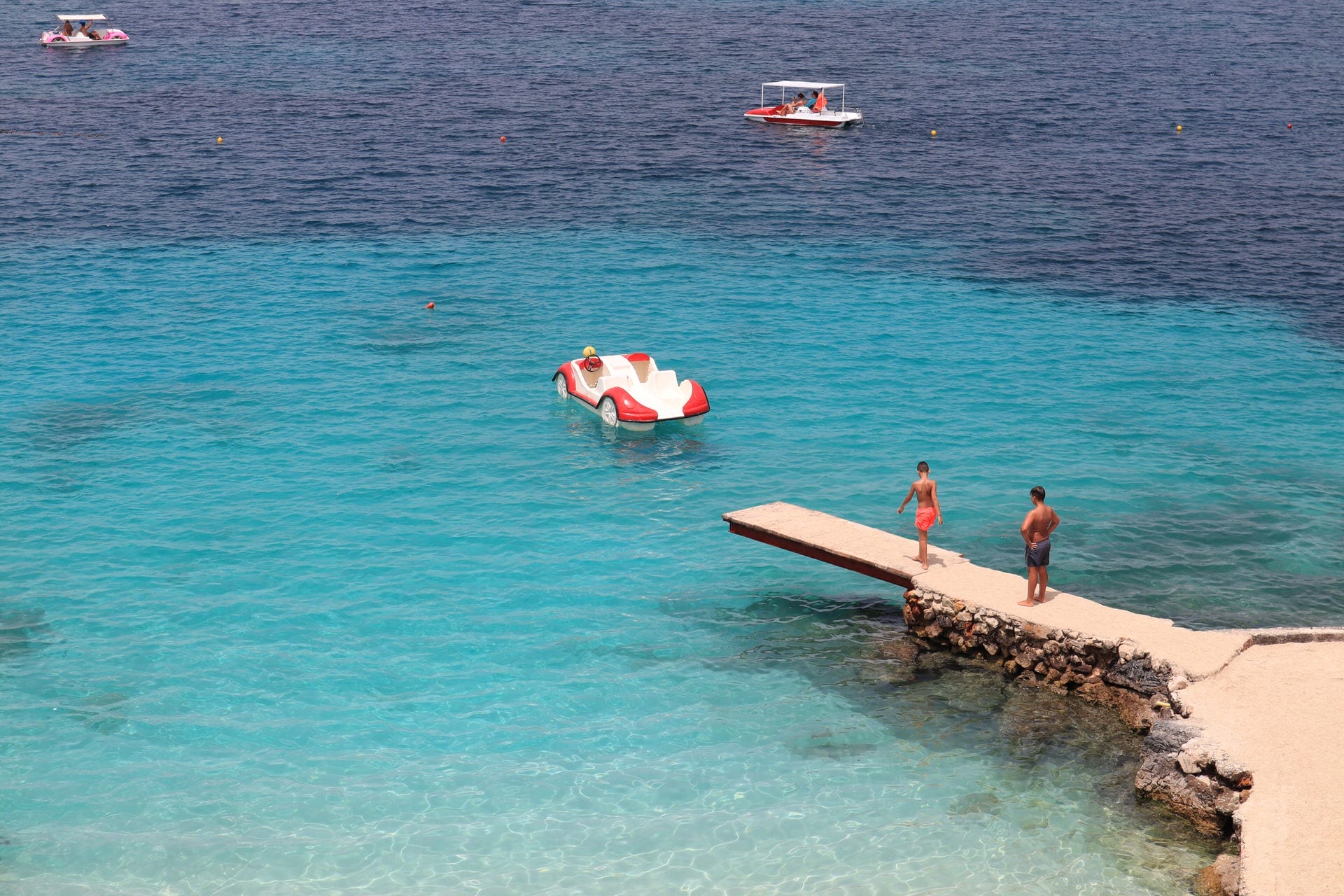
Ksamil occupies Albania’s southernmost point, approximately 12 kilometers south of Sarandë and just north of the Greek border. The setting provides the fundamental appeal—a shallow bay where four rocky islands create protected swimming areas, water that achieves genuine Caribbean-like turquoise transparency, and white pebble beaches that photograph spectacularly.
The water quality remains exceptional despite development pressures. The shallow bay’s natural flushing and the pebble beach composition (which doesn’t suspend sediment like sand) create visibility of several meters even during crowded summer periods. The four Ksamil Islands—now officially protected as nature reserves though enforcement seems minimal—can be reached by swimming (200-400 meters from shore, manageable for competent swimmers), paddleboarding, kayaking, or renting small boats from beach operators.
Butrint National Park, a UNESCO World Heritage Site preserving extraordinary Greek, Roman, and Byzantine ruins, lies just 10 minutes south by car. This proximity allows combining beach tourism with one of Albania’s most significant archaeological sites—an unusual pairing that gives Ksamil cultural dimension beyond pure beach resort character.
The Albanian Riviera context matters too. Ksamil sits at the southern terminus of the coastal region, offering different character than northern Riviera beaches like Dhërmi or Gjipe. The water here tends to be warmer, the setting flatter and more exposed, and the development denser than most other Albanian coastal destinations.
But honesty requires acknowledging what Ksamil has become. July and August bring crowds that overwhelm the small town’s capacity. Beaches become so densely packed with loungers and umbrellas that finding space for a towel in public sections becomes challenging. Traffic jams block the narrow roads. Water and waste management systems strain visibly. Prices inflate to levels that shock budget travelers accustomed to Albania’s general affordability—€4-5 for beer, €20-50 for beach loungers, €150-250 for mid-range hotels during peak season.
The beach club culture has transformed the atmosphere. Establishments like Veranda by Apollonia operate as full Mediterranean beach clubs—constant electronic music, professional DJs during peak season, cocktails at inflated prices, and the kind of social scene that appeals to some travelers while alienating others seeking quieter beach experiences.
Visit Ksamil if you’re interested in experiencing Albania’s most developed beach resort, if the four islands appeal photographically, if proximity to Butrint matters for your itinerary, or if you’re comfortable with crowded, commercialized beach environments similar to popular Greek islands. Visit during shoulder season (May-June or September-early October) when crowds thin and the town becomes more manageable.
Skip Ksamil if you seek undiscovered beaches, quiet coastal villages, or the Albania that travel articles often romanticize as “untouched Mediterranean.” That Albania exists—but not here, not during summer, not anymore.
The Four Islands and the Bay
The Ksamil Islands—four rocky outcrops rising from shallow water in the bay—create the destination’s distinctive visual signature and provide its primary swimming attraction. The islands range from perhaps 50 to 200 meters in length, covered with Mediterranean scrub vegetation, surrounded by clear shallow water over white pebble bottom that creates the brilliant turquoise color.
The islands are uninhabited and officially protected as nature reserves, though in practice they receive constant visitor traffic during summer season. Swimming or paddling to the islands has become the quintessential Ksamil activity—the distance from shore (200-400 meters depending on which island and which beach you’re departing from) is manageable for reasonably fit swimmers in calm conditions, though life jackets are advisable and available for rent from beach operators.
The islands offer limited amenities—no facilities, no shade beyond occasional scrub trees, nothing but rock, vegetation, and the surrounding water. People swim out, explore the rocky shores, photograph the bay from the islands’ perspectives, and return. The appeal is the activity itself and the setting rather than anything the islands provide beyond natural scenery.
Environmental pressures on the islands have increased with visitor numbers. Litter accumulates despite periodic cleanup efforts, the vegetation shows wear from foot traffic, and the surrounding waters sometimes show pollution during peak summer periods when thousands of swimmers pass through daily. Whether the “protection” status means anything substantive or merely exists on paper remains unclear.
The bay’s depth varies from one to perhaps four meters in most swimming areas, creating safe conditions for families while still allowing swimming rather than just wading. The pebble beach means entry requires care (water shoes help, though many forgo them), and the lack of sand creates different texture underfoot than sandy beaches provide.
The water temperature reaches 23-26°C during July-August peak season, remaining swimmable (19-23°C) from late May through October. The bay’s protected position means wave action stays minimal even when offshore winds create chop elsewhere along the coast.
The Beach Club Phenomenon
Ksamil’s beach scene has evolved into full Mediterranean beach club culture, with establishments competing for the loudest sound systems, most attractive lounger arrangements, and best-known visiting DJs. Veranda by Apollonia represents the apex of this development—a beach club operation occupying prime waterfront, offering organized lounger sections, full bar and restaurant services, regular DJ performances, and the kind of scene that attracts visitors who want Mykonos or Ibiza vibes at Albanian prices.
The beach club model works like this: establishments claim sections of beach (through arrangements whose legal foundations can be murky), install hundreds of loungers in neat rows, and charge €20-50 per day for lounger access depending on position and season. This fee usually doesn’t include food or drinks, which command separate premium pricing (€4-5 for beer, €8-15 for cocktails, €15-25 for meals). The loungers come with constant music—electronic, house, hip-hop, pop—creating atmosphere that some travelers seek and others find overwhelming.
During peak summer weekends, the beach clubs host Albanian and regional DJs, advertise events heavily on social media, and draw crowds specifically for the party scene rather than primarily for swimming. The combination of beach, music, alcohol, and social visibility creates what promoters market as “Albanian Riviera nightlife”—though whether this represents authentic Albanian culture or imported Mediterranean resort culture remains debatable.
For travelers seeking this scene, Ksamil delivers it more consistently than anywhere else on Albania’s coast. For those seeking quiet beaches, the beach clubs create precisely the environment to avoid—though alternatives exist if you’re willing to look beyond the main beaches.
Beyond the Main Beaches: Pema e Thatë and Hidden Coves
The overwhelming focus on Ksamil’s main beaches obscures the fact that the surrounding coastline offers alternatives for those willing to walk, drive, or boat to less accessible locations.
Pema e Thatë, roughly 3 kilometers south toward the Greek border, consists of several small pebble coves separated by rocky headlands. Access requires either driving narrow unpaved roads (passable in normal cars during dry conditions, challenging after rain) or hiking from Ksamil (40-50 minutes along coastal paths). The difficulty of access translates to dramatically fewer crowds—you might share a cove with dozens rather than thousands, even during peak season.
The beaches themselves offer no facilities—no loungers for rent, no beach clubs, no restaurants beyond what occasional vendors bring. It’s beach experience reduced to essentials: water, pebbles, sun, and whatever you carry with you. For some travelers, this represents relief from Ksamil’s commercialization. For others, the lack of services and amenities proves inconvenient.
Other hidden coves dot the coastline north toward Sarandë and south toward the border, many accessible only by boat or challenging hikes. Several boat rental operators in Ksamil offer tours to these locations, charging €30-60 per person for half-day trips that typically include swimming stops at multiple coves, snorkeling opportunities, and sometimes visits to coastal caves.
These boat trips provide escape from summer crowds while remaining based in Ksamil’s accommodation infrastructure—though whether paying for boat access to uncrowded beaches represents good value compared to simply visiting less developed Albanian coastal areas in the first place becomes a reasonable question.
The Butrint Connection
Ten kilometers south of Ksamil, the ancient city of Butrint occupies a peninsula in a coastal lagoon, preserving layered ruins from Greek colonization (7th century BCE) through Roman expansion, Byzantine Christian period, Venetian control, and Ottoman conquest. UNESCO designated the site as World Heritage in 1992, recognizing exceptional archaeological significance and preservation.
Butrint’s proximity to Ksamil creates unusual pairing—one of Albania’s most important cultural sites lying minutes from its most developed beach resort. This allows travelers to combine archaeological tourism with beach holidays, experiencing both aspects of Albanian offerings in compact timeframe.
The site deserves half-day minimum for meaningful exploration, ideally full day to thoroughly walk the extensive ruins, understand the historical layers, and visit the on-site museum. Most Ksamil visitors make the trip—either independently by rental car/scooter or through organized tours from Ksamil or Sarandë.
This proximity represents Ksamil’s greatest asset for travelers interested in more than pure beach tourism. Without Butrint nearby, Ksamil would be simply another beach resort. With Butrint accessible, the destination offers cultural dimension that justifies the visit even if beach crowds prove overwhelming.
Infrastructure Realities and Development Costs
Ksamil’s rapid growth has far outpaced infrastructure development, creating visible strains that reveal the costs of unplanned tourism explosion.
Roads: The main road through town becomes parking lot during July-August as traffic overwhelms the single narrow route connecting Ksamil to Sarandë and the highway beyond. Side roads remain unpaved or poorly maintained, creating dust clouds during dry periods and mud during rain. Parking becomes premium resource requiring €5-10 daily fees at informal lots or hours spent searching for street parking.
Water and Waste: The town’s water system struggles to serve summer populations fifty times larger than year-round residents. Hotels and restaurants sometimes face water shortages during peak periods. Waste collection can’t keep pace with summer garbage production, leading to overflowing bins and litter accumulation that gets particularly noticeable by late August after months of peak season strain.
Construction: Ongoing building continues relentlessly, with new hotels and apartment blocks rising wherever available land exists. The construction occurs largely without coordinated planning—buildings appear wherever owners can secure permits (or don’t bother waiting for permits), creating haphazard urban form without logical organization or architectural cohesion.
Environmental Impact: The rapid development’s environmental costs become visible in eroded hillsides where construction has removed stabilizing vegetation, in water quality that declines slightly each summer as waste systems struggle, and in the loss of natural coastline as every buildable meter gets commercialized.
Albanian environmental regulations theoretically restrict coastal development, but enforcement remains minimal in practice. The economic pressures driving construction—land values that have increased exponentially, employment opportunities in tourism-dependent economy, and political incentives to support development—overwhelm environmental concerns in most decision-making.
Whether this development trajectory is sustainable remains open question. Some observers predict eventual infrastructure collapse or environmental degradation that undermines the natural beauty attracting tourists in the first place. Others argue that market forces will eventually require infrastructure improvements and development controls as declining visitor satisfaction threatens economic returns.
For current visitors, these infrastructure issues mean accepting imperfect conditions—crowded roads, occasional water pressure problems, construction noise, and visible environmental stress—as part of the Ksamil experience.
Practical Ksamil
Getting There: Most visitors arrive via Sarandë, either flying to Tirana (296 kilometers, 5-6 hours drive south) or taking ferries from Corfu to Sarandë (30-70 minute crossing, then 12 kilometers north to Ksamil). Daily buses connect Tirana to Sarandë (7-9 hours), from where local minibuses run to Ksamil every 30-60 minutes (20-minute journey, 200-300 lek).
The Greek border crossing at Qafë Botë lies 15 minutes south of Ksamil, making the town accessible from northern Greece (Thessaloniki approximately 4 hours) for those combining Albanian and Greek travel.
Accommodation: Options range from budget guesthouses (€30-50/night, basic but functional) to mid-range hotels (€80-150/night, modern amenities) to upscale beach resorts (€150-300/night during peak season). Book well ahead for July-August when occupancy reaches capacity and prices inflate 50-100% above shoulder season rates.
Many accommodations advertise under “Sarandë” in booking systems since Ksamil remained administratively part of Sarandë municipality—search for both names when looking for options.
Dining: Fresh seafood dominates menus, sold by weight (1,200-1,800 lek per kilo for fish, grilled and served whole with sides). Standard Albanian dishes (byrek, tavë kosi, grilled meats) appear alongside Italian-influenced options (pizza, pasta). Quality varies enormously—establishments busy with Albanian families generally indicate better execution than those surviving purely on tourist traffic.
Budget €15-25 per person for decent seafood meals, €8-12 for simpler Albanian dishes, €20-40 at upscale beach club restaurants.
Beach Access: Public beach sections exist but represent small fraction of total beachfront, with organized lounger areas (operated by beach clubs and hotels) dominating. Lounger rental runs €20-50 per day depending on establishment and position. Some hotels provide beach access exclusively for guests.
Money: Most businesses accept cash (Albanian lek) only, though larger hotels take cards. ATMs exist but can run out during peak weekends—withdraw sufficient cash in Sarandë before arriving if visiting during high season.
Transportation: The compact town center is walkable, but reaching Butrint, Pema e Thatë, or other nearby sites requires transportation. Rental cars, scooters, and bicycles are available (€25-50/day for cars, €15-25 for scooters). Taxis operate between Ksamil and Sarandë (€10-15, agree on price before departure).
When to Visit
May-June: Optimal timing for those seeking warm weather without overwhelming crowds. Water temperatures reach swimmable range (19-22°C) by late May, beaches remain relatively uncrowded, prices stay at shoulder-season rates, and infrastructure copes more easily with visitor numbers. Most but not all beach clubs and restaurants operate.
July-August: Peak season brings maximum crowds, highest prices, warmest water (23-26°C), and the full beach club scene. Infrastructure strains become most visible, beach space becomes premium, traffic overwhelms the narrow roads, and the town functions at overcapacity. Only visit during peak summer if your schedule allows no alternative or if you specifically seek the crowded beach party atmosphere.
September-early October: September rivals May-June for optimal conditions—water retains summer warmth (22-24°C in September, 20-22°C in early October), crowds diminish significantly after mid-September, prices drop 30-50%, and the overall atmosphere relaxes considerably. Many businesses begin closing by late October as seasonal tourism ends.
November-April: Most tourism infrastructure closes completely. The few year-round restaurants and guesthouses operate, but beach facilities shut down, boat tours stop, and the town returns to its small year-round population. Winter remains mild by northern European standards (10-15°C) but too cool for beach activities.
The Honest Assessment
Ksamil represents Albania’s coastal tourism at its most developed—and most contested. The destination divides visitors sharply: some find the turquoise water, four islands, and lively beach scene exactly what they sought, while others leave disappointed by crowds, commercialization, and infrastructure issues that contradict expectations of “undiscovered Albania.”
The water quality remains genuinely exceptional. The four islands create distinctive scenery. Butrint’s proximity adds cultural dimension. And for travelers seeking beach club atmosphere at prices lower than Greek islands or Croatian coast, Ksamil delivers value.
But the rapid, largely unplanned development has created environment that feels transitional—no longer the quiet fishing village it was two decades ago, not yet the mature resort destination with infrastructure to match visitor numbers. You’re experiencing a place mid-transformation, with all the awkward incompleteness that implies.
The environmental costs are real and visible. The crowds during peak season are genuinely overwhelming. The beach club noise isn’t everyone’s preference. And the question of whether this development trajectory is sustainable—ecologically, economically, culturally—remains unresolved.
For understanding Albania’s tourism evolution, Ksamil provides valuable case study. This is what happens when extraordinary natural beauty meets sudden accessibility and capital investment without coordinated planning or strong regulatory enforcement. The outcome mixes genuine economic opportunity with environmental degradation, cultural transformation with heritage loss, and rapid improvement in some areas with deterioration in others.
If you visit Ksamil, go with realistic expectations. Expect crowds if visiting during summer. Expect infrastructure imperfections. Expect ongoing construction and visible environmental stress. Expect prices higher than most of Albania. But also expect genuinely beautiful water, convenient access to Butrint, and the energetic atmosphere of a beach destination in full development boom.
Whether that combination appeals depends entirely on what you value in beach destinations and how much tolerance you have for rough edges alongside natural beauty.
The four islands still float in turquoise shallows, as they have for millennia. Everything else about Ksamil has changed in two decades—and continues changing year by year, summer by summer, construction project by construction project. What you find when you visit will already differ from this description by the time you arrive.
That’s Ksamil: beautiful, chaotic, developing, crowded, contested, and entirely representative of Albania’s complicated relationship with its suddenly valuable coastline.