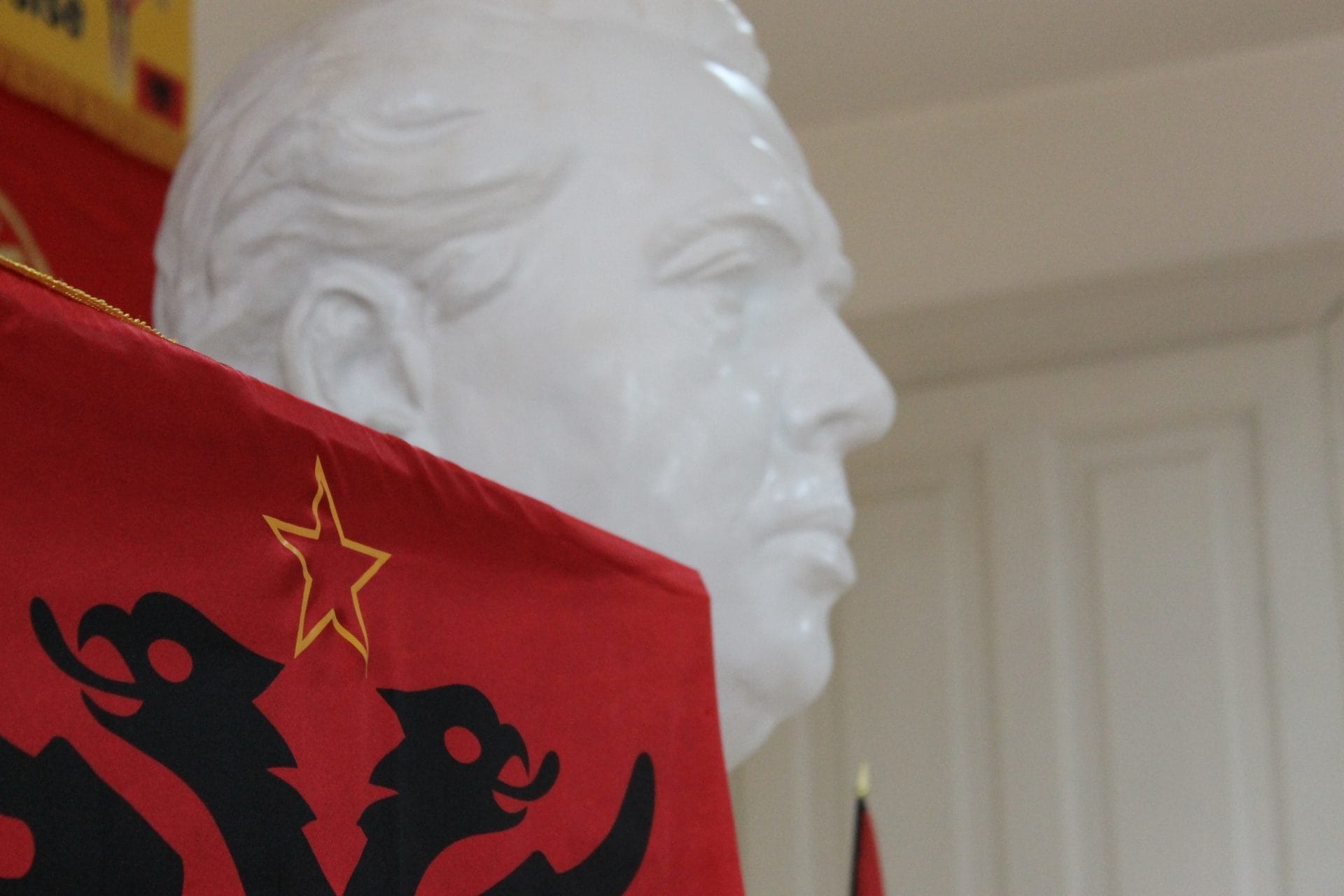
The Story Western Documentaries Won’t Tell You
Look, I know what you’ve heard about communist Albania. Brutal dictatorship. Grey concrete. Miserable people in bread lines. All true—but also incomplete in ways that fundamentally misunderstand what actually happened here.
I was born in Albania in 1982, left as an infant when my father represented Albania at the United Nations in New York, then got yanked back in 1987 because the regime decided my dad exhibited “capitalist ideologies.” We lived here through communism’s collapse in 1991, and what I witnessed during those final years bears almost no resemblance to the simplistic “oppressed masses yearning for freedom” narrative.
How We Became More Isolated Than North Korea
When Enver Hoxha took power in 1944, Albania was 85% illiterate with infrastructure that barely reached beyond Tirana. What he built over the next 46 years was one of history’s most extreme social experiments—a communist state that would eventually surpass even North Korea in isolation.
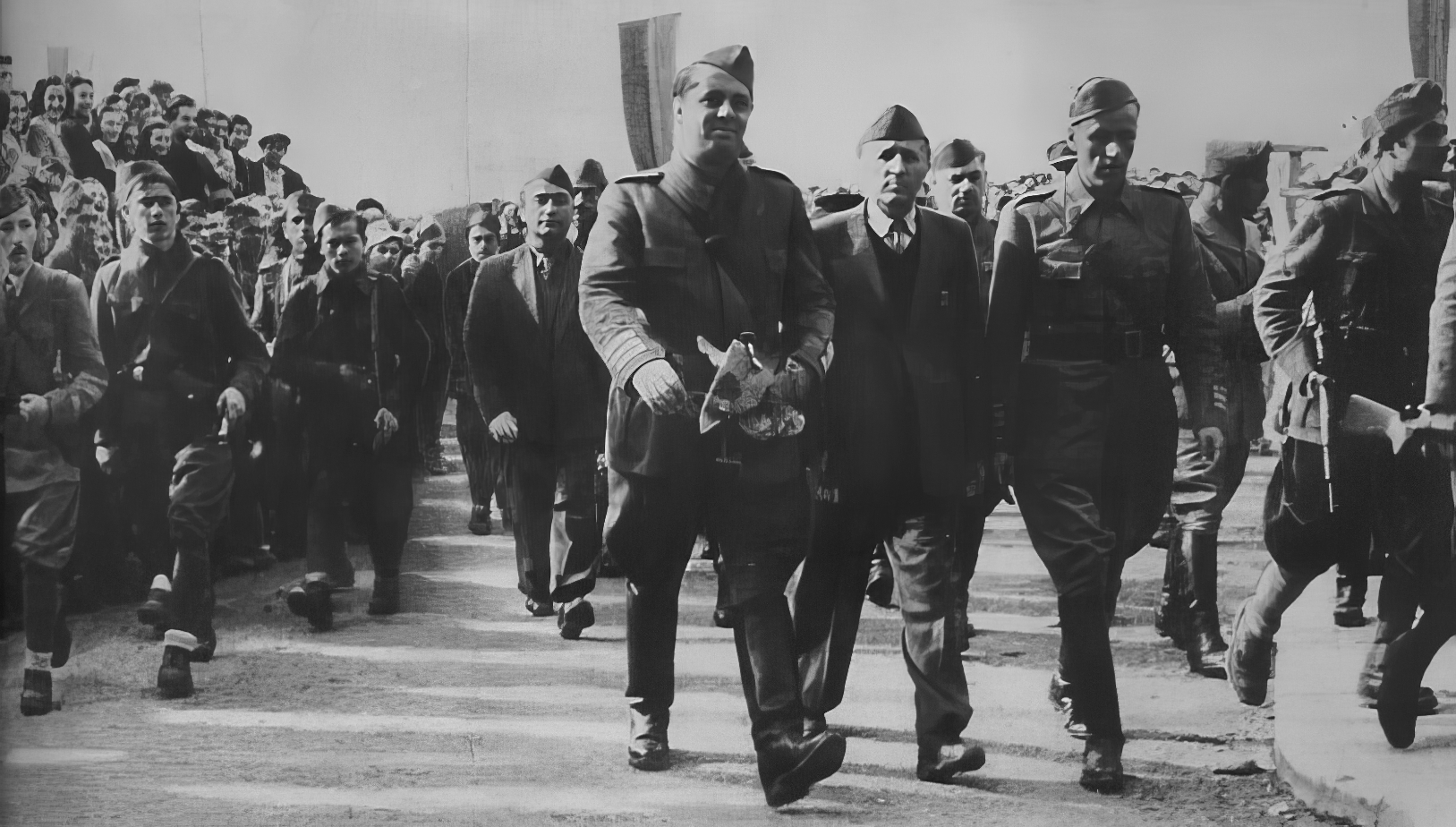
Albanian Partisans marching through the streets of Tirana in 1944 after WW2
Here’s the isolation timeline that nobody planned but somehow happened:
- 1948: Broke with Yugoslavia (Tito wasn’t Stalinist enough)
- 1961: Broke with Soviet Union (Khrushchev was “revisionist”)
- 1978: Broke with China (Deng Xiaoping embraced capitalism)
- 1978-1991: Completely alone. Zero allies. Just Albania and Hoxha’s paranoia.
This self-imposed hermit kingdom status destroyed the economy—Albania remained Europe’s poorest country throughout the entire communist period. My father’s generation grew up never seeing a banana, never hearing Western music, never meeting a foreigner unless they were from another communist country (which became increasingly rare as Hoxha alienated everyone).
But here’s what’s weird: within those closed borders, something unexpected happened.
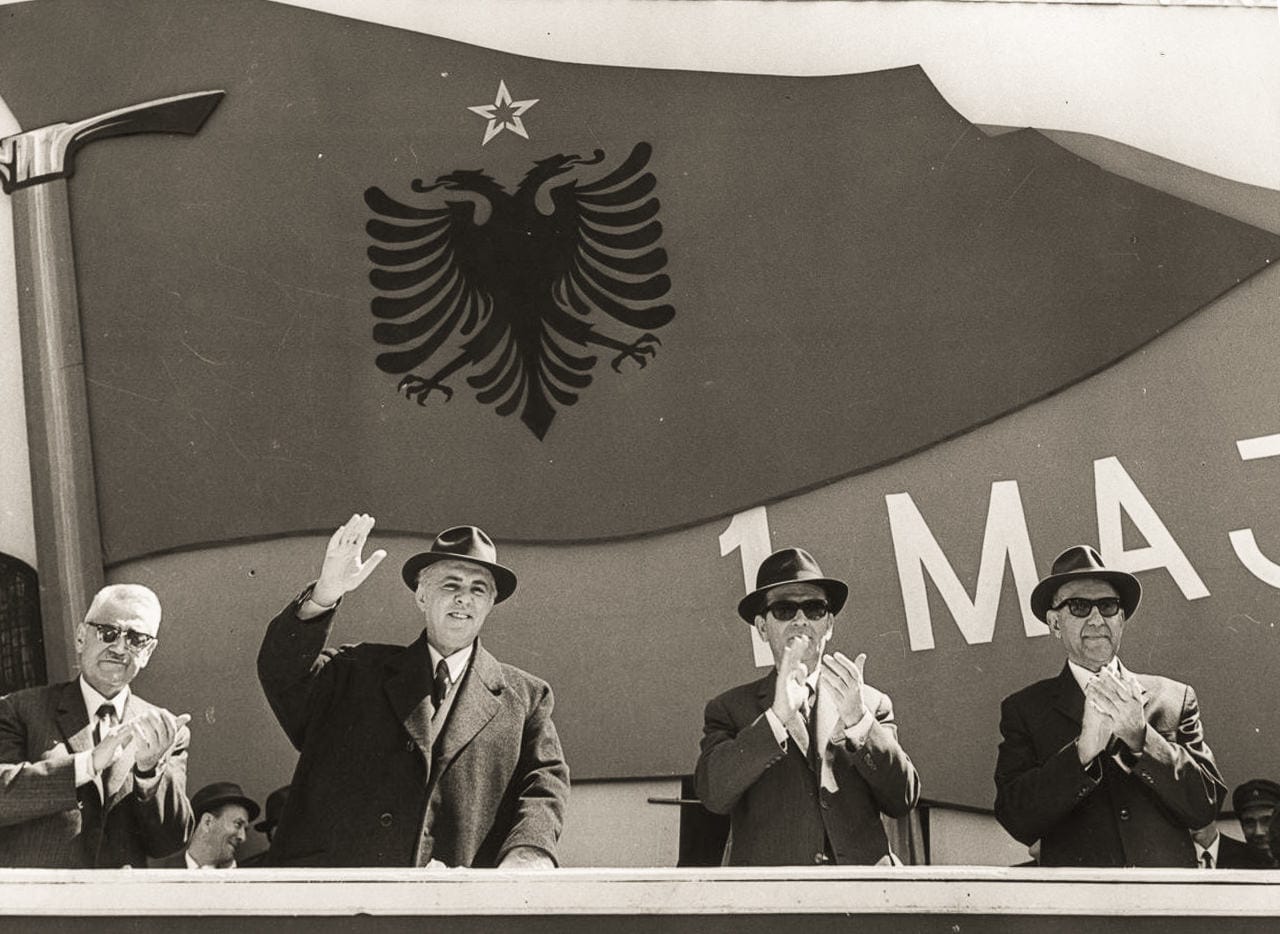
The Albanian Communist Politburo
When Academic Achievement Became the Only Status Symbol
Here’s the paradox that explains modern Albania better than anything else: when the regime eliminated material wealth as a status marker, Albanians turned obsessively to the one thing the state couldn’t redistribute—intellectual achievement.
My mother tells stories about her school years in the 1960s and 70s. Students competed viciously not for grades (everyone got good grades or faced consequences) but for genuine knowledge. Math competitions attracted crowds. Poetry recitals were social events. Knowing Russian literature was a bigger flex than owning a nice coat (which was impossible anyway since everyone wore the same state-issued clothing).
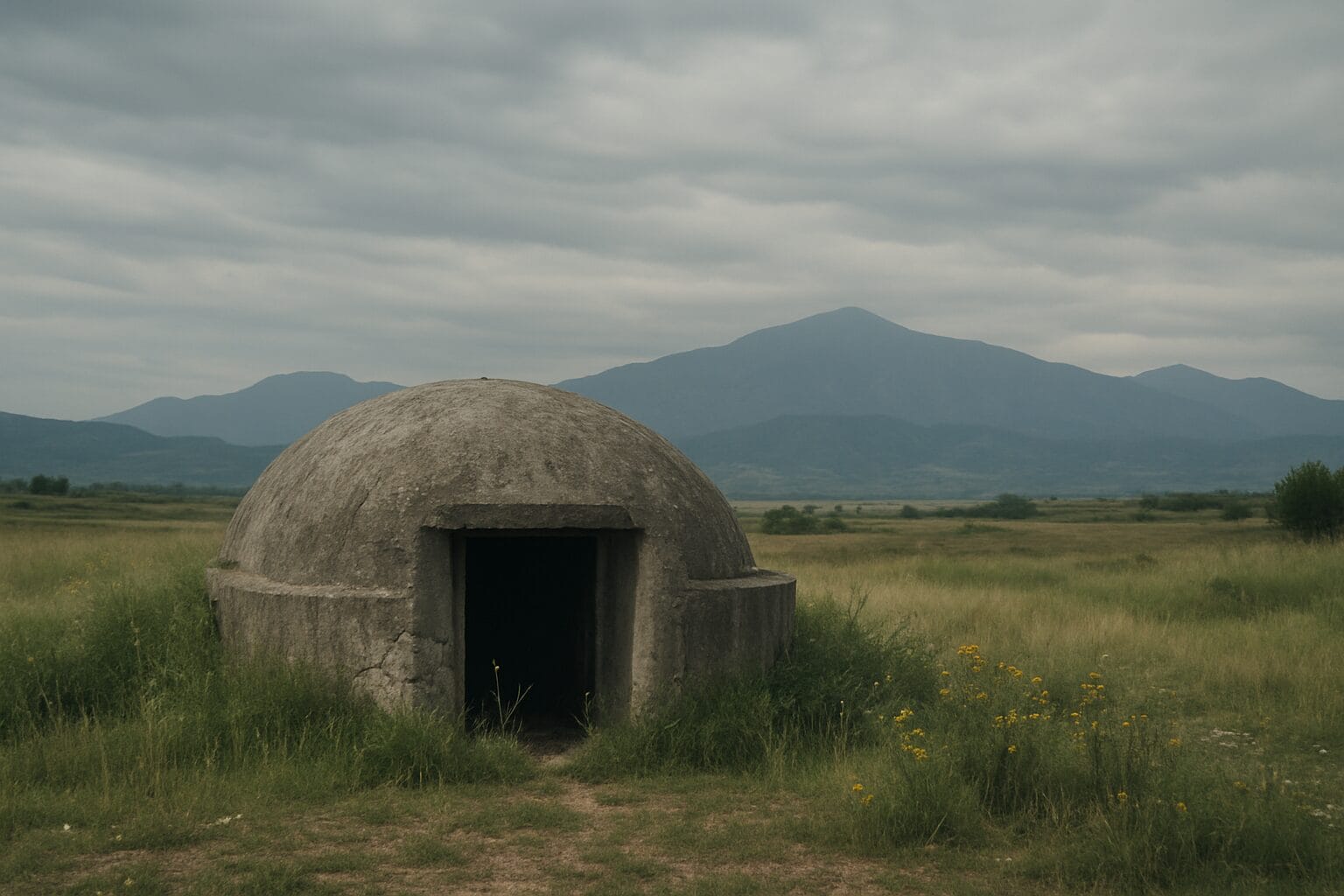
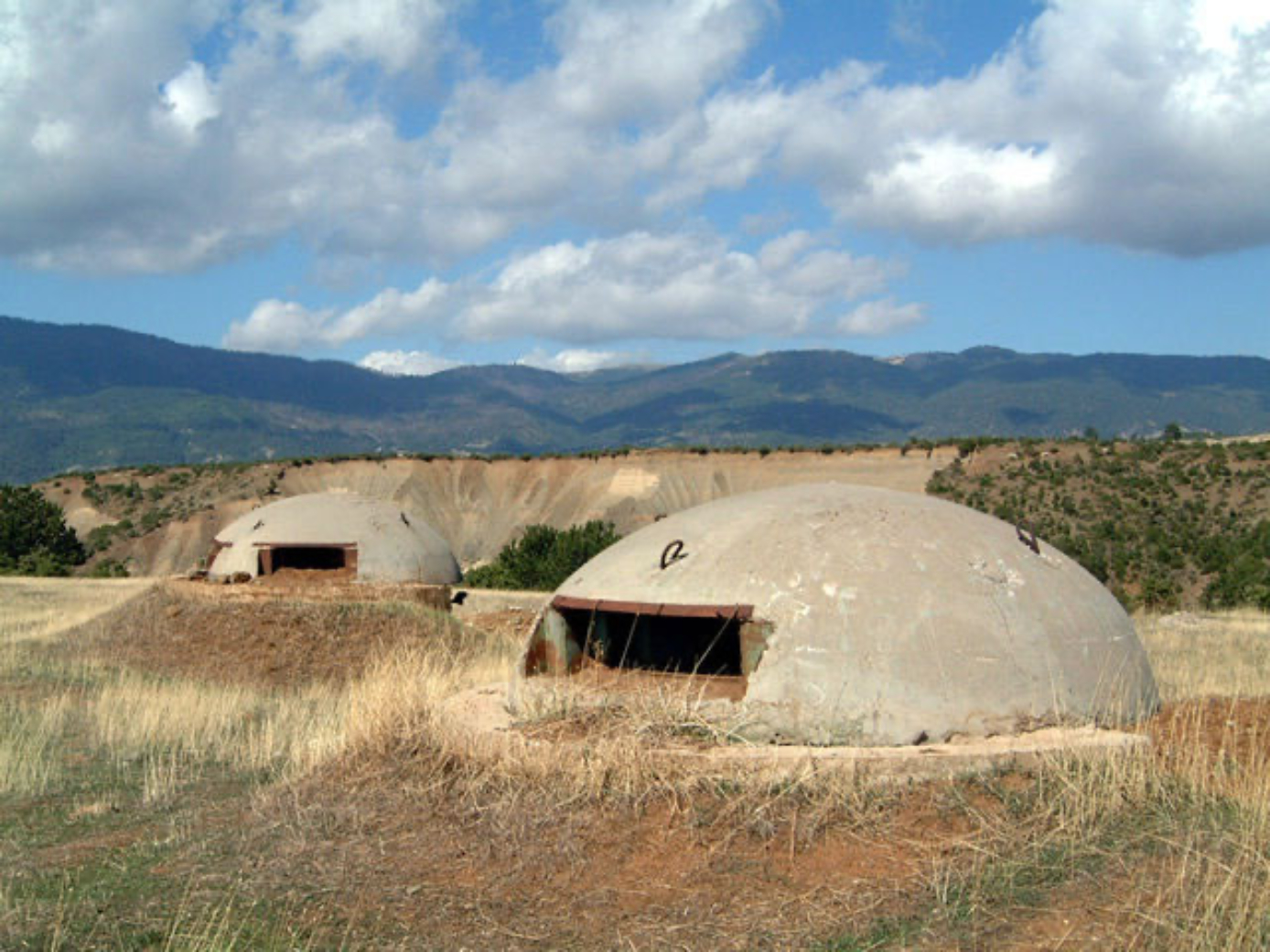
A concrete bunker, one of 173,000 built during Albania’s communist era. One for every four citizens.
The result? By the 1980s, literacy went from 15% to over 90%. Schools in remote mountain villages taught geometry and foreign languages with a rigor that would shame many modern Western schools. This wasn’t about freedom or enlightenment—it was about survival in a system where your brain was literally the only asset you controlled.
This legacy is why you’ll meet Albanian taxi drivers in New York who can quote Dostoevsky and explain quantum mechanics. The education was good—it just came packaged with political terror and poverty.
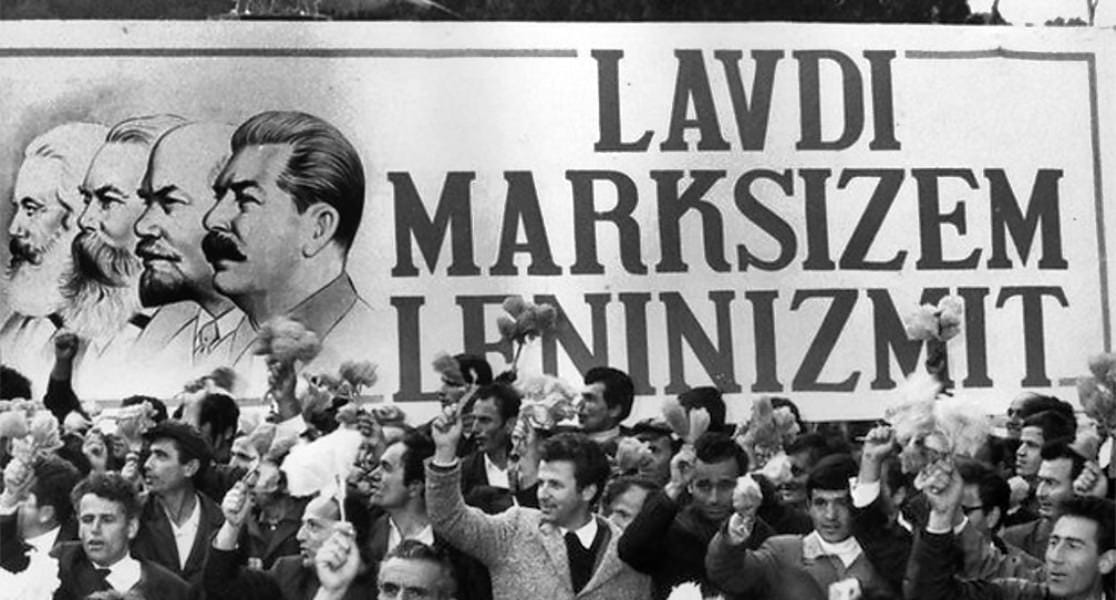
Communist Stalinist Albania
What It Actually Felt Like (1987-1991)
I was five when we returned to Albania in 1987. What I remember contradicts every Western documentary I’ve watched:
Crime was basically zero. Not because the Sigurimi (secret police) was watching—though they were—but because social fabric held. My mother left our apartment unlocked. Always. Neighbors watched each other’s kids. Strangers helped you carry groceries. This wasn’t communist propaganda; it was real, and every Albanian my parents’ age mourns its loss.
Families were everything. Not in the abstract Hallmark card way—in the practical “extended family is your only safety net” way. When state shops ran out of bread (often), your uncle’s neighbor’s cousin knew someone with flour. When you needed medicine (which was scarce), your grandmother’s friend’s nephew worked at the hospital. This network economy replaced the official economy entirely.
Community bonds were suffocating and beautiful simultaneously. Everyone knew your business. Your neighbor knew when you came home late. The local Party representative knew if you complained about food shortages. The shopkeeper knew your family’s political status and might “forget” to save you the good cheese if your cousin was under Sigurimi scrutiny.
But those same neighbors would also share their last potato with you. That same Party representative would quietly warn your father if someone filed a complaint. That same shopkeeper would hide an extra loaf of bread for your grandmother.
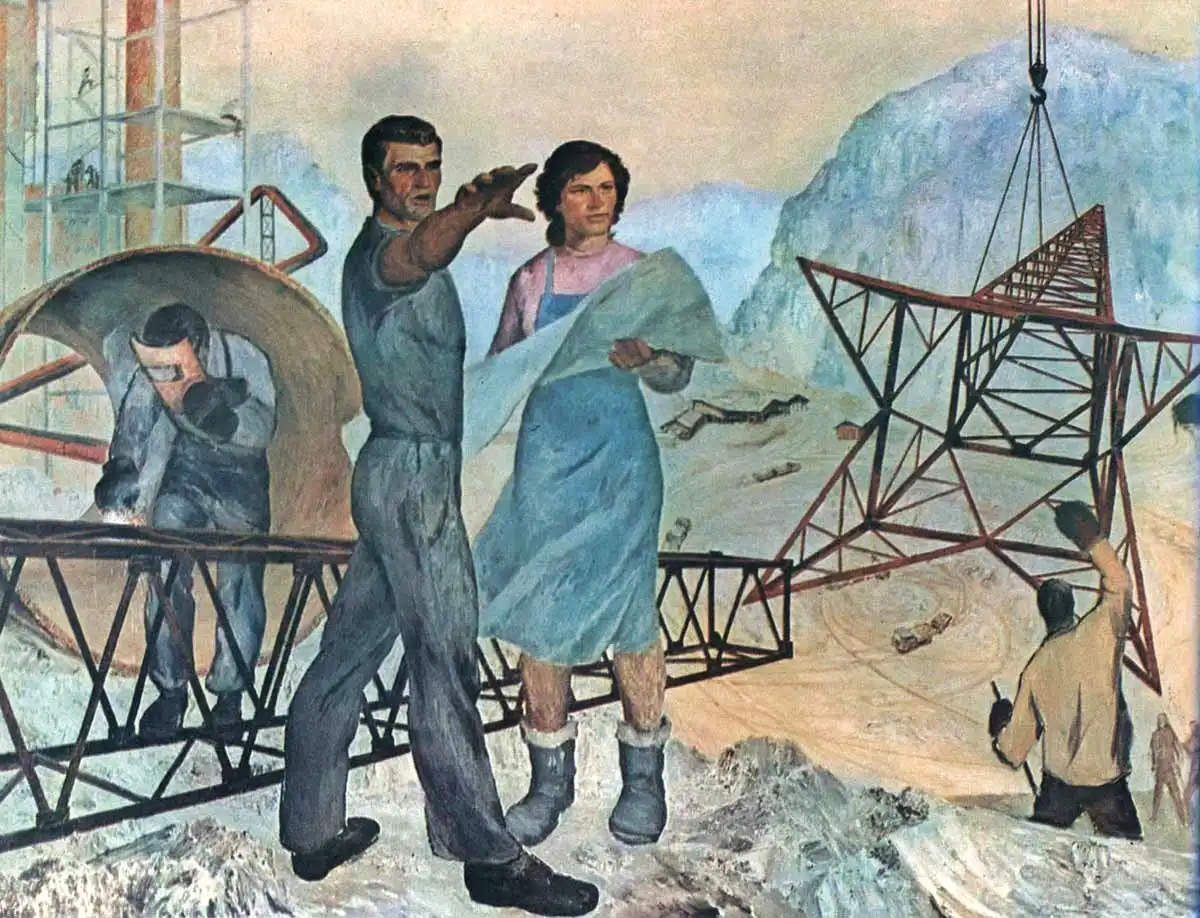
Communist Albania Industrialization Propoganda
What the Regime Actually Accomplished (Before Ruining It)
Look, I’m not here to rehabilitate communism, but honesty requires acknowledging what actually improved:
Healthcare went from nonexistent to basic. My grandmother’s generation died from preventable diseases. My mother’s generation got free medical care (terrible quality, but free). Infant mortality dropped dramatically. Life expectancy increased. You still couldn’t get antibiotics when you needed them, but at least villages had clinics instead of just hoping the flu didn’t kill you.
Infrastructure reached places maps forgot. Roads connected mountain villages. Hydroelectric dams brought electricity to regions that had never seen a light bulb. My father’s village in the north got running water in the 1960s—before that, women walked two hours to the nearest spring.
Women got educated and worked. My grandmother couldn’t read. My mother became an engineer. This wasn’t feminist enlightenment—the regime needed workers and didn’t care about gender when mobilizing labor—but the outcome was generations of educated Albanian women who would never accept being sent back to kitchens.
The Bill Came Due in Blood and Fear
Every improvement came wrapped in terror.
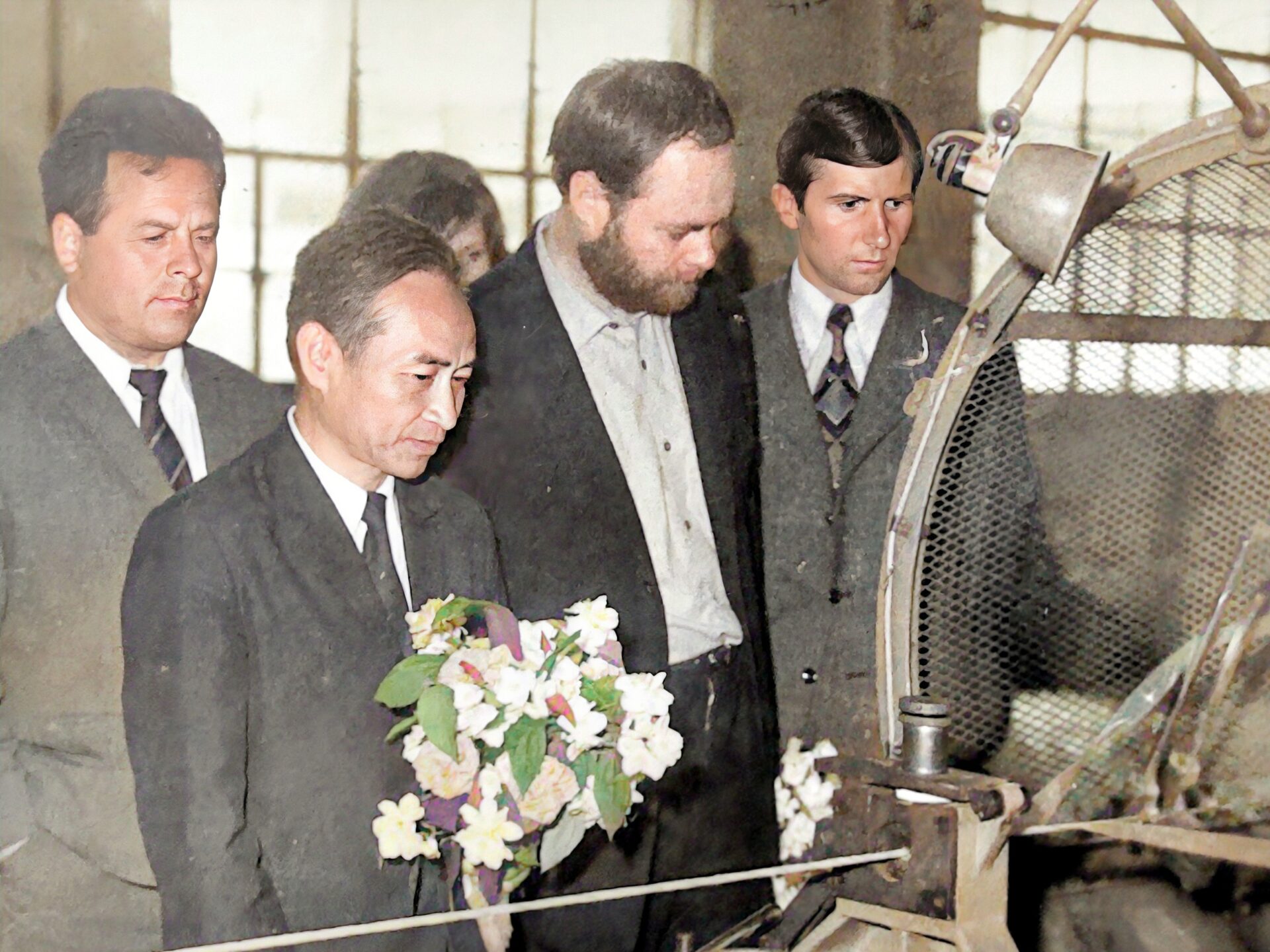
Chinese and Dutch visitors touring a manufacturing plant in the 1970s with my father (right) as their English translator.
The Sigurimi (secret police) made the Stasi look amateurish. One in four Albanians either worked for them or informed for them. Your neighbor. Your teacher. Your cousin. The surveillance state wasn’t abstract—it was your friend reporting that you complained about bread shortages, which meant your family lost housing privileges.
Religious persecution was systematic. In 1967, Albania declared itself the world’s first officially atheist state. Not “secular”—atheist. Churches became warehouses. Mosques became sports halls. Priests and imams went to prison or got executed. My great-uncle was a Catholic priest. He spent 17 years in Spaç labor camp for the crime of owning a Bible.
Economic policy was insane. When private livestock ownership proved difficult to eliminate, the regime’s solution? Mass slaughter of animals. This actually happened. Productive farming policies? No—just kill the chickens because they represent capitalist ownership. The result was chronic food shortages while state propaganda claimed record harvests.
Citizens learned to smile and lie. Everyone did. You lied about supporting the Party. You lied about being happy. You lied about having enough food. The lying became so normalized that it’s one reason why modern Albania struggles with corruption—we spent 47 years training people to treat official truth as performance art.
Why My Neighbors Still Argue About Whether It Was Better Back Then
Here’s the uncomfortable truth that makes Western liberals squirm: some Albanians genuinely miss aspects of communism. Not the system—but what it accidentally created.
They miss the zero crime. They miss leaving doors unlocked. They miss communities where your neighbor actually knew your name and would help when your kid got sick. They miss economic equality, even if everyone was equally poor.
What they don’t miss: the Sigurimi terror, the food shortages, the religious persecution, the complete isolation from the world, the inability to speak freely even in your own home.
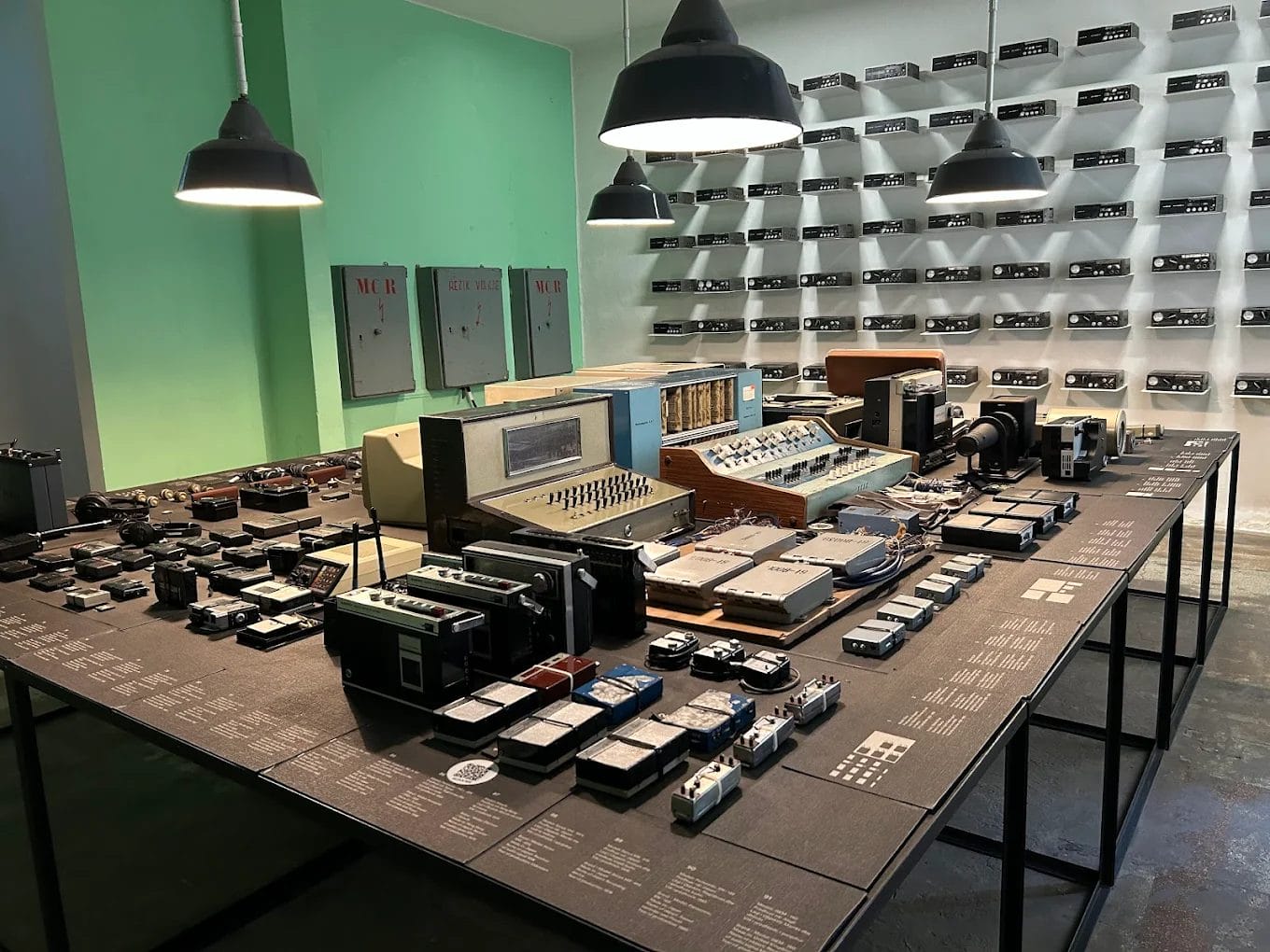
Surveillance equipment from Albania’s communist era on display at the House of Leaves Museum, Tirana
The paradox is real and painful. A society that once had minimal crime and strong social bonds became one of Europe’s most corruption-plagued nations within a decade of communism’s fall. The 1997 pyramid schemes that destroyed the economy? They succeeded partly because 47 years of isolation meant nobody understood how capitalism actually works.
But the education stuck. Albanian emigrants excel globally—doctors, engineers, tech workers, academics. That literacy campaign that reached remote mountain villages? Those kids grew up to have kids who attend MIT and Cambridge. The regime’s inadvertent gift was creating a highly educated population trapped in poverty, who exploded onto the global stage once the borders opened.
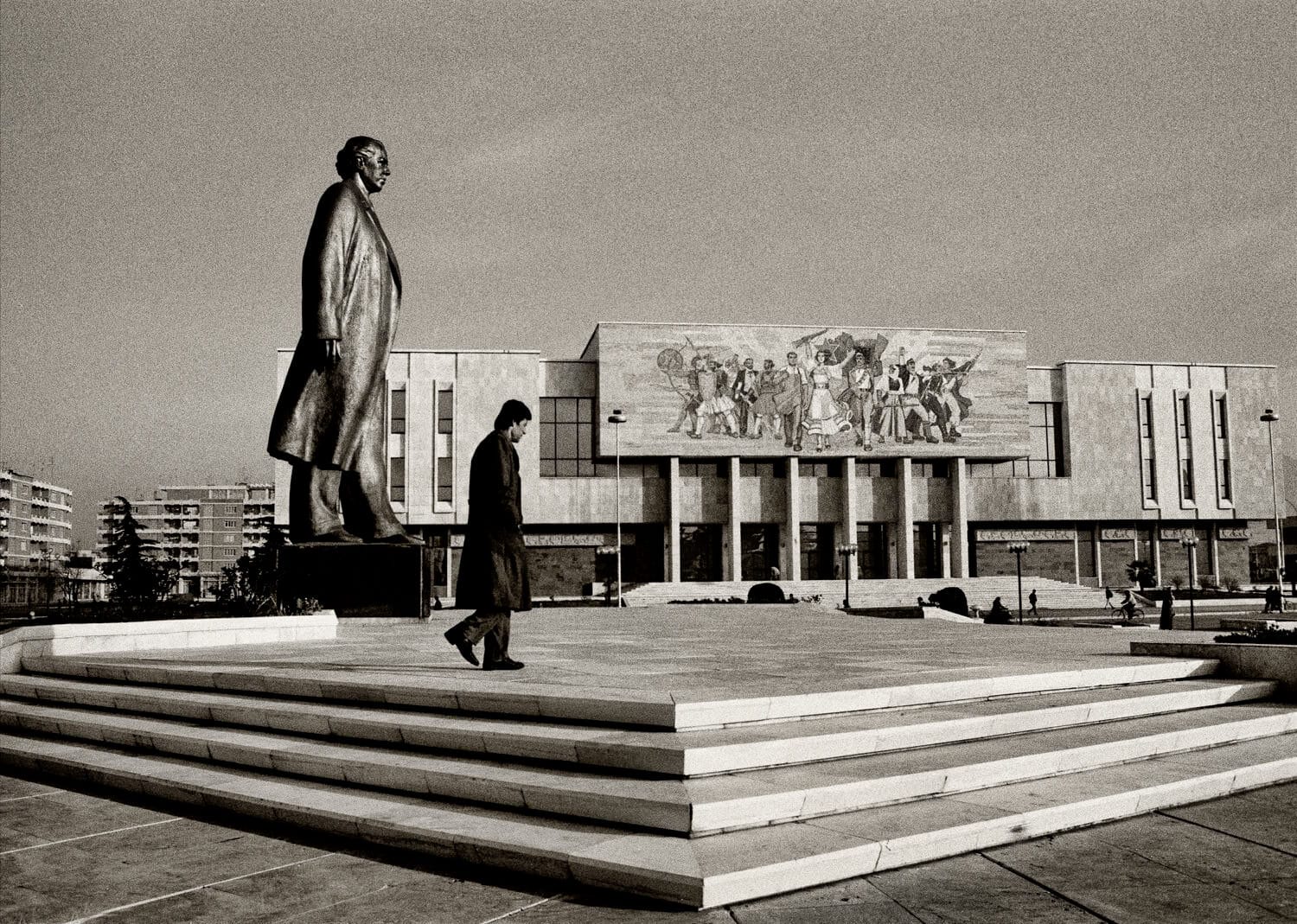
Enver Hoxhas bronze statue in Skederbeg square before the communist collapse in 1991.
Where to See What We’re Talking About (2026)
If you want to understand what this all actually looked like, Tirana has turned the regime’s infrastructure into museums that are genuinely worth visiting:
House of Leaves Museum (Museum of Secret Surveillance)
- €7.20 entry (700 ALL, cash only—cards don’t work, very Albanian)
- Former Sigurimi headquarters with original surveillance equipment
- Daily 9:00-16:00
- Exhibits show wiretapping devices, interrogation rooms, actual Sigurimi files
- The creepiest part? Realizing how amateur their spying tech was compared to what Facebook knows about you
- 900 ALL each (~€9), or 1,000 ALL with the audio guide (an app—download it over Wi-Fi first, and bring your own headphones)
- Combo ticket covering both works out to 800 ALL each and stays valid 72 hours (ask at the entrance—they won’t advertise it)
- Bunk’Art 1 drew 400,000 visitors in 2024 and is now TripAdvisor’s number-one attraction in Tirana
- Bunk’Art 1: Five-story nuclear bunker near the Dajti cable car, 106 rooms of military history and paranoia. Open 9:30-16:30 daily—that early close catches people out
- Bunk’Art 2: City center near Skanderbeg Square, focused on Sigurimi operations and police state mechanics
- Cash only (Albanian card readers have opinions about working)
The difference between them? Bunk’Art 1 shows you Hoxha’s military fantasy world—the bunker he built to survive nuclear war while everyone else died. Bunk’Art 2 shows you how the regime actually controlled people—interrogation rooms, surveillance files, the machinery of fear.
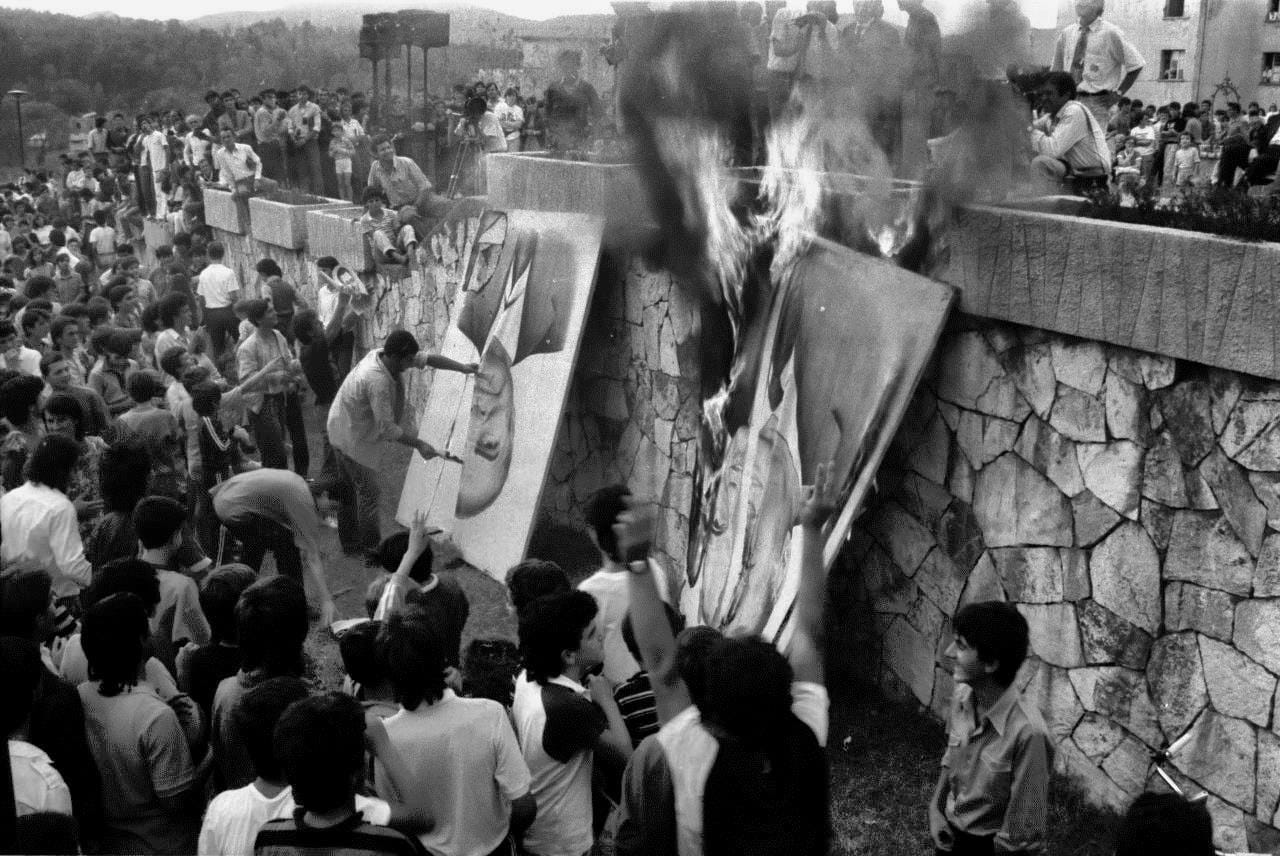
Student protests in Albania 1991 marking the end of communism.
Both are worth seeing. Start with Bunk’Art 2 if you only have time for one (easier to reach, more directly about daily life under surveillance).
- Free (it’s outdoors)
- Originally built as Enver Hoxha’s museum (the most expensive building ever constructed in Albania)
- Now a youth culture hub where teenagers hang out and climb the structure
- The ultimate symbol of Albanian resilience: turning your dictator’s monument into a skate park
What This Means for Modern Albania
Here’s what kills me: Albania spent 47 years building one of history’s most isolated, paranoid states, then collapsed it almost overnight and expected everything to just… work.
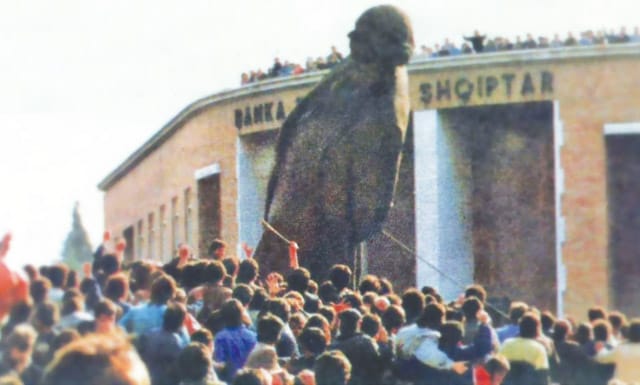
The toppling of Hoxha’s statue in Tirana 1991.
It didn’t. The fall of communism in 1991 unleashed chaos. The 1997 pyramid schemes wiped out life savings. Crime exploded. Corruption became normalized. The social bonds that survived communism fractured under capitalism’s pressure.
But the good parts stuck around too. The education system still produces brilliant students (even if many leave for Germany or the US). Family bonds remain stronger than in most of Europe. And there’s a resilience here that comes from surviving 47 years of one extreme and 35 years of another.
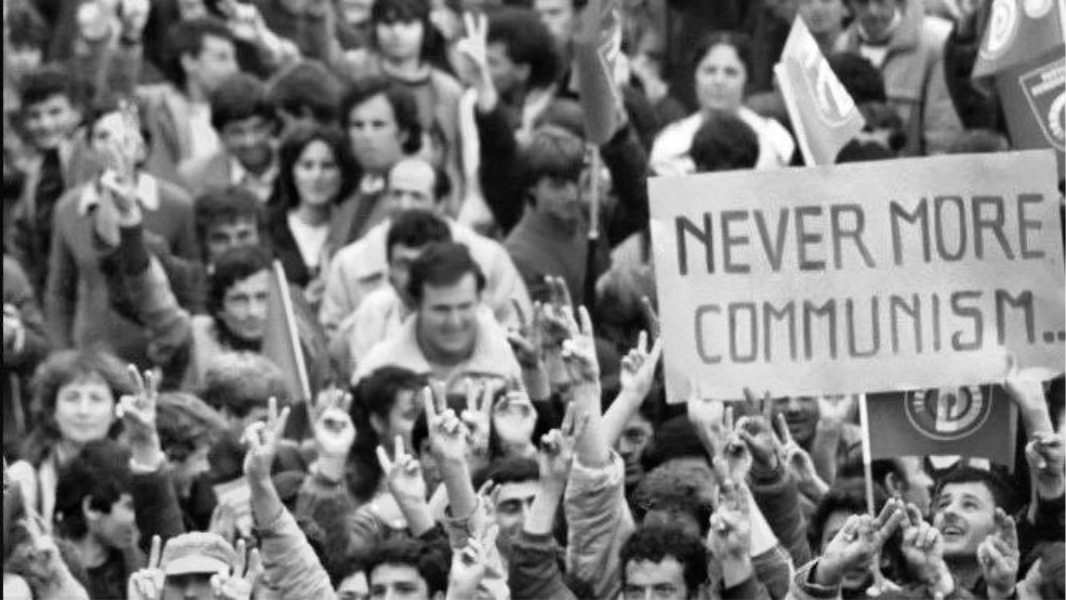
Never More Communism – Demonstrators in Albania, 1991
Those concrete bunkers scattered across Albania aren’t just historical curiosities—they’re physical reminders that we built monuments to paranoia while lacking basic infrastructure, and somehow survived anyway.
Today’s Albania is complicated. Corrupt but improving. Poor but developing. Scarred by the past but not defined by it. We’re building a future while still arguing about whether the past was as bad as it seemed or as good as nostalgia makes it feel.
Pro Tips for Understanding This
Don’t romanticize the regime. Nostalgia is real, but it’s selective. The people who miss communism miss the parts that worked (community, safety) and forget the parts that didn’t (surveillance, terror, poverty).
Don’t demonize everyone who participated. One in four Albanians worked for or informed to the Sigurimi. Your tour guide’s grandfather probably did. This doesn’t make them evil—it makes them survivors in a system where refusal meant prison or worse.
Visit the museums chronologically: House of Leaves first (to understand the surveillance), then Bunk’Art 2 (to see how it worked), then Bunk’Art 1 (to see the paranoia that justified it all).
Talk to Albanians about this carefully. Everyone has family stories. Some lost relatives to labor camps. Others had relatives who worked for the regime. The trauma is recent and real.
Recognize that Albania’s communist experience was unique. Not Soviet. Not Yugoslav. Not Chinese. We somehow managed to be more isolated than North Korea while maintaining higher literacy than most of Europe. That contradiction explains modern Albania better than any single narrative.