The Neighborhood We Couldn’t Enter
Here’s something most tourists don’t realize when they’re sipping €3 espressos at trendy cafés in Blloku: this entire neighborhood was forbidden territory until 1991. Not figuratively forbidden. Literally—armed soldiers at checkpoints, and if you didn’t have the right papers, you weren’t getting in.
I grew up in Tirana during the late 1980s, and Blloku existed in our city like a foreign embassy—visible but inaccessible, present but sealed off. The neighborhood consisted of villas built by Italian architects during World War II, requisitioned after the war to house Albania’s communist elite. Enver Hoxha himself lived here. So did every Politburo member, every feared Sigurimi (secret police) chief, every high-ranking military officer whose loyalty the regime valued.
The rest of us? We couldn’t even walk down the streets.
My mother tells a story about accidentally wandering too close to the Blloku perimeter in 1983 while searching for a friend’s apartment. A guard stopped her two blocks away. “Citizen, this area is restricted. Turn back.” No explanation needed. Everyone knew.
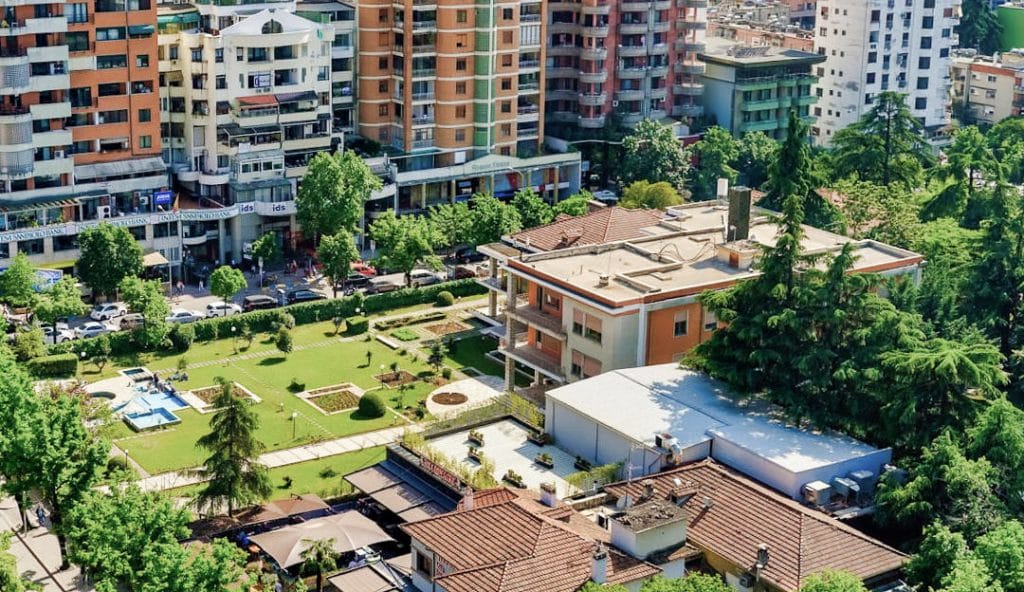
What kills me now is walking through those same streets watching tourists photograph Italian-designed villas housing boutiques, bars, and overpriced brunch spots, completely unaware they’re strolling through what was essentially an apartheid zone within our own city.
Inside the Gilded Cage
Life inside Blloku during the communist era was a study in contrasts so sharp it would be comedic if it weren’t so enraging. The ruling class enjoyed amenities unimaginable to ordinary Albanians—well-stocked libraries, foreign television programs, imported food, private gardens, reliable electricity and hot water.
Meanwhile, outside the checkpoints, families rationed electricity, queued for bread, and faced prosecution for possessing foreign currency or watching Western films. The disconnect was total.
But even within this privileged enclave, fear and paranoia lurked. Hoxha ruled with pathological suspicion, eliminating perceived threats among his closest associates. Living in Blloku meant proximity to power, but also proximity to purges. Today’s neighbor and colleague could be tomorrow’s “enemy of the people,” disappeared in the night.
The architecture tells this story if you know where to look. The villas feature high walls, small windows facing the street, large interior courtyards—designed for privacy and security, not community. Italian architects during Mussolini’s brief occupation (1939-1943) built these homes for Italian functionaries. After the war, Albanian communists simply moved in, replacing one occupying elite with another.
Walking through Blloku today, I try explaining this history to visiting friends. They see charming residential streets, Instagram-worthy cafés, boutique hotels. I see the literal walls that divided my city into zones of privilege and exclusion.
The Fall (And What Happened Next)
When communism collapsed in 1991, one of the first symbolic acts was tearing down Blloku’s restrictions. No more checkpoints. No more armed guards. For the first time in decades, ordinary Albanians could walk where they’d been forbidden.
I remember the first time I entered Blloku freely—June 1991, age 14. My friends and I walked down streets we’d only glimpsed from a distance, gawking at villas that had housed the people who’d controlled every aspect of our lives. Some homes had already been abandoned, their occupants fled or fallen from power. Others were being looted. The whole neighborhood felt surreal—like a forbidden city suddenly accessible but still alien.
What followed was rapid, chaotic transformation. The villas that once housed the communist elite now serve as embassies, cafés, restaurants, boutiques, and offices. Some families who’d occupied these homes during the communist era retained ownership through questionable legal proceedings. Others lost everything. Albanian property law in the 1990s was a free-for-all, and Blloku real estate proved particularly contentious.
By the early 2000s, Blloku had emerged as Tirana’s social center. Its sidewalks filled with fashionable locals and curious visitors. Cafés sprouted in former ground-floor apartments. Bars occupied basements that once stored who-knows-what for the regime. The neighborhood transformed from exclusionary enclave to inclusive gathering space—though “inclusive” is relative when coffee costs more than many Albanians earn in an hour.
Today, Blloku is the beating heart of Tirana’s social scene. Its streets come alive at night with music spilling from every corner, creating an electric atmosphere that’s genuinely compelling. The architecture remains a testament to the neighborhood’s Italian-designed past, with villas standing as silent witnesses to decades of privilege, oppression, and ultimately transformation.
What You’ll Actually Find There Now
If you’re visiting Tirana and want to experience Blloku, here’s my honest guide to navigating the neighborhood beyond the tourist Instagram spots:
The Café Culture: Blloku has excellent coffee—this is non-negotiable. Albanians take coffee seriously, and Blloku cafés compete fiercely. Expect €1.50-3 for espresso, €3-5 for specialty drinks. My favorites: Mulliri i Vjetër (in a restored villa, tremendous pastries), and Komiteti-Kafe Muzeum (communist-era memorabilia in a former high-ranking official’s home).
The Bar Scene: Blloku nightlife is genuinely fun but can get expensive by Albanian standards (€4-8 for cocktails, €2-4 for beer). The streets between Ismail Qemali and Pjetër Bogdani are particularly lively Thursday-Saturday nights. Locals start late—don’t show up before 10 PM or you’ll drink alone.
The Restaurants: You’ll find everything from traditional Albanian to Italian, Asian fusion, and American-style burgers. Quality varies wildly. Budget €10-20 per person for decent meals, €25-40 for nicer establishments. Avoid places with aggressive street-side touts—quality restaurants don’t need them.
The Shopping: Boutiques range from local Albanian designers (genuinely interesting) to overpriced imports you could find anywhere. The neighborhood’s main shopping street (Rruga Pjetër Bogdani) has reasonable variety.
The History: This is where most tourists miss the point. Amid the cafés and boutiques are genuine historical sites worth your time.
The Historical Sites Nobody Told You About
House of Leaves Museum (€5 entry, allow 1-2 hours): This former Sigurimi secret police headquarters turned museum offers genuinely chilling insight into surveillance and persecution during the communist era. The building itself was Blloku’s surveillance nerve center—they watched the watchers here, because paranoia extended even to the elite neighborhood.
The museum displays surveillance equipment, interrogation records, and personal stories of persecution. Walking through rooms where Albania’s secret police planned operations against “enemies of the state” (many of whom lived mere blocks away in Blloku itself) provides context most café-hopping tourists never encounter.
Enver Hoxha’s Former Residence (exterior viewing only): The dictator’s villa still stands on Ismail Qemali street, though it’s not publicly accessible. It’s now used for government functions. The building is unremarkable from outside—deliberately so, as Hoxha preferred his privilege understated. But standing outside the home of the man who forbade ordinary Albanians from this entire neighborhood provides strange emotional resonance.
The Former Villas: Many of Blloku’s Italian-era villas retain their original architecture despite modern commercial uses. Look for details: small balconies with ornate ironwork, arched doorways, terracotta roof tiles. These weren’t built as fortresses (unlike later communist construction)—they were designed as comfortable homes for fascist functionaries who expected to stay forever.
The Complicated Memory
Blloku symbolizes Albania’s transformation in ways both inspiring and uncomfortable. The neighborhood went from forbidden zone to public space—that’s progress, indisputably. But it also went from elite enclave to expensive commercial district, replacing one form of exclusion with another.
Many older Albanians still feel ambivalent about Blloku. My mother won’t meet me there for coffee. “I spent 40 years forbidden from those streets,” she says. “Now I’m priced out instead of locked out. What’s the difference?”
There’s truth in her bitterness. Blloku’s transformation reflects broader Albanian economic development—rapid, market-driven, generating both opportunity and inequality. The neighborhood’s cafés and boutiques serve a relatively wealthy clientele (by Albanian standards), creating a space that’s technically accessible but economically exclusive.
Younger Albanians view Blloku differently. For my generation and younger, it’s simply Tirana’s best neighborhood for nightlife and socializing. The historical baggage matters less. The communist-era restrictions exist as stories our parents tell, not experiences we remember.
This generational divide in how we remember Blloku mirrors larger questions about Albanian collective memory. Do we preserve the neighborhood’s problematic history or celebrate its transformation? Do we memorialize exclusion or embrace accessibility?
I think we need both. Blloku should remain Tirana’s vibrant social center—it’s genuinely great at that. But we also need to remember what it represented: systematic privilege, geographic apartheid, the physical manifestation of elite separation from ordinary citizens.
The House of Leaves Museum does this well—preserving dark history while the neighborhood around it pulses with contemporary life. It’s possible to sip excellent coffee in a converted villa while also acknowledging that villa once housed people who enforced a brutal dictatorship.
Practical Tips for Visiting
When to Go: Blloku works any time, but the neighborhood really comes alive Thursday-Sunday evenings. If you want the full experience, go Friday or Saturday night after 10 PM.
What to Wear: Locals dress up for Blloku nightlife. You’ll see everything from casual chic to full glamour. Tourists in hiking gear stick out (not necessarily bad, just obvious).
How to Get There: Blloku is walkable from central Tirana (15-20 minutes from Skanderbeg Square). Taxis cost €3-5 from most city center locations.
Language: Many Blloku establishments have English-speaking staff catering to tourists and diaspora. But learning basic Albanian phrases will improve your experience significantly.
Money: Most places accept cards, but carry some cash (euros or Albanian lek) for smaller cafés and street purchases.
Safety: Blloku is very safe by European standards. Normal urban awareness applies—watch your belongings, don’t leave drinks unattended, etc.
Why This Matters Beyond Tourism
For modern Albania, Blloku represents both progress and unfinished business. The neighborhood’s transformation from forbidden zone to public space is genuinely remarkable—it happened within one generation, within my lifetime.
But Blloku also raises uncomfortable questions about who benefits from development, how we memorialize difficult history, and whether economic exclusion is fundamentally different from political exclusion.
I’m glad Blloku opened. I’m glad it’s vibrant and successful. I’m glad tourists can experience contemporary Albanian urban culture there.
But I also wish more visitors understood what they’re walking through—that every café, every boutique, every trendy bar occupies space that was deliberately kept from ordinary Albanians for decades. That the charming villas were built by fascist occupiers and then repurposed by communist elites. That this neighborhood’s story is fundamentally about power, privilege, and who gets to occupy what spaces.
The next time you’re sipping an excellent espresso on a sunny Blloku sidewalk (which you absolutely should do—the coffee really is great), take a moment to imagine those same streets 35 years ago: empty of ordinary people, patrolled by armed guards, reserved for an elite that’s mostly gone now.
Then order another coffee and appreciate that you can be there at all. That’s the complicated, messy triumph of Blloku’s transformation.
Visit Blloku to experience Tirana’s vibrant café culture and nightlife—but don’t miss the House of Leaves Museum to understand the darker history beneath the neighborhood’s contemporary glamour.