What Tumulus of Kamenica Offers
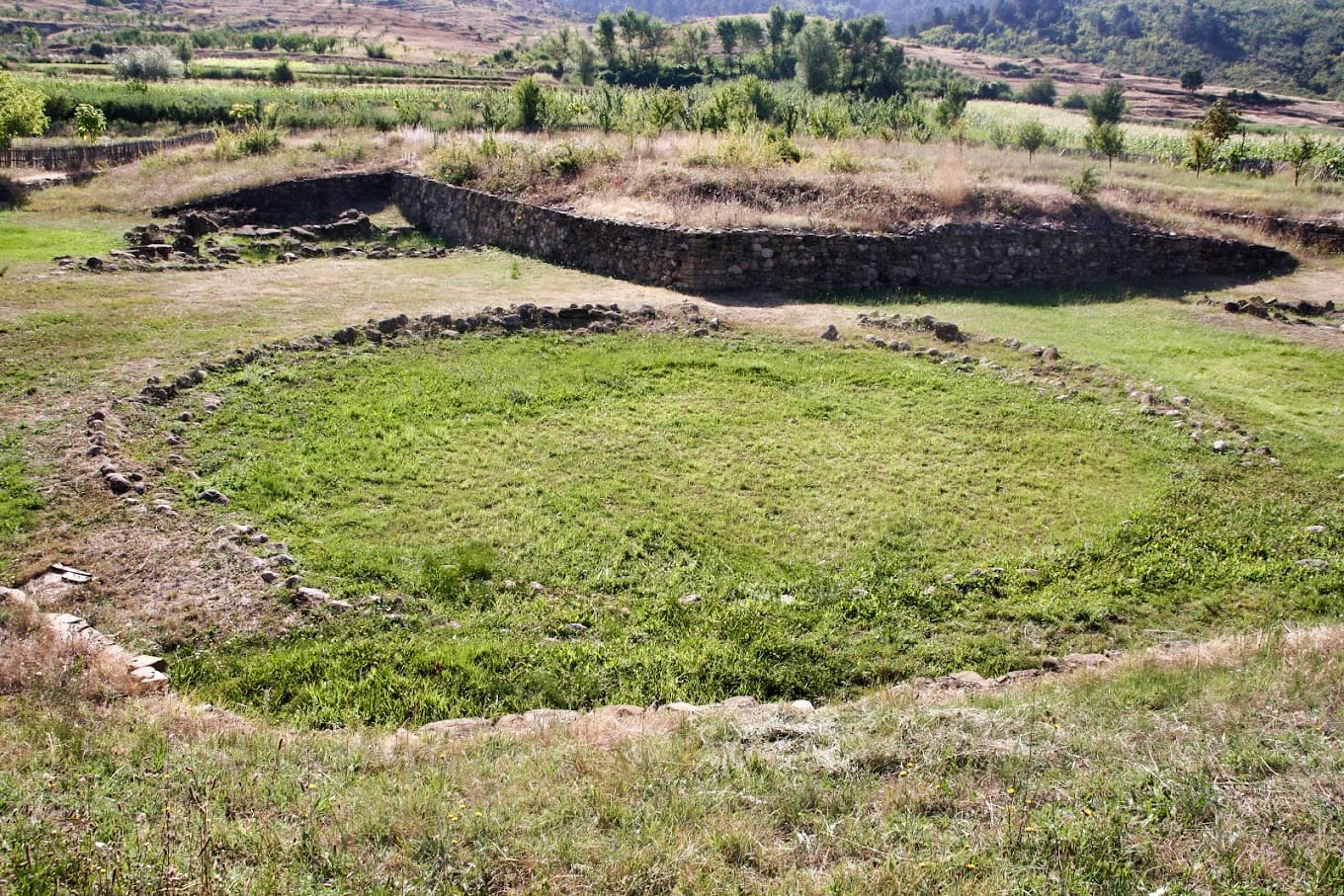
Tumulus of Kamenica is a prehistoric burial mound located 8 kilometers north of Korçë in southeast Albania, approximately 2 kilometers west of Kamenica village. The site contains Albania’s largest concentration of ancient graves—over 200 documented burials spanning from early Bronze Age (circa 1300 BCE) through late antiquity (approximately 400 CE). The mound itself appears as an unremarkable grassy hill rising from agricultural fields in the Korçë Valley, measuring approximately 30 meters diameter and 4 meters height at its center.
The archaeological significance lies in the burial density, the timespan represented, and the unique architectural feature of two concentric stone circles surrounding the graves—a design pattern uncommon in Balkan archaeology. Excavations beginning in the 1970s and continuing intermittently through present day have revealed artifacts indicating cultural connections between local Illyrian populations, early Greek settlers, and later Roman occupation, demonstrating this valley’s role as a corridor for trade and migration between Adriatic coast and inland Balkans.
The site operates as open-air archaeological park with walking paths, interpretive signage (Albanian and limited English), and adjacent small museum displaying artifacts and explaining burial customs. The tumulus itself remains partially excavated—visitors see exposed stone circles, some grave pits, and ongoing archaeology work during excavation seasons (typically summer months). The site is not heavily touristed, functioning primarily as regional heritage site for local schools and Albanian archaeology enthusiasts rather than international tourist destination.
Archaeological History and Excavations
Tumulus of Kamenica was first documented archaeologically in 1972 by Albanian Institute of Archaeology researchers conducting surveys in Korçë region. Initial excavations revealed the site’s unusual density of burials and the concentric stone circle design—two circular stone structures (outer circle approximately 25 meters diameter, inner circle 15 meters diameter) with graves placed in the zones between circles and within the inner circle.
The earliest graves date to Bronze Age, around 1300 BCE, based on pottery styles, bronze implements, and burial customs identified through comparative analysis with other Balkan sites. One early grave from this period contained Greek pottery and bronze jewelry suggesting trade connections with southern Greece or presence of Greek travelers/settlers in the valley—significant for understanding early Greek expansion into northern Balkans before classical colonization period.
Burials continued through Iron Age (circa 1000-500 BCE) when Illyrian tribal cultures dominated the region, and into Roman period (1st century BCE - 4th century CE) when Korçë Valley was part of the province of Macedonia. Late antiquity graves (300-400 CE) show Christian influence in burial orientation and grave goods, marking transition from pagan to early Christian customs in Albania.
The concentric stone circles appear to have functioned as both structural supports for the earthen mound and ritual boundaries defining sacred burial space. This design has parallels in some Thracian tumuli (in modern Bulgaria) and limited examples in northern Greece, suggesting Kamenica represents cultural blending zone where different Balkan traditions intersected.
Museum and Artifacts
The small on-site museum (single room, approximately 60 square meters) displays selection of artifacts found during excavations plus replica tomb reconstructions showing different burial types across the 1,500+ year span. The collection includes:
- Bronze Age pottery: Hand-formed vessels with geometric patterns typical of pre-Illyrian Balkan cultures, dating 1300-1000 BCE
- Greek imports: Red-figure pottery shards and bronze fibulae (clothing pins) from 6th-5th century BCE, demonstrating trade connections
- Illyrian weapons: Iron spearheads, sword fragments, and bronze horse bits from warrior graves (500-200 BCE)
- Roman period grave goods: Glass vessels, coins, bronze lamps from 1st-3rd century CE burials
- Medical tools: Bronze implements identified as trepanation (cranial surgery) tools, indicating Bronze Age medical practices—bone evidence from skulls shows some patients survived the procedures
Replica tombs show evolution of burial customs—early Bronze Age stone cist graves (box-like stone structures), Iron Age pit graves with stone markers, Roman chamber tombs with multiple burials, and late antiquity Christian graves oriented east-west. Interpretive panels explain significance but are primarily in Albanian with limited English text.
The museum also displays photographs and drawings from excavation seasons, showing archaeological methods and the layers of graves discovered at different depths—stratigraphy reveals continuous use of the site, with newer graves sometimes disturbing older ones.
Significance in Albanian and Balkan Context
Tumulus of Kamenica provides archaeological evidence for theories about Albanian ethnogenesis—the process by which modern Albanian people emerged from ancient populations. The Illyrian graves (500-100 BCE) represent ancestors of Albanians according to prevailing archaeological consensus, though the relationship between ancient Illyrians and modern Albanians involves complex questions of language, genetics, and cultural continuity debated by scholars.
The site demonstrates that Korçë Valley was inhabited continuously for over 1,500 years by populations that absorbed Greek and Roman influences while maintaining distinct burial traditions. The persistence of the same burial ground across cultural transitions (Illyrian to Roman to Christian) suggests local populations maintained connection to ancestral sites despite political changes—a pattern common in rural Balkans where villages occupy same locations for millennia.
Compared to major Balkan tumuli (such as Kazanlak in Bulgaria or Vergina in Greece), Kamenica is modest—no elaborate tomb chambers, no frescoes or monumental architecture. The significance lies in the density of “common” burials revealing social history of non-elite populations rather than royal tombs. Most graves are simple inhumations with few grave goods, though some contain weapons or jewelry indicating social differentiation.
Visiting Practicalities
Access from Korçë: 8 kilometers north via local road (paved but narrow), approximately 15 minutes by car or taxi (1,500 LEK/~€12 round trip from Korçë with waiting time). No public bus directly to site—shared taxi from Korçë to Kamenica village costs 300-500 LEK, then 2-kilometer walk west to tumulus. Bicycling from Korçë possible (flat terrain, 30-45 minutes).
Site facilities: Parking area (gravel, free), restrooms (basic), picnic tables, covered shelter with interpretive panels. No cafe or food service—bring water and snacks. Site is exposed (minimal shade)—summer heat can be intense (30-35°C), bring sun protection.
Museum hours: Generally matches site hours but may close for lunch 12-2 PM. Staff presence inconsistent—if museum locked, ask at site entrance or call ahead (number posted on gate). Entry fee includes both outdoor site and museum.
Accessibility: The tumulus site is relatively flat with gravel walking paths—accessible for most visitors. Museum has steps (3-4 steps to entrance)—no wheelchair ramp. Excavation areas fenced for safety—do not enter restricted zones or disturb archaeological features.
Guided tours: Available by arrangement through Korçë Archaeological Museum or local tourism offices (advance booking required, €20-30 for guide, usually Albanian-speaking with basic English). University of Korçë occasionally offers student-led tours during academic year.
Signage and interpretation: Panels in Albanian with some English text. Archaeological terminology assumes some background knowledge—non-specialists may find explanations technical. Visiting with guide or doing background research enhances understanding.
The Honest Assessment
Tumulus of Kamenica offers legitimate archaeological interest for visitors curious about Albania’s prehistoric and classical period history. The site provides tangible evidence of 3,000 years of human occupation, and the museum’s medical tools and burial reconstructions show unexpected sophistication in Bronze Age Balkans. For archaeology enthusiasts, the ongoing excavations and the unique concentric circle design justify a visit when in Korçë area.
What the site isn’t is visually impressive or immediately engaging for general tourists. The tumulus looks like a grassy hill, the graves are empty pits, and understanding the significance requires archaeological context most visitors lack. The museum is small, the artifacts are modest (no gold treasures or dramatic finds), and the site receives minimal visitor traffic—expect to be alone or with only local school groups.
The site works best as addition to Korçë region exploration rather than as primary destination. Korçë itself has more immediate attractions (old bazaar, Orthodox cathedral, National Museum of Medieval Art), and Tumulus of Kamenica functions as archaeology-focused diversion for those interested in prehistory. The site is not comparable to major Mediterranean archaeological destinations (Delphi, Ephesus, Pompeii)—it’s regional heritage site with specialized appeal.
Skip If: You have limited interest in archaeology and prehistory, if you expect dramatic ruins or monumental architecture (this is burial ground with simple graves), if you’re uncomfortable with remote sites with minimal facilities, if you visit during July-August heat without sun protection, if you cannot reach the site without public transport (access requires personal vehicle or expensive taxi), if you prioritize Albania’s more visually striking attractions (UNESCO sites, coastal areas, Albanian Alps).
Visit If: You’re interested in Balkan archaeology and Albanian prehistory, if you’re exploring Korçë region and want additional historical context, if you appreciate archaeological sites even without dramatic architecture, if you’re visiting with guide who can explain significance, if you combine with Korçë’s other museums and cultural sites, if you enjoy less-touristed heritage sites, or if you research Bronze Age/Iron Age Balkans and want to see excavations in progress (summer season).
Tumulus of Kamenica serves specialized audience—archaeology students, Albanian history enthusiasts, regional heritage tourists. Consider it optional enhancement to Korçë area visit rather than as standalone attraction. The site provides evidence for Albania’s deep history but requires visitor curiosity and patience to appreciate fully.