What the Museum Actually Documents
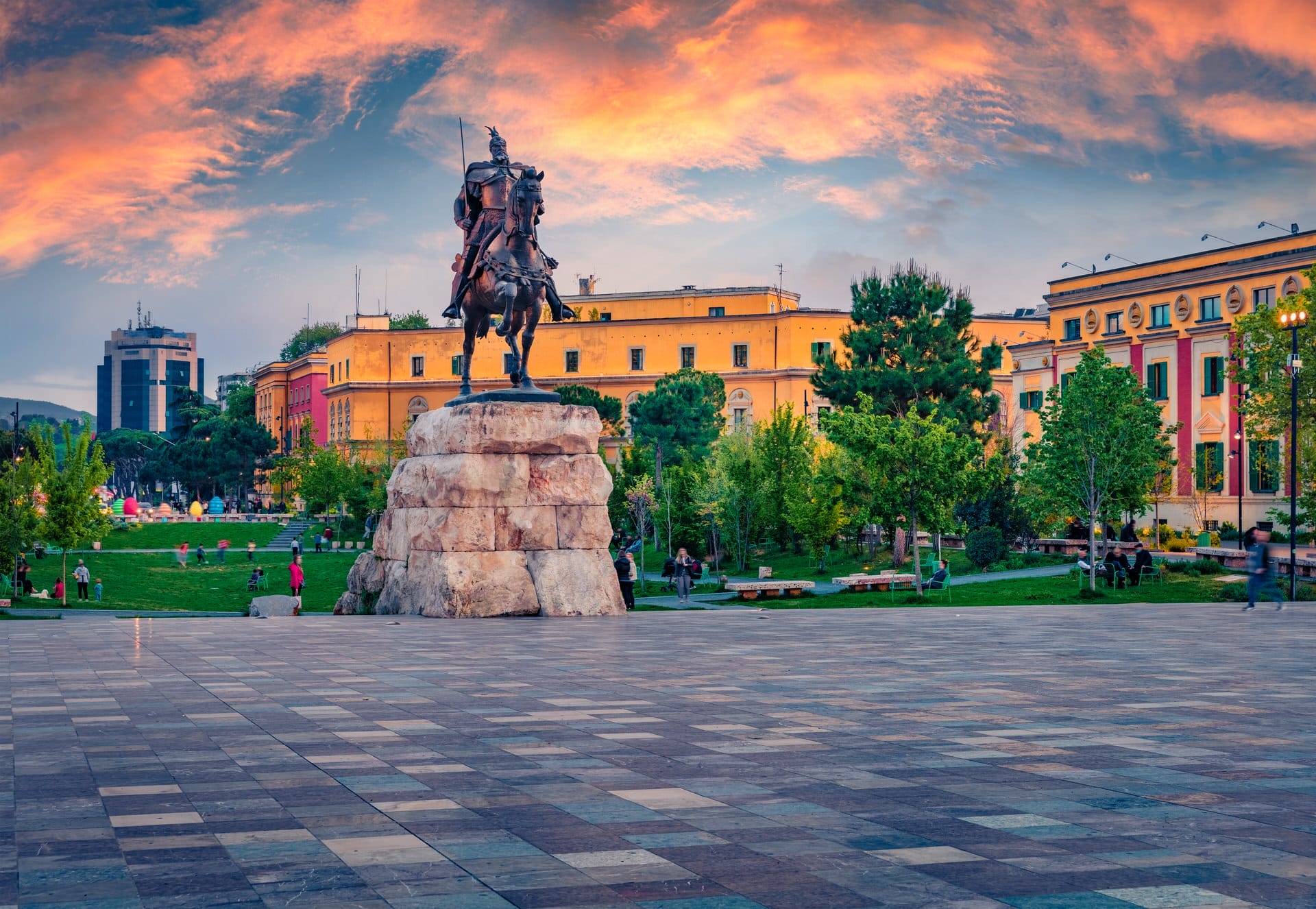
The Skanderbeg Museum chronicles Gjergj Kastrioti (1405-1468), an Albanian feudal lord who organized military resistance against Ottoman expansion for 25 years (1443-1468). Kastrioti had been raised in the Ottoman court as hostage (standard practice for ensuring loyalty of conquered territories), converted to Islam, earned the military title “Iskender Bey” (Lord Alexander, hence “Skanderbeg”), then defected in 1443 when Ottoman forces suffered defeats in the Balkans.
He returned to his family’s territory in central Albania, reconverted to Christianity, and organized the League of Lezhë—a coalition of Albanian feudal lords united in resistance against Ottoman reconquest. For 25 years, Skanderbeg’s forces defended Albanian territories through guerrilla tactics, mountain warfare, and European alliances (primarily with Venice and the Papacy, who valued Albania as buffer against Ottoman expansion). He died of natural causes in 1468. Within 12 years of his death, Ottoman forces had conquered all Albanian territories—his resistance delayed but ultimately did not prevent Ottoman control that lasted until 1912.
The museum presents Skanderbeg as Albanian national hero—the figure who symbolizes Albanian resistance, independence, and national identity. This interpretation developed gradually: Skanderbeg received recognition during his lifetime from European powers (Pope called him “Athleta Christi”—Champion of Christ), but his elevation to supreme Albanian national symbol occurred primarily during the 19th-century nationalist period and was amplified during communist rule (1944-1991) when the regime emphasized anti-Ottoman resistance narratives while downplaying Skanderbeg’s feudal lord status and religious motivations.
The Building Itself
The museum occupies a brutalist concrete structure inaugurated November 1, 1982 inside Krujë Castle, designed by Albanian architects Pirro Vaso and Pranvera Hoxha. The building’s abstract form supposedly represents an eagle—Albania’s national symbol appearing on the flag and associated with Skanderbeg (whose double-headed eagle standard became basis for modern Albanian heraldry). The architectural interpretation requires imagination—it’s recognizable as brutalist 1980s institutional architecture more readily than as bird-shaped building.
The interior organization moves chronologically across seven exhibition halls covering medieval Albanian history, Skanderbeg’s life and military campaigns, and Albanian resistance traditions. The display style reflects communist-era museum practices: artifacts in glass cases, large explanatory panels with nationalist historical interpretation, dramatic murals depicting battles, and limited interactive or multimedia elements. The museum received minor updates after 1991 (removing most explicit communist ideology while retaining the nationalist framework) but retains its 1980s museum aesthetic—valuable as historical artifact of Albanian museum practices during that period, less successful as modern educational facility.
What the Exhibits Actually Contain
Skanderbeg’s Helmet (Replica): The museum’s most photographed object is a replica of Skanderbeg’s helmet—a steel cap decorated with bronze goat head and Arabic inscription. The original helmet (preserved in Vienna’s Kunsthistorisches Museum since the 16th century) served as both protective equipment and symbolic statement combining Christian iconism (the goat representing strength) with Ottoman cultural elements (Arabic calligraphy). The replica is accurate to the original’s general form though details differ—it’s museum prop rather than historical artifact but provides useful visualization of medieval Albanian military equipment.
Medieval Weapons and Armor: Display cases contain swords, spears, shields, chainmail, and other military equipment attributed to Skanderbeg’s period. Authentication of specific pieces to Skanderbeg himself or his immediate forces is difficult—these are examples of 15th-century Balkan military equipment that represent what Skanderbeg’s armies used rather than necessarily being weapons he personally owned. The collection demonstrates medieval Albanian warfare technology—combination of Byzantine, Venetian, and Ottoman influences reflecting Albania’s position at intersection of multiple military traditions.
Maps and Battle Documentation: Large wall panels display maps showing Skanderbeg’s military campaigns, Ottoman invasion routes, and allied European powers. The battles highlighted include Torvioll (1444), Mokra (1445), Oronichea (1456), and the extended Siege of Krujë (1450, 1466-1467 failed Ottoman attempts to capture Skanderbeg’s capital). The maps emphasize Albanian victories while giving less attention to defeats and the ultimate Ottoman conquest after 1468—nationalist historiography prioritizing resistance narrative over comprehensive military history.
Murals and Artistic Interpretations: Multiple murals by Albanian artist Nexhmedin Zajmi depict Skanderbeg’s battles in heroic style—dramatic compositions with Skanderbeg as central figure leading Albanian forces against larger Ottoman armies. The artistic style combines socialist realist techniques (common in communist-era Albanian art) with nationalist symbolism. These are propaganda art rather than historical documentation but they’re historically interesting as examples of how communist Albania used medieval history to construct national identity narratives.
Documents and Manuscripts: The museum displays copies of historical documents—letters from Skanderbeg to European leaders, Papal correspondence, Ottoman records documenting Albanian campaigns. The originals reside in various European archives (Vatican, Venice, Vienna); the museum shows reproductions with Albanian and English translations. These documents provide evidence for Skanderbeg’s diplomatic activities and European recognition during his lifetime.
What the Museum Doesn’t Explain Well
The museum presents simplified nationalist narrative emphasizing Albanian unity and independence struggle. What it downplays or omits:
- Skanderbeg was feudal lord defending his territory and political position, not democratic leader of unified nation-state (which didn’t exist as concept in medieval Europe)
- The League of Lezhë was temporary alliance of competing feudal lords who often fought each other when not united against Ottomans
- Skanderbeg’s resistance received significant support from Venice and Papacy who had strategic interest in preventing Ottoman expansion—his campaigns weren’t isolated Albanian achievement
- His conversion to Islam during Ottoman service and reconversion to Christianity upon defection were pragmatic political decisions as much as religious ones
- The resistance ultimately failed—Albania remained under Ottoman control 1479-1912, deeply shaping Albanian culture, language, and religious composition
These omissions reflect the museum’s purpose as celebration of national hero rather than comprehensive historical analysis. Visitors interested in nuanced medieval Balkan history should supplement the museum visit with additional research—the museum provides Albanian nationalist interpretation, valuable for understanding how Albanians conceptualize their national identity but incomplete as historical documentation.
Access and Practical Considerations
The museum sits inside Krujë Castle, 35 kilometers north of Tirana (1 hour drive or bus). Buses depart from Tirana’s Kinostudio terminal hourly (150 LEK/€1.50, 1 hour). From Krujë town center, the castle is 15-20 minutes uphill walk via cobblestone paths—steep enough that less mobile visitors may struggle. Taxis from town center to castle entrance cost 200-300 LEK (€2-3).
Museum admission is 200 LEK (~€2). The Ethnographic Museum (in separate building within castle) requires separate ticket. Hours are 9 AM-7 PM daily May-October; 9 AM-2 PM and 4 PM-7 PM October-April; closed Mondays year-round. Photography without flash is permitted.
The museum has minimal accessibility features—stairs between floors, no elevator. Ground floor exhibits are wheelchair accessible; upper floors are not. Audio guides are available in Albanian, English, Italian (additional fee ~200 LEK). Guided tours can be arranged through Krujë tourism office or hotel accommodations (cost varies, typically €10-20 for private guide).
Most visitors spend 1.5-2 hours in the museum, then explore the castle grounds, bazaar (Ottoman-era market street within castle selling traditional crafts), and Ethnographic Museum. Combined visit typically requires 3-4 hours. Restaurants and cafes operate within the castle complex—food quality is tourist-oriented (higher prices, variable quality) but convenient.
The Honest Assessment
The Skanderbeg Museum succeeds as introduction to Albanian national mythology and the medieval figure central to Albanian identity. The building is interesting example of communist-era architecture, the helmet replica is photogenic, and the murals demonstrate Albanian artistic traditions. For visitors wanting to understand Albanian nationalism and how Albanians conceptualize their historical identity, the museum provides valuable context.
What the museum isn’t is sophisticated historical analysis or modern educational facility. The interpretation is nationalist and simplified, the display methods are outdated (though this is partly the museum’s charm as historical artifact itself), and the facility lacks interactive elements or multimedia that characterize contemporary museum experiences. Visitors interested in serious medieval history will find the museum frustrating for what it omits; visitors interested in Albanian culture and nationalism will find it enlightening for what it emphasizes.
Skip If: You’re not interested in Albanian nationalism or medieval history, if you expect modern museum facilities with sophisticated interpretation, if you have very limited time in Albania and prefer to focus on natural or archaeological sites, if you’re uncomfortable with nationalist historical narratives, or if the steep walk to the castle is physically problematic.
Visit If: You’re interested in Albanian identity and how nations construct national heroes, if you’re touring the Tirana region and want accessible day trip, if you appreciate communist-era architecture and museum practices as historical artifacts, if you’re visiting Krujë anyway for the bazaar and castle (the museum makes sense as part of comprehensive Krujë visit), or if you’re researching medieval Balkan history and want Albanian perspective on Ottoman-era resistance.
Combine the museum with the castle grounds and bazaar—Krujë works as half-day or full-day excursion from Tirana, with the museum as main attraction supplemented by castle exploration, bazaar shopping, and traditional Albanian lunch at one of the castle restaurants. The museum alone wouldn’t justify the trip, but as anchor for comprehensive Krujë visit it provides historical context that makes the entire site more meaningful.