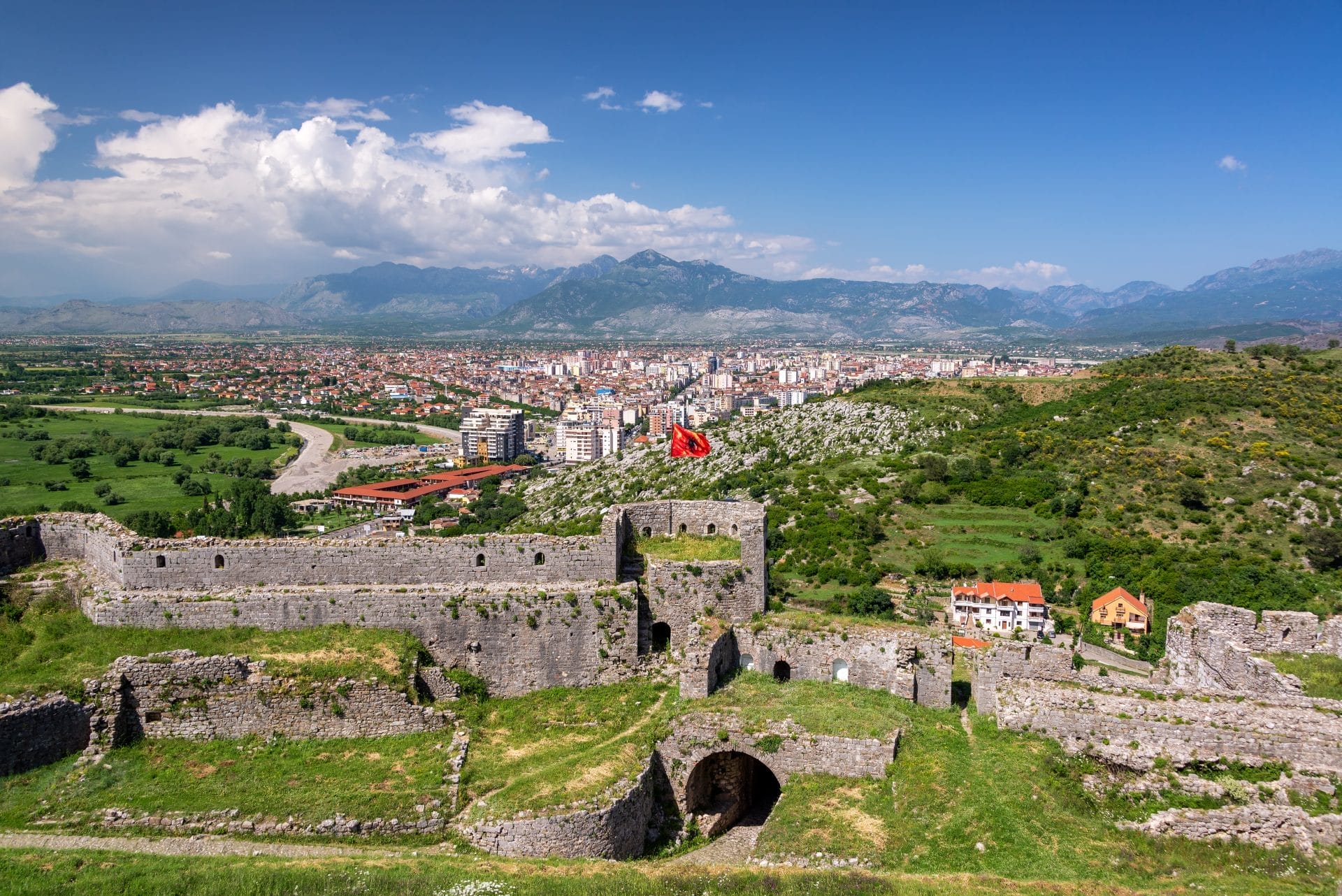
What Porto Palermo Castle Actually Is
Porto Palermo Castle (Kalaja e Porto Palermos) is a small triangular fortress built 1804-1814 by Ali Pasha Tepelena, the Ottoman Albanian governor who controlled much of southern Albania and northwestern Greece in the early 19th century. The castle sits on a small peninsula extending into Porto Palermo Bay, a natural harbor on the Ionian coast between Himarë (22 kilometers north) and Sarandë (45 kilometers south).
The fortress represents late-Ottoman military architecture from a period when traditional castle construction had become militarily obsolete. By the early 1800s, artillery made high stone walls vulnerable rather than protective—European military architecture had shifted toward low earthwork fortifications designed to absorb cannon fire. Ali Pasha, however, built numerous prestige structures (palaces, castles, mosques) throughout his territory as symbols of power and wealth rather than functional military installations. Porto Palermo Castle is one of these—built when traditional castles no longer served defensive purposes but still carried symbolic value.
The castle’s triangular footprint follows the peninsula’s natural shape. The walls are relatively low (6-8 meters height) with minimal defensive features—this isn’t a medieval fortress with towers, keeps, and elaborate fortifications. It’s a simple enclosure wall with a few rooms attached, functioning more as fortified residence or coastal observation post than military stronghold. Ali Pasha never resided here permanently—it likely served as waystation during coastal travels or as quarters for subordinates administering the bay area.
The “Romantic Legend” Context
Tourism sources frequently claim Ali Pasha built the castle as romantic gesture for his wife Vasiliqia. This story appears in guidebooks and travel websites but lacks historical documentation. Contemporary sources (Ottoman records, European travelers’ accounts from Ali Pasha’s period) don’t mention this motivation. The romantic narrative likely developed later as tourism marketing—adding love story makes the fortress more appealing than acknowledging it as minor administrative outpost built by regional governor.
Ali Pasha was known for extensive construction projects throughout his territories—he built fortifications, palaces, mosques, and infrastructure across southern Albania and Epirus. Porto Palermo was one small project among many, selected for strategic position controlling the bay rather than romantic reasons. The legend persists because it’s more interesting than mundane reality, creating pattern where tourism mythology replaces verified history.
What Remains and What You Actually See
The castle walls are largely intact—you can walk the perimeter (approximately 150 meters circumference) and enter through the main gate. The interior is mostly empty space—open courtyard with some ruined room foundations along the walls. Several chambers built into the walls survive with vaulted stone ceilings, used for storage, quarters, or administrative functions. These rooms are dark (no windows in most), empty (no furnishings or displays), and unmaintained (accumulated debris, graffiti on walls).
The walls provide elevated walkway offering views across Porto Palermo Bay—a natural harbor approximately 1.5 kilometers wide, surrounded by hills covered with pine and olive trees. The bay itself is scenic, creating the castle’s primary visual appeal—the combination of stone fortress, blue water, and forested hills produces photogenic compositions that work well for quick stops during Riviera drives.
The site has no facilities—no visitor center, no interpretation panels, no maintained paths, no restrooms, no services. You park at the roadside pullout on SH8 (capacity ~20-30 cars), walk 200 meters along paved path to the peninsula, enter the castle, explore for 20-40 minutes, return to your vehicle. This minimal infrastructure is both limitation (no context or explanation) and advantage (no crowds, no admission fees, no time pressure).
During summer (June-September), you’ll share the site with other travelers making the same roadside stop—typically 10-30 people wandering the walls at any given time. During shoulder seasons (May, October), you might have the castle largely to yourself. Winter visits are possible but weather can make the exposed peninsula unpleasant (cold winds off the water, rain).
The Access Advantage
Porto Palermo Castle’s primary value is convenience. It sits directly off the SH8 coastal highway—the main route connecting Vlorë to Sarandë along the Albanian Riviera. The parking area is obvious (large pullout with multiple vehicles), the walking distance is minimal (200 meters on paved/packed earth path), and the time commitment is small (30-45 minutes total including walking and exploration). This makes it ideal as brief stop during longer Riviera drives rather than dedicated destination.
Most visitors include Porto Palermo as one stop in multi-day Riviera itineraries: start in Vlorë or Sarandë, drive SH8 stopping at beaches (Dhërmi, Jale, Himarë) and Porto Palermo Castle, continue to destination accommodations. The castle provides variety (historical site breaking up beach stops) without requiring significant time investment or challenging access. It’s not the reason you’re driving the Riviera, but it’s easy enough to include that most travelers do.
Compare this to other Albanian castles requiring 30-60 minute drives on rough roads from main highways, or hours of hiking to reach hilltop ruins. Porto Palermo trades historical significance and architectural impressiveness for accessibility—it’s average as castles go but exceptional as roadside attractions.
The Bay and Beach Context
Porto Palermo Bay includes a small beach on the northern shore, accessible via rough track from the SH8 (different access from the castle—approximately 500 meters north of castle turnoff). The beach is pebble, approximately 100 meters long, with clear water and minimal facilities. During summer, the bay hosts private boats and occasional tour boats, but it’s less developed than major Riviera beaches (Dhërmi, Himarë, Ksamil). The beach works as swimming stop combined with castle visit—2-3 hours total commitment for both activities.
The bay itself served as submarine base during Albania’s communist period (1944-1991). Submarine bunkers remain visible cut into the hillside on the bay’s southern shore—concrete structures with arched openings large enough for submarine passage. These bunkers are closed to public (unsafe structure, unexploded ordnance concerns) but visible from the castle walls or from boats in the bay. The communist-era military use adds another historical layer—Ali Pasha’s 19th-century fortress overlooking 20th-century submarine facilities documenting Albania’s Cold War isolation.
The Honest Assessment
Porto Palermo Castle is architecturally modest, historically minor, and experientially brief. It’s not comparable to major Albanian fortresses like Gjirokastër, Berat, or Rozafa—those are substantial medieval castles with extensive ruins, museums, and clear historical significance. Porto Palermo is small 19th-century fortress notable primarily for convenient location rather than intrinsic interest.
What makes it worth visiting is precisely this convenience—it requires minimal effort (200m walk, 30 minutes time, free entry) and provides reasonable reward (bay views, photo opportunities, brief historical site experience). It works as roadside attraction rather than destination, valuable specifically because it fits easily into Riviera drives without requiring schedule adjustments or significant time investment.
Skip If: You’re not driving the SH8 between Himarë and Sarandë (the castle doesn’t justify a special trip), if you’re short on time and prefer to maximize beach time rather than making historical stops, if you’ve visited major Albanian castles and this will feel underwhelming by comparison, or if brief unmaintained ruins don’t interest you enough to justify 30-minute stop.
Visit If: You’re driving the Albanian Riviera and want brief stops breaking up beach time, if you appreciate convenient historical sites requiring minimal effort, if you’re interested in Ali Pasha’s architectural legacy across southern Albania, if you’re combining the castle visit with beach time at Porto Palermo Bay, or if you want photo opportunities combining fortress, bay, and coastal mountain landscapes.
Porto Palermo Castle is worth 30 minutes if you’re driving past anyway. It probably isn’t worth dedicated trip or significant detour. Manage expectations—this is quick roadside attraction providing variety during Riviera touring, not major historical destination justifying extended exploration.