Lake Ohrid Geography and the Albania-Macedonia Division
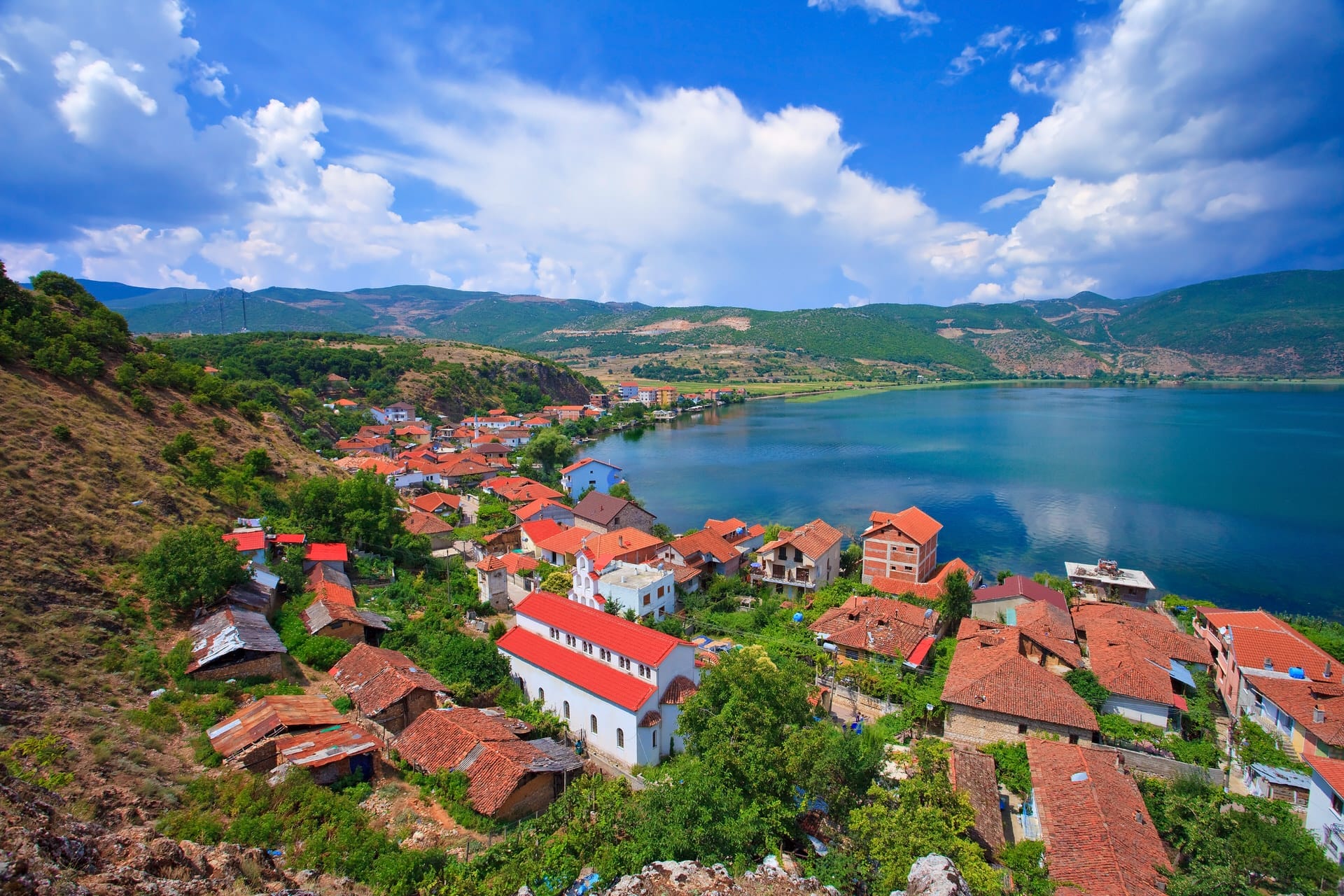
Lake Ohrid is a 358-square-kilometer ancient lake straddling the Albania-North Macedonia border in the Balkans, approximately 150 kilometers south of Skopje and 140 kilometers southeast of Tirana. The lake is one of Europe’s oldest (geological estimates range 1-5 million years) and deepest (288 meters maximum depth), fed by underground springs and mountain streams, draining via the Black Drin River flowing north into Albania.
The border runs roughly north-south through the lake, with North Macedonia holding the western 2/3 (including the historic city of Ohrid with its UNESCO World Heritage medieval churches and monasteries) while Albania holds the eastern 1/3 (centered on Pogradec town and the Lin Peninsula). This division means most of Lake Ohrid’s famous features—the UNESCO designation, Saint Naum Monastery, historic Ohrid old town, major tourist development—are on the Macedonian side.
The Albanian shore is less developed, quieter, and primarily functions as domestic Albanian holiday destination rather than international tourism hub. Pogradec (population approximately 30,000) is the main Albanian town on the lake, offering lakefront hotels, restaurants, beaches, and the starting point for exploring the Albanian portion. The setting is the same (ancient lake, mountain backdrop) but the tourism infrastructure and historical significance are lower compared to the Macedonian western shore.
Pogradec and the Albanian Lakefront
Pogradec occupies the northeastern lake shore, built along a several-kilometer lakefront promenade with parks, cafes, restaurants, and hotels facing the water. The town developed as Albanian holiday resort—during the communist period (1944-1991), Lake Ohrid was one of few domestic tourism destinations for Albanians since international travel was prohibited. This legacy continues—summer sees Albanian families from Tirana, Korçë, and Elbasan visiting for beach holidays.
The lakefront promenade (bulevardi) is Pogradec’s main feature—paved walkway extending 2-3 kilometers along the shore with benches, playgrounds, outdoor cafes, and lake views. The promenade becomes active evening gathering spot during summer when families stroll, eat ice cream, and watch sunset over the lake (facing west toward North Macedonian mountains).
Beaches in Pogradec are narrow pebble/sand strips along the promenade, not extensive sandy beaches. Swimming is possible June-September when water temperature reaches 20-24°C. The water quality has historically suffered from sewage issues (Pogradec and Macedonian towns had inadequate treatment), though infrastructure improvements in the 2010s have reduced pollution. Locals and regular visitors still caution about swimming near town centers versus more remote lake sections.
Hotels in Pogradec range from communist-era state hotels (basic, aging facilities) to newer private hotels (3-star standard, €30-60 per night). The tourism is seasonal—peak July-August, quieter June and September, largely closed October-May when weather cools and lake becomes less appealing for swimming.
Lin Peninsula and Archaeological Site
Lin Peninsula extends into the lake 6 kilometers south of Pogradec, forming a small promontory separating the main lake body from a shallow bay. The peninsula contains remains of a 6th-century early Christian basilica featuring floor mosaics partially preserved and viewable at the archaeological site. The mosaics are modest—geometric patterns, some animal/plant motifs—not comparable to major Byzantine mosaic sites like Ravenna or Istanbul but interesting as Albanian example of early Christian art.
The basilica site is open seasonally (typically April-October, hours 9 AM-5 PM, entry 200 LEK/~€2). The site has basic facilities—fencing, interpretive panels (Albanian and English), viewing platform over the mosaic areas. The peninsula itself offers lake views and is accessible via road from Pogradec (20-30 minutes drive or taxi).
Lin village, adjacent to the peninsula, is traditional Albanian lakeside settlement with stone houses, small population (fewer than 100 permanent residents), and appearance of faded lakefront village slowly being discovered by tourism but not yet transformed. A few guesthouses and restaurants cater to visitors, offering quieter alternative to Pogradec.
The peninsula has small beaches popular with locals seeking less crowded swimming than Pogradec’s main lakefront. The access requires personal transport (car, taxi, bicycle)—public transport is limited or non-existent.
Lake Ohrid’s Natural History and Endemic Species
Lake Ohrid’s age and isolation have created unique biodiversity—over 200 endemic species (found nowhere else) including microorganisms, snails, crustaceans, and fish. The most famous is the Ohrid trout (Salmo letnica, called “koran” locally), a fish species that has adapted to lake conditions and is considered delicacy.
Albanian and Macedonian restaurants around the lake serve grilled koran trout, though conservation concerns exist about overfishing. The fish populations declined significantly during the 20th century due to commercial fishing pressure, pollution, and introduction of non-native species. Recent regulations attempt to manage fishing, but enforcement is inconsistent.
The lake’s UNESCO Natural Heritage designation (shared between Albania and North Macedonia as transboundary site) recognizes both biodiversity and the fact this is Europe’s oldest continuously existing lake. The designation brings conservation obligations both countries struggle to meet given limited resources and development pressures.
Bird species use the lake during migration—herons, cormorants, ducks, occasional pelicans pass through or winter on Ohrid. The Lin Peninsula and wetland areas at river inlets provide habitat, though these areas are small relative to the lake’s size.
The North Macedonia Comparison
Visitors considering Lake Ohrid should understand the Albania-Macedonia difference. The North Macedonian side offers:
- Ohrid old town (UNESCO World Heritage medieval core with churches dating 10th-14th centuries)
- Saint Naum Monastery (10th century, active monastery with springs and peacocks, major tourist site)
- Developed tourism infrastructure (numerous hotels, restaurants, tour operators)
- Better road access and transportation
- Higher prices but more services
The Albanian side offers:
- Quieter, less commercialized lakefront (Pogradec is low-key resort town)
- Lower prices for accommodation and food
- Lin Peninsula archaeological site (modest but interesting)
- Albanian cultural context rather than Macedonian
- Limited tourism development (fewer services but also fewer crowds)
Many visitors combine both sides—stay in Pogradec for affordability, take day trip to North Macedonia for historical sites, or reverse this pattern. The border crossing near Lin is straightforward for most nationalities (check visa requirements—EU/US/Canadian citizens can enter both countries easily).
Practical Considerations for Albanian Side
Access to Pogradec from Tirana requires 2.5-3 hours driving (140 kilometers via Elbasan) on mostly paved roads that are improving but still have rough sections. Buses run from Tirana’s south terminal to Pogradec (€5-8, 3-4 hours, several daily departures). From Korçë, Pogradec is 40 kilometers (1 hour drive).
Accommodation in Pogradec is adequate but not luxurious—expect 3-star or below standards. The hotels along the lakefront promenade offer best locations and views. Booking ahead during July-August is advisable; other months have ample availability.
Restaurants serve Albanian cuisine plus lake fish—grilled koran trout is the specialty (€10-15 per fish), though quality and sustainability vary. The lakefront restaurants cater to tourists with elevated prices; inland restaurants offer cheaper Albanian standards.
Activities beyond swimming and walking the promenade are limited—boat tours on the lake (€10-20 for short trips, more for longer excursions toward North Macedonia), cycling along lakefront, visiting Lin Peninsula. Pogradec is primarily relaxation destination rather than activity hub.
The Honest Assessment
Lake Ohrid’s Albanian side provides affordable, quiet lakeside experience in historic lake setting. For visitors seeking relaxation without crowds, budget-friendly accommodation, and Albanian cultural context, Pogradec delivers. The lake itself is genuinely ancient and scientifically important, even if the Albanian side lacks the UNESCO historic core located in North Macedonia.
What the Albanian side isn’t is a substitute for visiting Ohrid old town and Saint Naum in North Macedonia—those sites contain the major historical and architectural significance. Pogradec is lakeside resort town, pleasant but not historically exceptional. The Lin basilica is modest archaeological site, interesting but not spectacular.
The Albanian side works best for travelers who want Lake Ohrid lake access without Macedonian tourism prices and crowds, or for those combining both sides to experience the full lake while managing costs. It’s harder to justify visiting just the Albanian side if your primary interest is Lake Ohrid’s UNESCO heritage—cross into North Macedonia for that.
Skip If: You’re specifically interested in Lake Ohrid’s UNESCO medieval churches and monasteries (those are in North Macedonia, not Albania), if you expect extensive tourism services and infrastructure (Pogradec is basic resort town), if you’re traveling without vehicle and prefer locations with excellent public transport (Pogradec is accessible but not as well-connected as major Albanian cities), if water quality concerns bother you (the lake has improved but still has issues), or if you have limited Albania time and prioritize the country’s more distinctive attractions.
Visit If: You’re exploring southeast Albania (Korçë region) and want lakeside diversion, if you seek affordable lakefront relaxation and don’t need luxury facilities, if you’re interested in seeing Albanian side of transboundary lake, if you plan to combine with North Macedonia visit for comprehensive Lake Ohrid experience, if you visit during shoulder season (May-June or September) when weather is pleasant but crowds are minimal, or if you want domestic Albanian resort experience rather than international tourist scene.
Pogradec and Albanian Lake Ohrid serve specialized purpose—budget-friendly alternative to North Macedonian tourism development, domestic Albanian holiday destination, or starting point for exploring both sides of this ancient lake. Consider it as component of southeast Albania travels or Albania-Macedonia border region exploration rather than as standalone highlight.
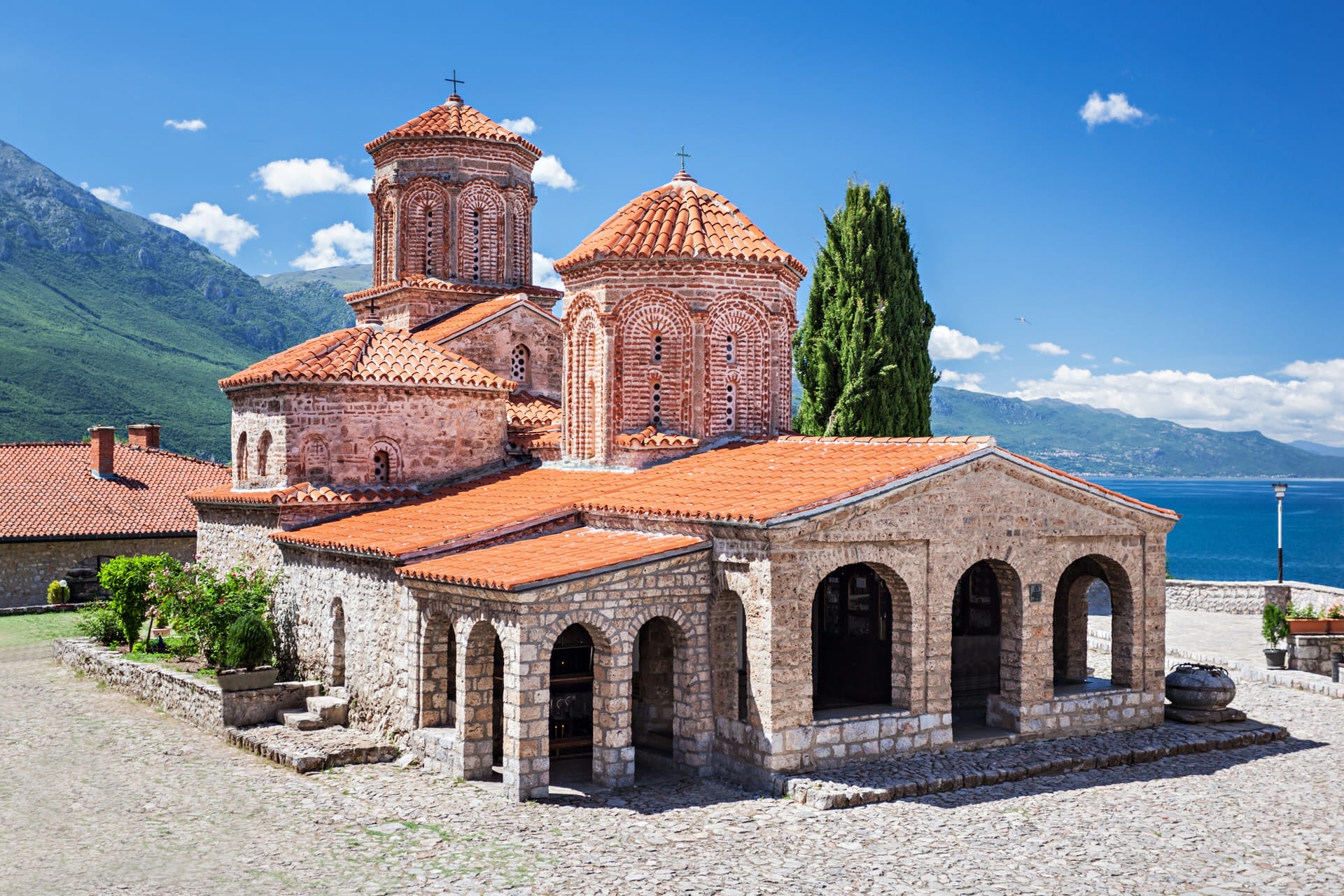
Saint Naum Monastery (10th century) on Lake Ohrid’s southern shore in North Macedonia—major historical site on the Macedonian side of the lake
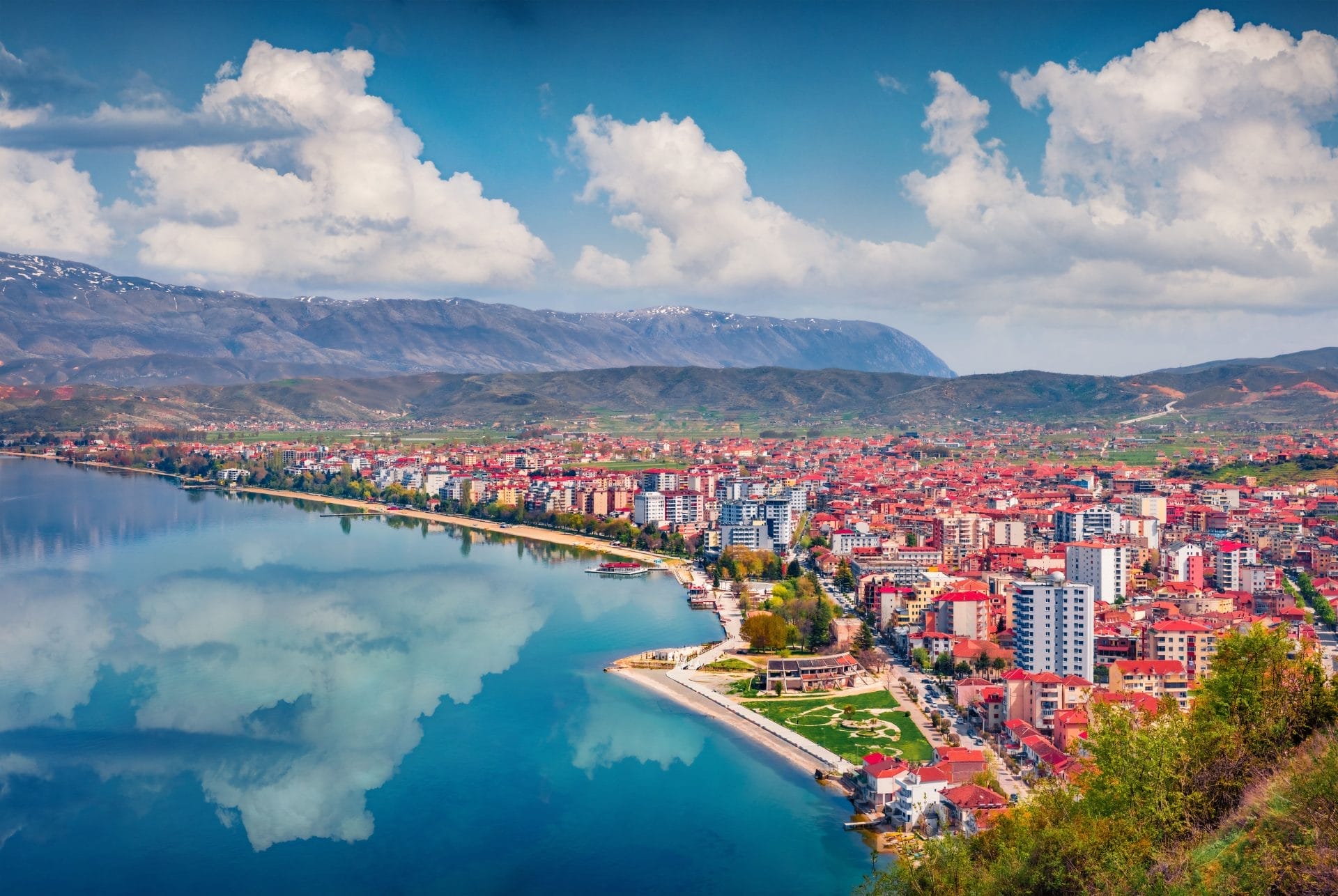
Pogradec town on the Albanian (eastern) shore of Lake Ohrid
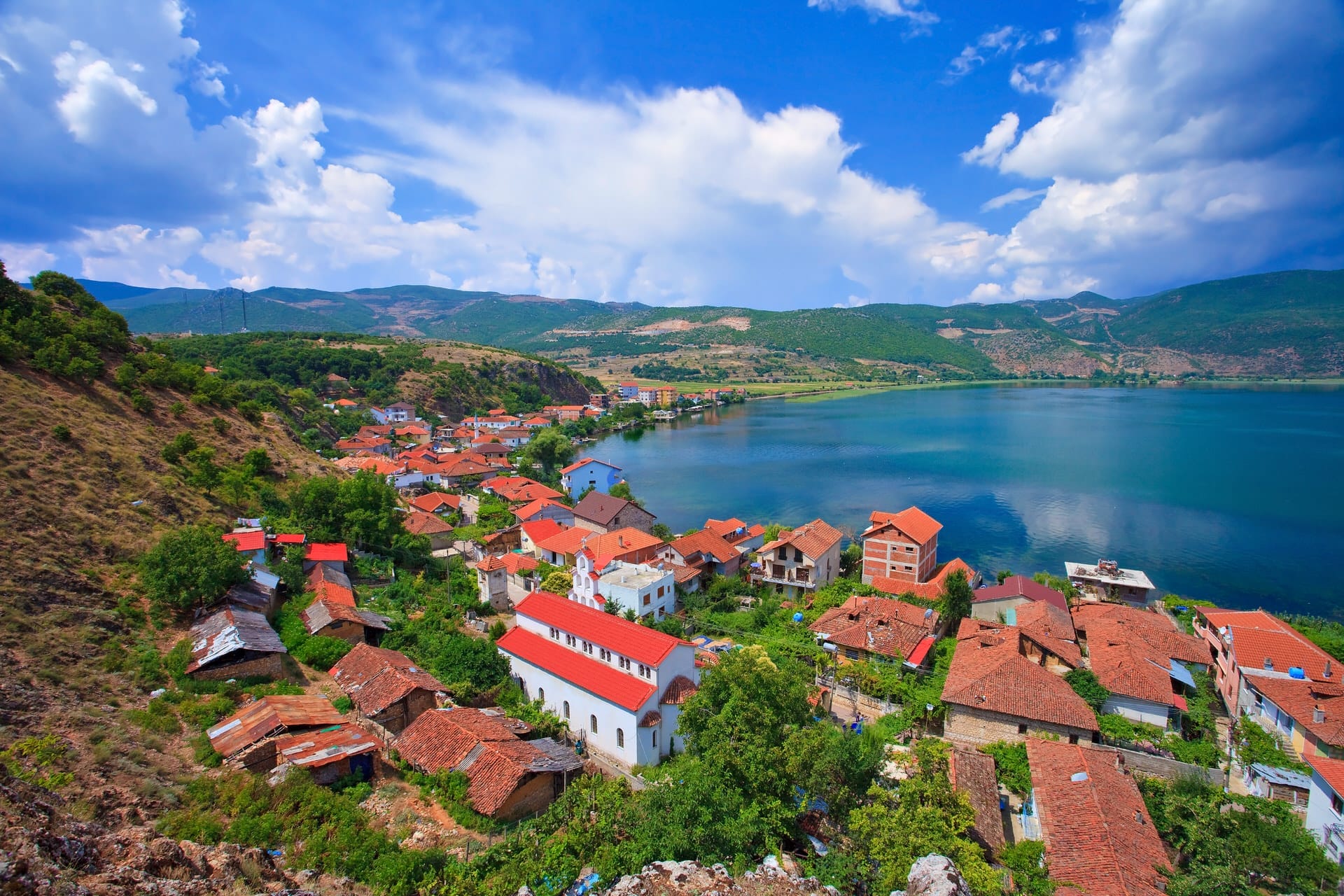
Lin village and peninsula on Albania’s Lake Ohrid shore, site of 6th-century basilica ruins
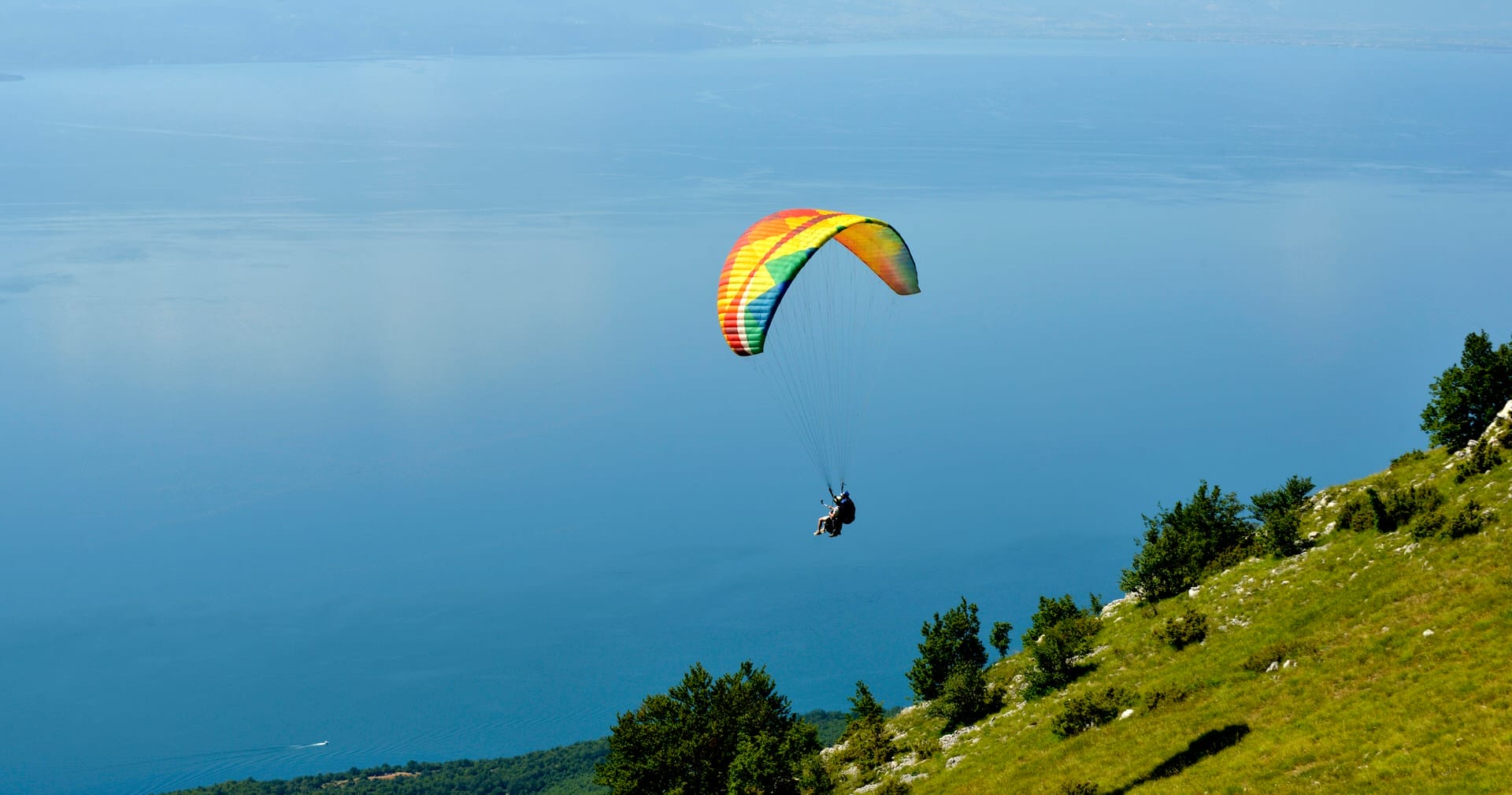
Paragliding over Lake Ohrid near Pogradec, Albania