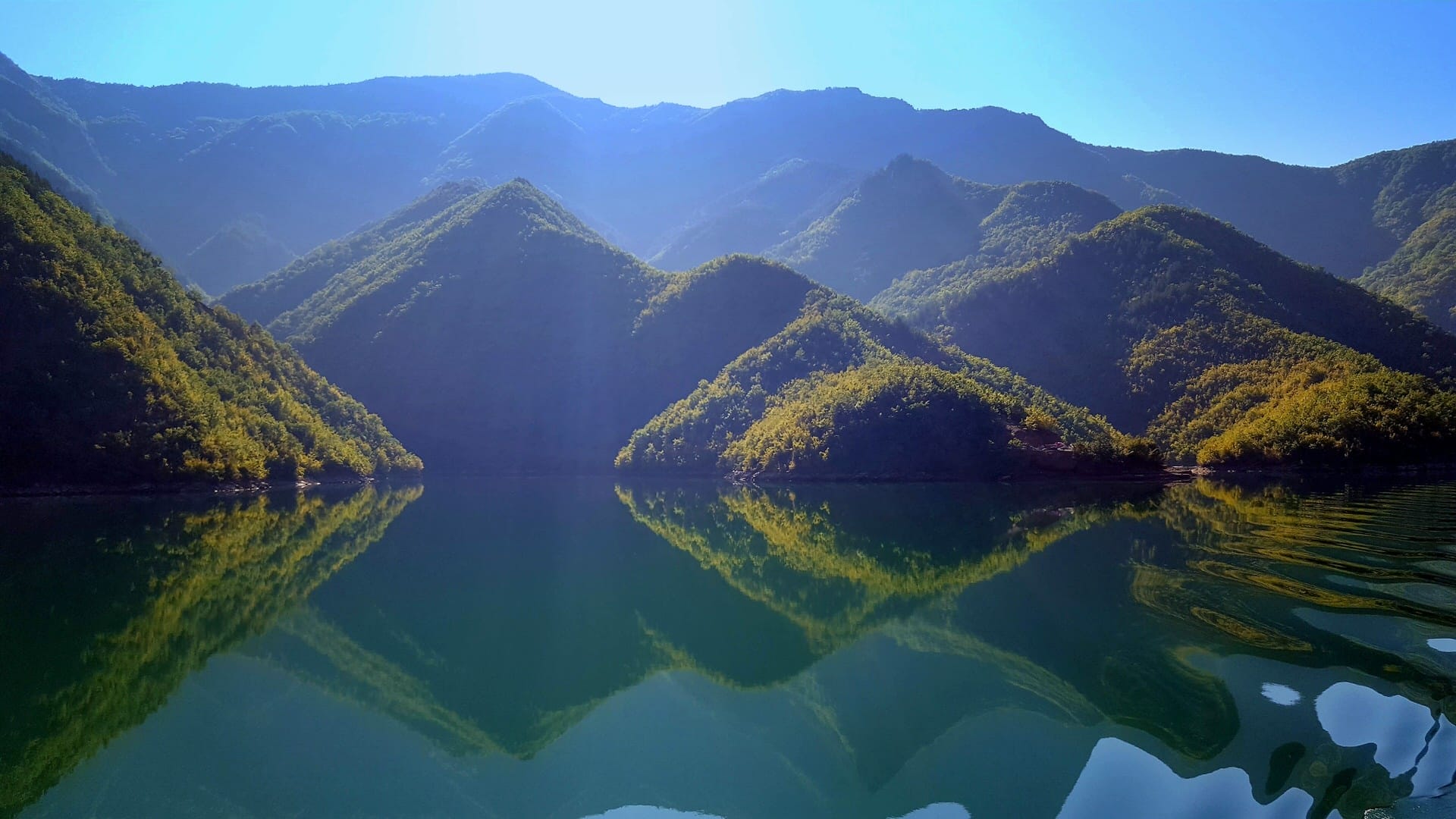
What Komani Lake Actually Is
Komani Lake (Liqeni i Komanit) is an artificial reservoir created between 1978 and 1985 by the construction of Komani Dam on the Drin River in northern Albania. The dam—115 meters tall and 285 meters wide—is one of Albania’s major hydroelectric projects, part of a cascade system (Fierza, Komani, Vau i Dejës) generating significant portion of the country’s electricity.
The reservoir flooded approximately 34 kilometers of the Drin River gorge, creating a narrow lake winding between limestone canyon walls rising 400+ meters above water level in some sections. The flooding submerged riverside villages, agricultural land, and the original transportation route through the valley—necessitating the ferry service that now carries tourists between Shkodër region and the northern highlands.
The lake’s primary functions remain hydroelectric generation and providing water transport to isolated northern communities. Tourism developed as secondary use when travelers discovered the ferry offered scenic route to Valbona Valley National Park and Theth—destinations that otherwise require long drives on rough mountain roads. The ferry isn’t a tourist attraction designed for sightseeing; it’s functional transport infrastructure that tourists use because it connects places they want to go while offering better scenery than the alternative overland routes.
The Ferry Experience
The standard ferry route runs from Koman village (80 kilometers northeast of Shkodër, accessible by minibus or taxi) to Fierza landing (where transport continues toward Valbona Valley). The journey takes approximately 3 hours covering 34 kilometers—significantly slower than the overland distance suggests because the boat navigates narrow channels, avoids shallow sections, and operates cautiously through the winding canyon.
Ferry operators are primarily small private boats rather than government-operated passenger ferries. The “ferry” is typically a covered motorboat holding 20-50 passengers depending on vessel size. Facilities are minimal—no restrooms on most boats (operators stop at lakeside locations if needed), no food service (bring your own), wooden benches for seating. The boats are functional transport, not cruise vessels.
Schedules vary by season and operator but typically involve departures from Koman between 7-9 AM during peak season (June-September). During shoulder months (May, October), service is reduced and unreliable—some operators cease operations entirely depending on demand. Winter service (November-April) is minimal to non-existent as tourist traffic to Valbona disappears and locals use alternative routes or remain in their highland villages for the season.
Pricing fluctuates: €10-15 per person is standard range, though operators may charge more during July-August peaks or less during slow periods when they’re trying to fill boats. Some operators require advance booking, others accept walk-up passengers if space allows. The unreliable scheduling and booking systems mean planning requires checking multiple sources (accommodation providers, local guides, online forums) shortly before travel rather than relying on official schedules that may not reflect operational reality.
What You See During the Journey
The scenic appeal comes from the narrow canyon geography. The reservoir occupies the former Drin River gorge where limestone cliffs rise directly from water level—in places, the canyon walls reach 400-500 meters height creating vertical landscapes unusual for boat travel. The water color varies from green to turquoise depending on depth, sunlight, and suspended sediment from upstream tributaries.
The comparison to “Norwegian fjords” appears frequently in tourism marketing. This comparison is both accurate and misleading. Accurate: you’re traveling through a narrow water body between vertical cliffs, creating similar visual impressions to fjord landscapes. Misleading: the scale is smaller (Norwegian fjords reach 1,000+ meter cliff heights and extend 100+ kilometers), the water is fresh rather than marine, and the surrounding landscape is Mediterranean rather than Nordic. Komani delivers impressive canyon scenery without matching the grandeur of major fjords.
During the journey, the boat passes submerged features—former villages, trees killed by flooding but still standing as dead trunks above water, old road beds visible during low water periods. A few houses remain occupied on shores accessible only by boat, where families continue living despite the flooding that isolated them from road access. The boat sometimes stops at these locations to deliver supplies or pick up passengers—functional transport rather than tourist stops, though visitors often photograph the unusual lakeside settlements.
Wildlife sightings are possible but not guaranteed. Birds (herons, cormorants, occasionally eagles) use the lake for hunting. Fish populations exist (carp, pike, catfish) supporting small-scale fishing by lakeside residents. The surrounding forests contain typical Balkan fauna (foxes, wild boar, occasional wolves) but they’re rarely visible from the water during daylight boat passages.
The Practical Reality of Using the Ferry
Most travelers use the Komani ferry as transport component in Valbona-Theth hiking itineraries rather than as destination itself. The typical pattern: stay in Shkodër, take morning minibus to Koman (1-1.5 hours), board ferry to Fierza (3 hours), transfer to minibus/taxi to Valbona (1 hour), hike Valbona-Theth (6-8 hours), descend to Shkodër completing the loop. The ferry is Day 1 of this multi-day circuit, valued for being more scenic than the alternative (driving from Shkodër to Valbona via Bajram Curri—longer and less interesting).
The ferry’s utility depends on your destination. If you’re going to Valbona anyway, the ferry route makes sense—it’s the better option combining necessary transport with scenery. If you’re not going to Valbona, riding the ferry means 3 hours to Fierza followed by 3 hours return (or complicated logistics arranging one-way passage and return transport by road). Few visitors take the ferry purely for sightseeing without the Valbona destination.
Conditions vary significantly. Clear sunny days provide optimal visibility and photography opportunities. Overcast or rainy weather reduces visibility, makes photography less rewarding, and creates cold conditions on the open boat deck (even in summer—bring layers). Wind can make the journey uncomfortable, particularly in the wider sections where the reservoir resembles an actual lake rather than narrow gorge. The boats don’t operate in dangerous weather, but they do operate in unpleasant conditions that reduce the experience quality.
The boat ride is long enough (3 hours) that initial excitement about the scenery often gives way to impatience—the canyon views are impressive but repetitive, and by hour 2-3 most passengers are ready to arrive rather than continuing to photograph cliff walls. Bring books, offline entertainment, or conversation with fellow travelers to occupy time during the middle section when scenic novelty has worn off.
The Honest Assessment
Komani Lake ferry delivers on its promise of scenic canyon travel. The limestone cliffs rising from water create genuinely impressive landscapes, and the journey through the reservoir canyon is more interesting than driving mountain roads to reach the same destinations. For travelers heading to Valbona anyway, the ferry is the recommended route—better scenery, easier than rough road alternatives, generally reliable during peak season.
What the ferry isn’t is a standalone attraction justifying a special trip. It’s scenic transport infrastructure, valuable specifically because it combines necessary travel with pleasant environment. The “Norwegian fjord” comparisons set unrealistic expectations—Komani is good but not world-class, impressive but not exceptional compared to major European water journeys.
Skip If: You’re not traveling to/from Valbona Valley (the ferry makes sense as part of that itinerary, not as isolated activity), if you’re visiting outside June-September when ferry operations are unreliable, if you’re uncomfortable with informal transport arrangements and flexible schedules, if you expect Norwegian-scale fjord scenery, or if 3 hours on a basic boat in potentially cold/wet conditions sounds unpleasant rather than adventurous.
Visit If: You’re hiking the Valbona-Theth circuit and need transport to Valbona (the ferry is the best option for this route), if you specifically enjoy boat journeys through mountainous terrain, if you’re interested in seeing Albanian hydroelectric infrastructure and its impact on valleys and communities, if you have flexibility to accommodate schedule uncertainties and potential weather issues, or if you’re researching Albanian highland access routes and want to experience both overland and water options.
The ferry is worth taking if you’re going to Valbona anyway. It probably isn’t worth taking if you’re not, unless you specifically enjoy boat travel enough to commit a full day to round-trip ferry passage through the same canyon twice. Make your decision based on your destination needs rather than treating Komani Lake as a standalone tourist sight—it works best as functional transport that happens to be scenic rather than as primary attraction.