What Karaburun-Sazan Marine Park Actually Is
Karaburun-Sazan Marine National Park, established 2010, is Albania’s first and only marine protected area, covering 12,570 hectares (125.7 square kilometers) of sea and coast around the Karaburun Peninsula and Sazan Island at the entrance to the Adriatic Sea. The park extends from the southern tip of the Karaburun Peninsula (where the Adriatic meets the Ionian Sea) northward along the peninsula’s western coast and includes all of Sazan Island, a 5.7-square-kilometer island sitting in the Vlorë Bay entrance.
The protected area was created to conserve Mediterranean marine biodiversity in one of Albania’s least developed coastal zones. The Karaburun Peninsula is roadless—no vehicle access exists along its western coast, making it one of Albania’s most remote terrestrial areas despite being only 15 kilometers from Vlorë across the water. This isolation has preserved marine and coastal ecosystems from development pressures affecting other Albanian coastal areas, though it also complicates visitor access and park management.
The park functions primarily as diving destination and boat tour objective rather than as traditional national park with hiking trails and visitor centers. Access is exclusively by boat from Vlorë—private boat tours, organized diving trips, or kayaking expeditions for experienced paddlers. The peninsula has no accommodations, no facilities, and limited landing sites where boats can safely approach the rocky coast.
The Marine Biodiversity and Conservation Context
The park’s waters host approximately 300 fish species, sea turtles (loggerhead and green turtles nest on beaches), dolphins (common and bottlenose species), and occasional Mediterranean monk seal sightings (one of Europe’s most endangered mammals with fewer than 700 individuals remaining). The underwater environment includes rocky reefs, sea grass meadows, underwater caves, and vertical wall formations creating habitat diversity supporting varied marine life.
Conservation efforts focus on restricting commercial fishing (the park has buffer zones limiting trawling and net fishing), protecting nesting beaches (sea turtle monitoring during nesting season May-August), and managing visitor impacts (limiting anchoring in sensitive areas, establishing diving site rotation, monitoring marine mammal populations).
The “12% of Mediterranean biodiversity” statistic appearing in tourism materials is misleading—this figure refers to the proportion of Mediterranean species recorded in the park relative to total Mediterranean biodiversity, but it doesn’t mean 12% of all Mediterranean creatures live here. It means the park contains representatives of approximately 12% of known Mediterranean species, which is still significant for a relatively small protected area.
The marine park designation provides legal protection, but enforcement is challenging. Albania’s limited marine patrol resources mean illegal fishing occasionally occurs, and park management lacks funding for comprehensive monitoring. The isolation that protects the area from development also makes it difficult to patrol effectively.
Karaburun Peninsula Geography and Access
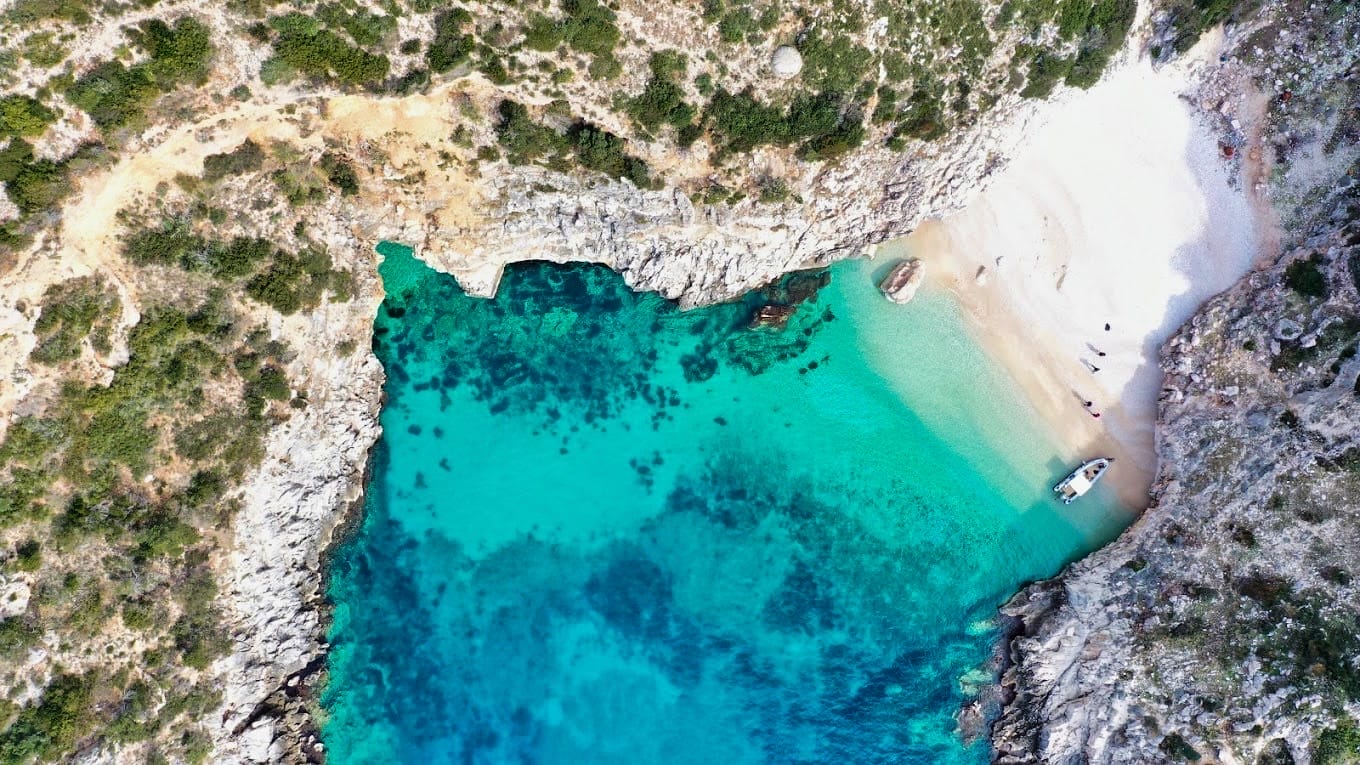
The Karaburun Peninsula extends 16 kilometers southward from the mainland, forming the western boundary of Vlorë Bay. The peninsula is mountainous—limestone peaks reaching 800 meters elevation—with cliffs dropping directly into the sea along much of the western coast. The eastern side (facing Vlorë Bay) has some beaches and coves accessible by boat, while the western side (open Adriatic) is primarily cliffs with caves carved by wave action.
The peninsula is uninhabited except for seasonal shepherds and occasional fishermen using sheltered coves. Historical structures include abandoned military installations from Albania’s communist period (1944-1991) when the coast was heavily fortified. Small chapels and ruins indicate historical settlement, but no permanent communities exist currently.
Boat tours from Vlorë typically visit the southern tip of the peninsula (Kepi i Gjuhëzës—Tongue Cape) where Adriatic and Ionian waters meet, then explore caves and coves along the western coast. Popular stops include Haxhi Ali Cave (large sea cave accessible by boat, featuring chamber with skylight opening), Grama Bay (beach with ancient Greek and Latin inscriptions carved into cliff walls by passing sailors), and various unnamed beaches and swimming spots.
The peninsula has limited landing areas where boats can safely deposit passengers. Most sites are view-from-boat or anchor-and-swim rather than walk-on-land locations. For visitors wanting to explore the peninsula on foot, organized hiking tours exist but require boat transport to starting points and experienced guides familiar with the roadless terrain.
Sazan Island History and Current Access
Sazan Island sits 2.5 kilometers from Karaburun Peninsula and 5 kilometers from the mainland, controlling the entrance to Vlorë Bay. The island measures 5.7 square kilometers (approximately 4.5 kilometers long by 1.5 kilometers wide) with hills reaching 342 meters elevation. The strategic position made Sazan valuable military asset—Italy occupied it 1920-1947, then Albania’s communist government made it major naval base with submarines, fortifications, bunkers, and a garrison of 3,000 soldiers.
The island was completely closed to civilians from 1947 until 2015 when limited tourism access began. Military facilities remain, and parts of the island are still restricted. Organized boat tours can land at designated areas where visitors walk to viewpoints, see abandoned military structures (bunkers, tunnels, gun emplacements), and visit beaches on the southern coast.
The island has no civilian infrastructure—no accommodations, no restaurants, no services. Tours are day visits only. The military history is the primary interest—Cold War bunkers, tunnel systems, observation posts overlooking the Adriatic, and the isolated island setting creating unusual atmosphere of abandoned military installation slowly being reclaimed by nature.
Access requires organized tours from Vlorë (most boat tours include Sazan as part of Karaburun-Sazan full-day itineraries) or private boat charter. Independent landing without authorized tour is technically prohibited, though enforcement is inconsistent. The island has a small Albanian military presence maintaining restricted zones, but tourism is now officially permitted in designated areas.
Diving in the Marine Park
The park’s primary attraction for serious marine enthusiasts is diving. Multiple dive sites offer variety: underwater caves (including Cathedral Cave—large submerged cavern with swim-through passages), vertical walls (cliffs continuing underwater creating wall dives to 40+ meters depth), rocky reefs (supporting fish populations, octopus, lobster, moray eels), and wrecks (several WWII-era vessels sunk near Sazan Island, plus modern vessels deliberately sunk as artificial reefs).
Diving in the park requires going through licensed operators based in Vlorë. Several dive centers offer trips ranging from single-day two-dive packages (€70-90 per person including equipment and boat transport) to multi-day liveaboard diving trips (€150-200+ per day). The diving season runs May-October with June-September providing best conditions (calm seas, good visibility typically 15-25 meters, water temperature 22-26°C).
The diving is good by Adriatic standards but not world-class compared to Mediterranean hot spots like Malta or the Red Sea. The marine life is diverse but not abundant—you see variety of species but not massive schools or concentrations. The caves are interesting geological features. The wrecks are modest historical artifacts rather than major war relics. For divers visiting Albania anyway, the park offers worthwhile diving; it probably doesn’t justify international trip specifically for diving unless combined with extensive Albanian coastal exploration.
Snorkeling is possible at shallow sites, though much of the interesting marine environment is at depths beyond snorkeling range (the cliffs that create dramatic above-water scenery also mean deep water close to shore). Rocky coastlines don’t provide extensive shallow areas ideal for snorkeling like you’d find at coral reefs or sandy beaches with gradual depth.
Boat Tours and Practical Considerations
Most visitors experience the park via organized boat tours from Vlorë operating May-October. Standard full-day tours (8 AM-6 PM) cost €30-60 per person depending on boat size, included services (lunch, drinks, snorkeling equipment), and specific itinerary. These tours typically visit Haxhi Ali Cave, Grama Bay, several swimming/snorkeling stops along Karaburun coast, and Sazan Island landing for 1-2 hours.
The boat ride from Vlorë to Karaburun takes 1-1.5 hours depending on boat speed and sea conditions. Sazan Island is 30-45 minutes from Vlorë. The boats range from small speedboats (10-15 passengers, faster, more expensive) to larger tourist boats (40-60 passengers, slower, cheaper). Rough seas cancel tours—the western Karaburun coast and Sazan passage can be choppy even when Vlorë Bay is calm.
Booking in advance during July-August is recommended as popular tours fill. May-June and September-October offer more availability. The tours are weather-dependent—operators cancel if conditions are unsafe, and refunds or rescheduling policies vary (confirm before booking).
Independent exploration via kayak is possible for experienced paddlers—rental kayaks in Vlorë (€20-30 per day) allow crossing to Sazan or paddling along the Karaburun eastern coast. The western Karaburun coast is too exposed for recreational kayaking (open Adriatic with limited emergency landing options if conditions deteriorate). Kayaking requires serious experience, proper equipment, and conservative decision-making about sea conditions.
The Honest Assessment
Karaburun-Sazan Marine National Park protects important Mediterranean marine biodiversity and provides diving and boat tour experiences in Albania’s most remote coastal area. The combination of roadless peninsula, former military island, and protected marine environment creates unique Albanian attraction—nowhere else in Albania offers this specific mix of isolation, marine life, and Cold War history.
What the park isn’t is easy to access, well-developed for tourism, or exceptional compared to major Mediterranean marine destinations. The boat-only access limits flexibility (you’re dependent on tour operators and weather), the marine life is diverse but not abundant, the diving is good but not world-class, and the tourism infrastructure is basic (appropriate for protected area but challenging for visitors expecting developed facilities).
The park works best for visitors already in Vlorë who want full-day boat excursion, divers seeking Albanian dive sites, or adventurous travelers interested in remote coastal exploration. It’s harder to justify if you’re comparing it to more accessible Albanian beaches or more developed Mediterranean diving destinations.
Skip If: You’re prone to seasickness (1+ hour boat rides on potentially rough seas), if you have limited time in Albania and prefer more accessible coastal areas (Albanian Riviera beaches, Ksamil), if you expect developed tourism infrastructure (the park is deliberately undeveloped), if rough seas cancel your tour and you can’t reschedule, if you’re not interested in diving or boat-based exploration (the park requires boat access—no alternative exists), or if the €30-60 tour cost seems expensive compared to beach day alternatives.
Visit If: You’re spending multiple days in Vlorë and want variety beyond beach time, if you’re interested in diving and want to explore Albanian underwater sites, if you specifically seek remote coastal scenery and want to experience Albania’s roadless peninsula, if you’re interested in Cold War history and want to visit Sazan Island’s abandoned military installations, if weather is favorable and tours are operating (check conditions before committing), or if you combine the marine park with comprehensive southern Albanian coastal exploration rather than expecting it as standalone highlight.
The park is worth visiting for the right audience—divers, boat tour enthusiasts, travelers with time in Vlorë seeking variety. It’s less compelling for casual beach visitors or time-limited travelers prioritizing Albania’s most accessible highlights. Consider it as specialized attraction rather than must-see destination.