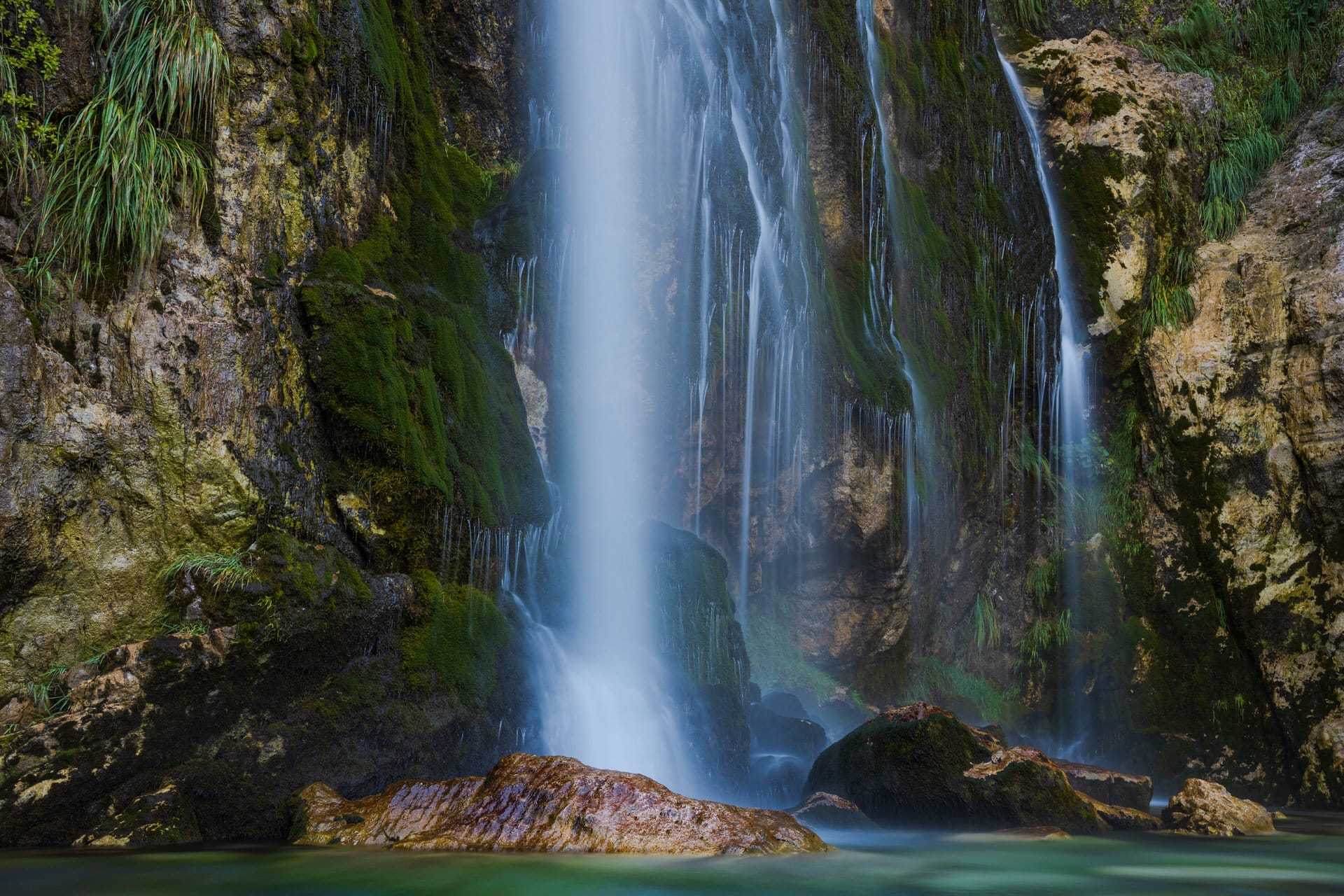
What Grunas Waterfall Actually Is
Grunas Waterfall (sometimes spelled Grunasi or written as Theth Waterfall on maps) is a 25-meter waterfall in Theth National Park, approximately 1 hour walking from Theth village center. The waterfall drops over a limestone cliff into a pool below, surrounded by forest in a small amphitheater of rock walls. The cascade is the most popular short hike from Theth village—easier and shorter than the multi-hour Valbona-Theth trail or climbs to higher peaks, making it the standard half-day activity for visitors staying in Theth who want hiking without committing to all-day mountain expeditions.
The waterfall itself is moderate-sized by alpine standards. The 25-meter drop is noticeable but not exceptional compared to larger waterfalls elsewhere in Albania (Sotira Waterfall near Gramsh is ~100 meters, for comparison). The appeal combines accessibility with scenery—the limestone cliff setting creates photogenic composition, and the pool at the base provides swimming option (very cold water even in summer, fed by snowmelt and spring sources).
Access requires €2 entrance fee collected at the trailhead where a path branches from the main vehicle track through Theth valley. This fee theoretically funds trail maintenance, and compared to other Theth hiking routes, the Grunas trail is better maintained—cleared vegetation, defined path, some reinforcement of erosion-prone sections. “Well-maintained” is relative to Albanian mountain trails generally, not compared to developed European hiking infrastructure—expect rough trail requiring sturdy shoes and reasonable fitness.
The Trail and Access
From Theth village center (near the church), the waterfall is approximately 2-3 kilometers via marked trail. The path initially follows the valley floor heading northwest from the village along vehicle track, then branches onto footpath at the fee collection point (small booth staffed during peak season June-September, unmanned but honor-system box for payment during shoulder months).
The trail gains approximately 200 meters elevation over the 2-3 kilometer distance—gradual enough that families with children aged 6-8+ manage the hike, steep enough that it’s noticeable effort rather than flat valley stroll. The path crosses forest (beech and pine), follows a stream (tributary feeding into the main Theth valley river), and passes through clearings with views toward surrounding limestone peaks.
During dry summer conditions (July-September), the trail is straightforward—rocky but clear, a few stream crossings via stepping stones, some muddy patches in shaded sections. During wet conditions (spring, autumn, after rain), the trail becomes slippery with mud and stream crossings are more challenging. Winter (November-April) brings snow making the trail difficult to follow and potentially dangerous without winter hiking experience and equipment.
The hike takes approximately 1 hour from village to waterfall at moderate pace, 45 minutes for fast hikers, 1.5 hours with children or less mobile visitors. The return takes similar time—slight downhill advantage offset by fatigue. Total round trip typically requires 2-3 hours including time at the waterfall.
What You See at the Waterfall
The waterfall drops approximately 25 meters (some sources say 30 meters—the exact height is variable depending on measurement point) over limestone cliff into a pool roughly 5-8 meters wide and 1-2 meters deep. The water flow varies dramatically by season: during spring snowmelt (May-June), the waterfall is powerful with high volume creating mist and significant noise; by late summer (August-September), the flow reduces to moderate cascade, sometimes becoming thin stream during drought years.
The pool at the base is accessible for swimming—very cold water (typically 8-12°C even in summer) fed by snowmelt and underground springs. Locals and adventurous tourists swim, though most visitors just wade or photograph rather than fully immerse in the frigid water. The pool depth varies—shallow edges (0.5 meters) dropping to deeper center (1-2 meters), rocky bottom with some sandy patches.
The surrounding amphitheater of limestone cliffs creates enclosed setting—walls rising 50-100 meters around the waterfall creating shaded microclimate even during midday. Forest covers the cliff tops and fills the approaches, providing green backdrop to the white limestone rock. The combination of water, rock, and forest creates compositions popular for photography, particularly during spring when water flow is highest.
The site has no facilities beyond the trail itself—no restrooms (use forest before reaching waterfall), no food vendors (bring water and snacks), no seating (sit on rocks), no safety barriers (be careful near the pool edges and cliff bases where rockfall is possible). It’s natural feature with minimal human infrastructure beyond the maintained approach trail.
The Crowding and Timing Considerations
Grunas is Theth’s most popular short hike, meaning it concentrates visitors who aren’t hiking the longer Valbona route or climbing higher peaks. During July-August peak season, the waterfall can see 50-100 visitors daily—the trail becomes congested with groups moving both directions, and the waterfall viewing area (limited space near the pool) hosts 10-20 people at any time during midday hours.
Early morning departures (leaving Theth village by 7-8 AM) and late afternoon visits (arriving at waterfall after 4 PM) reduce crowds. Most organized tour groups and guesthouse groups hike mid-morning (9 AM-noon), creating peak congestion. Weekdays are calmer than weekends when Albanian domestic tourists add to international visitor numbers.
May and September-October offer better crowd levels than July-August while still maintaining reasonable weather and trail conditions. May has advantage of high water flow from snowmelt but potential for wet trail conditions. September-October brings lower water volume but dryer trails and autumn colors in the forest.
The €2 entrance fee is collected by local families who maintain the trail—payment supports this maintenance and provides income to Theth residents. During unmanned periods, an honor box at the trailhead collects fees. Most visitors pay, both from honesty and recognition that trail maintenance benefits everyone using Theth’s hiking infrastructure.
The Waterfall in Context of Theth Activities
Grunas functions as the “easy option” in Theth’s hiking menu. For visitors who want to experience Albanian Alps scenery without committing to the 6-8 hour Valbona-Theth crossing or full-day peak climbs, Grunas provides 2-3 hour half-day activity that’s achievable for families, older visitors, and anyone with moderate fitness rather than requiring serious hiking capability.
This accessibility is both advantage and limitation. Advantage: most visitors to Theth can do Grunas, making it reliable activity that doesn’t require concern about fitness levels or mountain experience. Limitation: if you’re in Theth specifically for serious alpine hiking, Grunas may feel underwhelming—it’s a pleasant waterfall hike but not a challenging mountain adventure.
The waterfall combines well with other Theth activities: visit Grunas in the morning, then spend afternoon exploring Theth village (Lock-in Tower museum, church, traditional architecture), or use it as rest-day activity between longer hikes. For visitors staying in Theth for 2-3 days hiking the Valbona route, Grunas works as warm-up hike on arrival day or recovery hike after the long mountain crossing.
The Honest Assessment
Grunas Waterfall delivers what it promises: accessible waterfall hike from Theth village suitable for families and casual hikers, requiring moderate effort for moderate reward. The 25-meter cascade is genuinely attractive during spring high-flow season, the limestone cliff setting provides interesting geology, and the maintained trail makes the hike pleasant by Albanian Alps standards where many routes are rough unmarked paths.
What Grunas isn’t is exceptional compared to larger waterfalls, uncrowded during peak season, or challenging enough to satisfy experienced mountain hikers seeking serious alpine routes. It’s good waterfall hike that fits into Theth visit without being the primary reason to make the difficult journey to Theth (the Valbona-Theth trail, the overall Albanian Alps setting, and traditional mountain village experience are the main draws—Grunas is supporting activity rather than headliner).
The €2 fee is reasonable for maintained trail access and supports local community. The 2-3 hour time commitment fits into half-day scheduling. The family-friendly difficulty opens Theth to visitors who can’t manage longer mountain hikes but want to experience Albanian Alps nature.
Skip If: You’re in Theth only briefly and prefer to focus on the Valbona-Theth trail or longer hikes, if you’ve seen larger waterfalls elsewhere and this will feel anticlimactic, if you’re visiting during peak crowding (July-August weekends) and prefer solitude, if mobility limitations make even moderate hiking difficult, or if the €2 entrance fee bothers you for what’s essentially nature access.
Visit If: You’re staying in Theth for 2+ days and want variety beyond the major hiking routes, if you’re visiting with family/children who need easier hiking options than the Valbona trail, if you visit during May-June when water flow is highest, if you want to support trail maintenance in Theth through fee payment, if you appreciate accessible waterfall viewing without requiring extreme hiking, or if you combine it with Theth village exploration as comprehensive half-day or full-day itinerary.
Grunas works as “while you’re in Theth anyway” activity—worth doing if you’re already in the village, probably not worth the 3-hour rough road from Shkodër as standalone destination. Make it part of multi-day Theth experience rather than expecting it to justify difficult access to the Albanian Alps by itself.
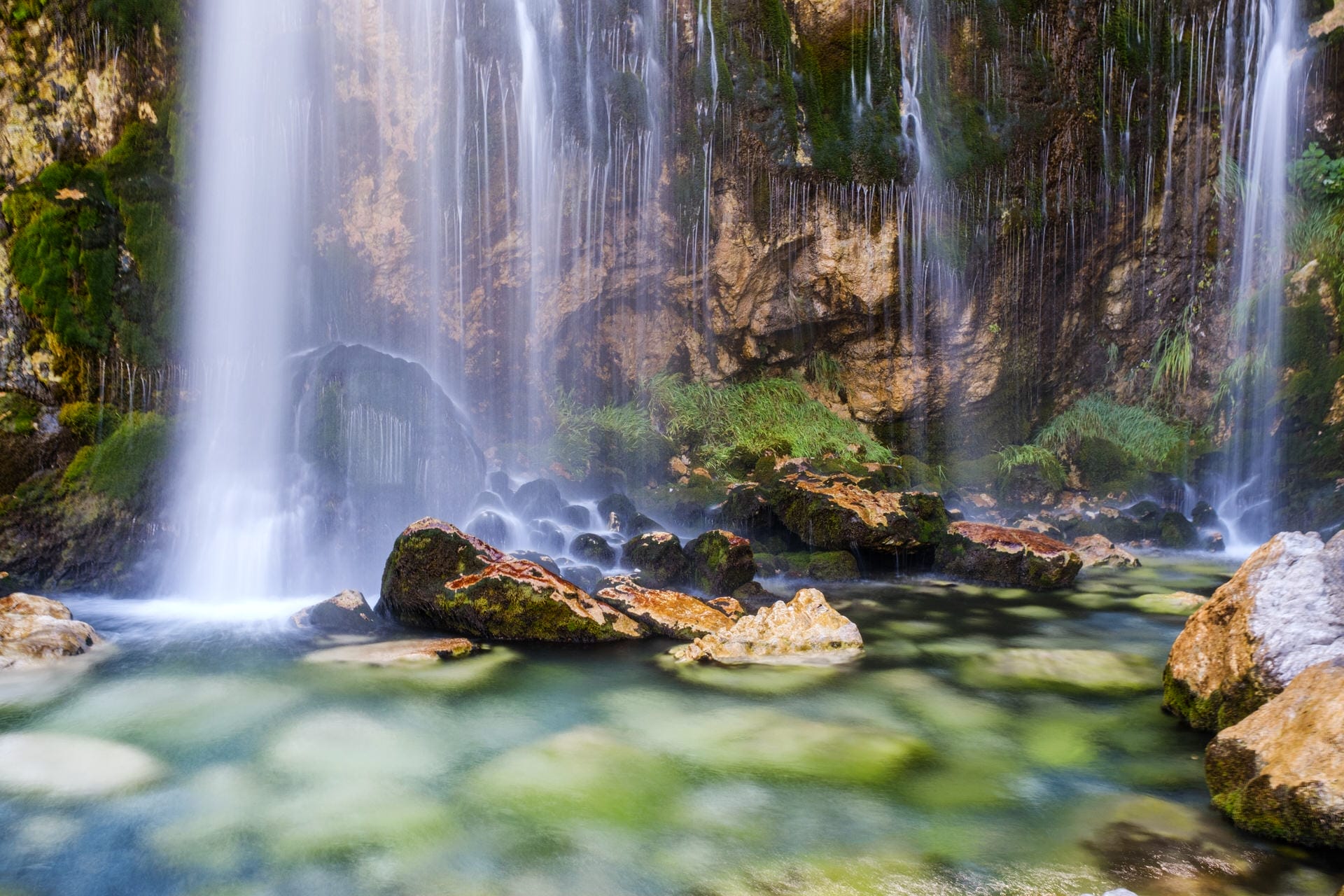
Grunas Waterfall dropping 25 meters over limestone cliff in Theth National Park
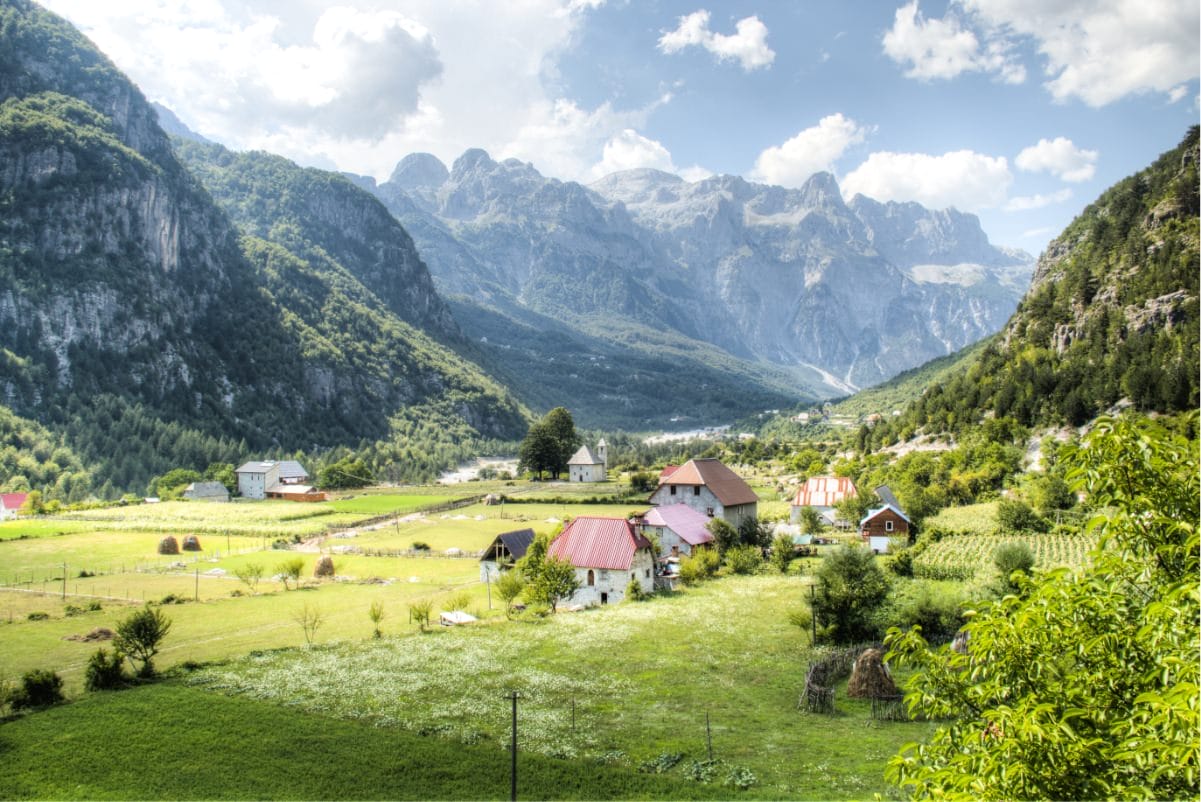
Theth village in Northern Albania provides access to Grunas Waterfall and other Albanian Alps hiking
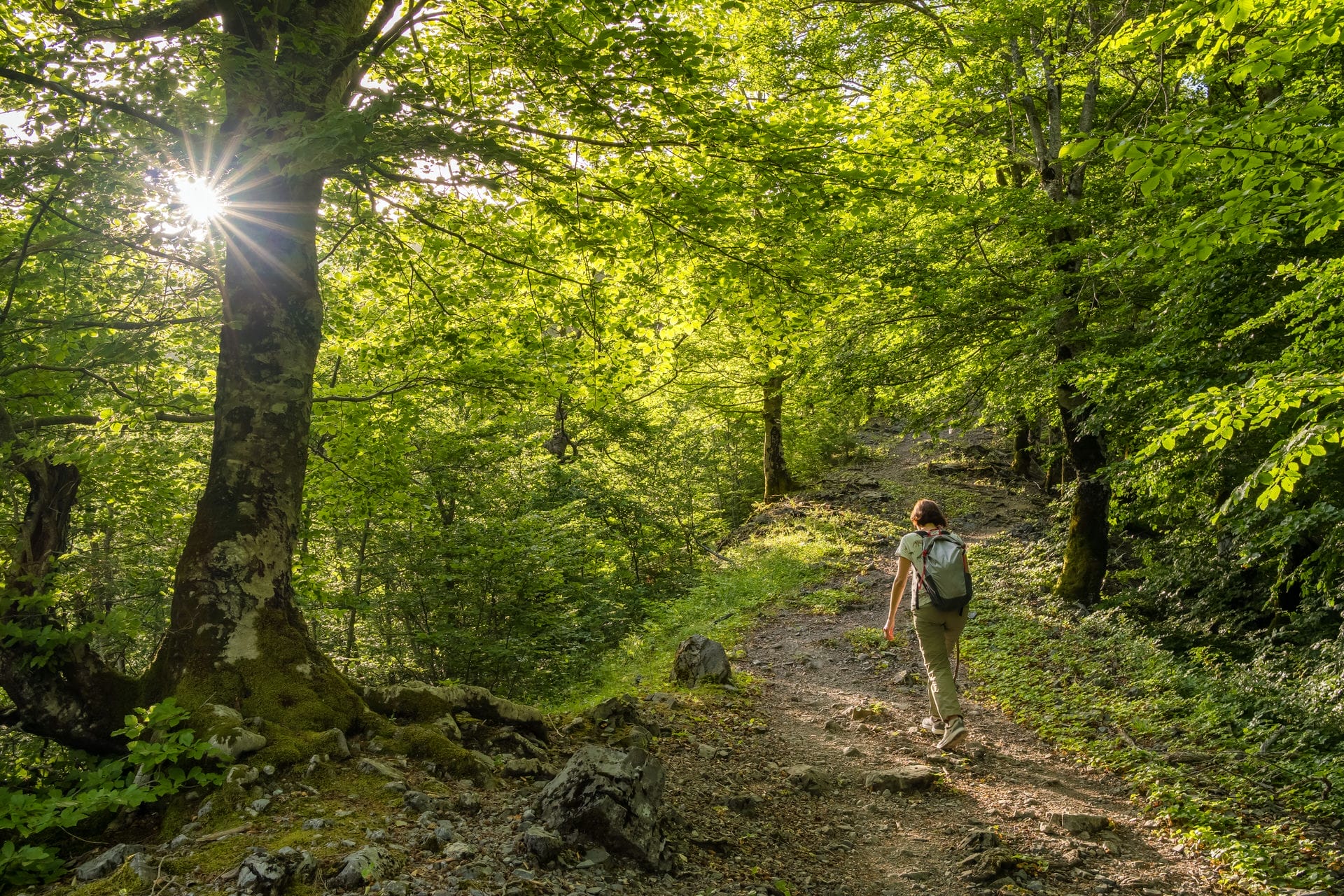
The Albanian Alps around Theth offer multiple hiking options including Grunas Waterfall and the Valbona trail
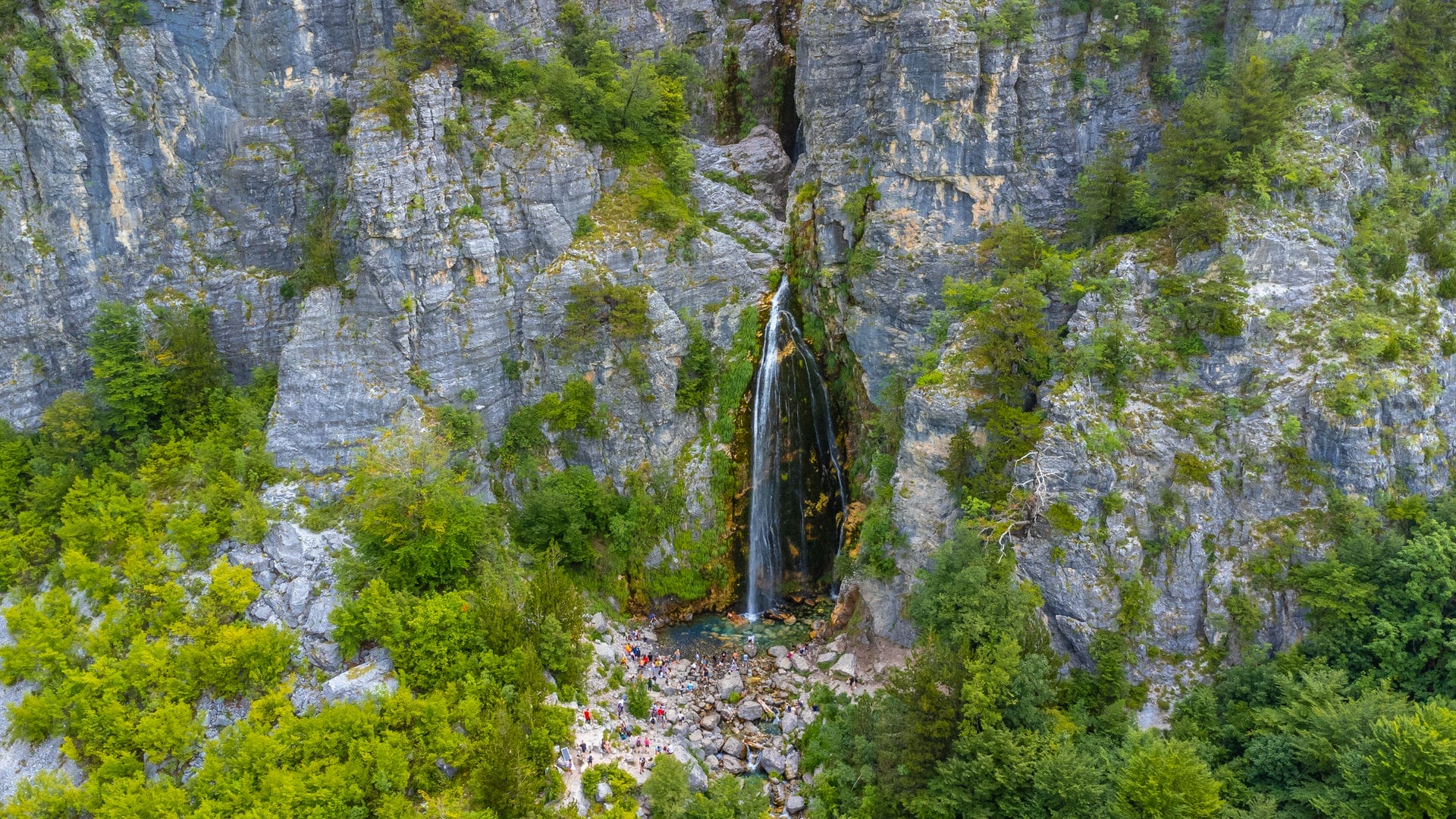
The pool at the base of Grunas Waterfall allows swimming in cold mountain water