The Mosque That Survived Everything
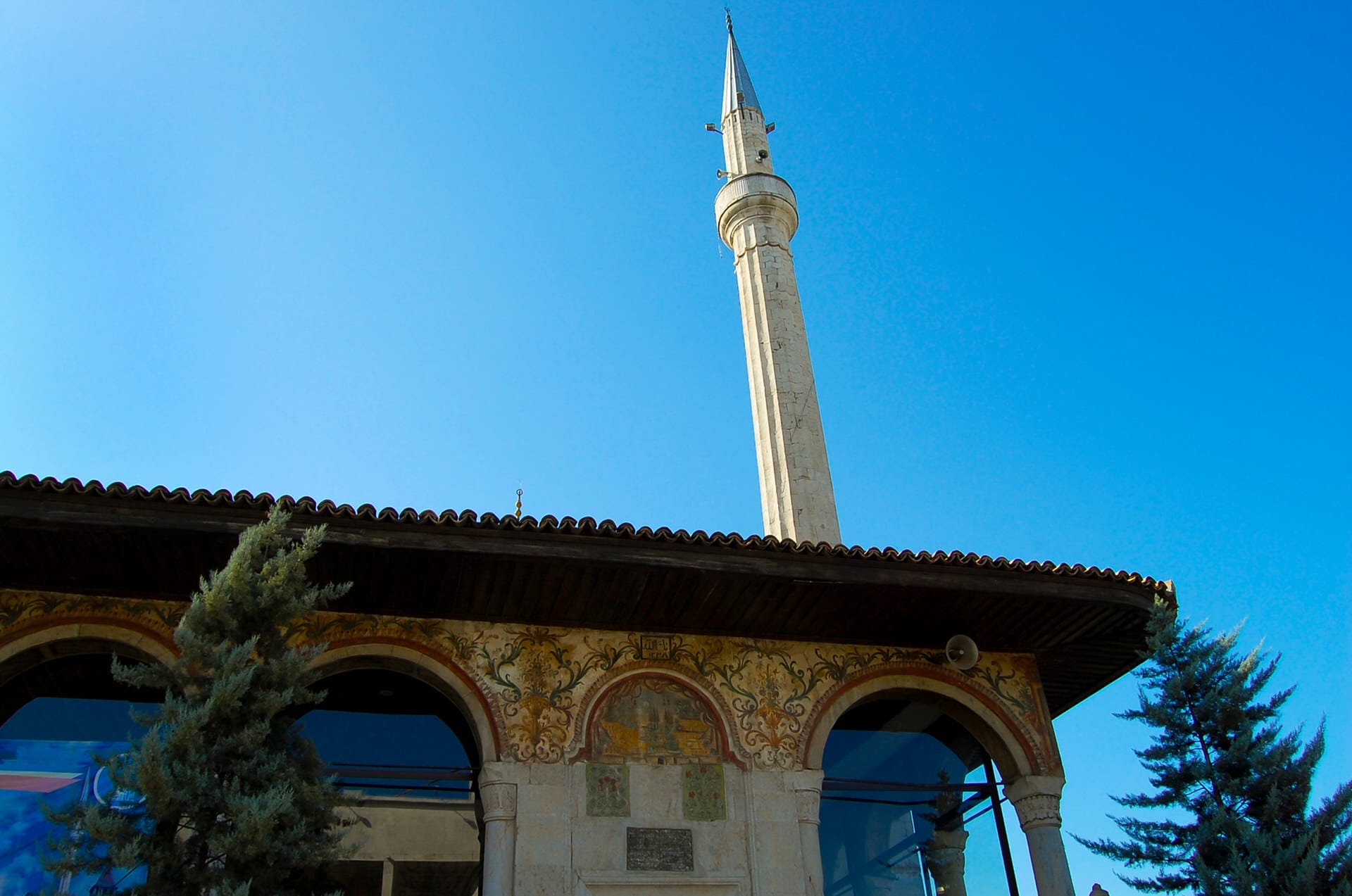
On the northern side of Skanderbeg Square in Tirana, Et’hem Bey Mosque occupies a small footprint surrounded by buildings representing every regime that ruled Albania since 1789—the year construction began under Ottoman governor Molla Bey. His son, Haxhi Et’hem Bey, completed the mosque in 1821 after his father’s death, creating one of the finest examples of Ottoman religious architecture in the Balkans.
The mosque’s survival qualifies as remarkable. When Albania gained independence in 1912, authorities demolished dozens of mosques viewed as symbols of Ottoman occupation. When Enver Hoxha declared Albania the world’s first atheist state in 1967, demolition campaigns accelerated—over 2,000 religious buildings destroyed nationwide, with most mosques either razed entirely or converted to warehouses after workers removed minarets and whitewashed frescoes.
Et’hem Bey avoided demolition but was sealed and forbidden for worship. The building survived closed for 24 years until January 18, 1991, when approximately 10,000 Albanians gathered in Skanderbeg Square and forced the doors open for public prayer in direct defiance of laws prohibiting religious assembly. Security forces received orders to disperse the crowd but refused to act. The regime’s inability to enforce its core ideological position—state atheism—signaled that Hoxha’s system had lost authority. The mosque reopened officially days later, and the communist government collapsed within months.
What Makes the Mosque Distinctive
The architecture follows Ottoman imperial style—a portico supported by columns surrounds the prayer hall, topped by a central dome, with a cylindrical minaret rising 35 meters allowing the call to prayer. The design echoes Istanbul’s grand mosques from the 16th century, establishing visual continuity between the Ottoman capital and its Albanian territories.
What distinguishes Et’hem Bey from most Islamic religious architecture is the interior decoration. Approximately 300 square meters of frescoes cover the upper walls, depicting landscapes with rivers, boats, stone bridges, trees, and small structures resembling bathhouses. These works incorporate elements of Persian miniature painting traditions while avoiding depictions of humans or animals—focusing instead on environmental beauty from aerial perspectives.
Islamic artistic tradition generally discourages representational imagery in mosques, making these landscape frescoes unusual. Most Ottoman-era mosques throughout Albania featured geometric patterns and calligraphy rather than pictorial scenes. The survival of these paintings through both Ottoman period and communist suppression makes Et’hem Bey the only Albanian mosque preserving illustrated interior decoration at this scale.
The frescoes were restored between 2019 and 2021 as part of comprehensive renovation addressing structural damage and decades of deferred maintenance during the mosque’s closure. The restoration maintained the original 18th-19th century painting techniques while stabilizing deteriorating plasterwork.
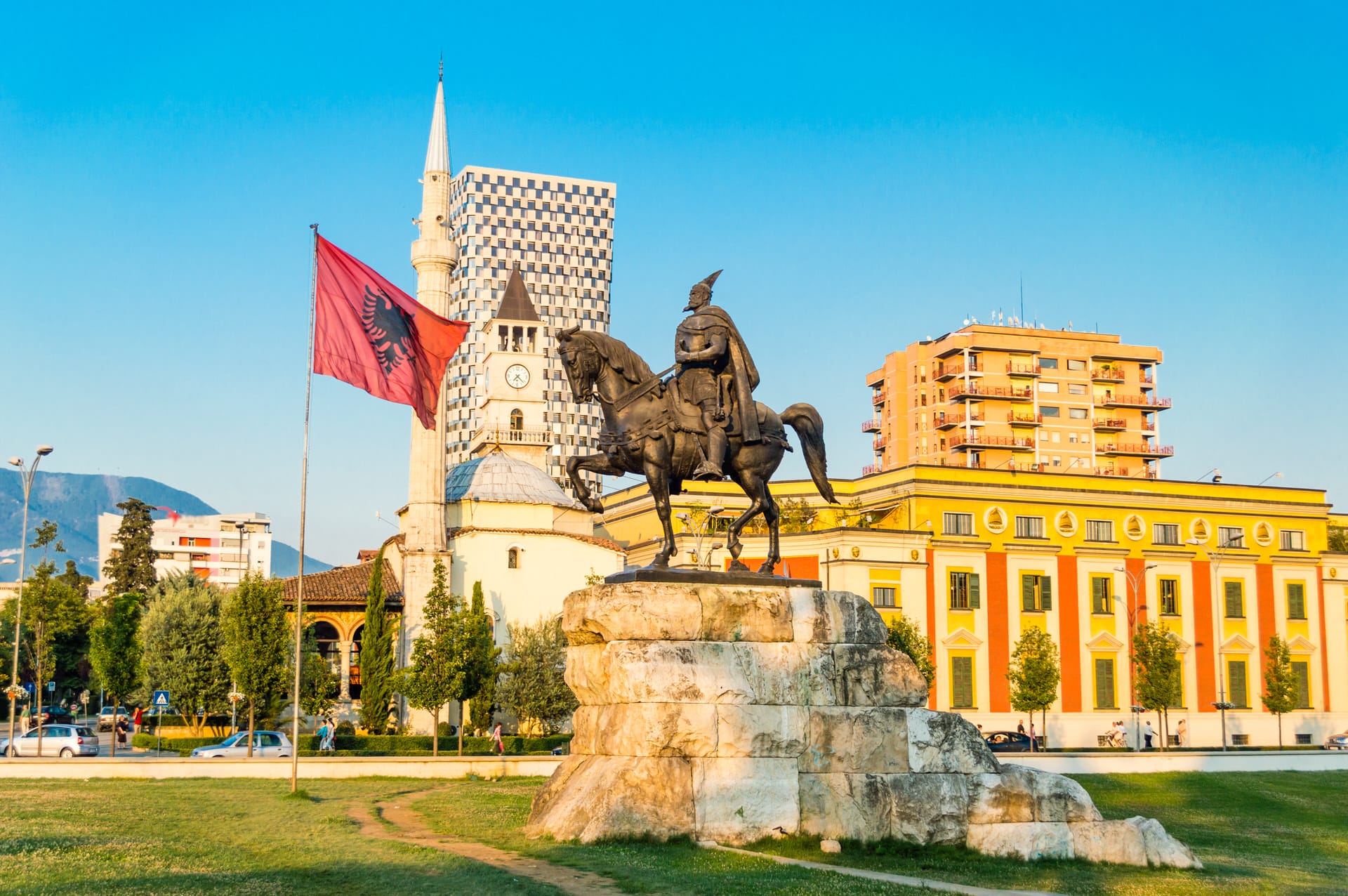
Skanderbeg monument and Et’hem Bey Mosque in the center of Tirana
The 1991 Prayer That Broke the Regime
Understanding Et’hem Bey’s significance requires understanding what happened here on January 18, 1991. Albania had been officially atheist since 1967—longer than any nation in history. Religious practice wasn’t just discouraged; it was criminalized, with violators facing imprisonment, internal exile, or execution. By 1990, as communist regimes collapsed across Eastern Europe and the Soviet Union implemented glasnost, Albania remained sealed and totalitarian.
Small protests began in Tirana in December 1990 demanding political reforms. On January 18, 1991, organizers called for a mass gathering at Et’hem Bey Mosque—closed since 1967—for public Islamic prayer. The symbolic target was deliberate: if thousands could openly practice religion in the capital’s central square, the regime’s fundamental claim to authority (enforcement of state atheism) would be exposed as hollow.
Approximately 10,000 people gathered at the mosque. Security forces surrounded the square. The regime issued orders to disperse the crowd and arrest organizers. Security commanders refused to act. The crowd forced open the mosque doors and conducted Friday prayers openly for the first time in 24 years. The government issued no punishments and reopened the mosque within days, recognizing it could no longer enforce prohibitions on religious practice.
This moment functioned as tipping point—once the regime demonstrated it couldn’t or wouldn’t enforce its core ideological position, the entire structure of totalitarian control began unraveling. Protests expanded throughout 1991, political parties formed, elections occurred in March, and the communist system collapsed by year’s end.
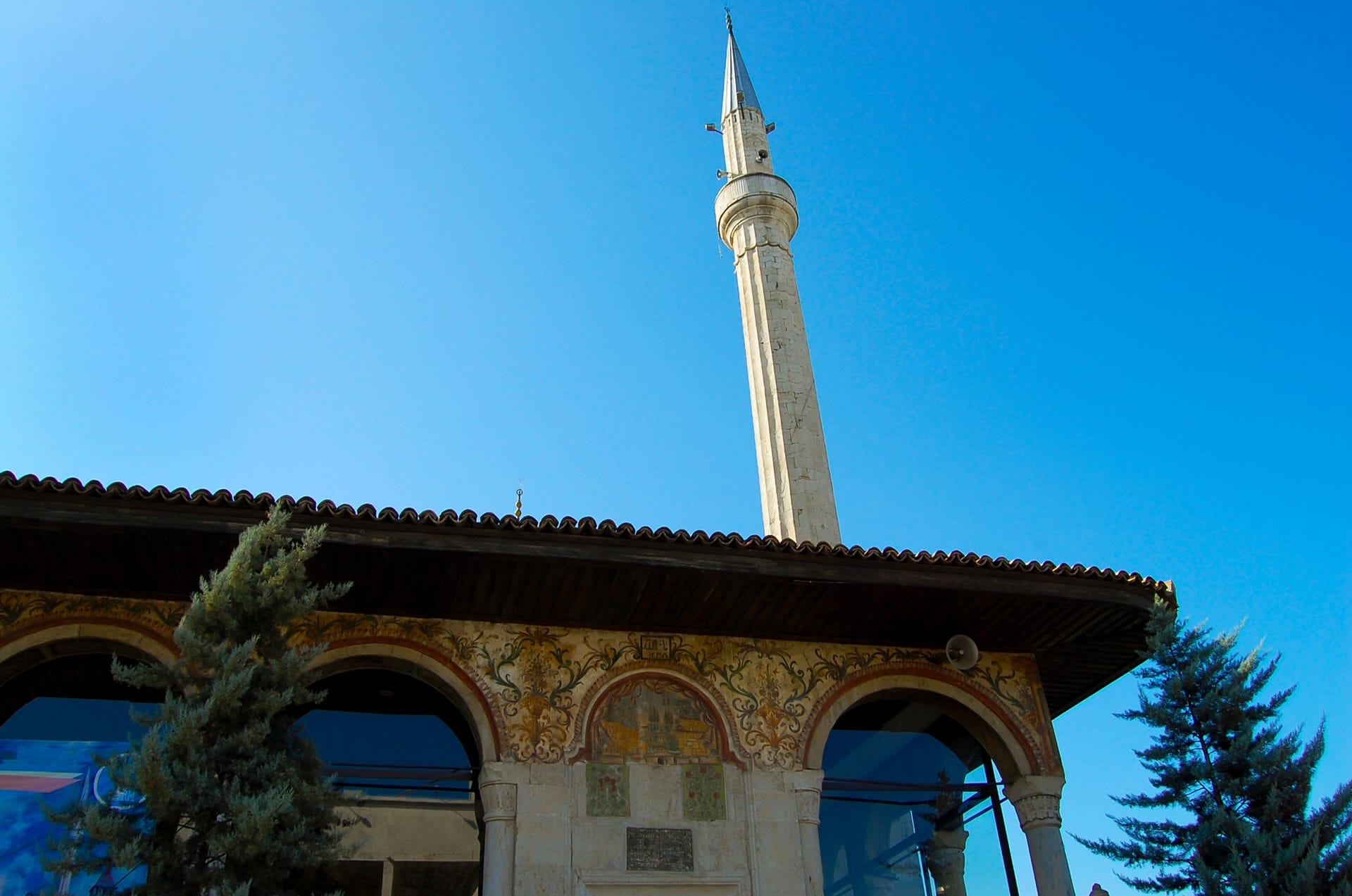
Et’hem Bey Mosque
Visiting Practicalities
Location and Access: Et’hem Bey Mosque sits directly on Skanderbeg Square’s eastern side, adjacent to the Clock Tower (built 1828). The mosque is impossible to miss when visiting the square—the portico and minaret create distinctive silhouette against the surrounding brutalist and neoclassical architecture.
Hours: The mosque operates on a schedule accommodating both worship and tourism:
- Daily: 9:00-11:00 AM, 12:30-2:30 PM, 4:00-5:00 PM
- Friday: 9:00-11:00 AM, 1:00-2:00 PM
These hours allow visitors to enter outside of prayer times. During prayers (five times daily), the mosque closes to tourists while worshippers use the space for its intended purpose.
Entry and Donations: No admission fee, though donations are encouraged—a donation box sits near the entrance. The mosque functions as active place of worship supported by Tirana’s Muslim community, and contributions help maintain the building and fund religious education programs.
Dress Code: Modest dress required—knees and shoulders covered for both men and women. Women should cover hair with scarf (scarves provided at entrance if needed). Remove shoes before entering prayer hall (shoe storage available at entrance). These aren’t arbitrary tourist rules; they’re standard practices for Islamic religious spaces that locals observe when attending for worship.
Time Needed: The mosque’s interior is small—the main prayer hall, portico, and viewing of frescoes requires 15-20 minutes. This isn’t a massive complex with multiple rooms; it’s a single-chamber mosque designed for local community worship rather than imperial grandeur.
Photography: Generally permitted for non-commercial purposes, though avoid photographing worshippers without permission. During prayers, photography isn’t appropriate—the space is functioning as religious sanctuary rather than tourist attraction.
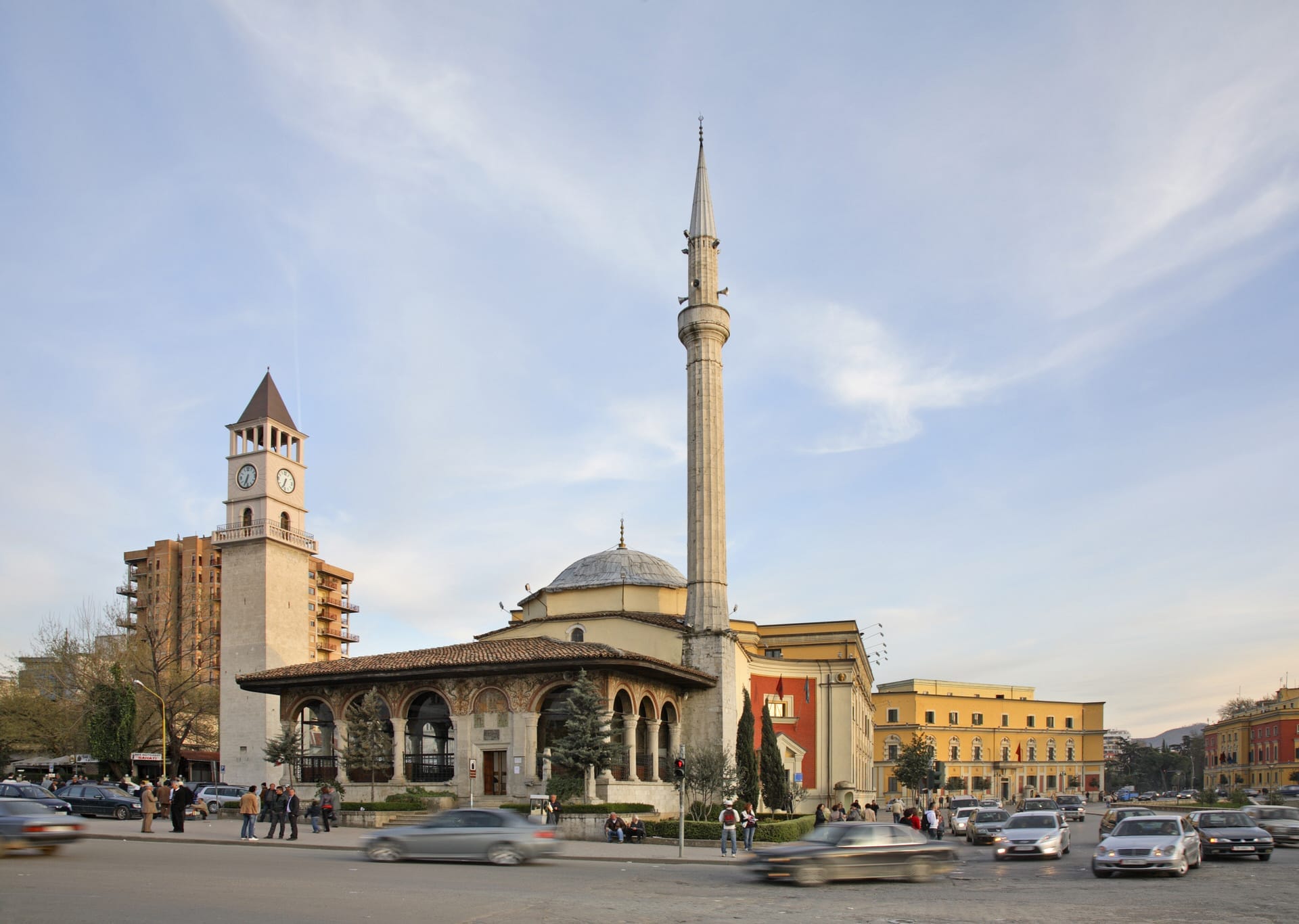
Et’hem Bey mosque and clock tower in Tirana
Combining Visits
Et’hem Bey Mosque sits in the middle of Skanderbeg Square, making it easy to combine with:
- Clock Tower (adjacent, 1828): Climb for panoramic city views, small admission fee
- National History Museum (across square): Closed for renovation until 2028, but facade mosaic visible
- National Library (5 minutes walk): Brutalist architecture example
- Bunk’Art 2 (7 minutes walk): Secret police museum in former bunker
The mosque’s central location means it fits naturally into any Skanderbeg Square visit rather than requiring dedicated journey.
The Honest Assessment
Et’hem Bey Mosque succeeds as historical site and functioning religious space. The 1991 gathering here genuinely mattered for Albania’s transition from totalitarianism to democracy—this wasn’t symbolic protest that authorities ignored; it was moment when regime’s inability to enforce core policy became publicly visible, precipitating collapse.
The architecture and frescoes justify visit on aesthetic grounds alone. The landscape paintings represent rare survival of 18th-19th century Albanian Islamic art, and the mosque demonstrates Ottoman architectural traditions adapted for Balkan context rather than simply transplanted from Istanbul.
What the mosque doesn’t offer is extensive time investment or complex exhibits. This is small neighborhood mosque that happens to occupy historically significant location and preserve unusual artistic elements. You’ll spend 15-20 minutes inside, observe the frescoes, understand the architectural style, and leave with appreciation for what the building represents without needing hours of exploration.
The real value comes from understanding context—why this mosque survived when thousands were destroyed, what happened here in 1991, how the building functions today as active religious space rather than museum. Without that historical framework, it’s just a small Ottoman mosque with nice frescoes. With context, it’s site where Albania’s communist regime began its collapse because security forces refused to prevent 10,000 people from praying.
Skip Et’hem Bey Mosque if you’re not visiting Skanderbeg Square anyway (unlikely—it’s literally the center of Tirana), if religious architecture doesn’t interest you, if you’ve seen Ottoman mosques in Turkey or the Balkans and don’t need another example, or if you need attractions requiring substantial time commitment.
Visit if you’re exploring Skanderbeg Square (15 minutes from most city center hotels), if you want to understand Albania’s transition from communist atheism to religious freedom, if Ottoman architecture interests you, or if you appreciate religious sites that function as active places of worship rather than converted museums. The combination of architectural preservation, unusual frescoes, and genuine historical significance makes this more substantive than typical “see the pretty old building” tourist stops.
The mosque stands as evidence that buildings can outlive the regimes that tried to destroy them. What Molla Bey began in 1789 survived Ottoman decline, survived demolition campaigns, survived 24 years of forced closure, and now serves Tirana’s Muslim community while welcoming visitors who want to understand how Albania reclaimed religious freedom. That’s sufficient purpose for a 15-minute visit to a small mosque that refused to disappear.