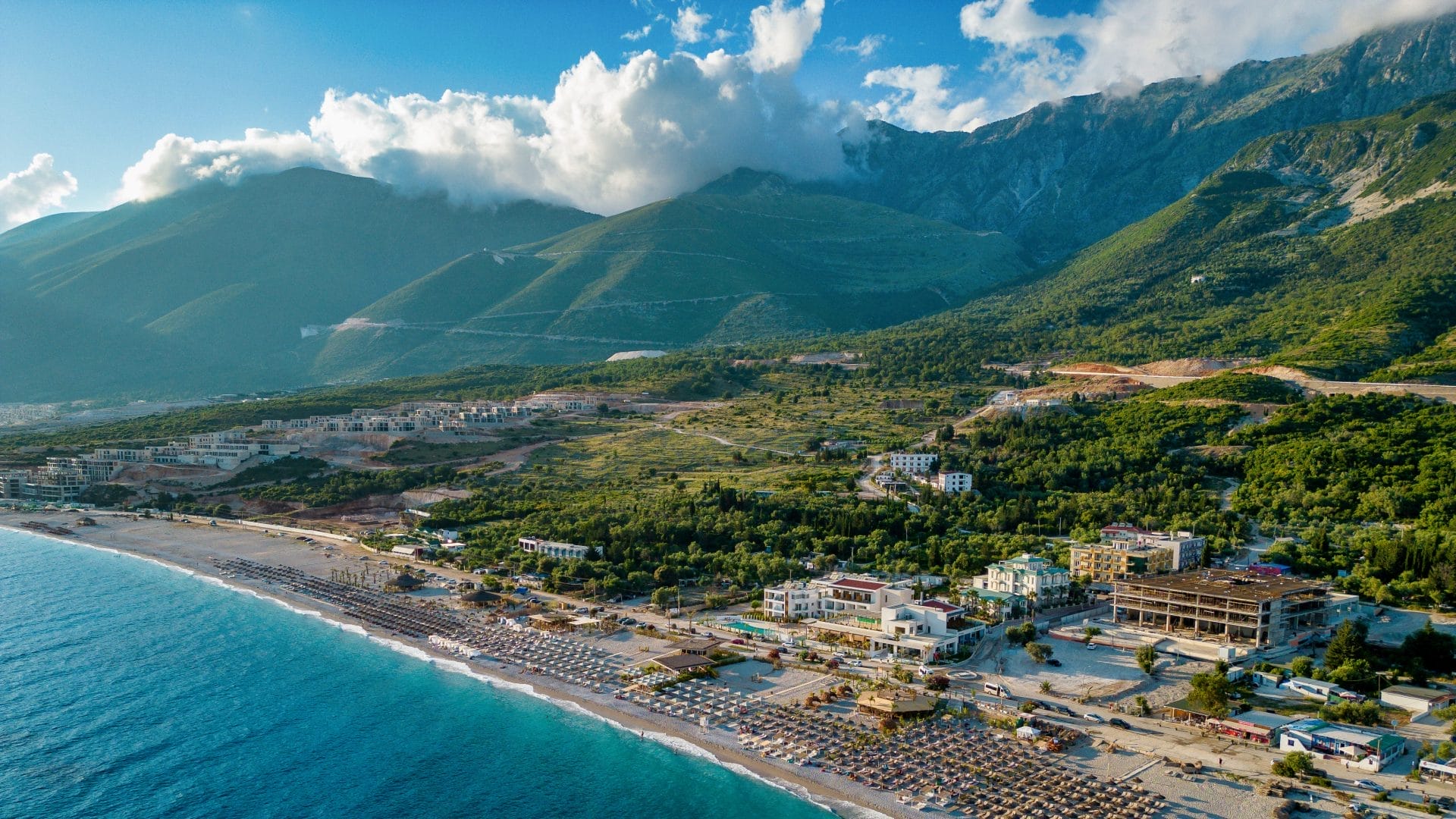
Albania’s Coastal Geography
Albania’s coastline stretches 427 kilometers along the Adriatic Sea (northern section, approximately 200 kilometers from Montenegro border to Vlorë) and the Ionian Sea (southern section, approximately 227 kilometers from Vlorë to Greek border). The coastline divides into distinct geographic and tourism zones based on beach type, development level, and accessibility.
Northern Adriatic Coast (Velipojë to Durrës to Vlorë, approximately 200 kilometers): Characterized by sandy beaches, gentle slopes into shallow water, coastal plains with agricultural land behind the shore, and proximity to Tirana (30-60 kilometers from capital to various beach towns). This section sees primarily domestic Albanian tourism plus visitors from Kosovo, North Macedonia, and regional travelers seeking affordable beach access. Major towns include Velipojë, Shëngjin, Lezhë coast, Durrës, Kavajë, and Golem.
Southern Ionian Coast (Vlorë to Sarandë, approximately 227 kilometers): Features rocky coastline with pebble beaches, limestone cliffs creating coves and bays, the Albanian Riviera section with SH8 coastal highway crossing Llogara Pass (1,027 meters), and clearer water compared to northern beaches due to rocky bottom and less river sediment. This section attracts more international tourism, particularly to Dhërmi, Himara, Jale, Gjipe, and Ksamil beaches near Sarandë. The terrain is more dramatic, access more challenging, and tourism development more recent (primarily post-2000s).
The coastline offers variety—families with children find sandy northern beaches easier for swimming, while younger travelers and those seeking scenic settings prefer southern rocky coves. Water temperature ranges 22-26°C in summer (July-August), with Ionian section typically 1-2°C warmer than Adriatic.
Northern Adriatic Beaches and Towns
Velipojë (Velipoja)
Sandy beach approximately 10 kilometers from Shkodër, extending several kilometers along coast where Buna River meets the Adriatic. The beach is wide (100+ meters at low tide), flat, with shallow water (chest-deep at 50+ meters from shore) suitable for children. The sand is gray-brown (river sediment origin) rather than white, and the area lacks dramatic scenery—flat delta landscape typical of river mouths.
Tourism infrastructure is basic—small hotels and restaurants along main access road, no major resort development. The beach appeals to domestic tourists from Shkodër and Tirana seeking affordable summer escape. Nearby Buna River Delta offers birdwatching but requires boat access and local guides. Velipojë functions as functional beach rather than scenic destination.
Shëngjin and Lezhë Coast
Small port town with sandy beach, approximately 70 kilometers north of Tirana. The beach is less crowded than Durrës but also less developed—fewer hotels, basic beach facilities, limited dining options. The town serves both fishing and tourism functions, creating working port atmosphere rather than resort ambiance. Lezhë city (5 kilometers inland) offers historical sites including Skanderbeg Memorial, making Shëngjin potential base for combining beach and cultural tourism.
Durrës
Albania’s second-largest city (population approximately 120,000) and major port, located 33 kilometers west of Tirana. Durrës combines beach resort function with urban port city character—the beach extends several kilometers along the bay, lined with hotels, restaurants, and beach clubs, while the port handles cargo and ferry traffic to Italy (Bari, Ancona routes).
The beach is sandy, wide, but the urban setting means less natural scenery and more development. The water quality has improved from poor ratings in 1990s-2000s through sewage treatment upgrades, though the beach near port areas remains less clean than southern coast. Durrës works as convenient beach access from Tirana (40 minutes drive) and offers Roman-era attractions including 2nd-century amphitheater (15,000 capacity), Roman baths, and archaeological museum.
The city functions as Albanian beach hub for locals rather than international tourist destination—infrastructure exists but is functional rather than luxurious, and the atmosphere is lively/crowded during summer weekends when Tirana residents visit en masse.
Golem and Kavajë
Resort area between Durrës and Kavajë (approximately 10-15 kilometers south of Durrës), developed during 2000s-2010s as hotel and resort zone. Golem offers long sandy beach similar to Durrës but less urban—hotels front the beach with promenade, restaurants, and beach services. The area attracts families and package tourists from regional markets.
Kavajë city (5 kilometers inland) is commercial center, while Golem functions purely as beach resort. The development is somewhat characterless—modern hotels but lacking distinct architectural style or cultural identity—though prices remain lower than comparable Mediterranean beach resorts.
Southern Ionian Coast: The Albanian Riviera
The Albanian Riviera designation refers loosely to the southern coastal section from Vlorë to Sarandë, particularly the approximately 130-kilometer stretch of SH8 highway crossing Llogara Pass and descending to coastal villages including Palasë, Dhërmi, Himara, Jale, and Borsh. This section offers rockier coastline, pebble beaches in coves, clearer turquoise water, and mountain-meets-sea scenery distinct from flat northern beaches.
Vlorë
City of approximately 130,000 at the junction where Adriatic Sea meets Ionian Sea—the geographic divide marked by Karaburun Peninsula forming western boundary of Vlorë Bay. Vlorë combines industrial port functions, naval base, and tourism—the waterfront promenade offers cafes, restaurants, and views, while beaches extend north (toward Llogara) and south (toward Orikum).
The city has historical significance as site where Albanian independence was declared (November 28, 1912) and contains Independence Monument and museums documenting this history. Vlorë functions as base for exploring Karaburun-Sazan Marine National Park (boat-access only) and as starting point for Albanian Riviera drives.
Beach areas around Vlorë are mixed—some sandy sections near city, rocky/pebble beaches toward Orikum. The city beach is functional but not particularly scenic, while beaches 10-20 kilometers south toward Llogara Pass entrance offer better water quality and scenery.
Llogara Pass and Palasë
SH8 highway climbs from Vlorë to Llogara Pass (1,027 meters elevation), crossing Ceraunian Mountains through Llogara National Park before descending dramatically to Palasë beach. The pass offers viewpoints overlooking the coast—on clear days, views extend to Karaburun Peninsula and across the sea toward Italy (70 kilometers west).
Palasë beach (at the base of descent from Llogara Pass) is the first major beach on the Riviera proper—pebble beach, clear water, mountain backdrop. The area developed quickly in 2000s-2010s with hotels, beach bars, and services, creating somewhat chaotic mix of development styles. Palasë works as entry point to Riviera but lacks the character of smaller villages further south.
Dhërmi (Dhërimi)
Village in hills above coast with beach area 1-2 kilometers below (accessible via steep access road). Dhërmi beach is pebble, approximately 3 kilometers long, with clearer water than northern beaches and mountain backdrop. The beach developed as backpacker/youth destination in 2000s, with beach bars, music, and party atmosphere during July-August high season.
The village itself retains some traditional architecture (stone houses), while the beach area is modern development—hotels, beach clubs, restaurants. Dhërmi appeals to younger travelers seeking social atmosphere and beach parties rather than quiet relaxation. Prices are higher than northern beaches but lower than Greek islands—hotel rooms €40-80 in summer, beach food €8-15 per meal.
Gjipe Beach
Isolated cove accessible via 30-minute hike from SH8 highway (parking area with turnoff sign) or by boat from Dhërmi/Jale. The beach is approximately 200 meters long, pebble, with high cliffs on both sides creating canyon-like setting. A small stream (Gjipe River) flows through the canyon to the beach, creating fresh water for rinsing.
Gjipe developed as “hidden beach” destination but now sees 200-300+ visitors daily in July-August, reducing the isolation factor. Camping is allowed near the beach (bring gear, no facilities), and basic restaurant operates during summer. The hike is moderate (some scrambling on rocky sections, steep descent to beach), requiring sturdy shoes. Gjipe works as day trip for hikers willing to carry water and sun protection—the hike creates barrier filtering out families with small children.
Jale and Himara
Jale is small pebble beach with beach bars and restaurants, developed as youth-oriented destination similar to Dhërmi. The beach is popular for beach parties, water sports (jet skis, parasailing), and social scene. Himara (Himarë) is larger town 5 kilometers south, with beach, old town in hills, and Albanian Greek minority population (historically Greek-speaking area).
Himara offers more infrastructure than smaller beaches—hotels, restaurants, shops, services—functioning as regional center for southern Riviera. The beach is pebble, extending several hundred meters, with beach services. The old town (Himara castle area) has traditional stone architecture and views, though it’s small and requires only 1-2 hours to explore.
Borsh
Village with Albania’s longest beach—approximately 7 kilometers of pebble beach between hills and sea. Borsh remains less developed than Dhërmi/Himara, retaining quieter character with family-run guesthouses and restaurants. Olive groves cover the hills behind the village—the area produces olive oil sold at local shops. Borsh Castle ruins (accessible via hike from village) date to Ottoman period.
The beach length means less crowding even in summer—visitors spread along the shore finding space away from main access points. Borsh works for travelers seeking less commercialized Riviera experience, though fewer facilities means less convenience.
Sarandë and Ksamil
Sarandë is southern Albania’s main resort town (population approximately 35,000, swelling to 100,000+ in summer), located 14 kilometers north of Greek border. The town curves around bay with waterfront promenade, hotels, restaurants, and bars. Sarandë functions as tourism hub providing access to nearby attractions including Butrint (UNESCO archaeological site, 18 kilometers south), Blue Eye Spring (25 kilometers east), and Ksamil beaches (15 kilometers south).
Sarandë beach is in town—pebble, developed with beach services but urban atmosphere. The town thrives on package tourism and ferry arrivals from Corfu, Greece (40 minutes, seasonal service). Infrastructure is adequate but not luxurious—three-star hotel standard predominates, dining is tourist-oriented with elevated prices (€10-20 per person), and English is widely spoken in tourism sector.
Ksamil (small village 15 kilometers south of Sarandë) offers several small beaches with clear turquoise water and views to four small islands offshore (accessible by swimming or short boat ride). Ksamil developed rapidly in 2010s, creating dense hotel construction with some buildings erected illegally too close to shoreline. The beaches are popular (crowded July-August), and the development reduces the natural setting appeal, though the water clarity and island scenery remain.
Practical Coastal Travel Information
Transportation: Renting a car provides maximum flexibility for coastal exploration—SH8 highway connects all major beach areas, though some sections have curves and mountain driving (Llogara Pass area requires cautious driving). Car rental from Tirana airport costs €25-50 per day depending on vehicle and season. Buses connect Tirana to Durrës (hourly, 300 LEK/€2.50, 1 hour), Vlorë (several daily, 700 LEK/€6, 2.5 hours), and Sarandë (daily, 1,500 LEK/~€12, 6-7 hours), but reaching specific Riviera beaches requires hitchhiking or taxis from highway.
Accommodation: Hotels and guesthouses range from budget (€20-30 per night) to mid-range (€50-100) with limited luxury options (€100-200+ in boutique properties). Booking ahead is essential for July-August—many properties fill with Kosovo and Albanian diaspora visitors returning for summer. Off-season (May-June, September), prices drop 30-50% and availability is abundant.
Beach Costs: Public beach access is free, but organized beaches (most developed areas) charge for loungers and umbrellas (500-1,500 LEK/€4-12 per day for two loungers plus umbrella). Parking at beaches ranges from free (undeveloped areas) to 300-500 LEK (€2.50-4) at popular spots. Restaurants at beaches charge tourist prices—meals €8-15 per person, drinks €2-5.
Water Quality: Southern Ionian beaches generally have clearer water than northern Adriatic beaches due to rocky bottom, less river runoff, and lower development density. Albania has improved sewage treatment along coast since 2000s, but some areas near towns still have water quality issues. Check Blue Flag beach designations (Albania has limited Blue Flag certified beaches, indicating lower environmental standards compared to Croatia/Greece).
Safety: Albanian coast is generally safe for tourists. Beach crime is minimal (watch belongings on busy beaches), and water conditions are usually calm (no significant currents or tides). Lifeguards are absent or minimal at most beaches—swim at your own risk. Roads, particularly SH8 through Llogara Pass, require cautious driving (curves, limited barriers, occasional landslides).
Albania’s Coast in Mediterranean Context
Albania’s coastline competes with established Mediterranean destinations including Greece (immediately south), Croatia (across Adriatic), Italy, and Montenegro. Albanian advantages include lower prices (30-50% cheaper than Greek islands or Croatian coast), less crowding (outside July-August at major beaches), and emerging destination appeal for travelers seeking undiscovered spots.
Disadvantages include developing tourism infrastructure (fewer luxury hotels, limited services, inconsistent standards), language barriers (less English outside major towns compared to Greece/Croatia), road conditions (SH8 is improved but still challenging in sections), and environmental management issues (construction near beaches, waste management during peak season, water quality in some areas).
Albania works best for budget-conscious travelers, adventurous visitors comfortable with basic facilities, and those who prioritize affordability over polish. The coast is not substitute for Greek islands’ tourism infrastructure or Croatian coastal towns’ preservation and services—it’s alternative accepting trade-offs.
The Honest Assessment
Albania’s coastline delivers affordable Mediterranean beach access with variety of beach types and coastal scenery, particularly along the southern Riviera section where mountains meet sea. For budget travelers, families seeking value, and visitors exploring Balkans who want beach diversion, Albanian coast provides legitimate option with clear water, adequate facilities, and developing tourism sector.
What the Albanian coast isn’t is pristine paradise or polished resort destination. Northern beaches are functional rather than scenic, southern Riviera beaches have seen rapid development creating construction chaos in places (Ksamil particularly), and infrastructure remains inconsistent—excellent small guesthouses exist alongside poorly maintained hotels, good restaurants alternate with tourist traps, and beach services range from professional to haphazard.
The coast works for travelers with realistic expectations—those seeking Greek island luxury will be disappointed, but those accepting Albania’s current development stage while appreciating 50% cost savings can find enjoyable beach holidays. The water is clean enough for swimming (southern beaches particularly), the beaches offer variety, and the coastal drives provide scenery, especially Llogara Pass and Riviera sections.
Skip If: You require luxury resorts and comprehensive services, if you expect Greek island polish or Croatian coastal town preservation, if you’re uncomfortable with developing destination infrastructure (construction, occasional unpaved roads, basic facilities), if you visit July-August and dislike crowds (major beaches see intense concentration), if you cannot drive and rely on public transport (bus service exists but limits flexibility), or if you prioritize Albania’s more distinctive attractions (Albanian Alps, UNESCO sites, mountain regions are more unique than beaches).
Visit If: You’re budget-conscious seeking affordable Mediterranean beach, if you explore Albania and want beach time without traveling to neighboring countries, if you visit shoulder season (May-June or September) when weather is pleasant and crowds reduced, if you rent car allowing beach-hopping along Riviera, if you combine coast with inland attractions (Vlorë to Gjirokastër, Sarandë to Butrint), if you’re curious about emerging destinations and accept development stage trade-offs, or if you specifically seek less-touristy Mediterranean coast.
Albania’s coastline serves travelers seeking value and variety while accepting developing-destination limitations. Consider it as budget alternative to established Mediterranean coasts rather than competing with premium beach destinations, and plan visits for shoulder season when lower crowds and prices maximize the experience.