The Reality Behind the Count
Albania officially designates 158 castles and fortifications as cultural heritage monuments. This number includes everything from substantial fortresses with intact walls and functional gates to archaeological sites where “castle” means scattered foundation stones on a hilltop requiring archaeological expertise to distinguish from natural rock formations.
Of these 158, approximately 40-50 have enough remaining structure that non-archaeologists can identify them as former fortifications rather than random stone piles. Of those 40-50, perhaps 20 maintain access infrastructure (roads, parking, signage) making them reachable without four-wheel drive and detailed GPS coordinates. And of those 20 accessible sites, only 6-8 actually merit tourist visits unless you’re specifically researching medieval Balkan fortification architecture or enjoy hiking to ruins primarily for the views rather than the archaeology.
This isn’t criticism of Albanian heritage preservation—it’s acknowledgment that maintaining 158 fortification sites spread across mountainous terrain requires resources that few countries could afford. The sites that receive investment are the ones historically and architecturally significant enough to justify expense, creating practical hierarchy of castles worth visiting.
The Six Castles Actually Worth Your Time
Berat Castle (Kalaja e Beratit)
Location: Berat, central Albania Access: 10-minute walk uphill from Mangalem quarter, paved path Entry: 300 LEK (~€3) Time Needed: 2-3 hours
Why Visit: Berat Castle is Europe’s only major medieval fortress still inhabited—approximately 300 people live within the walls in homes their families have occupied for generations. This isn’t heritage village recreation; it’s functioning neighborhood where residents dry laundry on lines between Byzantine church foundations and children kick footballs in courtyards where Illyrians once gathered 2,400 years ago.
The fortress contains multiple Byzantine churches (several with preserved frescoes), the Onufri Museum displaying 16th-century icons, and residential quarters showing continuous adaptation from Illyrian foundations through Byzantine, Ottoman, and modern Albanian periods. The inhabited nature means you’re walking through living architecture rather than museum exhibit.
Skip If: You have limited time in Albania (it’s wonderful but Gjirokastër offers similar experience with better museum). Visit If: You’re spending 2+ days in Berat, if you’re interested in how medieval fortifications adapted to modern residential use, or if you want fortress experience without the emptiness that characterizes most castle ruins.
Gjirokastër Castle (Kalaja e Gjirokastrës)
Location: Gjirokastër, southern Albania Access: 15-minute walk uphill from bazaar, partially paved Entry: 400 LEK (~€4) Time Needed: 2-3 hours
Why Visit: Gjirokastër Castle ranks among the Balkans’ largest fortresses, with extensive walls, towers, and interiors preserved enough to understand fortress layout and function. The site houses a military museum displaying captured equipment from various periods (Ottoman through World War II), though the museum’s appeal depends heavily on your interest in military hardware.
The castle served as prison during communist period, and several cells preserve conditions documenting that use—sobering documentation of how fortifications built for defense converted to tools of oppression. The views from the ramparts extend across the Drino Valley to distant mountains, creating some of Albania’s most extensive panoramas from any accessible elevated position.
Skip If: You’re not visiting Gjirokastër anyway (the castle alone doesn’t justify trip to southern Albania). Visit If: You’re spending time in Gjirokastër, if you’re interested in fortress architecture at scale, or if you want to understand how fortifications functioned as integrated defensive systems rather than isolated towers.
Krujë Castle (Kalaja e Krujës)
Location: Krujë, 35 kilometers north of Tirana Access: Bus from Tirana (150 LEK, 1 hour), then 15-minute walk uphill Entry: 500 LEK combined (~€5) for castle and Skanderbeg Museum Time Needed: 2-3 hours
Why Visit: Krujë Castle functioned as Skanderbeg’s base during Albanian resistance against Ottoman expansion (1443-1468), making it Albania’s most symbolically important fortress for national identity purposes. The castle complex houses the Skanderbeg Museum (mandatory visit), the Ethnographic Museum, and bazaar reconstructed in Ottoman style.
The castle itself is moderately interesting architecture, but the real value is understanding Skanderbeg’s role in Albanian national mythology. The museum presents Albanian nationalist interpretation of the resistance period, creating useful context for understanding how Albanians conceive their relationship to Ottoman period and why Skanderbeg appears on currency, statues, and street names nationwide.
Skip If: You’re uncomfortable with nationalist historical interpretation or if you’ve limited time and prefer natural sites. Visit If: You’re trying to understand Albanian identity formation, if you’re interested in 15th-century Balkan geopolitics, or if you want accessible castle visit from Tirana without driving to Berat or Gjirokastër.
Rozafa Castle (Kalaja e Rozafës)
Location: Shkodër, northern Albania Access: 3 kilometers from Shkodër center, taxi 500 LEK or walk 40 minutes uphill Entry: 200 LEK (~€2) Time Needed: 1-2 hours
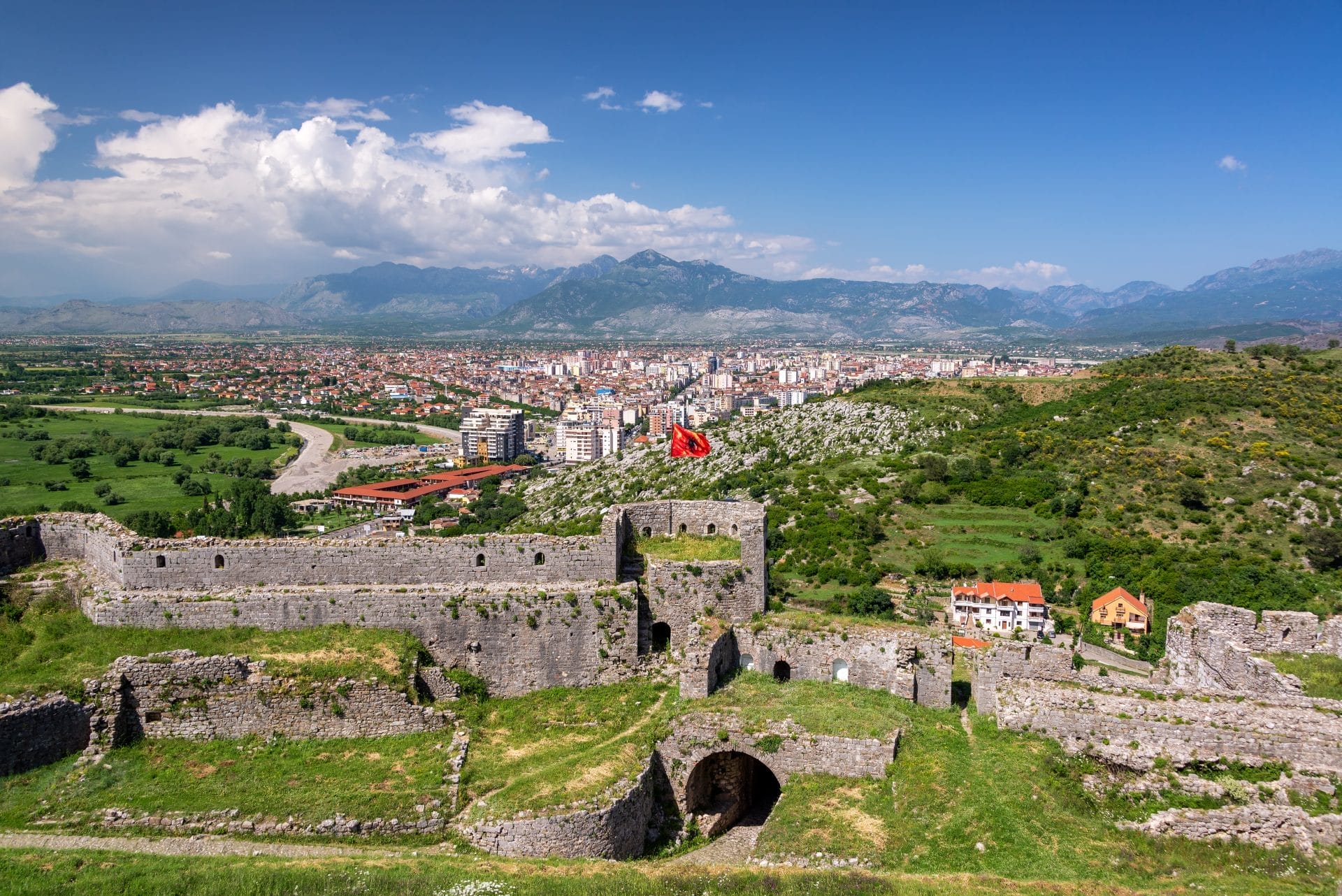
Why Visit: Rozafa occupies strategic hilltop at the confluence of Buna, Drin, and Kir rivers, providing views across Lake Shkodër toward Montenegro. The fortress walls remain substantially intact, creating sense of enclosed defensive space that many ruins lack. Archaeological evidence indicates continuous occupation from Bronze Age through Ottoman period, with visible construction layers documenting different fortification technologies.
The site is less touristed than Berat or Gjirokastër castles, meaning you might explore walls and towers largely alone even during summer. The associated legend—builders sacrificing newlywed bride Rozafa within walls to ensure fortress strength—appears in numerous Balkan variations, documenting common foundation sacrifice mythology across the region.
Skip If: You’re not visiting Shkodër anyway or if you’ve already seen multiple Albanian castles (diminishing returns after 2-3 fortress visits). Visit If: You’re spending time in Shkodër, if you want castle experience with fewer crowds than major sites, or if you’re specifically interested in fortification architecture showing multiple historical construction periods.
Drisht Castle (Kalaja e Drishtit)
Location: 7 kilometers southeast of Shkodër Access: Rough road requiring 4x4 or 2-hour hike from nearest village Entry: Free (unmaintained site) Time Needed: 2-3 hours including access
Why Visit (Conditionally): Drisht represents the ruined castle category—substantial walls and towers remain, but no restoration, no signage, no infrastructure. The fortress sits on isolated hilltop with extensive views but requires commitment to reach. This is “castle as adventure destination” rather than “castle as tourist attraction.”
The site appeals to visitors who enjoy combining hiking with archaeology and don’t need interpretive infrastructure to appreciate medieval ruins. If you need maintained paths, explanatory panels, and guaranteed access, Drisht will frustrate you. If you appreciate ruins specifically because they’re unrestored and require effort to reach, Drisht delivers.
Skip If: You want maintained tourist site, if you lack hiking fitness for 2-hour approaches, or if you’re visiting Albania for limited time. Visit If: You’ve exhausted major castles and want something more adventurous, if you specifically enjoy unmaintained ruins, or if you’re spending extended time in Shkodër region seeking off-path experiences.
Porto Palermo Castle (Kalaja e Porto Palermos)
Location: Between Himarë and Sarandë on Albanian Riviera Access: Directly off SH8 coastal highway, 200 meters walk from parking Entry: Free Time Needed: 30-45 minutes
Why Visit: Porto Palermo is a 19th-century fortress (not medieval) built by Ali Pasha Tepelena on peninsula jutting into Porto Palermo Bay. The fortress is small, quickly explored, and appeals primarily for location and views rather than architectural significance. The triangular fortification design reflects late-Ottoman military architecture when traditional castles had become obsolete against artillery but prestige structures still mimicked fortress aesthetics.
This works well as brief stop while driving the Albanian Riviera—pull off highway, walk to fortress, spend 30 minutes exploring, continue journey. It doesn’t justify dedicated trip, but if you’re already driving past, the minimal time investment and coastal views make it worthwhile addition to beach-focused Riviera touring.
Skip If: You’re not driving the Riviera or if you need substantial historical sites to justify stops. Visit If: You’re doing the SH8 coastal drive and want brief break from beaches, if you’re interested in 19th-century fortification design, or if you want easily accessible fortress requiring minimal walking.
The Fortification Timeline
Albanian fortress construction spans roughly 2,500 years across five major periods:
Illyrian Period (4th century BCE - 1st century CE): Hill forts using massive stone blocks (some exceeding 2 meters length) fitted without mortar. Most Illyrian fortifications exist as foundations buried under later construction. Apollonia and Butrint preserve Illyrian-era walls incorporated into larger Greek and Roman sites.
Byzantine Period (4th-15th centuries CE): Systematic fortress construction using alternating courses of stone and brick. Byzantine military engineering focused on defending strategic locations along Via Egnatia and controlling valleys leading into interior mountains. Most substantial Albanian castles incorporate Byzantine construction as foundation layer.
Venetian Period (14th-18th centuries): Coastal fortifications protecting Venetian maritime trade routes. Venetian fortresses (Durrës, portions of Shkodër) show Renaissance military engineering—lower walls, angular bastions, gun emplacements rather than height-based defense.
Ottoman Period (15th-19th centuries): Adaptation of existing fortresses for Ottoman military needs plus new construction where strategic requirements changed. Ottoman additions typically involve strengthening existing walls, adding artillery positions, and creating garrison quarters within captured Byzantine or Venetian fortifications.
Modern Period (20th century): Communist-era bunkers represent Albania’s most recent fortification phase, though these aren’t typically classified with medieval castles despite similar defensive purposes. Albania constructed approximately 750,000 bunkers between 1967 and 1986, creating world’s highest fortification-to-population ratio.
The Honest Assessment
Albanian castles deliver on historical architecture and strategic positioning—these are genuine medieval fortifications occupying locations chosen for military advantage, creating dramatic hilltop positions with extensive views. The best examples (Berat, Gjirokastër, Krujë) justify visits as primary destinations, not just incidental stops.
What Albanian castles don’t deliver is uniform accessibility or interpretation. Sites range from fully developed tourist attractions with museums and guides to unmarked ruins requiring GPS coordinates and scrambling over loose stones. This inconsistency means careful selection matters—visiting wrong castles will yield disappointing experiences (long drives to minimal ruins), while visiting right ones provides genuinely compelling medieval architecture.
The “158 castles” marketing number is technically accurate but practically misleading. Most visitors should focus on 3-4 major sites (Berat, Gjirokastër, Krujë, Rozafa) rather than attempting comprehensive castle touring. Each additional fortress beyond these shows diminishing returns unless you’re specifically interested in fortification architecture variations rather than using castles as proxies for experiencing Albanian history and landscape.
Skip Albanian castle touring entirely if you have limited Albania time (the beaches, mountains, and archaeological sites offer more distinctive experiences), if you’ve extensively toured castles in Western Europe and these will feel incomplete by comparison, or if you need fully developed tourist infrastructure at every site.
Engage with Albanian castles if you’re spending 7+ days in Albania allowing time for 2-3 fortress visits, if you’re interested in how fortifications adapted across multiple empires and architectural periods, if you appreciate sites where tourism infrastructure remains developing rather than polished, or if you want to understand Albanian geography through military lens (fortresses occupy strategic positions explaining settlement patterns and historical trade routes).
The castles are worth visiting selectively rather than comprehensively—choose 2-3 based on which cities you’re visiting anyway, accept that they’re partial ruins rather than complete reconstructions, and appreciate them as documentation of how empires attempted to control Albanian territory through fortification architecture that ultimately couldn’t prevent the successive invasions that kept coming regardless.