The Choice You Can’t Avoid
Albania’s 427-kilometer coastline divides into two incompatible beach zones forcing visitors to choose between conflicting priorities: accessibility or scenery. The northern Adriatic coast (approximately 160 kilometers from Montenegro border to Vlorë) offers sandy beaches with shallow water sitting 30-90 minutes from Tirana via good highways. The southern Ionian Riviera (approximately 267 kilometers from Vlorë to Greek border) provides the photogenic pebble beaches and turquoise water appearing in Instagram posts, but requires 2-3 hours minimum from Tirana via mountain roads.
No Albanian beach delivers both easy access from the capital AND the dramatic mountain-meets-sea topography that makes the Riviera visually compelling. This geographical reality means your beach choice depends on whether you prioritize convenience (Adriatic) or aesthetics (Ionian), because you can’t get both simultaneously unless you’re willing to relocate accommodation between regions.
This isn’t subtle difference—the two coasts feel like different countries. The Adriatic coast resembles Italian or Croatian beaches: flat hinterlands, long sandy shores, developed infrastructure, domestic tourism dominating international visitors. The Ionian Riviera evokes Greek islands: mountainous terrain, pebble coves, dramatic cliffs, international tourism exceeding domestic visitors. Choosing incorrectly based on assumptions rather than priorities will yield disappointing beach experience.
The Adriatic Coast: Access Over Aesthetics
The northern Adriatic coastline from Montenegro south to Vlorë consists primarily of sand beaches backed by flat or gently rolling terrain. The beaches are long (Velipoja stretches 5+ kilometers, Durrës beach runs 10+ kilometers), wide, and gradually shelving into shallow water—you can wade 50+ meters offshore in many locations and still stand comfortably.
Durrës Beach
Distance from Tirana: 39 kilometers (30-40 minutes drive) Beach Type: Sand, 10+ kilometers long Crowds: Extremely high June-August, manageable May and September
Durrës functions as Tirana’s default beach—where residents go for quick seaside access without multi-hour drives. This proximity makes Durrës Albania’s most visited beach, accommodating tens of thousands daily during July-August peaks. The beach fills completely on weekends, with umbrellas packed so densely that walking between them becomes challenging.
The beach itself is unremarkable sand backed by concrete hotel development from the 1960s-1980s (some renovated, many not). The water is clean enough for swimming but visibility is limited—suspended sand creates murky conditions rather than the clarity the Ionian offers. The beachfront promenade provides restaurants, cafes, and infrastructure absent from more remote locations.
Skip Durrës If: You’re seeking scenic beaches, if you want to avoid crowds, if you’re uncomfortable with Soviet-era architecture, or if water clarity matters. Visit If: You need beaches within 30-40 minutes of Tirana, if you’re traveling with young children who need shallow water, if you prioritize developed infrastructure over natural beauty, or if you want to experience Albanian domestic beach culture rather than international tourism.
Velipoja Beach
Distance from Shkodër: 22 kilometers (25-30 minutes drive) Beach Type: Sand, 5+ kilometers long Crowds: Moderate, primarily domestic tourists
Velipoja sits near the Buna River delta where Albania meets Montenegro, creating beach backed by wetlands rather than development. The beach itself is long, wide sand with shallow water and minimal infrastructure beyond seasonal beach bars. Bird watchers use Velipoja as base for accessing delta wetlands (home to rare Dalmatian pelicans and other species).
The beach attracts Albanian families rather than international tourists, creating atmosphere dominated by domestic visitors during July-August but relatively empty outside peak season. Accommodation consists primarily of small guesthouses and apartments rather than large hotels.
Skip Velipoja If: You need developed infrastructure, if you want scenic mountain backdrops, or if you’re seeking international tourism atmosphere. Visit If: You’re interested in the Buna delta ecosystem, if you want beaches away from international crowds, if you’re already visiting Shkodër and want easy beach access, or if you prefer under-developed coastline to polished resorts.
Divjaka Beach
Distance from Lushnjë: 40 kilometers (45 minutes drive) Beach Type: Sand, 4+ kilometers within pine forest Crowds: Low to moderate
Divjaka sits within Divjaka-Karavasta National Park, where pine forest extends to within meters of the beach creating shaded areas uncommon on Albanian beaches. The sand is darker than typical Adriatic beaches (result of river sediments), and the shallow water extends far offshore. The beach is less developed than Durrës or Velipoja, with limited infrastructure and seasonal opening only.
The adjacent Karavasta Lagoon is Albania’s largest lagoon and protected area for Dalmatian pelicans. Combining beach time with lagoon boat tours makes Divjaka more interesting than pure beach destination.
Skip Divjaka If: You need extensive beach services, if you want clear turquoise water, or if you’re not interested in the lagoon ecosystem. Visit If: You appreciate beaches within natural settings rather than resort developments, if you’re interested in combining beach and nature activities, or if you want genuinely quiet beaches even during July-August.
The Ionian Riviera: Scenery With Complications
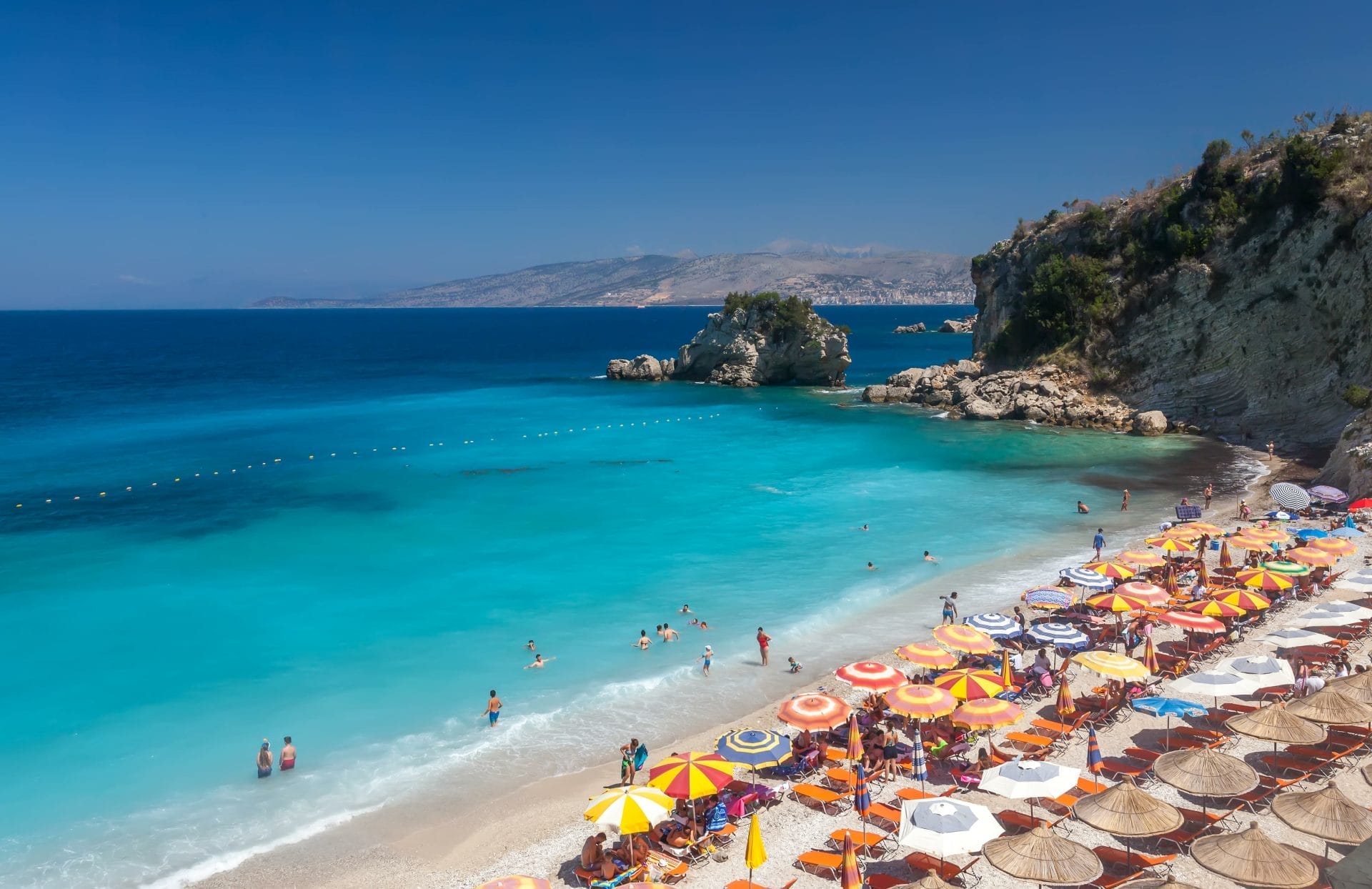
The southern Ionian coastline from Vlorë to the Greek border occupies narrow zone between Ceraunian Mountains and sea, creating dramatic topography where cliffs drop directly into water and beaches occupy small coves or coastal flats. The beaches are predominantly white pebble (ranging from marble-sized to fist-sized stones), and the water clarity exceeds the Adriatic significantly—you can see bottom at 5-10 meters depth.
I already covered this coast extensively in the Albanian Riviera Beaches article, so I’ll focus on comparison with Adriatic rather than repeating details.
Key Ionian Beaches
Dhërmi (3km long, most developed, extremely crowded July-August), Gjipe (200m long, 30-minute hike required, minimal crowds), Jale (600m long, party beach atmosphere), Ksamil (sand beach, offshore islands, parking nightmare August), Borsh (7km long, mostly empty despite length).
The Ionian Trade-Offs
The Ionian Riviera’s advantages—dramatic scenery, clear water, photogenic landscapes—come with logistical complications the Adriatic doesn’t impose:
Distance: Minimum 2 hours from Tirana to first Riviera beaches (Dhërmi), 2.5-3 hours to southern beaches (Ksamil). The Adriatic beaches sit 30-90 minutes away.
Road Quality: The SH8 coastal highway is paved and maintained but it’s a mountain road with switchbacks, limited passing zones, and sections where one lane hugs cliff drops. The Adriatic coast roads are flat highways.
Pebbles vs Sand: White pebbles create water clarity but make beach walking painful without water shoes. Kids struggle on pebbles. Sand beaches are more comfortable for most visitors.
Crowds: The Ionian attracts international tourism creating different crowd dynamics than Adriatic’s domestic visitors. Expect more English speakers, higher prices, and different beach culture.
Infrastructure Strain: The rapid Ionian development (2010-2020) means infrastructure struggles during peaks—water shortages, waste issues, parking gridlock don’t affect Adriatic beaches built and maintained for decades.
The Honest Comparison
If you prioritize convenience and family-friendliness: Adriatic beaches deliver. They’re near Tirana, the sand and shallow water work well for children, infrastructure is established, and prices are lower than the Riviera. You’re sacrificing scenery and water clarity, but you’re gaining accessibility and practical functionality.
If you prioritize scenery and Instagram content: Ionian beaches deliver. The mountain-meets-sea topography, turquoise water, and white pebble beaches create the Albania beach imagery people expect based on online research. You’re sacrificing convenience, accepting longer drives, dealing with crowds and infrastructure gaps, and paying higher prices.
If you want both: You need 5+ days for Albania beach touring, allowing time to experience both coasts rather than choosing one. This is the ideal approach for visitors with adequate time, though it requires relocating accommodation and accepting that you’re essentially visiting two different beach destinations that happen to be in the same country.
If you want empty beaches in high season: Neither coast delivers during July-August. The Adriatic fills with domestic tourists, the Ionian with international visitors. You need to visit May-June or September-October for manageable crowds on either coast. The only exception is Gjipe (Ionian), where the 30-minute hike deters crowds even in August.
Category-Specific Recommendations
Best for Young Children: Adriatic beaches (Velipoja, Divjaka)—sand surface, shallow water extending far offshore, family-oriented atmosphere.
Best for Couples/Romance: Ionian beaches (Gjipe, southern Dhërmi)—scenic settings, clear water, fewer families.
Best for Solo Travelers: Ionian Riviera villages (Himarë, Dhërmi)—active social scene, easy to meet other travelers, English widely spoken.
Best for Budget: Adriatic coast—cheaper accommodation, lower food prices, free beach access without pressure to rent expensive loungers.
Best for Avoiding Crowds: Either coast in May-June or September-October. In July-August: Gjipe (Ionian) due to hike requirement, or Divjaka (Adriatic) due to underdevelopment.
Best for Combining Beach with History: Ionian coast—proximity to Butrint, Gjirokastër, ancient Phoenice, Himara’s Greek minority culture.
Best for Combining Beach with Nature: Adriatic coast—Divjaka-Karavasta National Park, Buna River delta, wetland ecosystems.
Best for Water Sports: Ionian coast—better water clarity for snorkeling, steeper drop-offs for diving, wind conditions for kitesurfing at specific locations.
Best for Photography: Ionian coast—dramatic topography, turquoise water, white pebbles create more visually interesting compositions than flat Adriatic sandy beaches.
The Decision Framework
Choose Adriatic If:
- You have limited time (2-3 days beach visit)
- You’re based in Tirana and want day trips
- You’re traveling with young children
- You prioritize comfort and convenience over scenery
- You want lower prices and Albanian rather than international tourism atmosphere
- You need guaranteed shallow water and sand beaches
Choose Ionian If:
- You have 4+ days for beach-focused travel
- You’re comfortable with 2-3 hour drives and mountain roads
- You prioritize dramatic scenery and clear water
- You’re willing to pay premium prices for photogenic locations
- You want to combine beaches with southern Albania’s historical sites
- You accept infrastructure gaps as trade-off for natural beauty
Visit Both If:
- You have 7+ days in Albania
- You want comprehensive beach experience
- You’re interested in comparing different Albanian coastal zones
- You’re comfortable relocating accommodation mid-trip
The “best” Albanian beaches depend entirely on what “best” means for your specific priorities. The Ionian Riviera beaches appear in travel marketing because they photograph well, but the Adriatic beaches function better as practical beach destinations for families and visitors prioritizing access over aesthetics. Neither coast is objectively superior—they serve different purposes and appeal to different visitor types.