What Berat Offers Visitors
Berat is a city of approximately 60,000 in central Albania, located 120 kilometers south of Tirana along the Osum River. The city received UNESCO World Heritage designation in 2008 for its Ottoman-era quarters (Mangalem and Gorica) and the inhabited hilltop fortress dominating the city center. Berat functions as Albania’s most accessible heritage tourism destination—easier to reach than mountain villages, more concentrated attractions than archaeological sites requiring multi-site visits, and sufficient infrastructure to accommodate tourists without the beach resort commercialization of coastal areas.
The city’s primary appeal combines architectural heritage (fortress, Ottoman houses, Byzantine churches) with natural setting (Osum River gorge, views toward Tomorr Mountain) and regional access (Osumi Canyon 40 kilometers southeast, Apollonia archaeological site 60 kilometers west). Visitors typically spend 1-3 days in Berat—one day minimum for castle and old quarters, additional days for museums, nearby natural attractions, or simply experiencing the city’s slower pace compared to Tirana or coastal resort towns.
Berat works as either standalone destination or stopping point between Tirana and southern Albania. The city has adequate accommodation (hotels, guesthouses, hostels ranging €20-80 per night), restaurants serving Albanian cuisine and tourist-oriented options, and transport connections via bus to Tirana (700 LEK/€6, 2-2.5 hours), Gjirokastër (600 LEK/€5, 2 hours), and other cities. English is spoken in tourism sector but less widely than in Tirana or coastal areas.
Berat Castle: The Inhabited Fortress
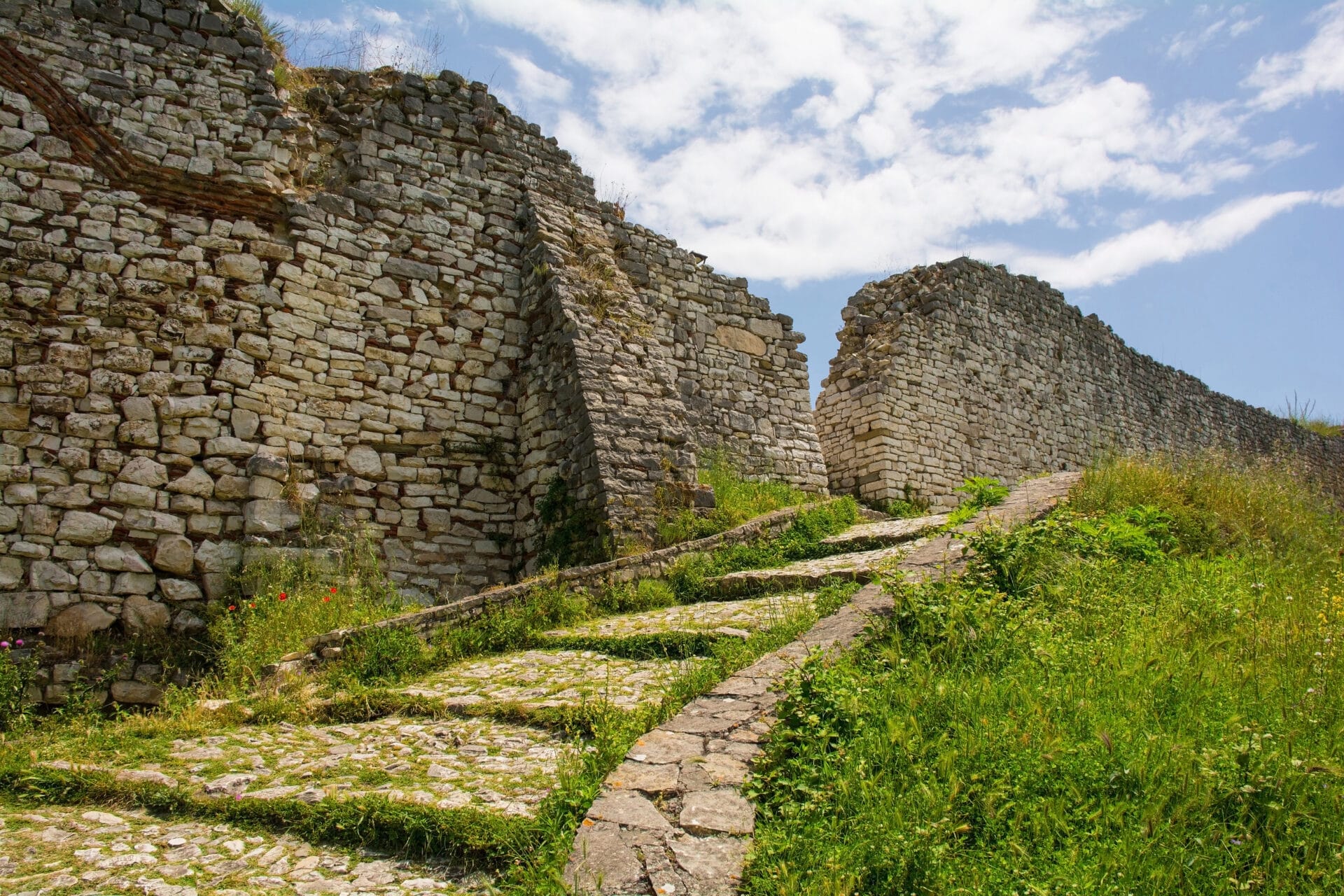
Berat Castle occupies hilltop approximately 200 meters above the modern city, accessed via paved walking path climbing through Mangalem quarter (15-20 minutes steady uphill walk from city center). The fortress site shows continuous occupation spanning 2,400 years—Illyrian foundations (4th century BCE), Roman and Byzantine expansions (4th-14th centuries CE), and Ottoman modifications (15th-19th centuries)—creating layered construction where different historical periods remain visible in wall sections, building foundations, and architectural styles.
The castle’s unique characteristic is that it remains inhabited—approximately 300 people live within the fortress walls in homes their families have occupied for generations, some dating to Ottoman period. This isn’t heritage village reconstruction or museum exhibit; it’s functioning neighborhood where residents maintain gardens, operate cafes and shops serving tourists, and continue daily life within medieval fortification. You walk past laundry drying on lines between Byzantine church ruins, children playing in courtyards where Illyrians once gathered, and residents renovating homes incorporating masonry from multiple historical periods.
Fortress Layout and Features
The castle walls enclose approximately 30 hectares forming irregular shape following hilltop topography. Multiple gates provide access (the main entrance from Mangalem quarter, plus smaller gates now mostly closed), with defensive towers spacing the perimeter at strategic intervals. The walls rise 5-8 meters in preserved sections, though some areas have collapsed or been rebuilt using modern masonry.
Within the walls, narrow lanes connect residential areas, church sites, cisterns providing water storage, and open areas offering views across Berat and the Osum River valley. The layout feels organic rather than planned—paths evolved over centuries following terrain and connecting functional areas without geometric street grids typical of purpose-built settlements.
Churches and the Onufri Museum
Berat Castle contains approximately 20 churches (varying states of preservation from intact structures to foundation ruins), most dating to Byzantine period (13th-14th centuries). Several preserve interior frescoes documenting Byzantine artistic traditions, though many were damaged or destroyed during Ottoman period when churches were either converted to mosques, abandoned, or used for secular purposes.
The Onufri Museum occupies the Church of the Dormition of Saint Mary, displaying collection of Orthodox Christian icons primarily from 16th-18th centuries. Onufri (Onufrios, active mid-16th century) was Albanian painter whose icon work became renowned for distinctive red pigment (often called “Onufri red”) and technical skill matching contemporary Byzantine masters. The museum holds over 100 icons by Onufri and his contemporaries plus liturgical objects, explaining Orthodox iconographic traditions and Onufri’s artistic innovations.
Museum Details: Entry 200 LEK (~€2), open 9 AM-5 PM daily (reduced winter hours), signage in Albanian and English. The museum is small (2-3 rooms), requiring 30-45 minutes. Photography typically prohibited inside but rules vary—ask staff. The icons are significant examples of post-Byzantine Albanian artistic tradition, though casual visitors may find the collection specialized unless they have interest in Orthodox iconography.
Visiting Practicalities
Access: 15-20 minute walk uphill from Mangalem quarter via paved path. The path is steep but paved (suitable for most fitness levels), though elderly visitors or those with mobility limitations may struggle. No vehicle access to castle interior (residents have special permits). Taxis cannot drive to castle—you must walk from city.
Entry Fee: 300 LEK (~€3) collected at main gate. The fee applies to castle grounds; museums within castle charge separate admission.
Hours: The castle itself has no gate closing times—residents need 24-hour access, so technically you can visit anytime. Practically, visit during daylight (museums and churches close 4-5 PM, cafes operate 9 AM-7 PM, walking after dark is inadvisable). Most visitors explore castle 9 AM-6 PM.
Time Needed: 2-3 hours minimum for walking castle perimeter, visiting Onufri Museum, seeing main churches, having coffee at castle cafe. Full day possible for thorough exploration including all churches, extensive photography, leisurely lunch, multiple viewpoint visits.
Facilities: Several small cafes and restaurants within castle serving drinks, coffee, basic meals. Restrooms available at cafes (customer use). No major shops beyond souvenir stalls. Bring water if visiting mid-day summer (limited shade, sun exposure).
Ottoman Quarters: Mangalem and Gorica
Berat’s UNESCO designation primarily recognizes Mangalem quarter (south of Osum River, below castle) and Gorica quarter (north bank, connected via Gorica Bridge), both preserving 18th-19th century Ottoman residential architecture. The quarters contain approximately 600 protected buildings characterized by white-washed stone walls, large windows on upper floors, and tiled roofs—creating the “town of a thousand windows” nickname referencing window-dominated facades of traditional houses stacked on hillsides.
Mangalem Quarter
Mangalem occupies steep slopes between Osum River and castle walls, with houses built on terraces creating vertical neighborhood where upper floors of lower houses align with ground floors of houses above them. The architecture reflects Ottoman-period wealthy merchant and artisan housing—ground floors were stone-built for shops or storage, upper floors wooden-framed with plaster overhanging the street (creating covered walkways), large windows providing light for indoor craftwork (weaving, metalworking, carpet-making).
Many houses remain private residences, some converted to guesthouses and hotels offering tourist accommodation in traditional architecture. Walking Mangalem means navigating steep lanes, stairs, and narrow passages—the quarter rewards wandering without specific destination, discovering viewpoints, architectural details, and residential areas tourists often miss by only visiting main paths to castle.
The quarter contains several mosques including King’s Mosque (15th century, active), Red Mosque (distinctive red-painted minaret, 15th century), and Helveti Tekke (Bektashi dervish lodge, 18th century with earlier foundations). These function as working religious sites rather than museums—visitors can enter outside prayer times but should respect religious function (remove shoes, dress modestly, no photography during services).
Gorica Quarter
Gorica sits on opposite river bank connected via Gorica Bridge (Ottoman-era stone arch bridge rebuilt multiple times, current structure dates to 1920s replacing earlier bridge destroyed by flooding). Gorica is quieter than Mangalem—fewer tourists, more residential character, houses generally simpler (merchant class rather than wealthy artisans).
Walking Gorica provides views back toward Mangalem and castle creating photographically compelling perspective—the classic Berat images showing white houses stacked up hillside beneath castle walls are typically shot from Gorica side. The quarter has fewer specific sites to visit (one small church, residential architecture), functioning more as observation point and alternative route for walking tours than as destination containing must-see monuments.
Exploring the Quarters
No formal entry system exists—these are living neighborhoods, not open-air museums. You walk freely through public lanes and squares, avoiding private property. The main thoroughfares (connecting bridges to castle path and central square) are well-maintained and obvious, but exploring side lanes reveals architectural details and residential life tourists rushing to castle miss.
Guided walking tours (offered by Berat hotels and tour operators, €15-25 per person, 2-3 hours) provide architectural history and access to private courtyards usually closed to individual tourists. Self-guided exploration works fine with basic map (available from hotels)—the quarters are compact enough that getting seriously lost is impossible, and dead-end lanes simply require retracing steps to main routes.
Museums Beyond the Castle
Ethnographic Museum
Located in Mangalem quarter in restored 18th-century traditional house, the museum displays regional domestic life, costumes, craftwork tools, and artifacts documenting Berat’s Ottoman-period and early 20th-century material culture. Rooms are arranged as they would have been during Ottoman period—ground floor with craftwork areas (metalworking tools, looms), upper floors with living quarters showing furniture, textiles, and household objects.
Entry: 200 LEK (~€2), open 9 AM-5 PM daily, closed Mondays in winter. Time: 30-45 minutes. The museum is well-maintained with Albanian and English labels explaining exhibited objects and traditional crafts. Photography usually allowed (check with staff).
The building itself demonstrates traditional Berat house architecture—more instructive than individual objects for understanding Ottoman-period domestic space organization. The museum appeals primarily to visitors interested in material culture and traditional crafts rather than casual tourists seeking major monuments.
National Museum of Medieval Art
Small museum near castle entrance displaying religious art, medieval manuscripts, and liturgical objects from Berat region churches. The collection complements Onufri Museum within castle, showing broader context of Albanian medieval artistic production beyond single painter.
Entry: 200 LEK (~€2), hours vary (often 9 AM-2 PM with afternoon closures). Time: 20-30 minutes. The museum is minor compared to Onufri collection—visit if you have extensive time in Berat or specific interest in medieval Albanian art, otherwise the Onufri Museum within castle provides better concentration of significant works.
Natural Attractions Near Berat
Osumi Canyon (Kanioni i Osumit)
Located 40 kilometers southeast of Berat near Çorovoda, Osumi Canyon is 26-kilometer gorge where Osum River cuts through limestone creating canyon with vertical walls reaching 70-100 meters height. The canyon offers canyoning (technical descent requiring wetsuits, ropes, guides—€40-70 per person with equipment), rafting and kayaking (spring high water), hiking along canyon rim and river level, and swimming in pools during summer low water.
Tour operators in Berat organize Osumi Canyon day trips (transport, guides, equipment, €40-60 per person) departing morning and returning evening. Independent access requires personal vehicle (rough roads final 5 kilometers to canyon access points). The canyon is Berat region’s primary active outdoor attraction, appealing to visitors seeking adventure activities beyond cultural heritage touring.
Mount Tomorr National Park
Tomorr massif rises southeast of Berat with highest peak Maja e Tomorit reaching 2,416 meters. The mountain is sacred site in Albanian Bektashi tradition—annual pilgrimage (mid-August) attracts thousands to Tomorr summit shrine. Hiking routes from villages around mountain base allow summer ascents (6-8 hours to summit from nearest trailhead, requiring mountain hiking experience), offering alternative to coastal and Albanian Alps mountain tourism.
Tomorr access requires vehicle to trailhead villages and advance research on routes (trails are unmarked, local guides recommended—arrange through Berat tour operators). The mountain is specialist destination rather than casual day trip—attempt summit only if you have mountain hiking experience, proper equipment, and adequate time. Views from lower slopes (accessible via day hikes) provide scenery without summit commitment.
Benja Thermal Springs and Përmet
Located 70 kilometers south of Berat, Benja hot springs offer natural thermal pools (30-32°C) along Langarica River canyon near Përmet town. Day trips from Berat are possible but require 3-4 hours total driving, making Benja more practical as destination when traveling between Berat and Gjirokastër rather than as return day trip from Berat base.
Practical Berat Information
Reaching Berat from Tirana: Bus departures from Tirana’s south bus terminal (near “21 Dhjetori” area) run several times daily, 700 LEK (~€6), 2-2.5 hours. Purchase tickets at terminal booth or from driver. Buses fill quickly summer weekends—arrive 30-60 minutes before departure. Alternatively, arrange private transfer (€40-50 for car, seats 4 passengers) or rent car for flexibility visiting surrounding areas.
Accommodation: Berat offers range from budget hostels (€10-15 per dorm bed) to Ottoman house conversions (€40-80 for guesthouse room) to modern hotels (€50-100). Mangalem quarter houses provide most atmospheric accommodation—sleeping in traditional architecture within UNESCO zone—though upper floors in renovated houses involve stairs (no elevator buildings exist in old quarters). Book summer (June-September) accommodation weeks ahead; winter (November-March) has abundant availability and lower prices.
Dining: Restaurants cluster around central square and Mangalem main street, serving Albanian cuisine (tavë kosi, grilled meat, byrek), Italian-influenced dishes (pasta, risotto), and tourist-oriented “traditional Albanian” meals. Expect €8-15 per person for dinner with drinks. Higher-end restaurants in Ottoman houses charge €15-25. Local grill restaurants (qofte, qebapa) on back streets offer cheaper meals (€5-8). Hotel restaurants serve reliable if unexciting food.
Services: Berat has ATMs (several banks in city center), pharmacies, small grocery stores, and basic shops. Tourism infrastructure exists but remains developing—don’t expect extensive English signage, comprehensive tourist offices, or Western European service standards. Mobile phone coverage is adequate in city, limited in surrounding mountains.
Transport Within Berat: Walking covers city center, Ottoman quarters, and castle. Taxis available for trips to bus station or sites outside walking distance (short rides 300-500 LEK). No public transport system exists—the city is small enough that taxis or walking handle all needs.
The Honest Assessment
Berat delivers on architectural heritage—the inhabited fortress is genuinely unique in European context, the Ottoman quarters preserve authentic residential architecture still functioning as neighborhoods rather than museum villages, and the concentration of Byzantine churches and museums creates cultural density manageable in 1-3 days. The UNESCO designation is warranted, reflecting genuine historical significance rather than marketing convenience.
What Berat doesn’t deliver is polish. The city’s heritage tourism remains developing—signage is limited, museums have basic interpretation, services are adequate but not comprehensive, and infrastructure assumes visitors comfortable with self-directed exploration rather than guided experiences. This developing character appeals to some travelers (seeking authentic places over tourist-optimized destinations) while frustrating others (expecting services matching UNESCO designation implies).
The surrounding natural attractions add dimension if you have time and interest—Osumi Canyon provides adventure activities, Tomorr offers mountain hiking, thermal springs give relaxation options. These require additional days and transportation, functioning as enhancements rather than primary reasons to visit Berat.
The city works exceptionally well as base for exploring central Albania—easier access than mountain villages, more concentrated culture than archaeological sites, sufficient infrastructure to support multi-day stays without feeling isolated or under-served. Berat functions less well as day trip from Tirana (possible but rushed) or as quick stop between destinations (requires minimum overnight to appreciate properly).
Skip Berat If: You have very limited Albania time and prioritize Albanian Alps or coastal areas (both offer more distinctive experiences), if you need extensively developed tourism infrastructure and comprehensive English services, if you’re uncomfortable with steep walks (castle and quarters involve significant uphill/stairs), if you’ve extensively toured Balkan Ottoman heritage sites (diminishing returns after multiple similar cities), or if you visit November-March when reduced hours limit museum access.
Visit Berat If: You’re spending 5+ days in Albania allowing 2-3 days in central region, if you’re interested in Ottoman architecture and Byzantine religious art, if you appreciate UNESCO sites still functioning as living cities rather than preserved heritage zones, if you want accessible Albanian heritage tourism without remote mountain travel, if you’re comfortable with developing infrastructure and self-directed exploration, or if you’re traveling between Tirana and southern Albania and want cultural stop between coastal or mountain destinations.
Berat succeeds as Albania’s most accessible heritage city—closer than Gjirokastër, more concentrated than Shkodër, more culturally focused than Durrës. Whether that translates to satisfying visit depends on your interest in architectural heritage, tolerance for developing tourism infrastructure, and willingness to spend 2-3 days experiencing a city whose primary appeal is wandering Ottoman quarters beneath an inhabited 2,400-year-old fortress rather than checking off major monuments on rapid itinerary.