The Building Is Half the Experience
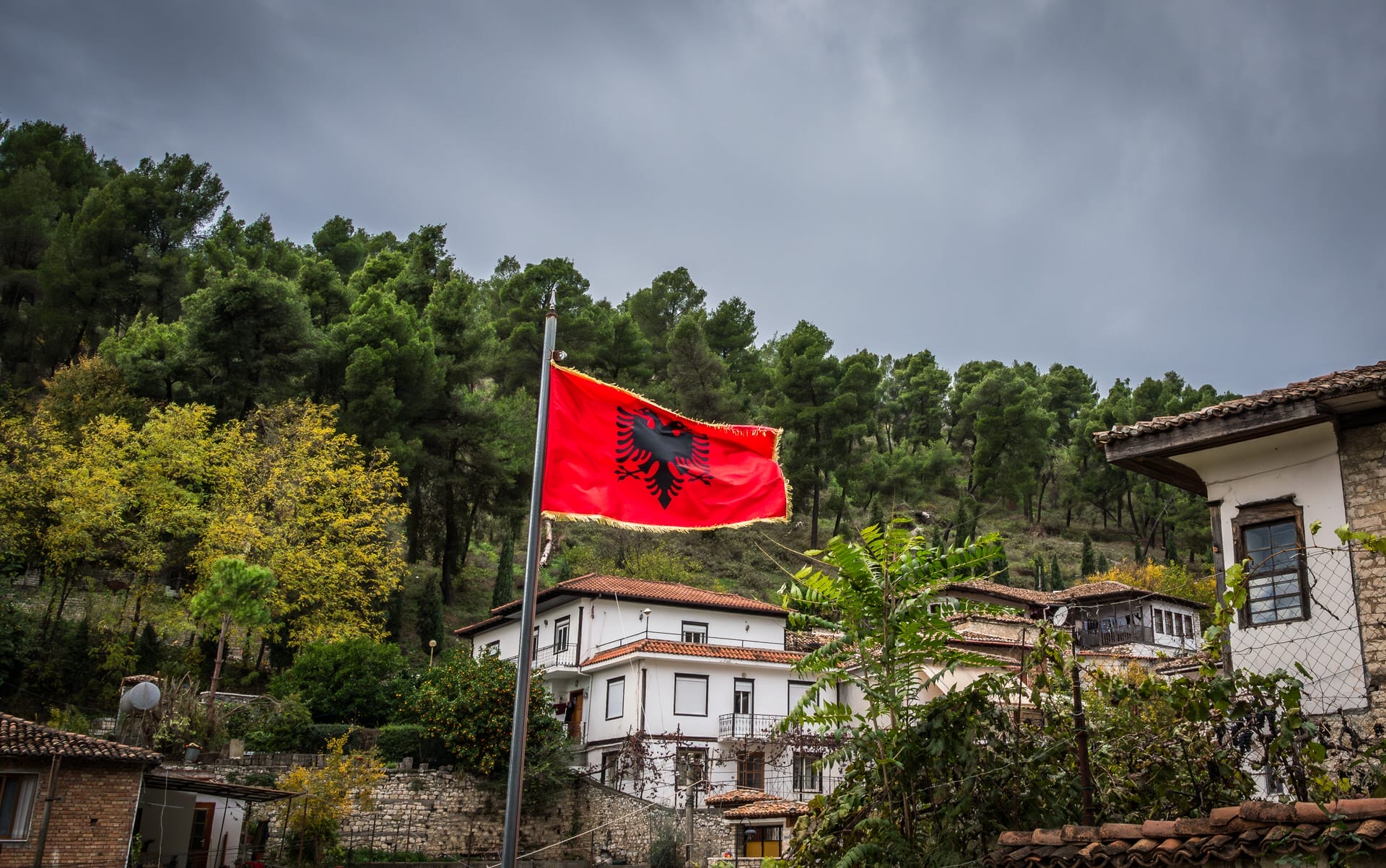
The Berat Ethnographic Museum occupies an 18th-century Ottoman konak (large residential mansion) in the Gorica neighborhood—the quarter across the Osum River from Berat’s castle and Mangalem districts. The building itself is the museum’s most significant artifact: two-story stone and timber construction with projecting upper floor (chardak), carved wooden ceilings, built-in wall niches (musandras), and architectural details typical of wealthy Ottoman-era Albanian families.
The konak belonged to a prosperous merchant family—evidenced by the building’s size (most Berat houses were smaller) and architectural refinement (carved details cost money). The museum conversion preserved original elements while adding display infrastructure—glass cases, labels, protective barriers—creating hybrid space where you’re simultaneously viewing 18th-century domestic architecture and 19th-20th century ethnographic collections.
This creates interpretation challenges. You’re looking at objects displayed in rooms that weren’t originally designed for display. The carved ceiling was meant to impress guests during social visits, not to provide museum context for farming implements. Understanding what you’re seeing requires distinguishing between original architectural features and later museum additions—a distinction the minimal labeling doesn’t always clarify.
What the 1,300 Objects Actually Document
The museum organizes its collection across multiple rooms covering different aspects of traditional Albanian life. The objects date primarily from the 19th-early 20th centuries, documenting rural and small-town Albanian culture during the late Ottoman period and early independence—before industrialization and communist-era collectivization transformed traditional practices.
Bazaar Recreation (Ground Floor): The museum recreated a medieval-style bazaar with shop displays showing traditional crafts: filigree silver jewelry (telitare technique using fine twisted wire), copper vessels (hammered and engraved), woodcarving (geometric patterns and floral motifs), and textile work. These displays demonstrate urban craft specializations that existed in Ottoman-era Berat when the city functioned as a regional commercial center.
The quality varies—some pieces show sophisticated technique (particularly the silver filigree), while others are simpler functional objects. The displays don’t always explain manufacturing processes or economic context (who commissioned these objects, how craft guilds operated, why certain motifs recurred). You’re seeing finished products without production stories.
Home Industries (Porch/Ground Floor): Equipment for household production appears throughout: pottery wheels and ceramic molds, raki distilling equipment (copper stills and wooden barrels), olive oil presses (stone mortars and wooden screw presses), metalworking tools, spinning wheels and looms. These objects document the self-sufficiency of traditional Albanian households—families produced their own alcohol, processed their own food, made their own textiles, rather than purchasing everything from markets.
The raki equipment is particularly detailed—copper stills of various sizes, fermentation vessels, storage containers. Raki production was (and remains) central to Albanian domestic culture, and the museum’s collection documents the technical process comprehensively. Less clear is the social context—when families made raki, who participated, what occasions warranted distilling, how production fit into seasonal rhythms.
Women’s Craft Room (Upper Floor): Traditional looms occupy significant space, with examples showing different weaving techniques—flat-weave kilims, pile carpets, narrow-loom bands for decorative trim. The textile collection includes embroidered clothing, woven blankets, and decorative household textiles (pillow covers, wall hangings) featuring geometric and floral patterns typical of southern Albanian textile traditions.
The room emphasizes women’s work—textiles, embroidery, household decoration—reflecting historical gender divisions in traditional Albanian society. What the displays don’t fully explain is how textile production functioned economically. Were these textiles for family use or commercial sale? How much time did production require? What social significance did particular patterns carry? The objects exist without sufficient context.
Guest Room (Upper Floor): The formal reception room displays Ottoman-style furnishings—low seating platforms (mindere) with embroidered cushions, wall niches (dolap) for storing valuables, brass coffee service sets, carved wooden cabinets. This room demonstrates how wealthy families presented themselves to guests—the furniture and decoration were status displays showing taste, prosperity, and cultural sophistication.
The room feels staged (because it is—this is museum interpretation, not how the room looked when the house was occupied), but it successfully conveys the aesthetic of Ottoman Albanian domestic spaces. The problem is distinguishing what’s original to the house versus what curators added from other sources—the labeling doesn’t always clarify provenance.
Folk Costumes and Musical Instruments: Regional Albanian costumes appear throughout—heavily embroidered women’s clothing with silver ornaments, men’s fustanellas (pleated skirts) and felt caps, children’s clothing with protective amulets. Musical instruments include lahuta (one-string fiddle), çifteli (two-string lute), and various drums. These objects document how clothing and music functioned as identity markers—different regions had distinct costume styles and musical traditions that indicated geographic origin and social status.
The costume displays are visually impressive (the embroidery work is genuinely elaborate), but the interpretation is minimal. You learn what regions produced which styles but not who wore these costumes (everyday use or ceremonial occasions?), how styles changed over time, or what the symbolic motifs meant. The objects are presented as static ethnographic specimens rather than dynamic cultural practices that evolved over time.
What the Museum Doesn’t Explain Well
The collection demonstrates traditional Albanian material culture—what objects people made and used. What it doesn’t explain effectively is how people lived. The objects exist without sufficient narrative about daily life, seasonal rhythms, economic systems, social relationships, or cultural beliefs. You see a pottery wheel but not the potter. You see embroidered clothing but not the occasions when people wore it. You see raki equipment but not the social gatherings where people drank.
This is partly a labeling problem—the museum has minimal English-language interpretation, and even Albanian labels tend toward object identification rather than contextual explanation. It’s also a museological approach issue—the museum presents ethnographic artifacts in cabinets rather than reconstructing lived contexts or providing multimedia interpretation that would make the objects less mysterious.
Guided tours help (available by arrangement for groups, cost varies), but individual visitors are largely dependent on their own knowledge about Albanian traditional culture to interpret what they’re seeing. If you arrive with background about Ottoman-era Balkan domestic life, the objects reinforce and illustrate what you already know. If you arrive without that background, you leave having seen interesting old objects without fully understanding their significance.
Access and Practical Considerations
The museum sits in Gorica neighborhood, directly across the Osum River from Berat’s main tourist areas (Mangalem quarter and castle). Access requires crossing the river via the Gorica Bridge—a 5-10 minute walk from Mangalem center. The museum is signposted, though not prominently—ask locals for “Muzeu Etnografik” if you can’t find it.
Hours are split: 9 AM-1 PM, then 4-7 PM Tuesday-Sunday, closed Mondays. This Ottoman-era schedule (with afternoon break) means planning arrival times carefully—show up at 2 PM and you’ll wait two hours. Entry costs 200 LEK (~€2) for adults, 100 LEK for youth, free for children under 12. Payment is cash only.
Photography is generally permitted (confirm with staff). The building has stairs between floors—no elevator, so mobility-impaired visitors are limited to ground-floor access. The museum has no cafe or facilities beyond basic restrooms. Most visitors spend 60-90 minutes, though serious ethnography enthusiasts could spend longer examining specific object collections.
The neighborhood location in Gorica means fewer crowds than Berat’s main attractions—you’ll often have rooms largely to yourself, creating quieter museum experience but also meaning less infrastructure and fewer multilingual services.
The Honest Assessment
The Berat Ethnographic Museum preserves an important collection documenting traditional Albanian material culture in an authentic Ottoman-era architectural setting. The combination of building and objects creates atmospheric experience—you’re viewing traditional artifacts in traditional space, which works better than seeing these objects in modern museum buildings divorced from original context.
What the museum isn’t is accessible to visitors without prior knowledge. The minimal interpretation means you’re largely responsible for decoding what you see. The objects are genuine and often high-quality examples of traditional crafts, but their significance isn’t always explained. This is classic small-town ethnographic museum—valuable collection, authentic setting, limited resources for interpretation and visitor services.
Skip If: You’re not specifically interested in traditional crafts and domestic culture, if you need extensive English-language interpretation to engage with museums, if you expect multimedia presentations and interactive displays, if you have limited time in Berat and prefer to focus on the castle and Onufri Museum, or if you find ethnographic museums boring without strong contextual narratives.
Visit If: You’re interested in Ottoman-era Balkan domestic life and material culture, if you appreciate traditional crafts (particularly textiles and metalwork), if you want to see an authentic 18th-century konak interior, if you’re spending 2+ days in Berat and have time for secondary attractions, or if you’re researching Albanian ethnographic collections and want to see objects that don’t appear in larger national museums.
Combine the Ethnographic Museum with a walk through Gorica neighborhood—the area preserves Ottoman-era street patterns and traditional architecture, creating context for understanding how the museum’s building fit into larger urban fabric. The museum makes more sense when you’ve seen multiple examples of traditional Berat houses rather than viewing it as isolated artifact.