What Bënja Actually Offers (Expectations vs. Reality)
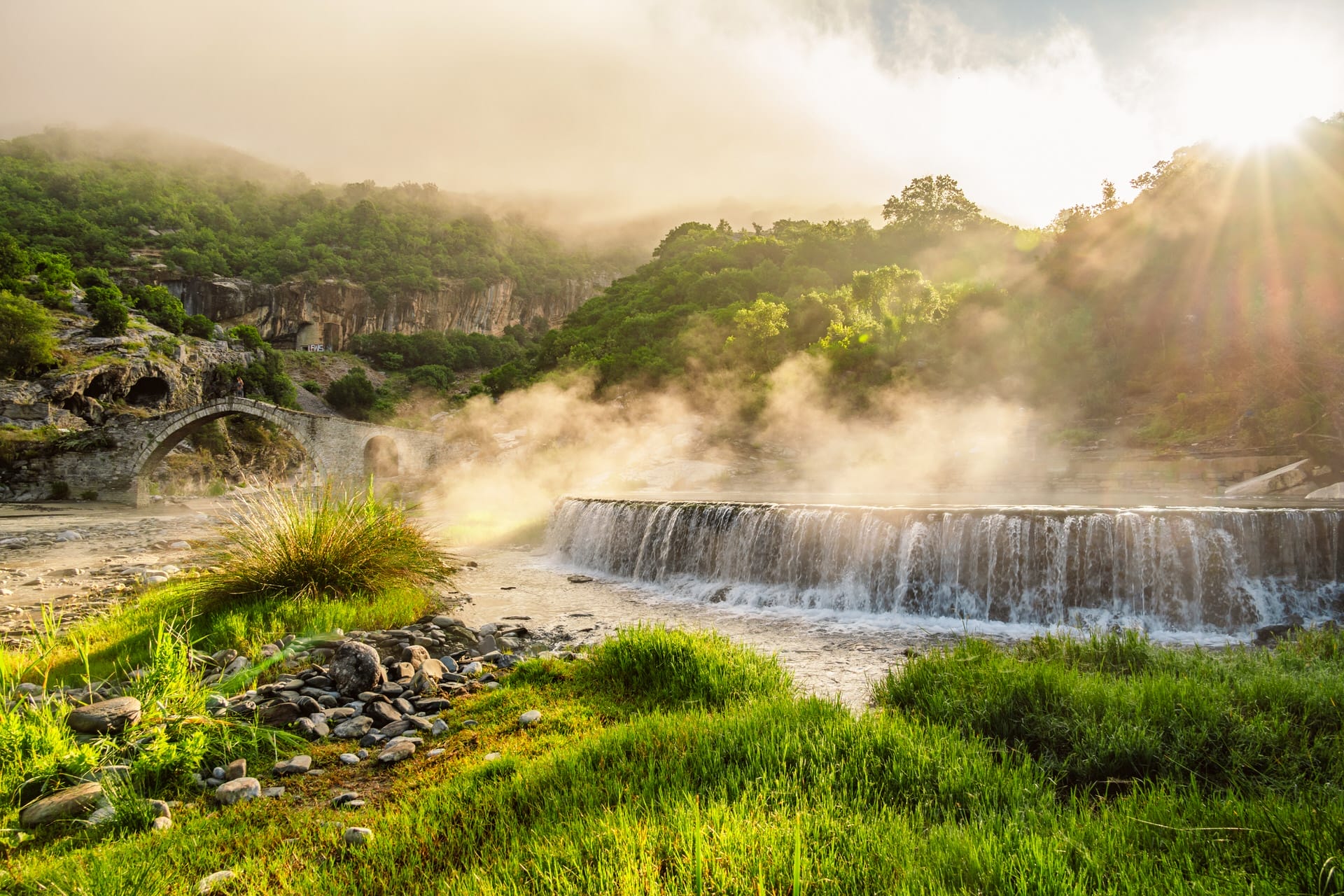
Bënja Thermal Baths (also spelled Benja or Benjë) consists of natural hot springs feeding into pools along the Lengarica River in southern Albania, 13 kilometers from Përmet. The springs emerge from underground sources at approximately 30-32°C (86-90°F)—noticeably warm compared to the cold mountain river water but not the scalding temperatures claimed in some tourism materials that cite “50°C” readings that don’t match actual bathing conditions.
The site is not a developed spa facility with locker rooms, services, or infrastructure. It’s wild hot springs where warm water mixes with river water creating natural bathing pools of varying temperatures depending on the mix ratio. The setting combines water temperature, canyon scenery (limestone cliffs along the Lengarica River), and the Ottoman-era Kadiut Bridge creating photogenic compositions that work well for social media.
Access requires 1.5-kilometer walk from the parking area along rough trail following the river upstream. The walk takes 20-30 minutes depending on pace and trail conditions—muddy after rain, rocky always, requiring sturdy footwear rather than flip-flops. This walk filters out some tourists but doesn’t prevent crowds during July-August peaks when the main pool near Kadiut Bridge can host 50+ people simultaneously.
The Springs and Pools Configuration
The thermal water emerges from multiple spring sources along the riverbank, creating several distinct pools and bathing areas spread across approximately 500 meters of riverside. The main pool—largest and warmest—sits adjacent to Kadiut Bridge, a small Ottoman-era stone arch bridge built 18th century. This pool is roughly 8-10 meters wide, 15-20 meters long, depth varying 0.5-1.5 meters, temperature approximately 30-32°C when not diluted by river flooding.
Several smaller pools exist upstream and downstream from the main pool, offering alternatives when crowds accumulate. These vary in configuration: some are natural rock depressions, others have been modified with stacked stones to channel warm water flow and create bathing pools. The water temperature in these smaller pools ranges 25-35°C depending on proximity to spring sources and degree of river water mixing.
During winter and spring (November-May), river water levels rise from rainfall and snowmelt, sometimes flooding or diluting the thermal pools to the point where they’re indistinguishable from cold river water. Summer and autumn (June-October) provide most reliable bathing conditions when river levels drop and thermal water concentration increases in the pools.
The pools are unmaintained—no cleaning, no filtration, no water treatment. They’re natural features modified by previous bathers stacking rocks. Algae growth occurs, particularly in slower-flowing sections. The bottom is rocky and uneven (wear water shoes). The springs continuously flow, providing some natural circulation, but this isn’t a pristine mountain spring—it’s a well-used natural bathing spot.
The Historical and Cultural Context
The springs have been known locally for centuries—Ottoman-era records mention thermal water in the Përmet region, and Kadiut Bridge’s placement suggests the springs were significant enough to warrant permanent infrastructure. The bridge itself is the more architecturally interesting element: single stone arch spanning the river, part of historical trade routes through the mountains connecting Përmet to villages deeper in the Trebeshtinë range.
During Albania’s communist period (1944-1991), the springs remained accessible but received minimal promotion since foreign tourism didn’t exist and domestic tourism was limited. Post-1991, as Albania opened and Përmet developed as tourist destination (known for wine, food, and surrounding nature), Bënja became promoted as regional attraction—the free hot springs offering natural experience compared to developed European spa resorts.
The name “Bënja” comes from the nearby village. “Thermal baths” is tourism marketing—these are hot springs, not baths in the constructed facility sense. Confusion arises because some sources describe Bënja as if it’s a spa complex rather than wild springs with minimal infrastructure.
What the Experience Actually Involves
From Përmet, the springs are 13 kilometers via paved road south toward the Greek border. Public minibuses run from Përmet to Bënja village during summer (irregular schedule, approximately hourly, 100 LEK/€1). Private taxis charge 1,000-1,500 LEK (€8-12) one way. Most visitors drive rental cars or arrive via organized tours from coastal regions (day trips from Sarandë or Gjirokastër often include Bënja as part of Përmet region itineraries).
At the parking area (capacity approximately 30-40 cars, managed by local family charging 200 LEK/~€1.50 parking fee), the springs are 1.5 kilometers upstream. The trail follows the river through Lengarica Canyon—narrow gorge with limestone cliffs, forest, and the river itself requiring several crossings via stepping stones or wading (difficult during high water, easy during summer low flow).
The walk is scenic but requires reasonable mobility—uneven terrain, some scrambling over rocks, stream crossings. Not wheelchair accessible. Families with young children manage but need to assist kids across water. Elderly visitors struggle with the trail unless they’re regular hikers comfortable with rough paths.
Upon arrival, facilities consist of: nothing. No changing rooms (people change behind rocks or wear swimsuits under clothes during the walk), no bathrooms (use the forest), no food vendors (bring your own water and snacks), no lifeguards, no signage, no services. It’s wild nature with warm water, valued specifically for being undeveloped natural experience rather than managed facility.
Bathing protocol is informal: people claim spots in various pools, stay as long as they want (typical visit 1-2 hours in the water plus walk time), rinse off in cold river water if desired. Swimsuits are required (this isn’t a nude bathing location despite what some travel blogs suggest—Albanian cultural norms expect covered bathing in public spaces).
The Crowding and Timing Reality
During July-August, particularly weekends, Bënja becomes crowded. The main pool can host 50-100 people on peak days, creating conditions more resembling public swimming pool than secluded nature experience. Albanian families from Tirana and Durrës visit on weekend trips, foreign tourists arrive on day tours, and the limited pool space concentrates everyone into the same location.
Early morning visits (before 10 AM) and late afternoon (after 4 PM) reduce crowds. Weekdays are calmer than weekends. Shoulder season (May, June, September, October) provides best balance—warm enough for comfortable bathing, fewer crowds, pleasant weather for the hike. Spring (March-May) risks high water diluting the pools. Winter (November-February) brings cold weather and potential flooding making visits unpleasant.
The upstream pools—requiring additional 10-15 minutes hiking beyond the main pool—see fewer visitors willing to make the extra effort. These can offer more solitude at the cost of potentially lower water temperatures and less convenient pool configurations.
The Honest Assessment
Bënja offers exactly what it promises if expectations are calibrated: free hot springs in a scenic canyon accessible via moderate hike, trading developed spa facilities for natural riverside setting. The water is genuinely warm (not scalding, not tepid—pleasantly warm for bathing), the canyon setting is attractive, Kadiut Bridge provides historical context, and the overall experience delivers low-cost natural thermal bathing.
What Bënja isn’t is undiscovered wilderness or pristine hot springs. It’s popular regional attraction that sees significant summer traffic, has visible tourism impacts (litter despite efforts to maintain cleanliness, erosion around pools, crowds during peak periods), and requires managing expectations about “thermal bath” meaning natural springs rather than spa facilities.
The sulfur content is noticeable but not overwhelming—a mild mineral smell typical of thermal springs without the intense rotten-egg odor of high-sulfur sources. Health claims about therapeutic benefits of the minerals are traditional rather than scientifically validated—the warm water feels good and relaxes muscles, whether due to specific minerals or simply warm water immersion is debatable.
Skip If: You expect developed spa facilities with changing rooms and services, if moderate hiking on rough trails sounds unpleasant, if you’re visiting during July-August and crowds bother you, if you need accessibility features (the trail is challenging for limited mobility), if you’re uncomfortable with basic natural bathing (no facilities, changing behind rocks), or if you have limited time and prefer to focus on more accessible Përmet attractions.
Visit If: You’re exploring the Përmet region and want free natural hot springs experience, if you don’t mind moderate hiking (1.5km rough trail each way), if you visit during shoulder season (May-June, September-October) to avoid peak crowds, if you appreciate natural settings over developed facilities, if you combine the visit with Kadiut Bridge viewing and Lengarica Canyon hiking, or if you’re camping/staying in Përmet for multiple days and want variety beyond town-based activities.
Bënja works best as part of comprehensive Përmet region exploration rather than as standalone destination justifying long detour. Combine with Përmet’s wine tasting, Lengarica Canyon hiking, nearby villages, and the region’s food scene—Bënja becomes one element of multi-day southern Albania itinerary rather than requiring dedicated trip from coastal areas.
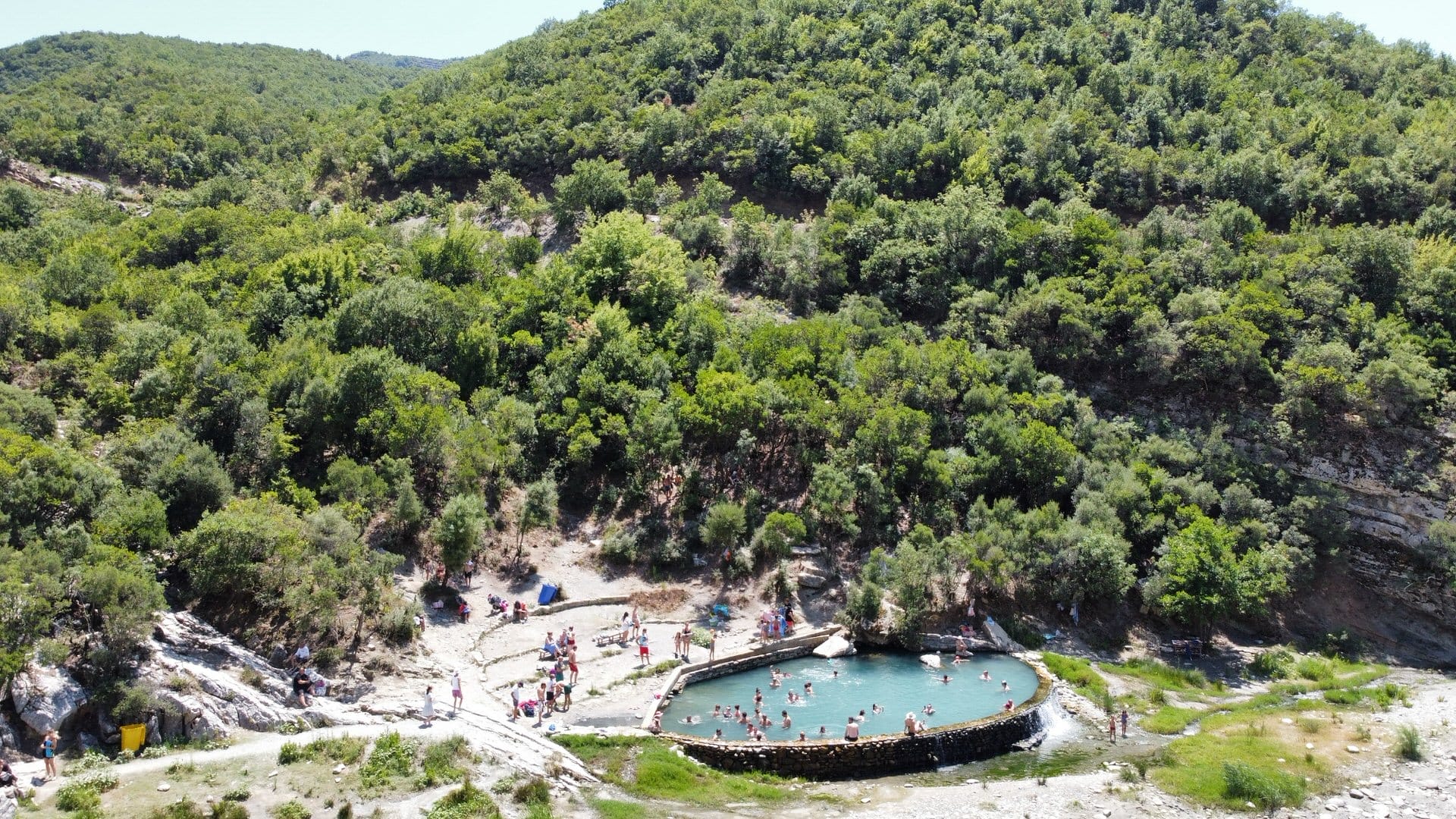
Natural hot springs along the Lengarica River create thermal pools at Bënja near Përmet
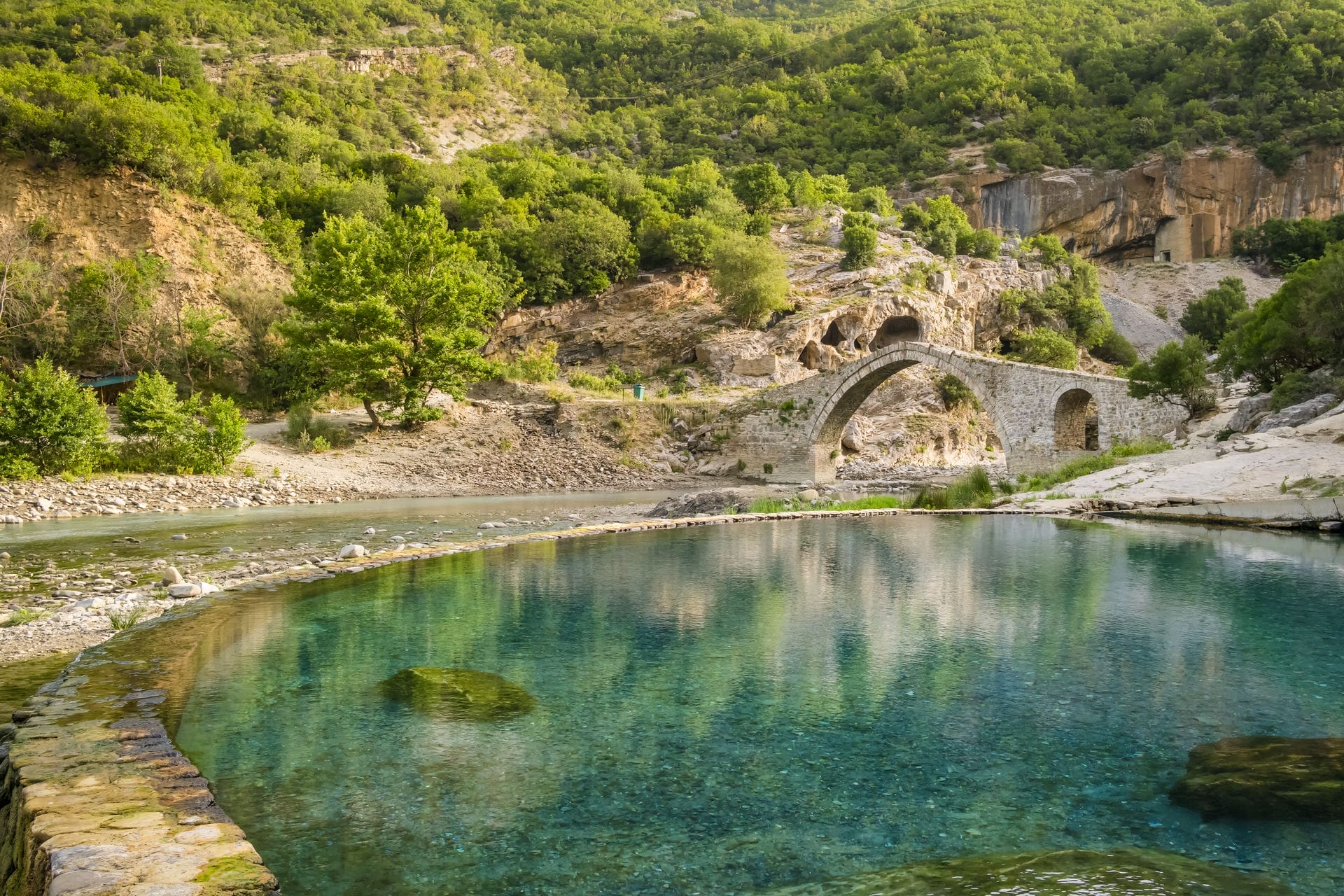
Main thermal pool at Bënja with Kadiut Bridge visible in background
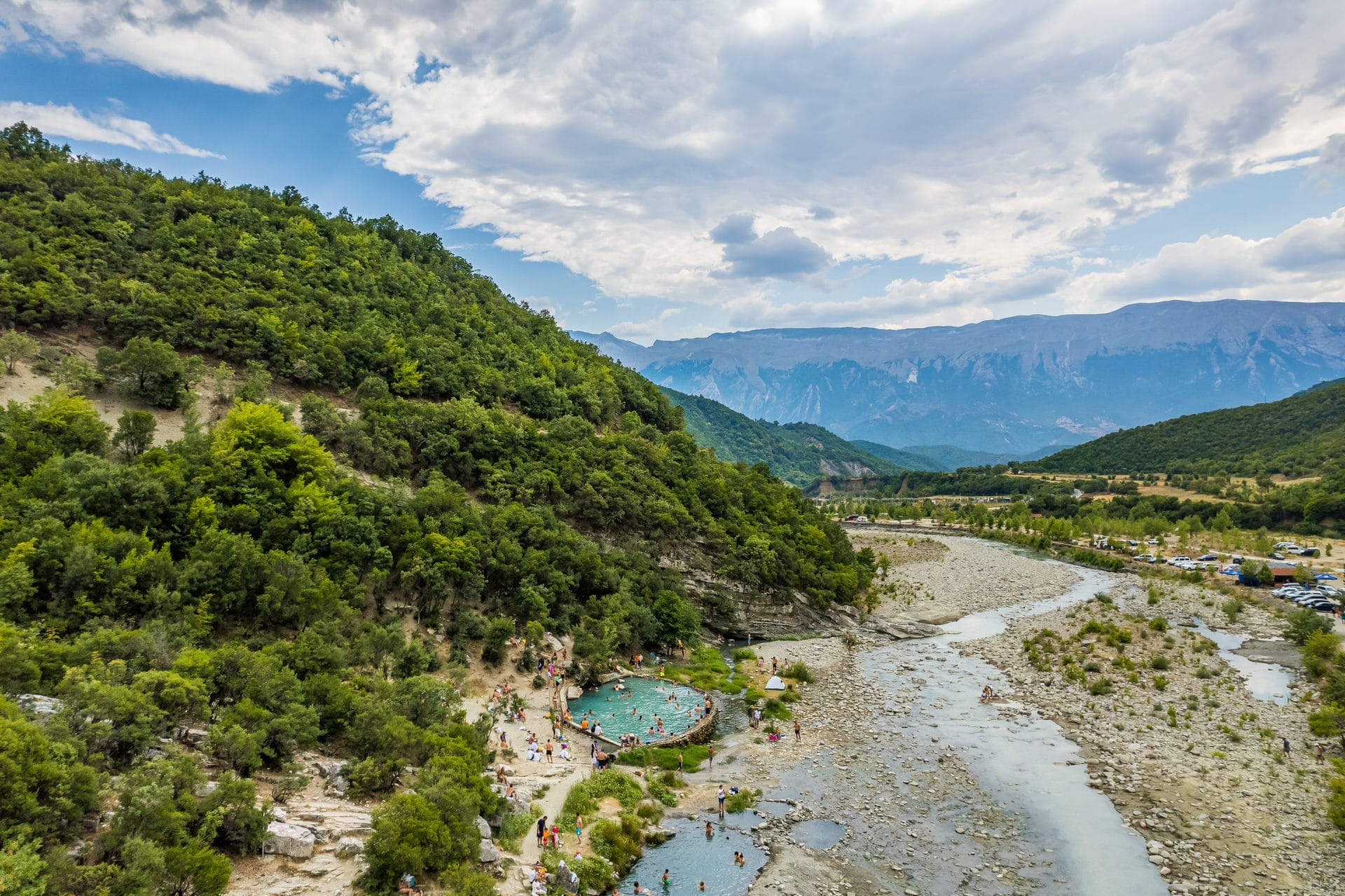
Lengarica River canyon near Bënja showing the natural setting for the thermal springs