What Makes Them Genuinely Unusual
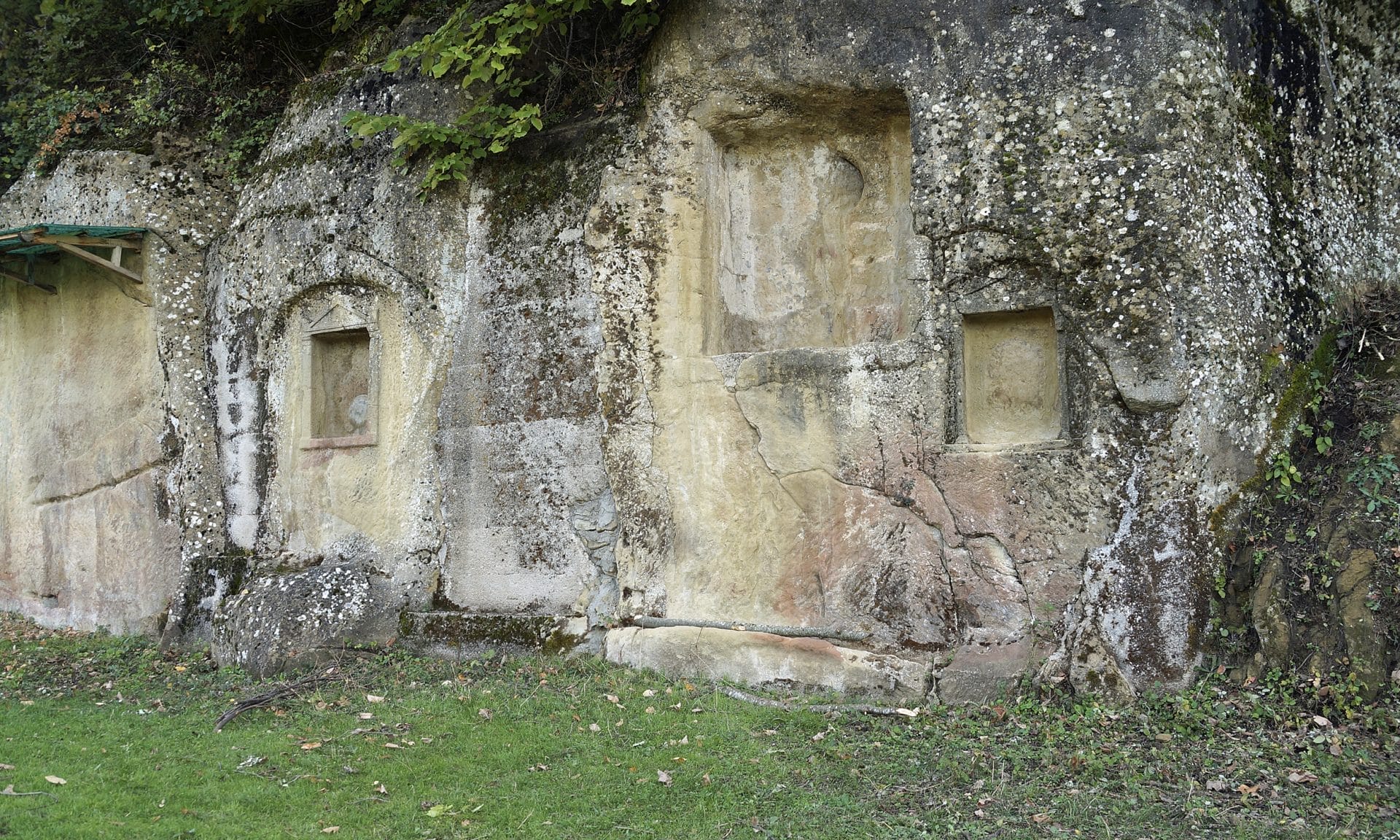
The Illyrian tombs at Selca e Poshtme represent Albania’s most architecturally elaborate rock-cut funerary monuments from the Hellenistic period (4th-1st centuries BCE). Unlike most Illyrian burials—simple stone tumuli or pit graves—Selca’s tombs mimic Greek temple architecture carved directly into a limestone cliff face rising above the village. The largest tomb features columns, pediments, and reliefs cut with such precision that archaeologists initially questioned whether local Illyrian kingdoms could produce such work without direct Greek craftsmen.
The site contains six major tombs spanning approximately 200 years of construction. The earliest (4th century BCE) shows crude attempts at architectural representation—basic rectangular chambers with shallow relief. The latest (2nd-1st century BCE) demonstrates sophisticated understanding of Doric temple design, with properly proportioned columns, triglyph-and-metope friezes, and false doorways suggesting symbolic passages to an underworld.
This architectural progression documents how southern Illyrian kingdoms absorbed Greek cultural influences as they interacted with colonies along the Adriatic coast. The tombs aren’t purely Illyrian or purely Greek—they’re hybrid monuments showing local elites adopting Mediterranean architectural language while maintaining distinct burial traditions.
The Reality of Visiting
Selca’s tombs require commitment. The site sits on a steep hillside approximately 500 meters above Selca e Poshtme village, accessed via an unmarked footpath climbing through scrub vegetation and loose rocks. The ascent takes 30-40 minutes depending on fitness level and involves sections where you’re scrambling over boulders rather than walking on maintained trail. There are no safety barriers, no handrails on steep sections, and no signage beyond a faded wooden sign at the village edge indicating “Varret Ilire” (Illyrian Tombs).
The tombs themselves are empty chambers carved into the cliff. Whatever contents they once held—human remains, grave goods, offerings—were either looted in antiquity or removed during brief archaeological investigations in the 1970s. The interiors contain no artifacts, no decorations, no interpretive panels. You’re looking at carved stone chambers, appreciating the architectural execution and imagining the funerary rituals that occurred 2,300+ years ago.
The largest tomb (sometimes called the “Royal Tomb” though this designation lacks archaeological evidence) measures approximately 6 meters wide, 5 meters deep, and 3 meters high. The facade includes four Doric columns carved in relief supporting a triangular pediment. The chamber’s rear wall shows traces of geometric patterns—parallel lines and concentric circles—whose meaning remains unclear. Archaeologists theorize they’re symbolic representations of doorways or religious motifs, but without excavation reports or comparative examples, this remains speculation.
What Archaeology Actually Knows
Scientific knowledge about Selca’s tombs is limited. The site received brief attention from Albanian archaeologists in the 1970s, who documented the tombs’ architecture, proposed dating based on stylistic comparison to Greek temples, and excavated one or two chambers (exact details are unclear—publications from the period are scarce and often unpublished). Since then, the site has received minimal scholarly attention and no systematic excavation.
We know the tombs were carved for elite individuals—the labor and skill required indicates significant wealth and social status. We don’t know who specifically was buried here. No inscriptions identify the deceased. No artifacts in Albanian museums are clearly attributed to Selca tombs. The tombs’ relationship to known Illyrian settlements in the area (ancient Encheleae territory) remains undefined.
The architectural style suggests construction between the 4th and 1st centuries BCE, spanning the period when southern Illyrian kingdoms interacted increasingly with Greek colonies, Macedonian expansion under Philip II and Alexander, and eventual Roman conquest. The tombs stopped being built when Roman administration absorbed the region, as local elites adopted Roman funerary practices (cremation, urn burial, Latin epitaphs) rather than continuing Hellenized Illyrian traditions.
The Comparison to Better-Known Sites
Travel sources sometimes describe Selca as “Albania’s Petra” or compare it to Lycian rock tombs in Turkey. These comparisons are misleading. Petra contains dozens of elaborate facades across a vast archaeological zone with extensive infrastructure and interpretation. The Lycian tombs include hundreds of examples with detailed scholarship, museum collections, and tourism facilities. Selca contains six tombs on a remote hillside with zero infrastructure and minimal published research.
The accurate comparison is to other unmaintained archaeological sites throughout Albania where significant monuments exist but lack resources for preservation, interpretation, and visitor facilities. Selca represents Albania’s archaeological reality—valuable heritage sites outnumber available resources for proper management, creating situations where visitors encounter ruins without context.
Practical Visiting Considerations
Access: From Selca e Poshtme village (on the road between Pogradec and Korçë), look for faded signs indicating “Varret Ilire” or ask locals for directions to the trailhead. Parking is informal—pull off the road where space allows. The village has no tourist facilities—no restaurants, no shops, no accommodation.
Hiking Requirements: The trail is steep and unmaintained. Wear proper hiking shoes with ankle support. Bring water—there’s no source at the site. Avoid visiting after rain when the loose rock becomes slippery. The site is completely exposed to sun—bring hat and sunscreen for daytime visits.
Safety: No guardrails exist at the cliff edge. The tomb chambers have low ceilings—watch your head. The carved stone is ancient and fragile—don’t climb on the facades. Mobile phone reception is limited—don’t rely on GPS or emergency calls.
Interpretation: Bring a guidebook or research the site beforehand—there’s nothing onsite to explain what you’re seeing. The tombs are visually interesting architecture, but without context about Illyrian culture, Greek influence, and burial practices, they’re just empty carved chambers.
Photography: The tombs face southwest—best light is mid-morning or late afternoon. The cliff position provides views across the valley toward Lake Ohrid—useful for context shots showing the site’s isolated location.
The Honest Assessment
Selca’s tombs are archaeologically significant—they document cultural exchange between Illyrian kingdoms and Greek civilization in ways few Albanian sites demonstrate. The temple-facade design shows sophisticated understanding of Greek architecture adapted to indigenous burial traditions.
What the tombs aren’t is tourist-ready. The access is challenging, the site is undeveloped, and the lack of interpretation means most visitors see impressive carved stone without understanding its historical context. This isn’t a site where you arrive, spend 30 minutes, take photos, and leave satisfied. It’s a site that rewards preparation, archaeological interest, and willingness to engage with monuments that require imagination to appreciate.
Skip If: You expect maintained tourist sites with facilities, if you’re uncomfortable with steep unmaintained trails, if you need interpretive infrastructure to engage with archaeological sites, if you have mobility limitations that prevent rough hiking, or if you’re not specifically interested in Illyrian archaeology and Hellenistic cultural exchange.
Visit If: You’re touring the Pogradec-Korçë region and have time for detours, if you’re specifically interested in Illyrian culture and lesser-known archaeological sites, if you enjoy hiking to monuments off the standard tourist circuit, if you appreciate ruins precisely because they’re undeveloped and require effort to reach, or if you’re researching Hellenistic influence on Balkan cultures.
The tombs deserve better than they receive—proper excavation, published research, interpretive signage, maintained trails, and inclusion in organized archaeological tourism. Until Albania develops resources for such investment, Selca remains a site for dedicated archaeology enthusiasts rather than general visitors.