What Happened in a Decade
In 2010, the Albanian Riviera’s beaches had minimal tourism infrastructure. Dhërmi village had perhaps 5-6 guesthouses, no beach bars, no organized lounger rental. The SH8 coastal highway between Vlorë and Sarandë—originally built by Italian engineers in the 1930s—remained poorly maintained, with sections requiring careful navigation around potholes and erosion damage.
By 2015, investment had begun arriving. Beach clubs opened. Hotels multiplied. The highway received complete reconstruction, converting a challenging 3-hour journey into a smooth 2-hour drive. Instagram discovered the Riviera’s turquoise water and white pebble beaches, creating viral content that reached audiences measuring in millions.
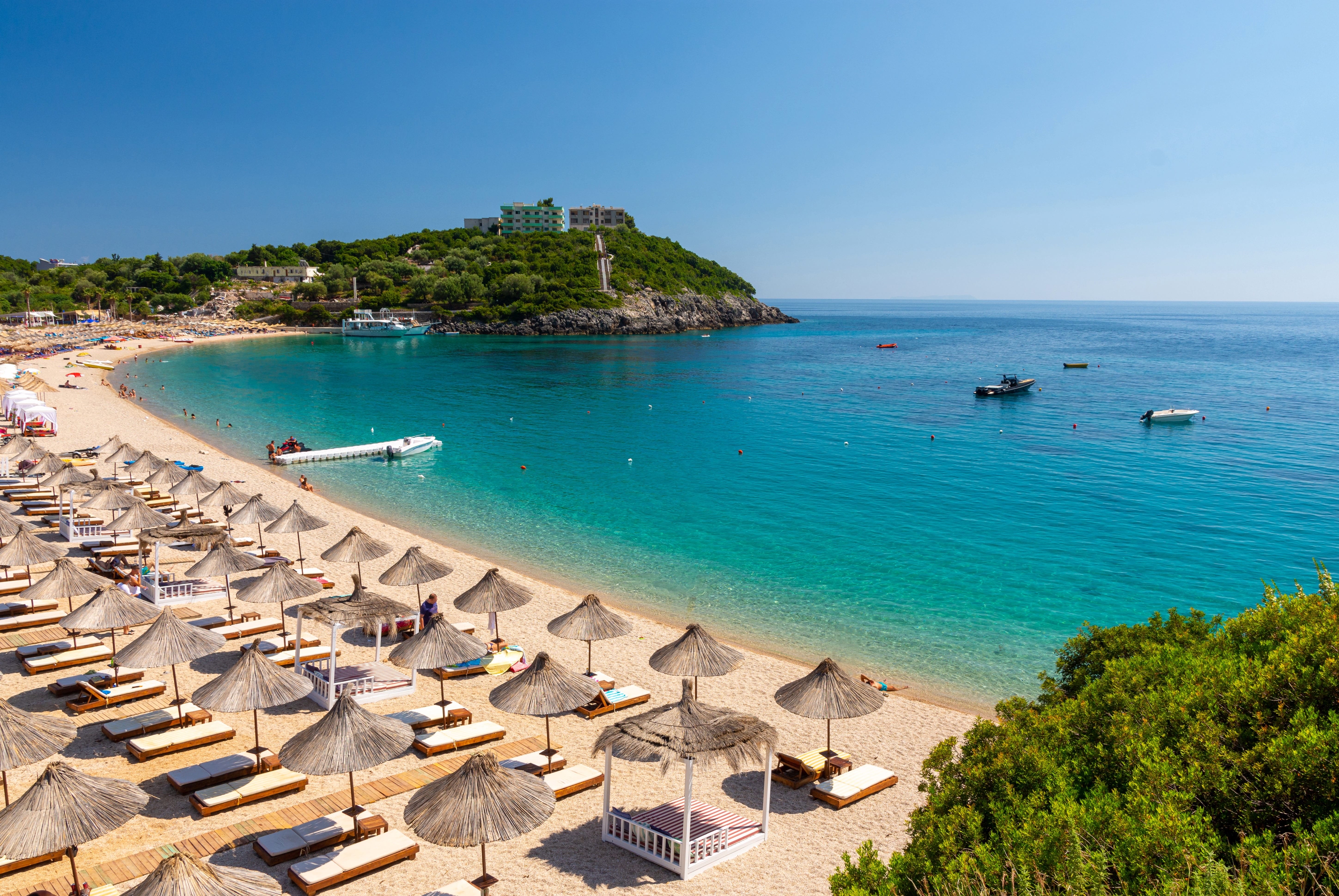
By 2020, the transformation was complete. Dhërmi’s 5-6 guesthouses had become 50+ hotels and apartment rentals. Ksamil’s quiet beaches were accommodating thousands daily. The Albanian Riviera had shifted from obscure Balkan coastline to mainstream European summer destination in under ten years—faster tourism development than almost any comparable Mediterranean location.
The Geography That Created the Beaches
The Albanian Riviera occupies approximately 120 kilometers of Ionian Sea coastline between Vlorë in the north and Ksamil near the Greek border in the south. The Ceraunian Mountains rise directly from the sea, creating topography where roads were impossible until the 20th century and where beaches remain accessible only via steep descents or boat access.
The beaches themselves divide into three distinct zones based on coastal geology:
Northern Section (Vlorë to Dhërmi, ~60km): White pebble beaches formed from limestone erosion. The pebbles range from golf-ball to fist-sized stones. Swimming requires water shoes unless you enjoy pain. The pebbles create the water clarity the Riviera is known for—limestone fragments don’t create the suspended sediment that clouds sandy beaches.
Central Section (Dhërmi to Himarë, ~40km): Mixed pebble and small stone beaches. Some sand appears in protected coves. The most dramatic coastal scenery occurs here, with cliffs rising 200+ meters directly from the waterline.
Southern Section (Himarë to Ksamil, ~20km): Transitioning to sand beaches as you approach Ksamil. The mountains recede slightly from the coastline, creating flatter terrain and easier beach access.
The Beaches Everyone Visits
Dhërmi Beach sits 42 kilometers south of Vlorë, making it roughly equidistant from both major coastal cities. The beach stretches approximately 3 kilometers—the Albanian Riviera’s longest uninterrupted beach. During July-August, expect 1,000+ beachgoers on weekends, with the beach reaching functional capacity where finding unoccupied space becomes challenging. Lounger rental costs €10-15 per day at beach clubs, €5-8 at independent operators. Parking runs €3-5 depending on proximity to beach access points.
The village has transformed into accommodation hub with 50+ hotels/guesthouses ranging €30-150 per night. The beach clubs operate 10 AM-2 AM during summer, with DJ sets and parties that either enhance or destroy the experience depending on whether you came for tranquility or socializing.
Gjipe Beach requires 30-minute hike through Gjipe Canyon from the nearest parking area (€2-3 parking fee). The trail descends approximately 200 meters elevation, navigating rocky terrain that becomes slippery when wet. The beach itself is pebble, approximately 200 meters long, backed by 150-meter cliffs on both sides creating amphitheater effect.
The hiking requirement limits crowds—even in August, Gjipe rarely exceeds 50-100 people, and outside peak weeks you might share the beach with 10-20 others. No lounger rental, no facilities beyond a single summer-only café serving drinks and basic food. This is the closest the Albanian Riviera gets anymore to pre-tourism conditions.
Access note: The parking area sits approximately 10 kilometers south of Dhërmi on the SH8, marked by roadside signs. The hike is manageable for anyone with moderate fitness, but carrying beach gear (umbrellas, coolers, etc.) makes it substantially harder.
Jale Beach sits between Dhërmi and Himarë, approximately 3 kilometers south of Dhërmi. The beach is 600-800 meters long, pebble surface, with particularly clear water due to offshore depth—the seabed drops to 10+ meters relatively close to shore. Jale developed reputation as the “party beach,” with several large beach clubs hosting events throughout summer. Expect loud music, crowds of 18-30 year olds, and prices matching the party atmosphere (€15-20 for loungers, €8-12 for cocktails).
Himarë Town Beach functions as the Riviera’s main local beach—where Albanian families from inland cities come rather than international tourists seeking Instagram content. The beach runs approximately 1.5 kilometers through Himarë town, with a concrete promenade, numerous small cafés and restaurants, and atmosphere that’s less polished but more functional than the tourist-focused beaches. Lounger rental €5-10. Parking difficult during weekends—arrive before 10 AM or park in residential streets 500+ meters from beach.
Borsh Beach stretches approximately 7 kilometers—making it Albania’s longest beach—but only the northern 2 kilometers near Borsh village has tourism development. The remaining 5 kilometers remain empty most of the time, accessible by walking south along the beach or via poorly-marked access tracks from the SH8 highway. The beach is mixed pebble and sand. Borsh attracts Albanian families rather than international tourists, keeping prices lower (loungers €5-8, accommodation €25-50/night).
Ksamil Beaches sit 12 kilometers south of Sarandë, consisting of three main beach areas plus four small offshore islands accessible by short boat rides (€5-10 return). Ksamil is sand rather than pebble—the only major sand beach on the Albanian Riviera. This fact, combined with proximity to Sarandë and the photogenic offshore islands, makes Ksamil the Riviera’s most crowded location.
August weekends see parking become essentially impossible—the road through Ksamil village reaches gridlock by 10 AM, with cars parked on both roadsides eliminating through traffic. The beaches accommodate thousands simultaneously, with lounger space selling out by midday. If you visit Ksamil in August, arrive before 8 AM or accept that you’ll spend 30+ minutes finding parking and walking significant distance to beach access.
Off-season (May-June, September-October), Ksamil reverts to manageable crowds and functions well as beach destination. The transformation between peak and shoulder season is dramatic—same beaches, 80% fewer people.
The Practical Complications
Transport: The SH8 highway is now paved and maintained to good standard, but it’s a mountain road with switchbacks, limited passing zones, and sections where one lane hugs 100+ meter cliff drops with minimal guardrail. Driving Vlorë to Sarandë requires 2-2.5 hours. Buses operate multiple daily departures (€5-10) but schedules remain somewhat flexible. Furgons (minibuses) depart when full rather than on fixed schedule.
Accommodation Booking: July-August requires advance booking—most properties fill completely, and walking in without reservation means either paying premium prices for remaining options or driving to the next town. June and September allow more spontaneity, though weekends still fill up. May and October see many properties closed as owners consider tourism season finished.
Beach Club Culture: The beach clubs operate on model where lounger rental is sometimes “free” if you meet minimum spending requirements (€20-30 per person on food/drinks). Other clubs charge €15-20 for loungers regardless of spending. The business model isn’t always transparent—ask about requirements before occupying loungers to avoid disputes when leaving.
Water and Waste: The rapid tourism growth exceeded infrastructure development in some locations. Dhërmi experiences water supply issues during July-August peaks when usage exceeds capacity. Waste collection struggles during summer, particularly in Ksamil where trash accumulates despite collection efforts. These aren’t catastrophic failures, but they’re visible enough to impact experience.
The Honest Assessment
The Albanian Riviera delivers on water clarity and coastal scenery. The limestone geology creates water that genuinely achieves the turquoise transparency that photographs suggest. The mountain-meets-sea topography produces dramatic landscapes that justify the drive down the SH8.
What the Riviera doesn’t deliver anymore is undiscovered isolation. The viral Instagram success and rapid development mean you’re visiting a destination in full tourism boom, with crowds that match popular Greek or Croatian beaches, infrastructure that’s still catching up to visitor numbers, and prices that have tripled since 2015 while remaining cheaper than Western European equivalents.
The beach experience itself depends heavily on timing. Visit in May, June, early September, or October, and you’ll find reasonable crowds, available parking, and beaches that work well as summer destinations. Visit in July-August—especially weekends—and you’re accepting crowds that will frustrate anyone expecting peaceful Mediterranean coast.
The cultural context matters too. These are beaches that were largely inaccessible until the 1990s, developed rapidly in the 2010s, and are still figuring out sustainable tourism models. The infrastructure gaps and occasional chaos aren’t evidence of incompetence—they’re documentation of what happens when tourism development occurs faster than planning and investment can accommodate.
Skip the Albanian Riviera if you have limited time in Albania (the beaches themselves aren’t dramatically different from accessible alternatives in Greece, Croatia, or Montenegro), if you’re visiting in July-August and expect to avoid crowds, if you need fully developed tourism infrastructure with consistent services, or if you’ve already visited the region’s most compelling attractions like Butrint or Gjirokastër and are just adding beach time.
Visit if you have 4+ days for proper Riviera exploration, if you’re traveling in shoulder season (May-June or September-October), if you want to see what rapid tourism transformation looks like in real time, if you’re comfortable with developing infrastructure and occasional service gaps, or if you’re specifically interested in the cultural and historical sites scattered along the coast (ancient Phoenice ruins, Porto Palermo Castle, Himarë’s Greek minority communities).
The Albanian Riviera is worth visiting, but it’s not the pristine undiscovered paradise that 2010-era travel blogs described, and it’s not yet the polished tourism destination that 2030 will likely produce. You’re visiting during the messy middle phase where the beaches are beautiful, the crowds are significant, and the experience is defined by the tension between traditional coastal villages and Instagram-driven tourism development that arrived faster than anyone planned for.